The Rolex Datejust and the Rolex Day-Date are two of the most iconic timepieces ever created by the Swiss watchmaking house. Both have carved their names into horology history through timeless design, technical innovation, and enduring appeal. At first glance they can seem similar, but look closer and you’ll find two watches built for entirely different audiences, with distinct features, pricing structures, and investment profiles worth understanding before you make a move.
Introduced in 1945, the Rolex Datejust was the first self-winding chronometer wristwatch to feature an automatically changing date display at 3 o’clock. That seemingly simple innovation changed watchmaking forever and cemented the Datejust as a benchmark for precision and reliability that still holds today.
The Rolex Day-Date came later, launching in 1956, and pushed the concept further by becoming the first watch to display both the date and the full day of the week spelled out on the dial. Nicknamed the “President’s Watch,” it has grown into a symbol of authority, success, and refined taste worn by world leaders, visionaries, and cultural icons across decades.
Both models share Rolex’s hallmark craftsmanship, from the Oyster case to precision movements and timeless aesthetics. But they diverge sharply when it comes to materials, functionality, and pricing. The Datejust is celebrated for its versatility and broad appeal. The Day-Date is revered for its luxurious exclusivity and what it signals to the room when you wear it.
What follows is a full breakdown of the key differences, pricing, investment potential, and defining features of both the Rolex Datejust and the Rolex Day-Date. By the end, you’ll know exactly which one belongs on your wrist.
Table of Contents
Rolex Datejust Key Characteristics (Price Range $7,000 to $45,000)
The Rolex Datejust is a timeless icon of precision, durability, and refined aesthetics. Born in 1945 as the first self-winding chronometer wristwatch with an automatically changing date display, it has been a cornerstone of Rolex’s lineup ever since, appealing to first-time buyers and seasoned collectors alike. Its enduring design, exceptional craftsmanship, and versatile style have made it a genuine benchmark in horology.
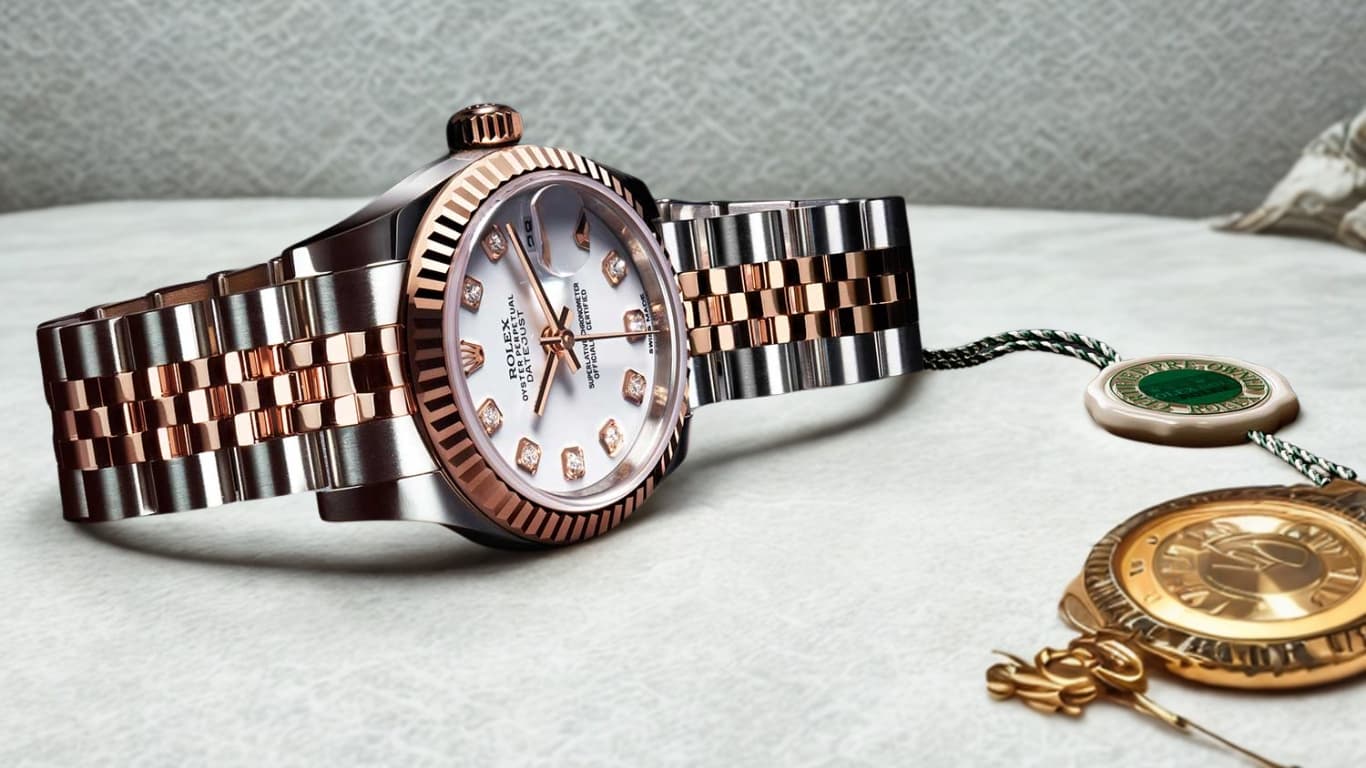
Designed to suit a wide range of wrist sizes and preferences, the Datejust comes in 28mm, 31mm, 36mm, and 41mm cases. The Oyster case delivers water resistance up to 100 meters (330 feet), offering real durability without sacrificing elegance. Material options span corrosion-resistant Oystersteel, solid gold in yellow, white, or Everose, and Rolesor, which blends stainless steel and gold for a balance of resilience and luxury.
Bezel options give you room to express your style too. Smooth bezels deliver a clean, modern look. Fluted bezels nod to classic Rolex tradition. Diamond-set bezels bring unmistakable luxury to the wrist. The dial selection is equally wide, running from classic sunburst finishes in blue, silver, and black to intricate motif dials and diamond hour markers for those who want extra refinement. And the Cyclops lens at three o’clock, a defining Rolex feature, makes date reading effortless at a glance.
Two signature bracelet options complete the package. The Jubilee bracelet, with its five-piece link design, leans elegant. The three-piece Oyster bracelet takes a sportier, more robust approach. Both come with the Easylink extension system, letting you adjust the fit quickly and comfortably.
Under the dial, the Datejust runs on Rolex’s in-house Caliber 3235 movement. As a Superlative Chronometer, it hits an accuracy of negative 2 to positive 2 seconds per day, well beyond industry standards. The 70-hour power reserve keeps things running through extended periods off the wrist, while the paramagnetic blue Parachrom hairspring shrugs off shocks and temperature swings.
Pricing on the Datejust is more accessible than the Day-Date, though it still varies with model, material, and configuration. Stainless steel references start at around $7,000. Two-tone Rolesor models begin at approximately $10,500. Solid gold variations, such as those in Everose gold, reach around $13,800, with prices shifting based on market demand.
The Datejust holds its value well and certain rare models, especially those with limited-production dials, have appreciated considerably over time. On the pre-owned market, vintage references regularly command a premium, particularly when they arrive with original box and papers intact.
Who is the Rolex Datejust for?
The Datejust suits individuals who value classic elegance combined with modern functionality. It works for the professional wanting a watch that moves effortlessly between the boardroom and the weekend, the first-time Rolex buyer looking for a credible entry point into the brand, the collector who appreciates broad customization and dial variety, and anyone who wants a timepiece that holds its own at any occasion without demanding the spotlight.
- First-time Rolex buyers seeking a balance between luxury and practicality.
- Professionals and business leaders looking for a refined everyday timepiece.
- Collectors interested in a model with long-term investment potential.
The Rolex Datejust is one of the most universally admired watches in the Rolex catalog. Its versatility, craftsmanship, and investment reliability make it a compelling choice whether you’re a watch enthusiast or a savvy buyer thinking about long-term value.

Rolex Day-Date Key Characteristics (Price Range $35,000 to $110,000+)
The Rolex Day-Date, known as the “President’s Watch,” sits at the very top of the Rolex lineup. Introduced in 1956, it was the first wristwatch to display both the date and the full day of the week spelled out on the dial. That innovation, combined with its exclusive materials and powerful associations, has made it a lasting symbol of success worn by world leaders, business magnates, and cultural icons across generations.
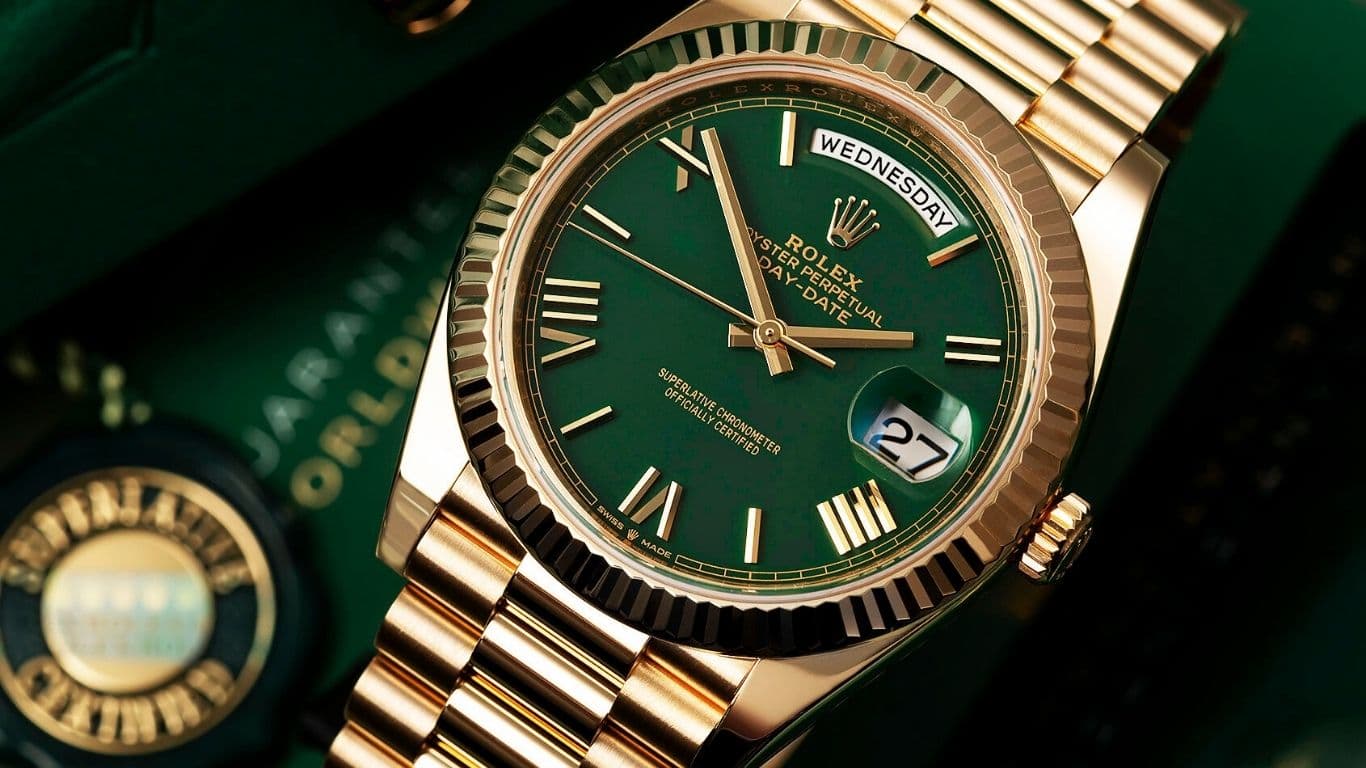
Unlike the Datejust, the Day-Date is crafted exclusively from precious metals, which reinforces its elite positioning from the ground up. Your options include 18k yellow gold for a classic, opulent statement, 18k white gold for understated luxury, and Rolex’s proprietary Everose gold for a rich, durable finish that resists fading. The rarest variant comes in platinum, typically paired with an ice-blue dial as a subtle but unmistakable mark of exclusivity. Case sizes run to 36mm and 40mm, keeping the proportions balanced and elegant.
Bezel choices follow a similar pattern to the Datejust, with fluted bezels being the most recognized, smooth bezels offering a cleaner modern look, and diamond-set bezels delivering maximum luxury presence. The Oyster case brings 100 meters (330 feet) of water resistance, so durability is never in question.
The dial is where the Day-Date really separates itself. The fully spelled-out day of the week sits at 12 o’clock, paired with the date at 3 o’clock behind the Cyclops lens, giving you both readability and distinction in one glance. Dial options range from classic sunburst finishes to mother-of-pearl and vibrant jewel tones, with diamond hour markers available on select references. Every detail reflects the level of precision Rolex brings to its flagship model.
The Day-Date wears the President bracelet, a design created specifically for this watch and no other. Its semi-circular three-piece links deliver both comfort and a polished elegance, while the concealed Crownclasp keeps the look seamless from every angle. The bracelet isn’t just a strap. It’s part of the identity.
Power comes from the Caliber 3255 movement, a Superlative Chronometer delivering accuracy of negative 2 to positive 2 seconds per day. You also get a 70-hour power reserve, a paramagnetic blue Parachrom hairspring for shock and magnetic resistance, and an instantaneous day and date change at midnight. The engineering behind that snap-change alone reflects how seriously Rolex approaches even the smallest details.
Pricing reflects the Day-Date’s precious metal construction and exclusivity. Entry points start at around $35,000 and can exceed $110,000 depending on materials and dial configurations. Yellow gold models begin at approximately $36,500, white gold at $38,800, Everose gold at $42,000, and platinum at $60,000, with market demand pushing figures higher on sought-after references.
Beyond being a luxury object, the Day-Date is a strong investment. It holds value consistently across both primary and secondary markets, backed by limited production, prestigious materials, and genuine historical significance. Vintage references with rare dials or configurations have shown meaningful appreciation over time, with platinum models especially sought after due to their scarcity.
Who is the Rolex Day-Date for?
The Rolex Day-Date is a luxury statement piece built for a specific type of buyer. It suits those who want their watch to communicate achievement without explanation, collectors focused on prestigious metals and rare configurations, executives and public figures for whom exclusivity is non-negotiable, and anyone treating a watch purchase as a serious long-term investment with strong appreciation potential.
- Value exclusivity and prestige in their timepiece.
- Appreciate precious metal craftsmanship and refined aesthetics.
- Seek a watch with historical significance and cultural relevance.
- View their purchase as both a luxury acquisition and a long-term investment.
The Rolex Day-Date is the ultimate expression of what Rolex can do. It goes beyond telling the time and becomes a declaration of achievement, taste, and timeless style.

Datejust and Day-Date Timeline
Both the Rolex Datejust and the Rolex Day-Date hold a defining place in the evolution of luxury watchmaking. Their timelines tell the story of Rolex’s relentless drive toward innovation, precision, and design that never ages.
Rolex Datejust Timeline
- 1945: Rolex introduces the Datejust, the first self-winding wristwatch with a date display window at 3 o’clock. It was launched to commemorate Rolex’s 40th anniversary and featured the iconic Jubilee bracelet.
- 1954: The Cyclops lens is added to the Datejust’s crystal to magnify the date window for improved readability.
- 1977: Rolex introduces the Caliber 3035 movement, enabling the quickset date function, allowing users to set the date independently from the hour hand.
- 2009: The Rolex Datejust II is introduced, featuring a 41mm case size, catering to modern preferences for larger watches.
- 2016: The Datejust 41 replaces the Datejust II, now equipped with the Caliber 3235 movement, offering a 70-hour power reserve and improved precision.
- Today: The Datejust remains a pillar of Rolex’s collection, available in a wide variety of case sizes, materials, and dial options, ensuring broad appeal across demographics.
Rolex Day-Date Timeline
- 1956: Rolex launches the Day-Date, becoming the first wristwatch to display both the date and the full day of the week spelled out in a curved aperture at 12 o’clock.
- 1956: The President Bracelet is introduced exclusively for the Day-Date, adding to its prestige and elegance.
- 1960s: The Day-Date becomes a symbol of leadership and power, earning its nickname, “The President’s Watch,” after being worn by numerous world leaders, including Lyndon B. Johnson.
- 1972: Rolex introduces the Quickset Date feature, making it easier for wearers to adjust the date without having to turn the hour hand repeatedly.
- 1988: The Caliber 3155 movement debuts, introducing the Double Quickset function, allowing both the day and date to be set independently.
- 2008: Rolex releases the Day-Date II, featuring a 41mm case size, catering to a growing trend for larger watches.
- 2015: The Day-Date 40 replaces the Day-Date II, equipped with the Caliber 3255 movement, offering enhanced accuracy, a 70-hour power reserve, and improved shock resistance.
- Today: The Day-Date remains Rolex’s flagship luxury timepiece, available exclusively in precious metals like gold and platinum, with premium features and dial options.
Key Differences in Their Evolution
Both the Datejust and Day-Date have benefited from the same advances in watch technology and precision over the decades. But their evolution reveals two very different purposes driving Rolex forward.
- The Datejust has always been about versatility and timeless appeal, offering multiple size options, a wide variety of materials, and designs suitable for a diverse audience.
- The Day-Date has remained exclusive to precious metals, maintaining its status as a luxury symbol and catering to an elite audience.
- Both watches have embraced Rolex’s technical innovations, including improved movements, precision, and durability, but the Day-Date remains more exclusive and prestigious due to its price point and material choices.
The Datejust’s timeline is a story of adaptability and universal appeal, constantly refined to suit a broader audience. The Day-Date’s history is one of exclusivity and authority, built to speak to those at the top. Rolex has kept both models relevant across generations through consistent innovation and a commitment to refinement that never feels forced.
Rolex Datejust vs Day-Date Model Options
Put the Datejust and the Day-Date side by side and the differences come into focus quickly through their materials, features, and the people they’re built for. Both carry Rolex’s signature craftsmanship. But the Datejust caters to versatility and broad appeal, while the Day-Date is unapologetically about exclusivity and prestige.
The Datejust earns its reputation for adaptability. It comes in 28mm, 31mm, 36mm, and 41mm case sizes, covering a wide range of wrist sizes and style preferences. The Oyster case holds water resistance up to 100 meters (330 feet), making it genuinely durable for daily wear and formal occasions alike. Material options run from robust Oystersteel to luxurious solid gold, with Rolesor models blending stainless steel and gold for a refined yet practical middle ground.
Bezel choices include smooth, fluted, and diamond-set variations, opening the door to both subtle and bold expressions of style. Dial options are equally wide, from sunburst finishes and patterned motifs to diamond hour markers and editions like the much-discussed Wimbledon dial.
The Datejust pairs with either the Jubilee or Oyster bracelet. The five-link Jubilee delivers a more refined, dressy look, while the three-link Oyster bracelet takes a sportier approach. Both include the Easylink extension system for quick adjustments. Under the dial, the Caliber 3235 movement delivers a 70-hour power reserve, negative 2 to positive 2 seconds per day accuracy, and strong resistance to shocks and magnetic fields thanks to the blue Parachrom hairspring.
The Day-Date takes a different approach entirely, representing the pinnacle of the Rolex lineup. Available exclusively in 18k yellow gold, white gold, Everose gold, and platinum, it comes only in 36mm and 40mm case sizes, reinforcing its traditional proportions and timeless presence. Bezel options mirror those of the Datejust, with the fluted version being the most iconic.
But the dial is where the Day-Date truly sets itself apart. Rare and exotic options such as mother-of-pearl, malachite, lapis lazuli, and meteorite take exclusivity to another level entirely, making each reference feel genuinely one of a kind.
The President bracelet, designed exclusively for this model, defines its identity on the wrist. Semi-circular three-piece links create a seamless aesthetic, while the concealed Crownclasp keeps everything elegant and uninterrupted. Inside, the Caliber 3255 matches the Datejust’s 70-hour power reserve and precision but adds the complexity of an instantaneous day and date change at midnight. That fully spelled-out day display at 12 o’clock is one of the most recognizable details in all of watchmaking.
On price, the Datejust offers a more accessible range, from $7,000 to $45,000 depending on material, size, and configuration. The Day-Date, built exclusively from precious metals, starts at $35,000 and can exceed $110,000 for platinum and diamond-set references.
The Datejust speaks to professionals, first-time Rolex buyers, and collectors who want a watch that balances versatility with prestige. The Day-Date speaks to high-net-worth individuals and those who see their watch as a direct expression of power and success. Both hold strong investment value, though the paths differ.
The Datejust benefits from broad demand and enduring appeal, making resale relatively straightforward. The Day-Date, with its rarity and precious metal construction, commands higher resale premiums, especially for platinum references and limited-edition dials where demand among serious collectors stays consistently strong.
Ultimately the Datejust gives you accessibility, customization, and everyday wearability. The Day-Date gives you something unrivaled in terms of exclusivity and status. Each model fulfills a distinct purpose, and Rolex delivers exceptional craftsmanship and enduring value through both.

Rolex Datejust vs Day-Date Pricing
Pricing is one of the sharpest distinctions between the Datejust and the Day-Date. Both watches reflect Rolex’s commitment to craftsmanship and timeless design, but what you pay tells a clear story about the materials, exclusivity, and market positioning behind each model.
The Rolex Datejust sits among the most accessible luxury watches in the Rolex family, balancing refinement, versatility, and investment value. Your final price depends on case size, materials, bezel type, bracelet style, and dial configuration. Oystersteel references start at around $7,000. Two-tone Rolesor models begin near $10,500. Solid gold Datejust variants in Everose gold reach approximately $13,800, with fully diamond-set configurations pushing toward the $45,000 upper range.
- Stainless Steel Models – Entry-level Datejust models, typically crafted from Oystersteel, start at approximately $7,000.
- Two-Tone (Rolesor) Models – Combining stainless steel and gold, these models range from $10,000 to $12,000, depending on dial and bezel choices.
- Solid Gold Models – Full gold versions, including yellow and Everose gold variants, cost between $13,000 and $15,000.
The Day-Date sits in a different league entirely. Built exclusively from 18k gold and platinum, pricing reflects both the materials and the rarity. Yellow gold models start at roughly $36,500. White gold references begin around $38,800. Everose gold sits near $42,000. Platinum, the rarest of the four, starts at $60,000 and can climb well beyond $110,000 for heavily jeweled or exceptionally rare dial configurations.
- Yellow Gold Models – Entry-level Day-Date models in 18k yellow gold start at approximately $35,000.
- White Gold Models – White gold versions begin around $38,000.
- Everose Gold Models – Everose gold variations range from $40,000 to $45,000.
- Platinum Models – The most exclusive Day-Date watches, particularly those with rare dials, start at $60,000 and can exceed $80,000 for special editions.
The Day-Date’s premium pricing reflects its luxurious materials, the unique President bracelet crafted entirely from precious metal, and the added engineering complexity of the day display complication.
Several factors drive the gap between the two collections. The most obvious is materials. The Datejust gives you stainless steel and two-tone options, while the Day-Date is built entirely from solid gold or platinum. That difference in raw composition explains a large part of the price gap on its own. The Day-Date’s movement also carries additional complexity through the day display alongside the date, which requires more intricate engineering to execute with the snap-change precision Rolex demands.
The President bracelet adds another layer to the Day-Date’s cost, crafted solely from precious metals and exclusive to this model. Limited production numbers matter too. The Day-Date is made in smaller quantities than the Datejust, which keeps demand elevated among collectors and supports pricing in both primary and secondary markets. High-net-worth buyers treat the Day-Date as a store of value as much as a luxury object.
Both models offer strong value retention, but their appreciation patterns differ. The Datejust enjoys broad market appeal with steady appreciation, especially on models featuring rare dials or notable configurations. The Day-Date tends to appreciate more aggressively, particularly in platinum and vintage references, which attract serious collector attention and can command substantial premiums on the secondary market.
If you want versatility, customization, and a more considered price point, the Datejust makes a compelling case. But if exclusivity, status, and long-term investment upside are your priorities, the Day-Date is in a category of its own.
Which Watch Is Better, Rolex Datejust or Rolex Day-Date?
Choosing between the Datejust and the Day-Date comes down to who you are, how you live, and what you want your watch to do for you. Both represent the best of Swiss watchmaking. But they speak to different people. Here’s a breakdown of the key criteria to help you decide which one belongs on your wrist.
Versatility and Everyday Wear
The Datejust is built for versatility. Four case sizes from 28mm to 41mm mean it works across wrist sizes and genders. Bracelet options including the Jubilee and Oyster, paired with an extensive dial range, let it shift effortlessly from a formal boardroom setting to a relaxed weekend without missing a beat.
The Day-Date, crafted exclusively from precious metals and wearing the President bracelet, is engineered for formal and statement-driven occasions. Its prestige is undeniable, but that luxurious aesthetic and elevated price point can feel out of context in casual settings.
Winner for all-around wearability goes to the Rolex Datejust.
Exclusivity and Status Symbol
The Day-Date carries a different kind of weight. Built only in 18k gold and platinum, reserved for an elite clientele, and featuring the President bracelet found on no other Rolex model, it communicates power and leadership the moment it’s on your wrist. That’s not an accident. It’s the entire point.
The Datejust is one of the most iconic luxury watches ever made, but its wider availability means it doesn’t carry quite the same singular exclusivity as the Day-Date.
Winner for unparalleled status and exclusivity goes to the Rolex Day-Date.
Material Options
The Datejust gives you the widest range of materials in the Rolex lineup. Oystersteel, two-tone Rolesor blending stainless steel and gold, and solid gold options make it accessible to a broad audience while leaving plenty of room for personal expression.
The Day-Date is available only in precious metals, yellow gold, white gold, Everose gold, and platinum. That exclusivity adds to its mystique but narrows the field considerably.
Winner for diverse material options goes to the Rolex Datejust.
Complications and Functionality
Both watches run on Rolex’s in-house automatic movements with Superlative Chronometer certification, so precision and reliability are built in at the highest level for both.
But the Day-Date adds one more layer with its day complication, displaying the full day of the week at 12 o’clock. It’s a detail that enhances both functionality and visual distinction. The Datejust, for all its strengths, doesn’t have that feature.
Winner for advanced complications goes to the Rolex Day-Date.
Investment and Resale Value
The Datejust is a stable investment with strong market demand and consistent resale value. Rare dial models and discontinued configurations tend to appreciate meaningfully over time, and the broader watch market supports steady demand across the Datejust range.
The Day-Date often appreciates more aggressively, particularly in platinum and vintage references. Limited production and genuine exclusivity push certain rare models to command serious resale premiums. If long-term capital appreciation is part of your thinking, the Day-Date has the stronger track record on high-value references.
- Datejust – More stable resale value and broad appeal.
- Day-Date – Higher appreciation potential, especially for rare editions.
Winner for long-term appreciation goes to the Rolex Day-Date. Winner for broader resale appeal goes to the Rolex Datejust.
Price and Accessibility
The Datejust offers a genuinely approachable entry into the Rolex world, with prices starting at around $7,000 depending on materials and configuration. That makes it an excellent choice for first-time Rolex buyers and professionals who want the balance of luxury and practicality without stretching too far.
The Day-Date starts at $35,000 and can exceed $60,000 or more for platinum and diamond-set references. That price places it firmly in the territory of high-net-worth collectors and individuals for whom cost is secondary to the statement being made.
Winner for affordability and accessibility goes to the Rolex Datejust.
Style and Audience Appeal
The Datejust has genuine universal appeal. Professionals, collectors, and anyone seeking a versatile luxury watch that adapts to various lifestyles all find something compelling in its range. The classic styling and deep customization options make it one of the most broadly admired watches in the world.
The Day-Date speaks to a more targeted audience, namely executives, political figures, and those seeking a bold status symbol with cultural weight behind it. Its association with power and wealth gives it an exclusive appeal that’s not for everyone, and that’s precisely the point.
Winner for broader audience appeal goes to the Rolex Datejust.
Emotional and Cultural Value
The Day-Date carries a legacy few watches can match. Worn by presidents, business moguls, and cultural icons across decades, it carries emotional weight that goes beyond the object itself. When you wear a Day-Date, you’re wearing a piece of that history. As Robb Report has noted, few watches carry the same cultural gravitas at the wrist.
The Datejust is widely respected and recognized worldwide as a refined and elegant timepiece. But it carries a more understated cultural profile. It doesn’t have the same historical associations with power and influence that define the Day-Date’s story.
Winner for cultural and emotional significance goes to the Rolex Day-Date. That said, if you’re drawn to other serious watch investments worth comparing, the broader collector market offers compelling alternatives alongside both of these Rolex icons.
| Category | Winner |
|---|---|
| Versatility | Rolex Datejust |
| Exclusivity | Rolex Day-Date |
| Material Variety | Rolex Datejust |
| Complications | Rolex Day-Date |
| Investment Value | Tie |
| Accessibility | Rolex Datejust |
| Audience Appeal | Rolex Datejust |
| Cultural Prestige | Rolex Day-Date |
FAQ
Is the Rolex Day-Date worth the higher price tag?
Yes, the Rolex Day-Date justifies its higher price through its exclusive use of precious metals, the iconic President bracelet, and the added day display complication. It’s also seen as a status symbol and often commands higher resale premiums, especially rare references.
Which Rolex holds its value better: Datejust or Day-Date?
Both watches hold value exceptionally well. The Rolex Datejust benefits from steady and consistent demand, while the Rolex Day-Date often experiences higher appreciation, particularly for rare or vintage references and platinum models.
Which Rolex is more exclusive?
The Rolex Day-Date is far more exclusive due to its limited production, precious metal-only construction, and higher price point. It’s often referred to as the “President’s Watch” due to its association with influential figures.