Sacramento sits at a fascinating crossroads of historical depth and modern economic energy. The state capital, often overshadowed by San Francisco and Los Angeles in California prime conversations, has built itself into a credible residential market with genuine architectural texture. Knight Frank's North American desk, Cushman & Wakefield's California coverage and Mansion Global's continuing Sacramento dispatches have all noted the city's reset across the past three years.
Below, our read on where Sacramento sits and what it offers for owners considering a Northern California address in 2026.
- Sacramento continues to attract Bay Area in-migration, with relatively affordable Northern California housing supporting steady demand into 2026 despite the cooling from pandemic peaks.
- We see state government, healthcare and the broader services sector providing the employment base, with the structural job stability supporting steady housing demand.
- Median prices have stabilised after the pandemic-era appreciation, with the market settling into a more sustainable growth trajectory across most submarkets.
- East Sacramento, Land Park, Curtis Park and the broader Granite Bay area continue to anchor the upper end of the regional luxury market.
- Inventory has improved through 2025 and 2026, with months-of-supply moving toward balanced conditions across most price tiers in the metropolitan area.
- For most considered buyers we view Sacramento as a structurally attractive Northern California alternative offering meaningful relative value compared with the Bay Area markets to the south.
- Who is this for?
- Buyers and investors evaluating Sacramento for primary residence or income property, alongside Bay Area relocation clients and the brokers, lenders and advisers supporting metro transactions.
- What is happening?
- A market overview and 2026 forecast for the Sacramento housing market, covering price levels, inventory dynamics, Bay Area migration demand and the state government employment drivers.
- When did this emerge?
- The article covers conditions through 2025 and 2026, with reference to the post-pandemic inventory cycle and the latest Bay Area migration patterns.
- Where is this happening?
- The piece focuses on the Sacramento metropolitan area, including East Sacramento, Land Park, Curtis Park, Granite Bay and the broader Sacramento and Placer County submarkets.
- Why does it matter?
- Sacramento offers Northern California access at materially more accessible prices than the Bay Area in 2026, which is why the relative-value case deserves explicit consideration here.
The price texture and the neighbourhood map
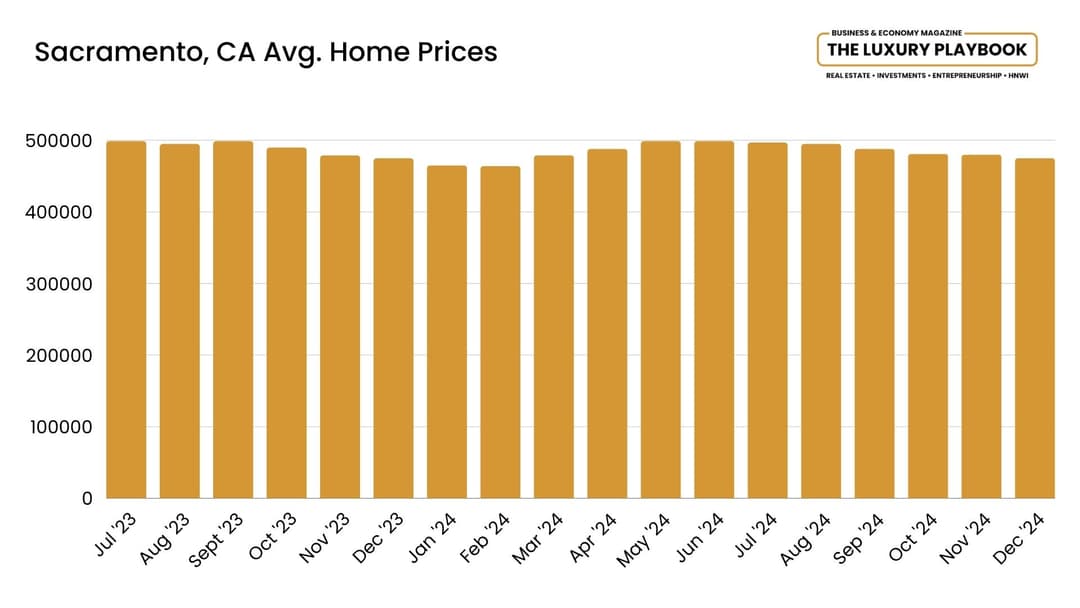
Sacramento's residential prices in 2026 cluster around a citywide median in the $475,000 range, with prime neighbourhoods like East Sacramento, Land Park, Curtis Park and the Fab 40s anchoring the higher per-square-foot bands. The wider city has absorbed a meaningful appreciation cycle since 2020, with the central and river-adjacent neighbourhoods pulling the headline numbers upward.
Realtor.com data through Q1 2026 places the citywide days-on-market figure in the mid-30s, with the prime band clearing in under three weeks for well-presented stock. Christie's International Real Estate's California affiliate reports strong interest from Bay Area owners across the past 18 months. The short-term and long-term ownership trade-offs in Sacramento favour the longer holding horizons.
The architectural texture and the named neighbourhoods
Sacramento's architectural depth is the city's defining commercial argument. The Victorian-era mansions of Boulevard Park and the Mansion Flats district, the Craftsman bungalow streets of Curtis Park and Land Park, the mid-century-modern stock across the Fab 40s and the contemporary infill across Midtown all read as coherent architectural conversations. The Sutter's Fort and Old Sacramento historic districts anchor the cultural register.
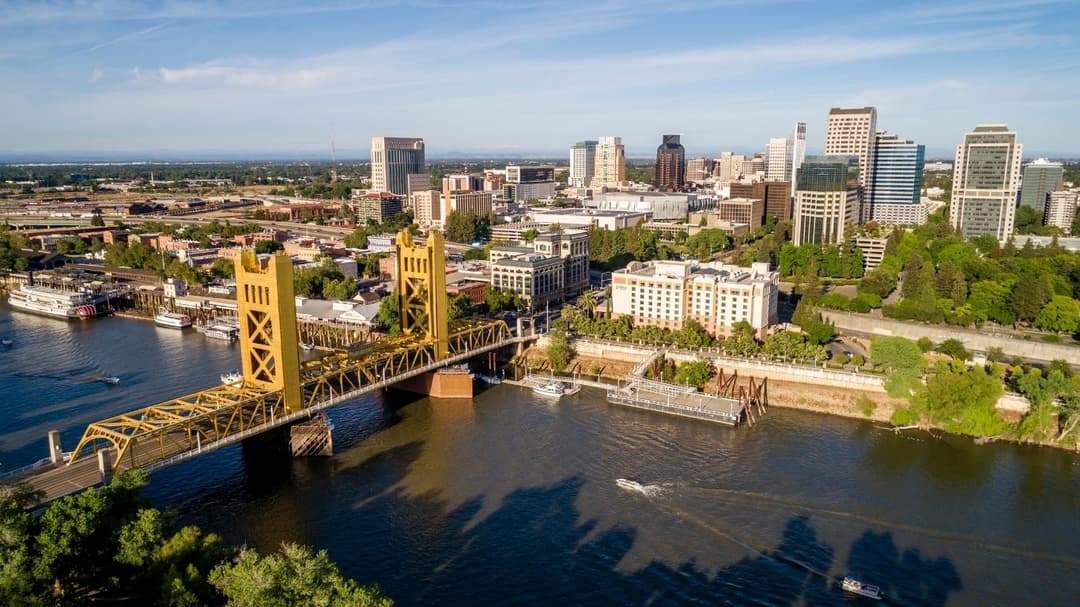
East Sacramento, particularly the Fab 40s (the streets numbered between 38th and 46th, running between J Street and Folsom Boulevard), is the city's clearest prime address. The Tudor and Spanish Revival mansions of the 1920s and 1930s constitute one of the more complete pre-war architectural ensembles surviving in Northern California. Land Park and Curtis Park hold the Craftsman-and-bungalow density at the next tier.
The architectural commissioning across the wider city has thickened. Sacramento-based practices like Studio Hatch, the Williams + Paddon Architects + Planners studio and the wider regional desks have built residential books that include serious restoration work. The contemporary infill in Midtown and East Sacramento has been deliberate.
The Capitol, the river and the cultural axis
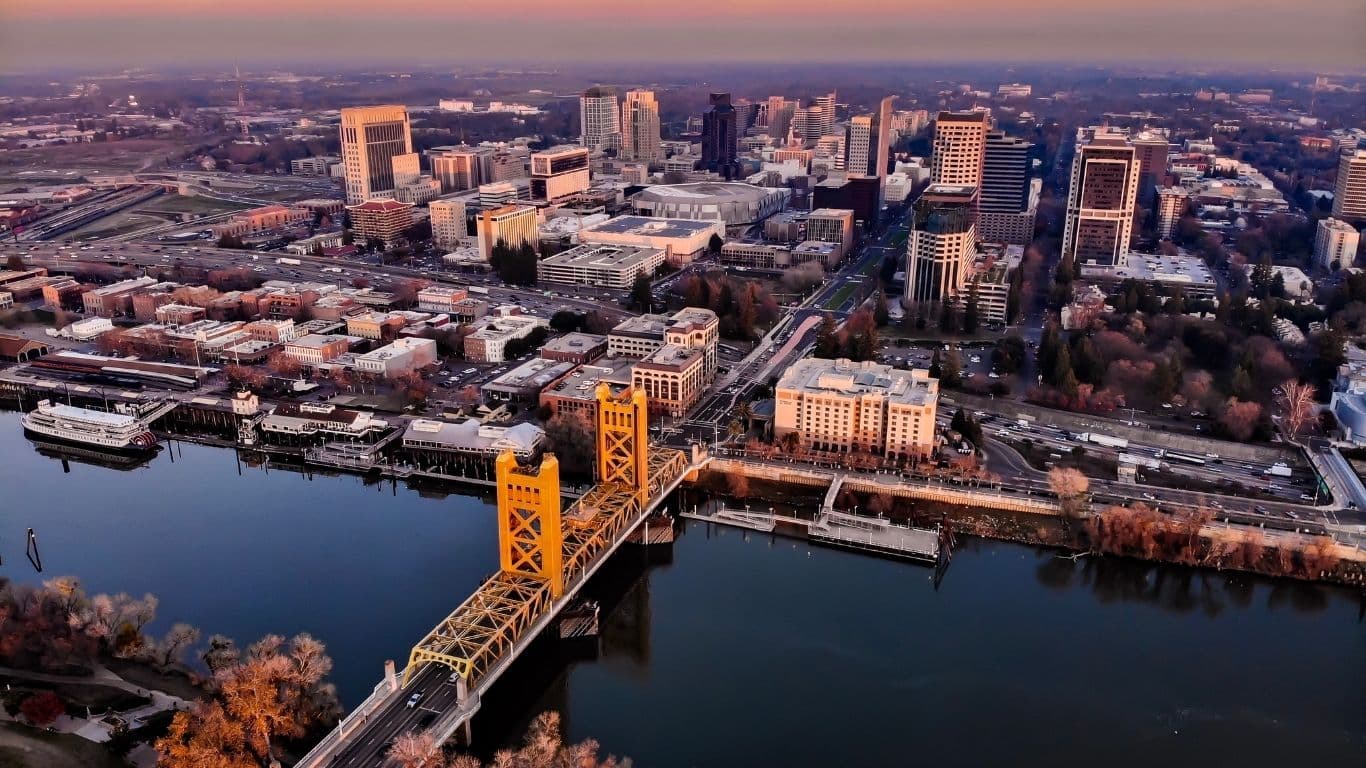
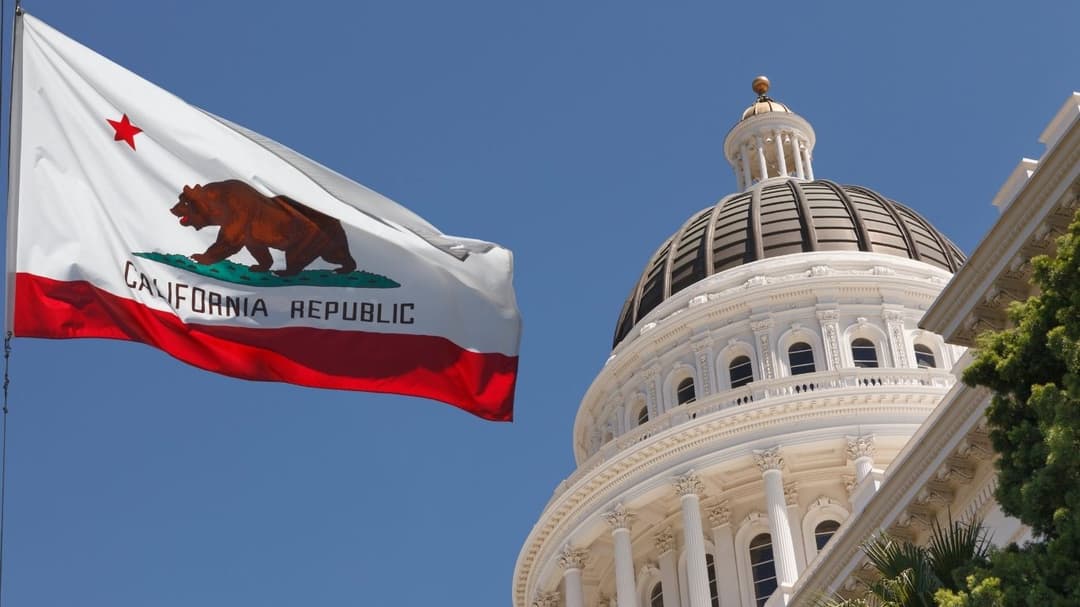
The California State Capitol and the surrounding government district anchor the city's identity. The Sacramento River and American River corridors, the Capitol Park (40 acres of botanical gardens surrounding the Capitol building) and the Crocker Art Museum (the oldest public art museum in the western United States) anchor the cultural infrastructure. The wider city has absorbed meaningful investment in the public-realm layer through 2024 and 2025.

The Midtown grid, with its tree-lined J Street and K Street axes, has become the city's clearest contemporary lifestyle district. The mid-block alleys, the converted warehouses and the dining scene along 19th, 20th and Capitol Avenue all anchor the contemporary urban texture. The Sacramento Republic FC stadium delivery in 2026 has reset the southern edge of the Midtown district.
The economic backdrop and the buyer field
Sacramento's economic structure is anchored by the state government, the University of California Davis Medical Center and the wider Sacramento State employment base. The agricultural-technology and life-sciences cluster has thickened through the past decade. The Bay Area adjacency has produced a structural commuter-and-relocation pattern.
The buyer field has rotated meaningfully across the past three years. Where the 2010s cycle saw mainly internal-California and regional Northern California buyers, the 2024-2025 wave has absorbed waves of Bay Area families, out-of-state remote workers and a meaningful international segment. The wider international buyer field across global prime markets has reached Sacramento through the broader West Coast pivot.
Days on market, rental and ownership balance
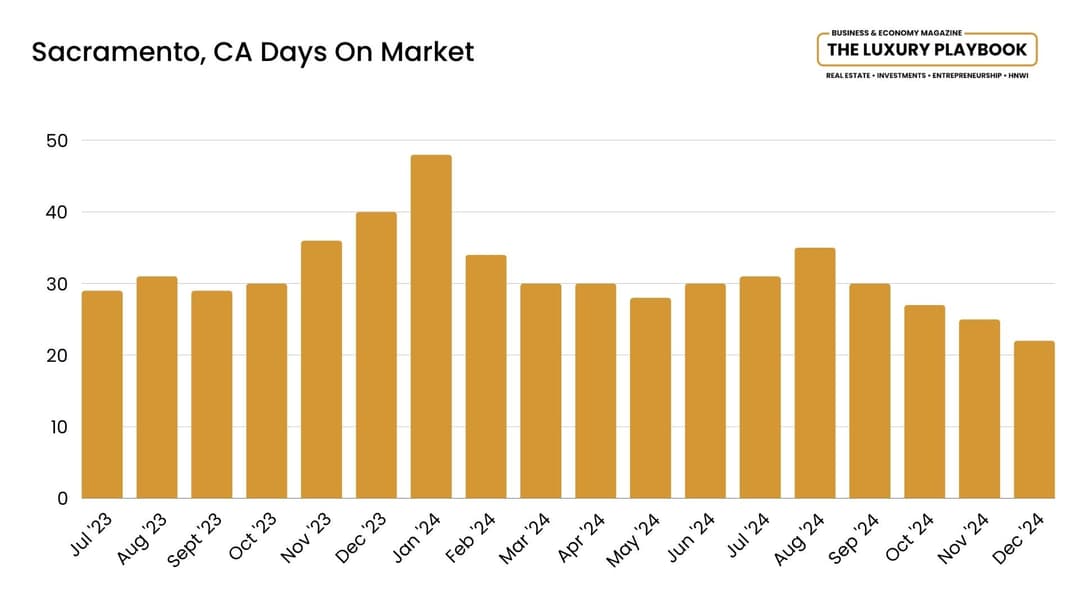
Average days on market in Sacramento has compressed across 2024 and 2025. The prime neighbourhoods clear in well under three weeks for well-presented stock, with East Sacramento and the Fab 40s running the fastest sale cycles. The wider city averages have held in the mid-30s.
The rental layer is active. Average rents in the prime neighbourhoods cluster between $2,200 and $4,200 per month for two-bedroom stock, with East Sacramento and Midtown anchoring the upper band.
The condominium-and-loft conversion in Midtown has continued through 2024 and 2025. The wider US ownership-vehicle landscape remains tractable for owners considering long-term Sacramento holdings.
The infrastructure and the school field
Sacramento's transport infrastructure is the city's main operational consideration. The Sacramento International Airport reaches major North American hubs cleanly. The Capitol Corridor commuter rail connects to the Bay Area via Davis and Berkeley.
The Sacramento Regional Transit light-rail covers the central districts. The independent school field includes the Sacramento Country Day School, Jesuit High School, St Francis High School and Sacramento Waldorf School. The UC Davis Medical Center and the Sutter Health network anchor the upper-tier healthcare layer.
What this means for buyers
For owners considering a Northern California address at a credible price point relative to the Bay Area, Sacramento in 2026 offers genuine architectural texture, a coherent cultural infrastructure and a buyer field that has rotated to include a meaningful out-of-state cohort. The price points sit well below comparable San Francisco or Palo Alto bands. The operational layer (schools, healthcare, transport) has matured.
The wider context for the city's pricing comes from the operational distinction between agencies and developers in the US market, which Sacramento's brokerage layer has navigated through the recent cycle. The Christie's International Real Estate, Sotheby's International Realty and Engel & Völkers desks all cover the city now.
For broader US property exposure, Sacramento sits as a credible Northern California prime conversation. For owners landing on the city in 2026, the work is choosing the neighbourhood (East Sacramento, Land Park, Curtis Park, Midtown, the Fab 40s) and committing to a multi-year holding horizon. We last reviewed this analysis in May 2026.


Savvas Agathangelou
Savvas Agathangelou co-founded The Luxury Playbook and has spent years reporting from the prime postcodes the magazine covers — Mayfair, Knightsbridge, the Athens Riviera, Dubai's Palm crescents, and the southern Mediterranean coastlines where the world's wealthy keep coming back. His background is in international hospitality, and that frame shapes how he writes about property: the developer's choices, the architect's signature, the agency's bench of named brokers, the building's service standard once the buyer moves in. He files developer spotlights, agency profiles, and the seasonal "Properties That Defined" listicles, and he hosts the magazine's founder-and-leadership interviews on the Voices side.