San Antonio’s real estate market in 2026 gives you something that’s increasingly hard to find in Texas — affordability, strong population growth, and real rental income potential all in one place. As the state keeps pulling in new residents from across the country, San Antonio stands out for its relatively low housing costs, a robust job market, and the kind of steady real estate performance that serious investors appreciate. Whether you’re buying your first investment property or adding to an existing portfolio, this city deserves your attention.
Stack San Antonio up against Austin or Dallas, and the difference is obvious. You get far more accessible entry points here — both for first-time buyers and for investors chasing strong rent-to-price ratios that those pricier metros simply can’t match.
The market is shifting. The aggressive appreciation of the pandemic years is behind us, and what’s emerging is actually more useful for long-term investors — moderate price growth, healthier inventory, and rising demand in specific neighborhoods that are quietly becoming some of the city’s most compelling opportunities.
Table of Contents
Overview of The San Antonio Housing Market
Through Q1 2026, the San Antonio housing market is settling into a steady normalization after years of breakneck growth. Prices are rising at a measured pace, and the city still offers some of the most affordable property values among major Texas metros. Population is climbing, inventory is improving, and buyer interest in suburban and transitional areas is picking up fast. For long-term investors and entry-level buyers, this is exactly the kind of environment where smart moves get made.
The median listing price in San Antonio sits at $297,000, up 0.5% year over year. The median sold price comes in around $290,000, which tells you homes are transacting close to asking. That’s a healthy, balanced market — one where neither buyers nor sellers are getting steamrolled in negotiations.

Inventory is trending in the right direction, with 4,658 active listings and roughly 1,309 new listings hitting the market in Q1 2026. Homes are spending an average of 58 days on the market, which gives you more breathing room than the frenzied buying conditions of the past few years. You can actually do your due diligence now.
Still, about 28.6% of homes are selling above listing price — so don’t mistake balance for weakness. Demand is holding firm in select neighborhoods and price brackets, and that competition is especially visible in anything under $350,000, where affordability keeps buyers hungry. understanding the 70% rule in real estate becomes particularly useful when you’re navigating these competitive sub-$350K deals.
The median price per square foot in San Antonio is $172, though that number moves around depending on location, property type, and construction age. Newer builds in Stone Oak and Alamo Ranch command higher per-square-foot premiums, while older homes in revitalizing areas like Southtown and West San Antonio stay more accessible — and often carry more upside.
Here’s what defines the San Antonio housing market right now. Affordability relative to other Texas metros. Balanced supply and demand. Rising inventory without oversupply. Consistent price appreciation in targeted neighborhoods. And a rental market that keeps performing for income-focused investors.
- Median home prices up 0.5% YoY
- Inventory improving with over 4,600 active listings
- Homes selling in approximately 58 days
- Nearly 29% of properties closing above asking
- Narrow gap between listing and selling prices
The bottom line for 2026 is that San Antonio offers a stable, affordable foundation for buyers and investors. Well-priced homes in the right neighborhoods are still drawing strong interest, and the value-driven segments of this market carry real long-term upside. Don’t overlook it.

Neighborhood Analysis
San Antonio’s neighborhoods span a wide range of price points, rental potential, and buyer profiles. That variety is actually one of the city’s biggest strengths — whether you’re running a fix-and-flip strategy, building a rental portfolio, or looking for a primary residence, you’ll find a submarket that fits. But you need to know where to look, because not all neighborhoods are created equal.
Downtown San Antonio
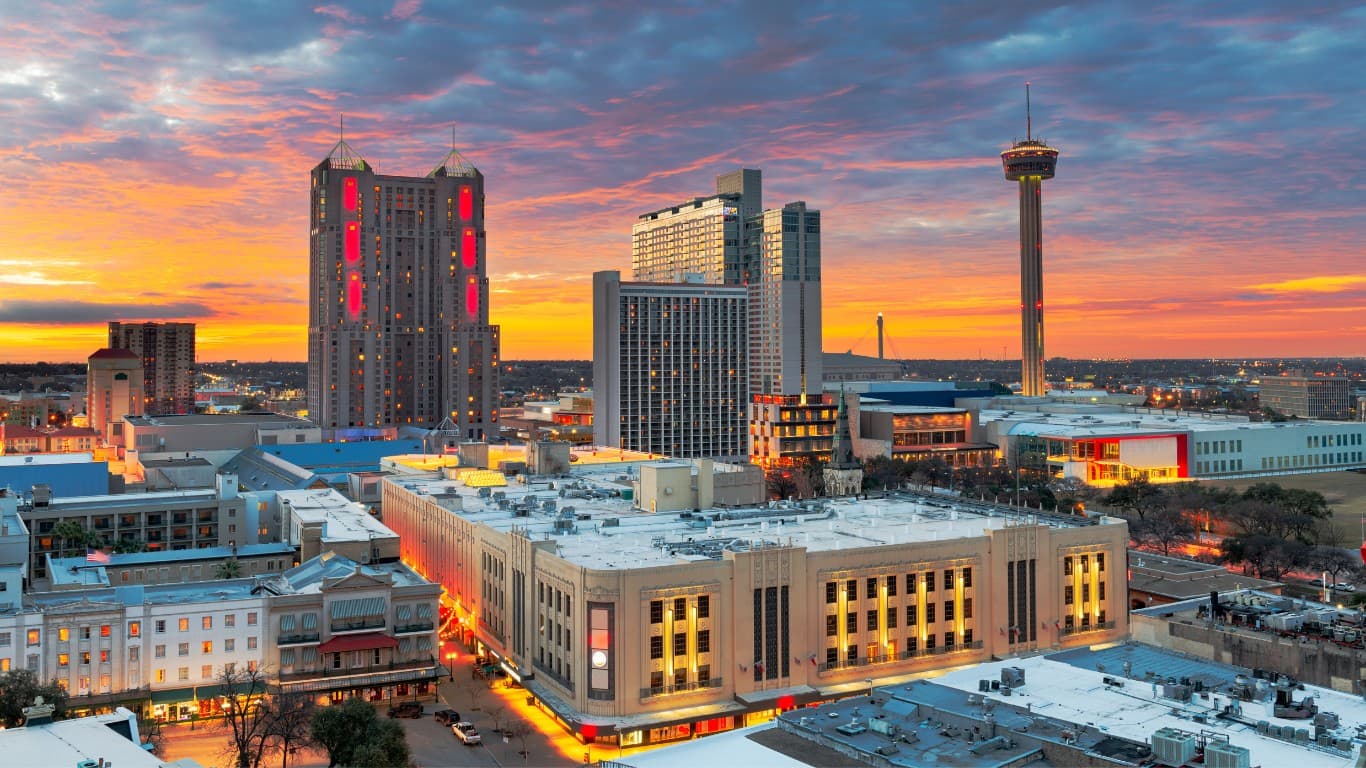
Downtown is the cultural and economic core of the city. The River Walk, historic landmarks, and a growing wave of modern condos and mixed-use developments make it a draw for both residents and tourists. For short-term rental investors, that tourism engine is a serious advantage.
The median home price here sits around $310,000, driven by demand from professionals and short-term rental investors who want proximity to attractions and convention venues. Appreciation runs slower than in some outer neighborhoods, but the centrality and tourism-based rental income potential make downtown a reliable, lower-volatility play. As Robb Report has noted, urban core properties in growing Sun Belt cities tend to hold value exceptionally well through market cycles.
Alamo Heights
Alamo Heights brings historic charm, top-tier schools, and tree-lined streets together in a way that very few San Antonio neighborhoods can match. It’s one of the city’s most prestigious addresses, and the demand reflects that.
The median home price stands at $450,000, backed by strong buyer interest from affluent families and long-term residents. Inventory stays tight by design — this is an established, in-demand district — and the Alamo Heights Independent School District keeps pulling buyers in year after year. Appreciation here is steady rather than explosive, but the wealth preservation story is compelling.
Stone Oak
Head north and you’ll find Stone Oak, a popular suburban destination built around gated communities, retail centers, and consistently high-rated schools. It’s the kind of neighborhood that upper-middle-class buyers gravitate toward when they want newer construction with space, safety, and convenience wrapped into one.
With a median home price of $350,000, Stone Oak attracts buyers who prioritize lifestyle alongside investment value. The area has posted consistent year-over-year price growth, and its position as one of the fastest-growing residential zones in the city shows no signs of reversing.
Southtown
Southtown sits right next to downtown, but feels like a world of its own. It’s a revitalized arts district with a strong mix of historic homes, eclectic culture, and genuine walkability. Buyers and renters who want urban energy without full downtown density tend to land here.
The median home price comes in around $275,000, which gives you one of the best value propositions near the urban core anywhere in San Antonio. Investors are paying close attention to Southtown right now, targeting both long-term appreciation plays and high-performing rental units.
West San Antonio
West San Antonio has spent years flying under the radar, but infrastructure investment is changing that story fast. The affordability that once made it an afterthought is now making it one of the more interesting opportunities in the city.
At a median home price of around $240,000, West San Antonio is one of the most accessible submarkets you’ll find anywhere in a major Texas metro. Entry-level buyers and cash-flow-focused investors are both moving in, and with new commercial development actively underway, the appreciation potential over the next several years is real. investing in real estate in growth markets like this one can deliver outsized returns when you get in ahead of the momentum shift.
Neighborhood Median Prices and Price per SqFt
| Neighborhood | Median Listing Price | Price per SqFt |
|---|---|---|
| Downtown | $310,000 | $265 |
| Alamo Heights | $450,000 | $310 |
| Stone Oak | $350,000 | $215 |
| Southtown | $275,000 | $230 |
| West San Antonio | $240,000 | $185 |
| Tobin Hill | $295,000 | $248 |
| Alamo Ranch | $325,000 | $205 |
| Northeast Crossing | $265,000 | $190 |
| Terrell Hills | $525,000 | $315 |
| Harlandale | $220,000 | $175 |
San Antonio Rental Market Overview
San Antonio’s rental market is performing well heading into 2026. Steady population growth, a cost-of-living advantage over other major Texas metros, and sustained demand from students, military personnel, and young professionals are all keeping rental conditions favorable for landlords.
With home prices and interest rates still limiting access to ownership for a meaningful portion of residents, rental properties are seeing high occupancy and upward pressure on rents. That dynamic isn’t going away anytime soon.
Average Rent Prices in San Antonio
As of Q1 2026, the average rent for apartments in San Antonio runs about $1,600 per month — roughly 11% below the national average. That gap is a feature, not a flaw. It’s exactly why the city keeps attracting new residents and why your rental units stay occupied. Bloomberg’s real estate coverage has consistently flagged affordable Sun Belt metros like San Antonio as top performers for rental yield stability.
- Studio Apartments: Average rent is around $1,000/month
- One-Bedroom Apartments: Approximately $1,106/month
- Two-Bedroom Apartments: About $1,392/month
- Three-Bedroom Apartments: Roughly $1,725/month

Rent growth has been modest but consistent. One-bedroom apartments posted a 6% year-over-year increase, while two-bedrooms moved up by about 3%. Investors focused on cash flow are finding steady success with mid-market rental units, especially in neighborhoods that offer strong job access and public transportation options.
Rent by Neighborhood
- Tobin Hill & Midtown: Rapid rent appreciation continues, with studio units averaging $1,878/month, up 109% year-over-year. These areas are seeing significant developer interest due to their walkability and central location.
- Far North Central & Vance Jackson: Studio rents average around $1,499/month, supported by strong employment hubs and modern apartment complexes.
- Downtown San Antonio: Surprisingly affordable, with one-bedroom units averaging just $835/month, making it appealing to students and entry-level professionals.
Vacancy Rates and Market Trends
San Antonio’s rental vacancy rate currently sits at 7.2%, down from 10% in 2022. Yes, that’s still above the national average of 5.8% — but the direction of travel matters. The market is tightening, driven by elevated mortgage rates pushing more residents into the renter pool rather than the buyer pool.
The key drivers keeping this rental market strong include steady military population demand from Joint Base San Antonio, a growing young professional workforce drawn by the healthcare and tech sectors, ongoing in-migration from higher-cost states, and affordable rent levels that attract and retain tenants even in softer economic conditions.
- Delayed homeownership due to interest rate affordability constraints
- Ongoing in-migration from more expensive metros like Austin and California cities
- Military demand from nearby Joint Base San Antonio and transient professionals
Investor appetite for Class B and C multifamily assets stays high, and for good reason. The renovation potential and affordability of these properties align well with what renters in San Antonio actually want and can afford. Neighborhoods like West San Antonio, Southtown, and Northeast Crossing are delivering solid yields and reliable tenant occupancy right now.

Factors Influencing the San Antonio Housing Market
Several forces are shaping how San Antonio’s housing market moves in 2026. Demographics, economic conditions, and local regulatory dynamics are all feeding into buyer activity, rental demand, pricing behavior, and the city’s long-term investment appeal. Understanding these forces is how you stay ahead of the market rather than reacting to it.
- Population Growth: San Antonio is one of the fastest-growing cities in the United States. Projections estimate the addition of 80,000 new households by 2026, largely driven by in-migration from other parts of Texas and out-of-state buyers seeking affordability. This sustained population increase is fueling both homebuyer demand and pressure on rental inventory.
- Economic Expansion: The local economy continues to diversify, with strength in healthcare, military, manufacturing, cybersecurity, and logistics. Employers such as USAA, H-E-B, Joint Base San Antonio, and Toyota create job stability and drive housing demand, especially in areas with strong commuter access.
- Inventory Growth: Active listings are up 15% year-over-year, giving buyers more choices and reducing the bidding pressure that dominated earlier market cycles. New developments are being launched in suburban areas like Alamo Ranch and Far West San Antonio, helping to address supply shortages in the $250K–$350K range.
- High Mortgage Rates: With 30-year mortgage rates hovering between 6.5% and 7%, many potential buyers have been priced out of the market or delayed purchases. This has increased rental demand and also provided leverage for cash and investor buyers who can navigate the financing landscape more competitively.
- Affordability Advantage: San Antonio remains one of the most affordable large metros in Texas. The median home price of $297,000 is well below Austin and Dallas, attracting first-time buyers and investors looking for strong rent-to-price ratios and capital appreciation in emerging neighborhoods.
- Urban Redevelopment and Infrastructure: Investment in roadways, parks, and public transportation is enhancing the appeal of formerly overlooked areas like Southtown, Harlandale, and parts of East San Antonio. These improvements are drawing both developers and early-stage investors looking for long-term growth opportunities.
- Military Demand Stability: Joint Base San Antonio, one of the largest military bases in the U.S., continues to provide stable housing demand. Both rental and purchase activity in nearby zones remain consistent year-round, creating a dependable market for landlords and real estate operators.
San Antonio Housing Market Forecast for 2026
Looking at the road ahead, San Antonio’s housing market is set up for stable, moderate growth through 2026 and beyond. National economic conditions and mortgage rates will always have some influence, but the local story here — affordability, strong in-migration, and constrained inventory — is powerful enough to support continued price appreciation and rental demand across the metro area.
Home prices in San Antonio are forecast to rise by 2.5% to 4.5% over the next 12 months. Starting from the current median of $297,000, that puts projected prices in the $304,425 to $310,365 range by early 2027. Not explosive — but reliable, and reliability is exactly what serious investors want in a hold strategy. According to Forbes Real Estate, steady appreciation markets like San Antonio tend to outperform boom-and-bust metros over a 10-year holding period.
The strongest gains are likely to come from West San Antonio, Southtown, and Northeast Crossing, where infrastructure improvements and entry-level pricing are pulling in a steady flow of buyers. Alamo Ranch and Stone Oak will stay competitive, though price growth in those already-established areas will probably be more measured.
Homes under $350,000 will stay the most active and fiercely competitive segment of the market. If that’s your target range, expect to move quickly and come prepared.
Inventory is expected to stay tight through 2026. New listings have improved over the past year, but construction simply hasn’t kept pace with demand. Builders are active on the outer suburban fringes, but supply in central and established neighborhoods stays limited — and that scarcity is one of the core reasons values are holding up.
Average days on market should stay in the 55 to 65 day range, with competitively priced homes in high-demand zones continuing to move faster. Overall conditions should stay balanced, with moments of seller leverage popping up in submarkets where price constraints and high absorption rates converge. Applying the 70% rule can help you stay disciplined on price in these tighter pockets.
San Antonio’s rental market is positioned for additional strength through 2026. Average rents are forecast to grow by 4% to 6%, fueled by delayed homeownership trends, ongoing in-migration, and investor demand for stable rental yields. At the current average of $1,600 per month, that means rents could climb to between $1,664 and $1,696 by early 2027. The biggest increases will likely show up in Class B and C inventory, where affordability and location keep occupancy rates high.
Neighborhoods like Tobin Hill, Midtown, South San Antonio, and Harlandale will keep delivering strong cash flow for landlords. Meanwhile, newer developments in the north and northwest will stay popular with mid- to high-income tenants who want modern amenities without downtown pricing.
Vacancy rates are expected to ease from 7.2% down to around 6.5%. That tightening improves income predictability for property owners and gives you better pricing power when renewing leases or bringing new units to market.
Population growth in the region is forecast to stay robust, supported by job creation across healthcare, logistics, education, and the military sector. The projected addition of 80,000 new households by 2026 means ongoing housing demand across both the for-sale and rental segments. That’s not a short-term spike — it’s a sustained demand story. The Financial Times has highlighted Sun Belt metros as the primary beneficiaries of America’s long-term demographic shift southward.
And if interest rates ease later in 2026 or into 2027, buyer demand could accelerate fast — especially among first-time homebuyers who’ve been sitting on the sidelines for the past several quarters. That pent-up demand is a tailwind worth building your strategy around.

Is It Worth Buying A Property In San Antonio?
The short answer is yes. Buying property in San Antonio in 2026 is a smart, strategic move for both investors and owner-occupants. With a median home price of $297,000, you’re getting a rare combination of affordability, income potential, and long-term appreciation inside a major metropolitan area. That combination is getting harder to find anywhere in the country.
For real estate investors, the numbers are genuinely compelling. Gross rental yields in key submarkets like West San Antonio, Southtown, and Harlandale are running between 6% and 8%. You get stable tenant demand, relatively low entry costs, and consistent cash flow — exactly what makes single-family and small multifamily investments work over the long haul.
Owner-occupants get the benefit of lower purchase prices compared to Austin or Dallas, without sacrificing quality of life. The job market is expanding, schools in areas like Stone Oak and Alamo Heights are strong, and the city offers the kind of livability that attracts and retains residents for decades.
Texas has no state income tax, and San Antonio’s property tax environment and pro-investor regulations add another layer of financial efficiency to the equation. For landlords and buyers focused on portfolio growth, that regulatory backdrop matters more than most people realize. You can explore how this stacks up globally by looking at how property taxes work in other markets like Greece for perspective on what a favorable tax environment actually looks like.
Vacancy rates are falling, rents are rising, and new infrastructure is lifting property values in transitioning neighborhoods. The timing is favorable right now — both for buy-and-hold investors and for those positioning to capture appreciation as underserved areas of the city come into their own.
Other Market Forecasts & Overviews
New York City Real Estate Market Overview & Forecast
Chicago Real Estate Market Overview & Forecast
Phoenix Real Estate Market Overview & Forecast
Dallas Real Estate Market Overview & Forecast
Jacksonville Real Estate Market Overview & Forecast
Columbus Real Estate Market Overview & Forecast
Indianapolis Real Estate Market Overview & Forecast
Seattle Real Estate Market Overview & Forecast
Oklahoma Real Estate Market Overview & Forecast
Los Angeles Real Estate Market Overview & Forecast
Houston Real Estate Market Overview & Forecast
Philadelphia Real Estate Market Overview & Forecast
San Diego Real Estate Market Overview & Forecast
Austin Real Estate Market Overview & Forecast
San Jose Real Estate Market Overview & Forecast
Charlotte Real Estate Market Overview & Forecast
San Francisco Real Estate Market Overview & Forecast
Denver Real Estate Market Overview & Forecast
Nashville Real Estate Market Overview & Forecast
FAQ
Are home prices in San Antonio expected to rise in 2026?
Yes. Prices are projected to increase by 2.5% to 4.5%, reaching an estimated range of $304,425 to $310,365 by early 2026.
Is San Antonio a good city for real estate investment?
Absolutely. With strong rental yields, low entry prices, and steady population growth, San Antonio offers consistent opportunities for both cash flow and long-term appreciation.
Which neighborhoods offer the best ROI for investors?
High-performing investment areas include West San Antonio, Southtown, Tobin Hill, and Harlandale, due to their affordability, rental demand, and revitalization potential.
Are rents expected to increase?
Yes. Rents are projected to rise by 4% to 6% in 2026, supported by low vacancy, limited new supply, and strong in-migration.
How long does it take to sell a home in San Antonio?
On average, homes spend 58 days on the market, although competitively priced listings in desirable neighborhoods often sell more quickly.