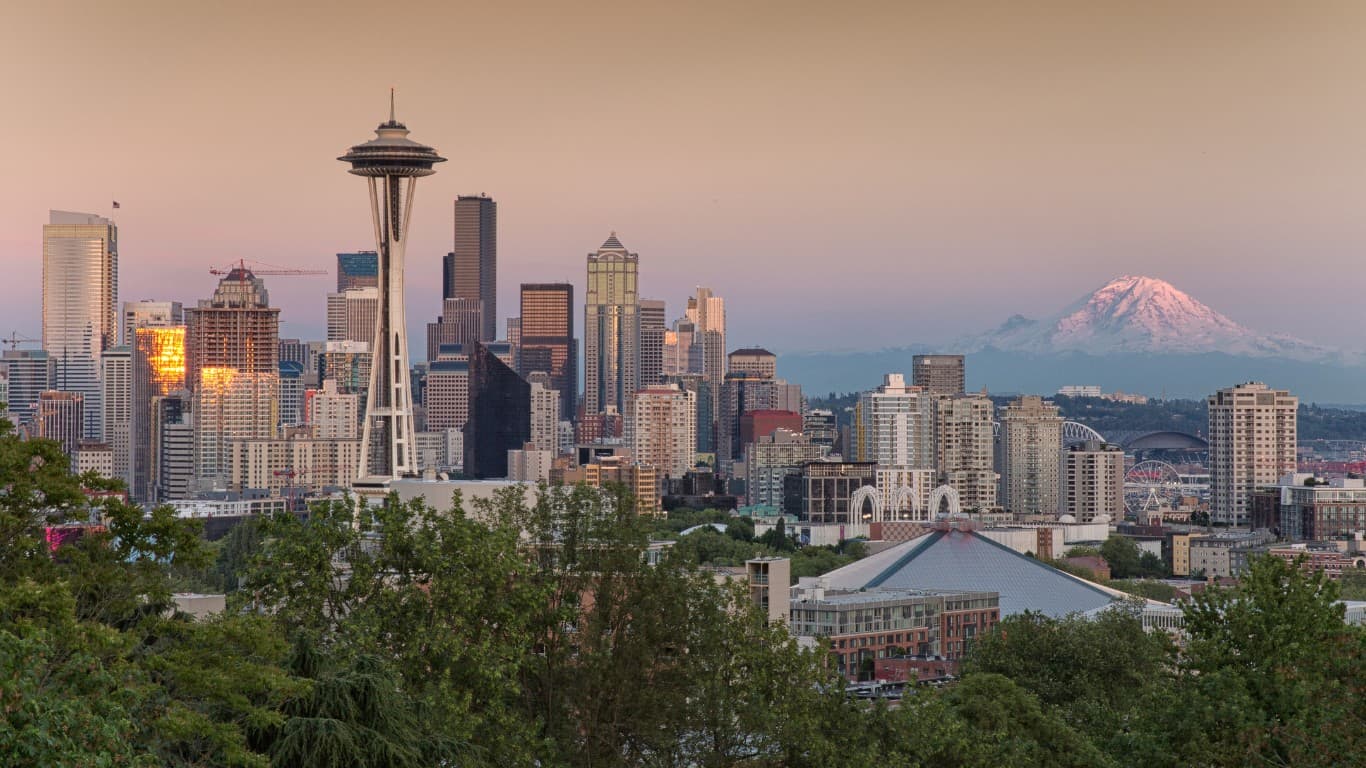
The 2026 Seattle real estate market is one of the most influential housing markets on the West Coast, driven by strong economic fundamentals, tech-sector resilience and a stubbornly constrained housing supply. The median home price sits at $885,000, up 3. 6 percent year-on-year, with the prime Madison Park, Mercer Island and Bellevue corridors trading materially higher.
Knight Frank's 2026 US Cities Prime Index flags Seattle as a top-tier West Coast prime market.
The Northwest Multiple Listing Service data, alongside the brokerages tracking the prime side (Compass, Realogics Sotheby's International Realty, Windermere Real Estate, Coldwell Banker Bain), describes a market that has worked through the post-2022 rate adjustment and is now showing renewed strength. Mansion Global has profiled the Seattle prime corridor as one of the cleanest US tech-anchored recoveries.
The broader context for high-end activity sits in our coverage of the rise summit programming and our analysis of particularly in established areas where luxury pricing is already pushing limits.
This analysis covers: Overview of The Seattle Housing Market | Neighborhood Analysis | Seattle Rental Market Overview | Factors Influencing the Seattle Housing Market | Seattle Housing Market Forecast for 2026 | Is It Worth Buying a Property in Seattle? | FAQ.
- Seattle continues to benefit from the Microsoft, Amazon and broader tech sector employment base, with population growth supporting steady housing demand despite the recent layoff cycles.
- We see median prices having stabilised after the pandemic-era appreciation, with the market now settling into a more sustainable growth trajectory across most submarkets.
- Madison Park, Madrona, Capitol Hill and the broader Eastside including Bellevue and Medina continue to anchor the upper end of the regional market.
- Inventory has improved through 2025 and 2026, with months-of-supply moving toward balanced conditions and giving buyers more negotiating leverage than in recent years.
- Washington state imposes no state income tax but applies a graduated real estate excise tax on transfers, with the top tier reaching three percent on the highest-priced sales.
- For most considered buyers we view Seattle as a structurally attractive long-term hold given the tech employment base and the broader Pacific Northwest demand tailwinds.
- Who is this for?
- Buyers and investors evaluating Seattle property, alongside relocation clients, technology professionals and the brokers, lenders and advisers supporting Greater Seattle transactions.
- What is happening?
- A market overview and 2026 forecast for the Seattle real estate market, covering price levels, inventory dynamics, tech sector employment and the Washington real estate excise tax considerations.
- When did this emerge?
- The article covers conditions through 2025 and 2026, with reference to the post-pandemic inventory cycle and the latest Microsoft, Amazon and broader tech sector employment trends.
- Where is this happening?
- The piece focuses on the Seattle metropolitan area, including Madison Park, Madrona, Capitol Hill, Bellevue, Medina and the broader King County submarket landscape.
- Why does it matter?
- Seattle offers structural Pacific Northwest tech sector support in 2026, which is why understanding both the demand drivers and the real estate excise tax matters for buyers here.
Overview of The Seattle Housing Market
Seattle enters 2026 with a property market that has stabilized through the rate cycle while maintaining strong absorption in the prime tier. Constrained housing supply, partly through local zoning and partly through the structural geography, sustains pricing pressure.
Anchor employment at Microsoft, Amazon, Costco, Boeing, plus the broader Puget Sound tech ecosystem, anchors the demand floor. Redfin’s latest Seattle market data confirms strong year-on-year price growth across the metro.

Days on market average 24, among the fastest in the country. The sale-to-list ratio of 100. 8 percent confirms that homes regularly clear above asking, particularly in the prime corridor.
Cash-buyer share above $2M consistently clears 40 percent.
Realtor.com's 2026 absorption tables place Seattle in the top ten large-metro buyer activity rankings. Zillow’s Seattle home value tracker shows the metro running materially above the national average for year-on-year growth through Q1 2026.
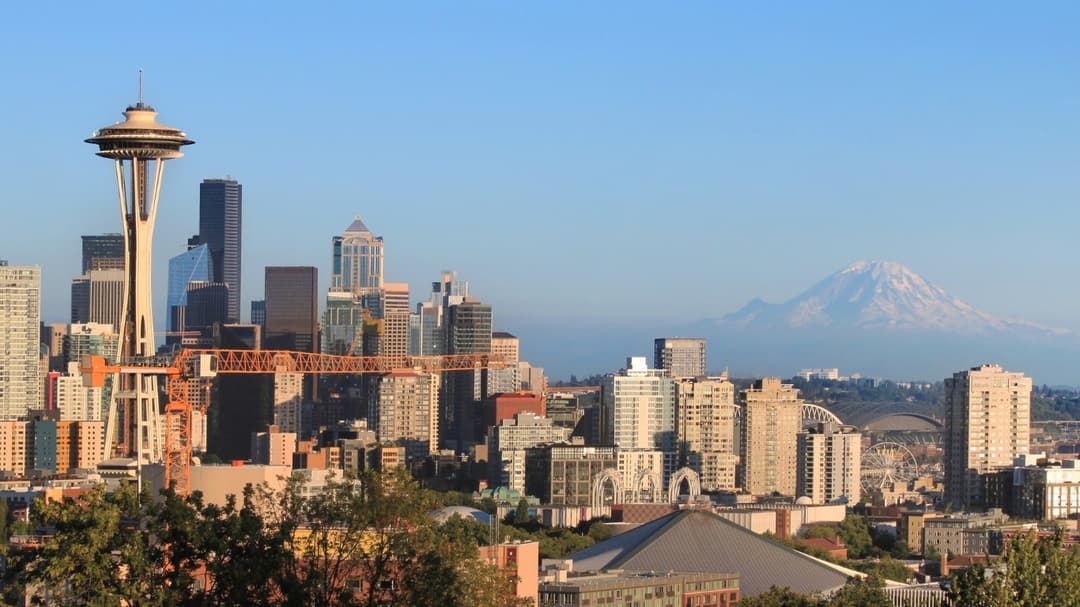
Key Market Indicators, Q1 2026
- Median Sale Price: $885,000 (up 3.6 percent YoY)
- Price per Sq Ft: $545
- Days on Market: 24 days
- Sale-to-List Ratio: 100.8 percent
- Cash-Buyer Share above $2M: ~40 percent
The structural supply constraint and the deep tech-sector employment base give Seattle one of the most resilient large-metro prime tiers in the country. Whether waterfront living is part of your investment thesis, the Lake Washington and Puget Sound waterfront corridors warrant a closer look.
Neighborhood Analysis
Seattle operates as several distinct submarkets stacked across the Puget Sound metro footprint. The prime Madison Park, Mercer Island and Bellevue corridors anchor the high end, while the design-driven Capitol Hill and Ballard stories carry the mid-market. The brokers tracking the prime side flag five neighborhoods carrying the citywide narrative.
Madison Park
Madison Park remains the city's most coveted urban prime address. Median home prices sit at $2. 85 million, up 4.
4 percent year-on-year. Lake Washington frontage, mature trees and proximity to downtown anchor demand. Compass and Realogics Sotheby's track Madison Park as the most stable prime Seattle submarket.
Mercer Island
Mercer Island, the island community in Lake Washington between Seattle and Bellevue, runs similarly tight. Median home prices clear $2. 95 million, up 4.
2 percent year-on-year. Strong public schools, lake access and the I-90 commute corridor sustain demand.
Bellevue
Bellevue, the affluent eastern suburb across Lake Washington, has been the city's most consistent tech-anchored prime tier. Median home prices clear $2.45 million, with the trophy stock on Yarrow Point and Hunts Point regularly trading above $10M. Christie's International Real Estate publishes the cleanest segment data.
Queen Anne
Queen Anne, the urban hilltop corridor with downtown and Space Needle views, anchors the city's strongest mid-prime tier. Median home prices sit at $1. 55 million, up 3.
8 percent year-on-year. The combination of mid-century housing stock, walkable retail and downtown proximity sustains demand.
Ballard
Ballard, the Scandinavian-heritage walkable neighborhood in the northwest, anchors the design-driven gentrification story. Median home prices sit at $895,000, up 4. 6 percent year-on-year.
Restored craftsman and bungalow stock dominates, with the buyer profile skewing toward design-oriented professionals and tech employees.

Seattle Rental Market Overview
The Seattle rental market remains one of the tightest large-metro stories on the West Coast. Average rent across the metro sits at $2,295 per month, up 4. 1 percent year-on-year.
One-bedrooms in the prime urban corridors lease between $2,200 and $2,900.
Vacancy stands at 4.4 percent. The institutional rental segment continues to expand, with South Lake Union and downtown carrying the bulk of new delivery. The Wall Street Journal’s real estate desk has profiled Seattle rental dynamics as among the more disciplined US tech-corridor stories.
Average Rent Prices
- Studio Apartments: Approximately $1,695 per month
- One-Bedroom Apartments: Around $2,195 per month
- Two-Bedroom Apartments: About $2,995 per month
- Three-Bedroom Apartments: Approximately $3,995 per month
South Lake Union, downtown and Ballard carry the tightest rental absorption. JLL's 2026 West Coast Multifamily Outlook flags Seattle as one of the more resilient large-metro rental markets through the second half of the decade.

Factors Influencing the Seattle Housing Market
Three structural forces drive Seattle demand. The tech-sector employment base (Microsoft, Amazon, plus the broader Puget Sound tech ecosystem) sustains the structural demand floor. Constrained supply through local zoning and the structural geography keeps absorption tight.
International capital inflow, particularly from East Asia, sustains the prime trophy-tier demand on Mercer Island, Bellevue and Madison Park.
The AI cycle has compounded employment-driven demand. Microsoft's OpenAI investments, Amazon Web Services' generative-AI build-out, and the broader Puget Sound AI ecosystem sustain the inbound talent flow. The comparison with peer markets like the Dallas real estate market shows Seattle outpacing on prime-tier absorption.
Mortgage rates in the 6.5 to 7 percent range continue to compress the first-time buyer segment but not the prime tier, where cash-buyer share above $2M regularly clears 40 percent. RSU vesting and stock-grant liquidity events continue to sustain the tech-corridor demand at all price tiers. the right questions when hiring a real estate agent becomes particularly important in a fast-absorption market like this.
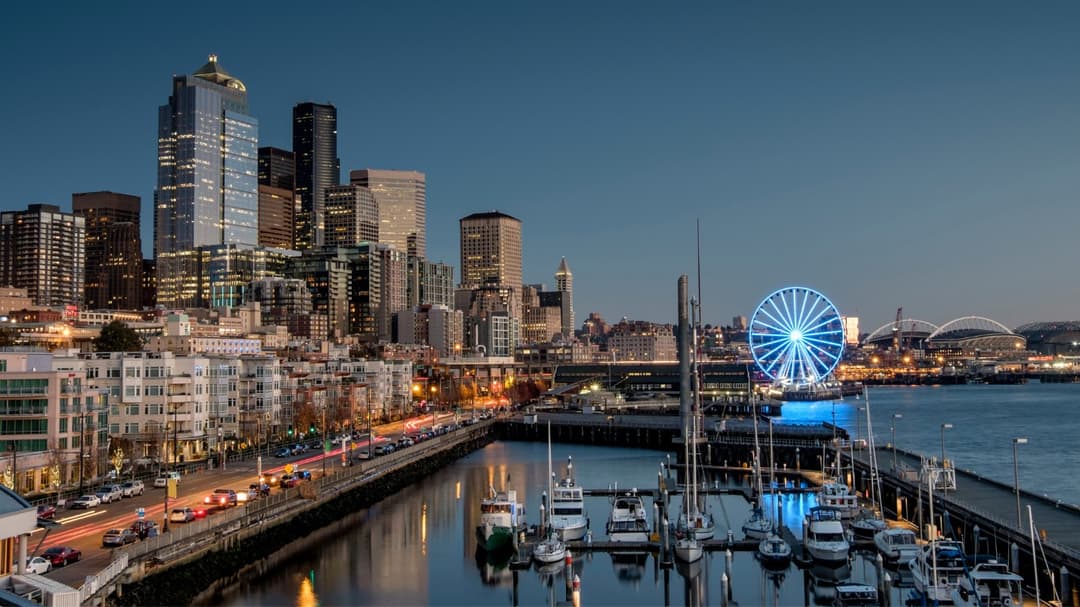
Lifestyle and infrastructure matter too. The Sound Transit Link expansion, the South Lake Union build-out and the broader transit modernization continue to reshape buyer attention across the metro.
Seattle Housing Market Forecast for 2026
The Seattle 2026 outlook is constructive. Home prices are projected to rise 3.5 to 5 percent through 2026, with the strongest gains in the prime corridor (Madison Park, Mercer Island, Bellevue) and the design-driven mid-market (Ballard, Queen Anne, Capitol Hill).
Rents are forecast to climb 4 to 5 percent across the metro. The structural supply constraint and the AI-cycle employment lift will continue to sustain pricing pressure.
Is It Worth Buying a Property in Seattle?
For long-tenure buyers, particularly those in the tech-corridor employment base, yes. The structural tailwinds (Microsoft, Amazon, AI-cycle expansion, supply constraint, cash-buyer share above 40 percent in the prime tier) sustain price stability. Seattle's prime corridor reads as one of the most resilient US large-metro segments.
For shorter-horizon buyers, the picture is more nuanced. The 2022 correction was real but modest. The post-correction floor reads as stable rather than accelerating in the sub-$1M segment.
We last reviewed this analysis in May 2026.
FAQ
Is Seattle a good real estate market in 2026?
Yes, particularly in the prime tier. The cash-buyer share above $2M regularly exceeds 40 percent, the AI-cycle employment lift sustains tech-corridor demand, and prime corridor absorption has improved materially through Q1 2026. Knight Frank flags Seattle as a top-tier West Coast prime market.
Which Seattle neighborhoods are appreciating fastest?
Ballard leads the citywide rate at 4. 6 percent, followed by Madison Park and Mercer Island at 4. 2 to 4.
4 percent. Bellevue anchors the eastern-suburb prime tier per Compass and Realogics Sotheby's International Realty.
How does Seattle compare to other West Coast markets?
Seattle has lower median sale prices than San Francisco or San Jose, with comparable tech-sector depth and slightly faster absorption. The Bellevue and Mercer Island corridors trade as a distinct premium tier driven by school catchments and lake frontage.
How tight is Seattle inventory in 2026?
Days-on-market at 24 ranks among the fastest in the country. Sale-to-list ratios above 100 percent confirm that homes regularly clear above asking, particularly in the prime corridor. Cash-buyer share above $2M consistently clears 40 percent.


Savvas Agathangelou
Savvas Agathangelou co-founded The Luxury Playbook and has spent years reporting from the prime postcodes the magazine covers — Mayfair, Knightsbridge, the Athens Riviera, Dubai's Palm crescents, and the southern Mediterranean coastlines where the world's wealthy keep coming back. His background is in international hospitality, and that frame shapes how he writes about property: the developer's choices, the architect's signature, the agency's bench of named brokers, the building's service standard once the buyer moves in. He files developer spotlights, agency profiles, and the seasonal "Properties That Defined" listicles, and he hosts the magazine's founder-and-leadership interviews on the Voices side.