Spain's prime property markets in 2026 are doing more interesting work than at any point since the early 2000s. Madrid has reasserted itself as Europe's fastest-rising prime city, Marbella has matured, and the Balearic Islands have become genuinely contested terrain. Knight Frank's 2025 European Wealth Report ranked Madrid among the top three European prime markets for capital growth in the previous twelve months, with the Balearic Islands the most-asked-about second-home geography in continental Europe.
Barcelona is doing its own thing despite the city's tourism-management policy turbulence. Below, the addresses that hold.
- The most coveted Spanish property markets in 2026 span Madrid, Barcelona, Marbella, Mallorca, Ibiza and the major Andalusian and Costa del Sol enclaves.
- We see Madrid offering the strongest combination of liquidity and appreciation in the urban prime segment, with La Moraleja and Salamanca at the upper end.
- Marbella, particularly the Golden Mile, Sierra Blanca and La Zagaleta, anchors the Costa del Sol prime segment with international buyer dominance.
- Mallorca and Ibiza continue to attract sustained international interest, with Knight Frank Spain reports placing prime stock at competitive Mediterranean benchmarks.
- The Beckham Law and the broader tax framework for new tax residents continue to support international relocation flows across the major Spanish markets.
- For most considered Spanish buyers we view market selection as primarily driven by lifestyle priorities and access patterns rather than abstract investment metrics alone.
- Who is this for?
- International buyers evaluating Spanish prime markets, alongside the advisers, brokers and family office staff framing those decisions across the urban and coastal complex.
- What is happening?
- A read of Spain's most coveted property markets in 2026, covering Madrid, Barcelona, Marbella, Mallorca, Ibiza and the broader Andalusian and Costa del Sol enclaves.
- When did this emerge?
- The article reflects 2026 market conditions through INE, Idealista, Knight Frank Spain and Savills Spain data alongside our observations.
- Where is this happening?
- The piece covers Spain broadly, including Madrid, Barcelona, Marbella, Mallorca, Ibiza and the major Andalusian and Costa del Sol enclaves.
- Why does it matter?
- Spanish market selection determines the universe of available opportunities, which is why upfront discipline pays back across every subsequent property-level decision.
Madrid and the Salamanca district
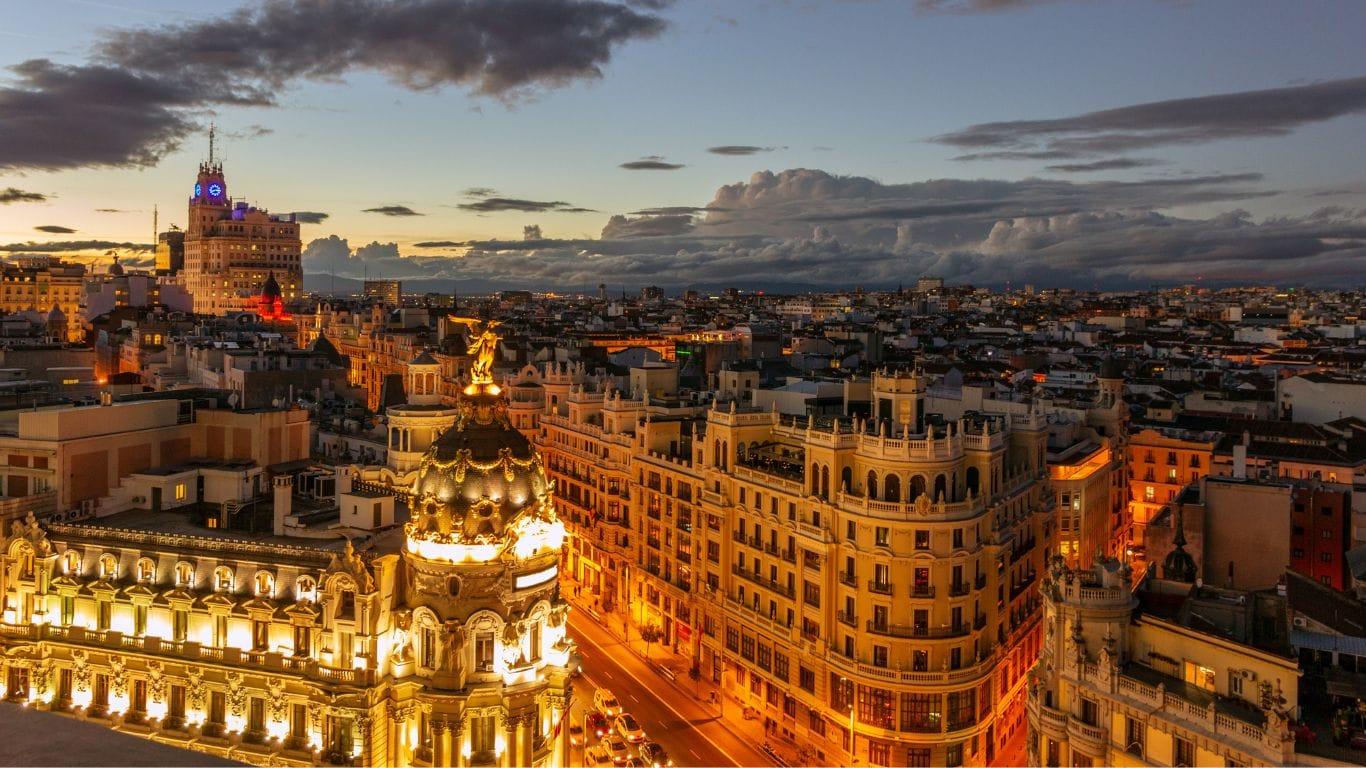
The Salamanca district, particularly the streets between Velázquez and Castellana, has become Madrid's clearest prime address. Mansion Global's 2025 Madrid dispatch tracked transactions on Calle Serrano, Calle Velázquez and the streets around the Retiro Park at €15,000 to €20,000 per square meter. These are meaningful numbers for Madrid, though still under the equivalent Paris or London benchmarks.
The buyer profile has changed. Where Madrid prime in 2018 was overwhelmingly Spanish, the 2025 wave is heavily Latin American, with Mexican, Colombian, Venezuelan and Argentine families joined by a meaningful US and European secondary segment. Engel & Völkers and Lucas Fox dominate the off-market pipeline above €5 million.
The architectural texture is Belle Époque and early-twentieth-century Beaux-Arts apartment blocks. Owners commission renovation architects who work fluently with the format. Practices like Lucas y Hernández-Gil, Bonell Studio and the Madrid desk of Studio Indigo have done serious work in the district.
Marbella, Sotogrande and the Costa del Sol
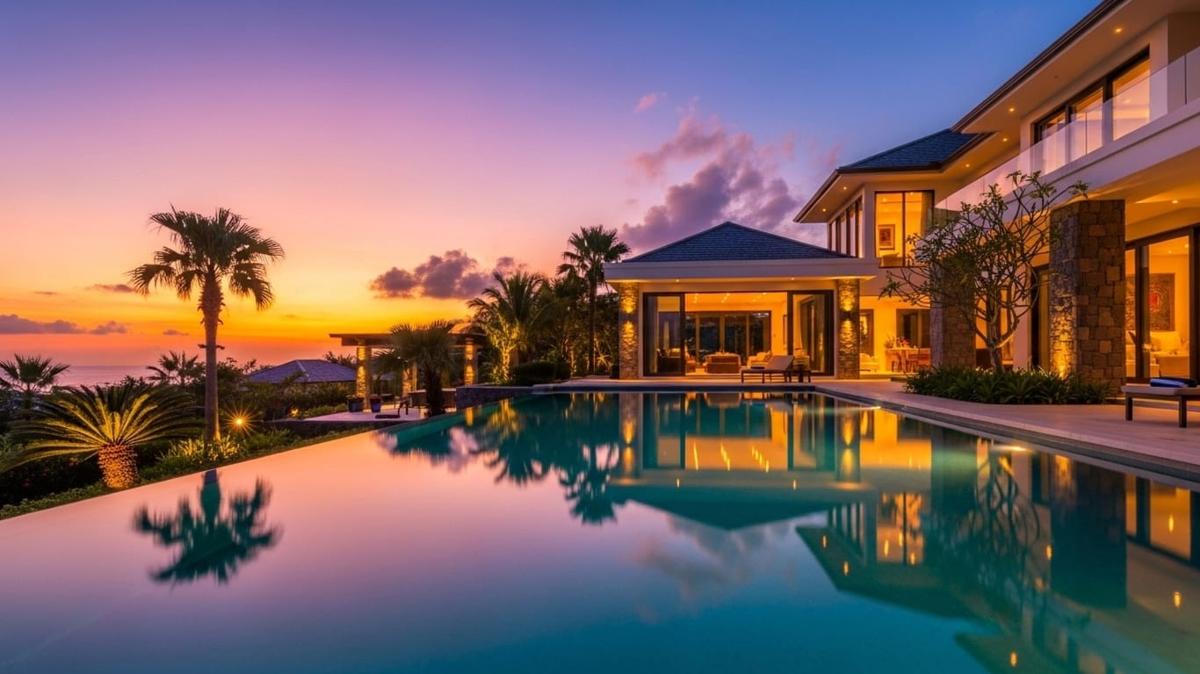
Marbella's Golden Mile, the strip of seafront between Marbella town and Puerto Banús, is the historic Costa del Sol prime band. The architectural top is the gated community of La Zagaleta, in the hills behind Benahavís. Villa plots typically run between 4,000 and 8,000 square meters and trade above €15 million for the upper tier.
The Sierra Blanca district holds the next band. Puente Romano is the resort-anchored cluster. Knight Frank's Costa del Sol desk noted in its 2025 outlook that La Zagaleta volumes had stabilised at low transaction counts but record per-square-meter pricing.
Sotogrande, sitting an hour west toward Gibraltar, is the quieter alternative. The community holds polo grounds, the Real Club Valderrama golf course (the 1997 Ryder Cup site), and a marina that has avoided the Banús party-pier evolution. The buyer profile skews Spanish, British and Northern European, with a thin off-market layer priced accordingly.
The Balearic Islands
Mallorca, Ibiza, Menorca, and Formentera each have their own market. Mallorca is the deepest. The Tramuntana coast through Deià, Valldemossa, Sóller and Banyalbufar has become the architectural top, with a buyer field of German, British and American second-home owners.
Mansion Global's 2025 Mallorca dispatch put record transactions for finca-style properties (the traditional stone farmhouse with land) above €15 million in Deià and Valldemossa. The Palma old town has emerged as the urban prime. Marivent and the streets around the Almudaina Palace hold the trophy townhouses.
Ibiza divides into northern and southern markets. The north (Santa Gertrudis, San Juan, Benirrás) holds the quieter second-home segment. The south (Cala Jondal, Es Cubells, Cala d'Hort) holds the architectural showpieces, where owners commission architects like Atelier Rojas-Cordoner, Marià Castelló and the Ibiza desk of Lázaro Rosa-Violán.
Menorca, the quieter Balearic, holds tightly-controlled planning rules and a slow-moving market that has stayed under the architectural radar. Formentera is small, finite and traded almost entirely off-market through Engel & Völkers and Christie's International Real Estate.
Barcelona and the Eixample
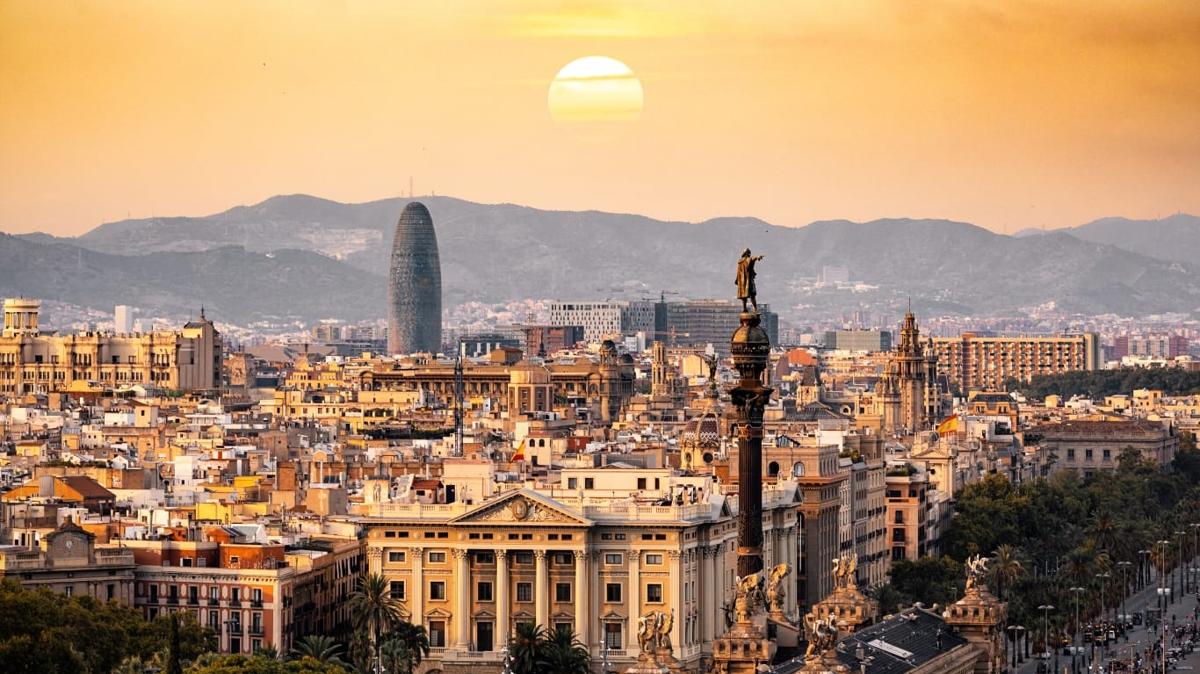
Barcelona's prime market is concentrated in the Eixample, with its Modernista apartment blocks designed by Domènech i Montaner, Puig i Cadafalch and contemporaries of Gaudí. The Sarrià-Sant Gervasi district and the Pedralbes neighbourhood hold the family-house tier. The city's tourism-management policy has cooled the short-let segment but has not affected the long-term residential prime in the same way.
Mansion Global tracked record demand from American and European buyers in 2025. The streets around Passeig de Gràcia and the Quadrat d'Or absorbed most of the named transactions. The architectural depth is the city's defining commercial argument.
Costa Brava, Valencia and the Canary alternatives
The northern Catalan coast through Cadaqués, Begur, Pals, Llafranc and S'Agaró has emerged as the quieter Catalan alternative for buyers who want Mediterranean architecture without the Mallorca price ceiling. The Empordà, sitting inland behind the coast, holds restored masías (the regional farmhouse format) and a generation of second-home owners from Barcelona, Paris and London.
Valencia city has been the surprise of the past three years. The El Carmen and Eixample neighbourhoods of the old city, alongside the Cabanyal beachfront district, have absorbed a meaningful wave of internal Spanish migration and northern-European second-home demand. Prices are still meaningfully below Madrid or Barcelona.
South along the Costa Blanca, Jávea, Moraira and the Marina Alta hills have become the quieter alternative to Marbella. Tenerife and Lanzarote are the Canary islands with the cleanest prime markets, with Tenerife's Costa Adeje and Lanzarote's Famara coast leading per-square-meter. The architectural texture in Lanzarote is anchored by César Manrique's twentieth-century work, which set planning constraints that have preserved the volcanic-and-whitewash vocabulary.
What this means for buyers
Spain in 2026 is wider than the postcards. Madrid is the urban prime. Marbella and Sotogrande are the Costa del Sol top.
The Balearic Islands hold the second-home architectural showpieces. Barcelona, the Costa Brava, Valencia and the Canaries fill in the secondary geography. The unifying texture is operational depth: restoration architects working with regional vernaculars, estate agencies like Engel & Völkers, Lucas Fox and Knight Frank Spain that know the off-market segments, and a planning regime that has protected the architectural character in the places that matter.
For buyers landing on a Spanish address in 2026, the work is choosing which region speaks to how the owner wants to live. The right answer is rarely a yield calculation. It is a question of which architectural vocabulary and which community holds the owner's attention across decades.
We last reviewed this analysis in May 2026.