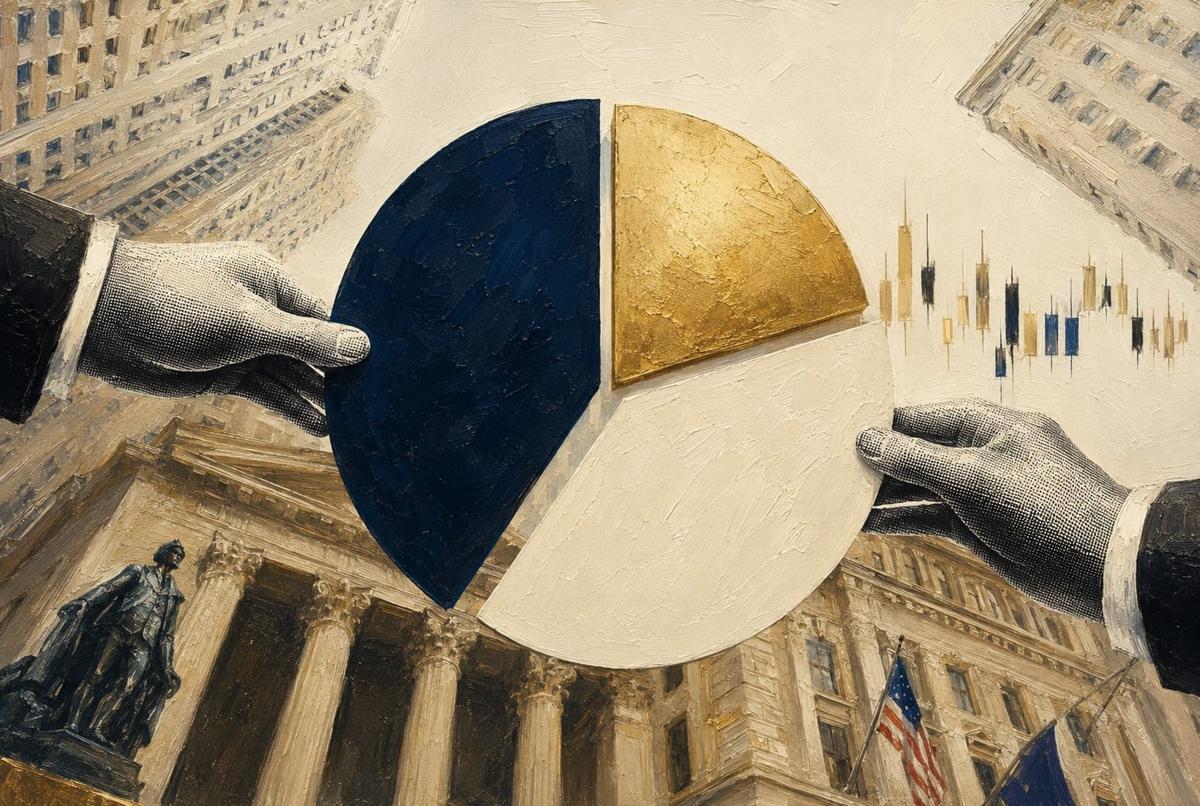

The meeting usually takes place somewhere quiet. A private room above a bank’s ground floor, perhaps, or a lounge in a family office where the coffee arrives without being ordered. The presentation is polished, and the payoff diagram alone takes a quarter of an hour to explain. There is a minimum ticket, a closing date, and a gentle suggestion that the allocation has been reserved with a small number of clients in mind. Nobody uses the word exclusive. Nobody needs to.
What the investor feels in that room is not mainly a view on the economics. It is something closer to recognition. Here is an opportunity that requires explanation, offered to someone judged capable of following it, and the pleasure of being that person is entirely real. An investment can begin to feel desirable partly because it is difficult to understand. Difficulty reads as depth, depth reads as quality, and somewhere along that chain of inference the plainer question of what the thing actually pays, and to whom, is quietly set aside.
This is the paradox worth examining. Among people who have earned the right to be discerning, complexity can become a kind of taste, and like any taste it can be cultivated, flattered and, eventually, sold to.
Key Takeaways
- Privileged access feels like evidence of quality, but the sensation of being offered something rare says nothing about whether it is any good.
- Scarcity is often an honest signal in luxury goods. In finance, restriction and tailoring can just as easily be ways of selling.
- Célérier and Vallée studied around 55,000 European retail structured products and found that higher headline rates came with more complexity, more risk and higher profits for the issuing banks.
- Carlin's theoretical model shows how firms can make pricing more complicated so that fewer customers know what they pay, and why competition may add complexity rather than remove it.
- Complexity has to justify itself economically, by what it does, rather than aesthetically, by how it looks.
- The test: what each layer does that a simpler arrangement could not, what it costs, and which risks it introduces.
- Who: Wealthy investors offered private placements, structured notes and bespoke vehicles, and the banks and advisers who design and sell them.
- What: Why complexity can come to feel like quality, and how to tell complexity that serves a purpose from complexity that serves the seller.
- When: In the quiet meeting where a polished structure is presented, and again when markets turn and terms that seemed academic start to bind.
- Where: Private banks, family offices and the market for structured and private investments, with the hardest evidence coming from European retail structured products.
- Why: Because complexity can make a feature prominent and a cost obscure at the same time, and a client who finds complexity reassuring is the last person likely to object.
When Access Becomes Evidence
Much of a successful life is spent learning that the better things are harder to get. The table that cannot be booked, the watch with a waiting list, the tailor who accepts new clients only by introduction. In these worlds scarcity is often an honest signal. Someone rewarded for twenty years for noticing such signals naturally carries the habit with them.
Financial markets do not honour that habit in the same way. A private placement may be restricted because capacity is genuinely limited, or simply because restriction sells. A structured note may be tailored because it solves a precise problem, or because tailoring makes comparison impossible. Neither is suspect by nature. The difficulty is that being offered them feels identical in every case, and the sensation of privileged access carries no information about which case is which.
The pleasure of access and the quality of a decision are separate things that happen to arrive together. Treating the first as evidence for the second is an easy mistake for anyone long accustomed to standing on the right side of the rope.
The Comfort of the Complicated
Complexity has a second appeal, quieter than status. It looks like work. A portfolio assembled from conditional payoffs, layered vehicles and bespoke terms gives the impression of having been engineered, and engineering suggests that someone has thought carefully about every outcome. A plain holding of broad, liquid assets can look, by comparison, as though nobody tried very hard.
Claire Célérier and Boris Vallée examined what sits beneath that impression in one well-documented corner of the market. Studying around 55,000 retail structured products issued in Europe between 2002 and 2010, they found that products advertising higher headline rates tended to be more complex, riskier and more profitable for the banks that issued them. Their reading is that much of the complexity was not incidental. It was the means by which an attractive number could be placed at the front of the brochure while the conditions attached to it receded into the formula.
These were retail products sold to households, and the findings should not be stretched to cover every bespoke instrument offered to private clients. The mechanism, however, is general enough to recognise. Complexity can make a feature prominent and a cost obscure at the same time. Bruce Carlin reached a related conclusion through theory rather than data. In his model of retail financial markets, firms can choose to make their pricing more complicated, which leaves some customers unable to establish what they are really paying, and greater competition may produce more complexity rather than less. It is a model rather than an observation, but its logic is instructive. Where complexity is cheap to add and costly to decode, someone has an incentive to add it, and a client who finds complexity reassuring is the last person likely to object.
The additional layers also tend to stay invisible until conditions turn. Fees sit at several levels. Liquidity terms that seemed academic become binding. A structure that behaved elegantly in every scenario shown in the presentation behaves rather differently in the one that was left out. None of this makes complexity wrong. It means that complexity has to justify itself economically, by what it does, rather than aesthetically, by how it looks.
Sophistication as Subtraction
There is a sound case for many complicated arrangements. A holding structure may resolve a genuine problem of succession or jurisdiction. A private vehicle may offer a return stream with no public equivalent to an investor well placed to bear the illiquidity it demands. In each case the complexity is doing a job that can be described in a sentence, and the sentence survives being asked what would happen without it.
The useful test, then, is not whether a structure is simple or elaborate but whether its complexity can be traced to a purpose. That means knowing what a given layer does that a simpler arrangement could not, what it costs, including the costs that never appear as fees, and which risks it introduces, together with the conditions under which they would matter. When those answers are clear, the structure has earned its place. When the honest answer is that it feels more serious, or that it was offered to very few people, it has not.
Understanding sophisticated instruments and needing to own them are different capacities, and the first is considerably rarer than the second. A seasoned investor can follow the mechanics of a capital-protected note or a layered co-investment, admire the engineering, and still decline. The gap between possessing sophisticated instruments and exercising sophisticated judgment is much of what Behavioral Arbitrage is concerned with, and it is a gap that tends to reveal itself in what an investor removes rather than in what he adds.
It takes a certain confidence to own a portfolio that would bore a dinner table. The arrangement that is easiest to explain is rarely the one that impresses, and the investor who can live with that has usually understood something the brochure was never written to teach. Wealth opens the door to ever more elaborate rooms. Being invited in was never the same thing as being right to stay.
Related thinking on how complexity comes to pass for sophistication in a large portfolio can be found in The Wealth Paradox: More Capital, More Complexity, More Cognitive Bias.
Sources: Claire Célérier and Boris Vallée, “Catering to Investors Through Security Design: Headline Rate and Complexity”, The Quarterly Journal of Economics, 2017, an empirical study of around 55,000 European retail structured products showing that higher advertised headline rates went together with greater complexity, greater risk and higher profitability for the issuing banks. Bruce I. Carlin, “Strategic Price Complexity in Retail Financial Markets”, Journal of Financial Economics, 2009, a theoretical model showing how firms can add complexity to their pricing to limit how many consumers become informed, sustaining market power even as competition increases.
We last reviewed this analysis on 16 November 2026.