The UAE real estate market in 2026 continues to redefine what scale and pace look like in a global property cycle. JLL MENA's Q1 2026 UAE Real Estate Market Overview reported sale prices and rentals in Dubai rising approximately 21 percent year on year. Abu Dhabi posted a 7 percent lift in sale prices and a 4 percent rise in rental rates over the same period.
Knight Frank's Wealth Report has tracked Dubai as one of the top three destinations globally for ultra-high-net-worth property buyers, alongside London and New York, a position the city did not hold five years ago. The 2026 UAE real estate market is no longer a frontier story; it is a structural prime market in the global comparison set.
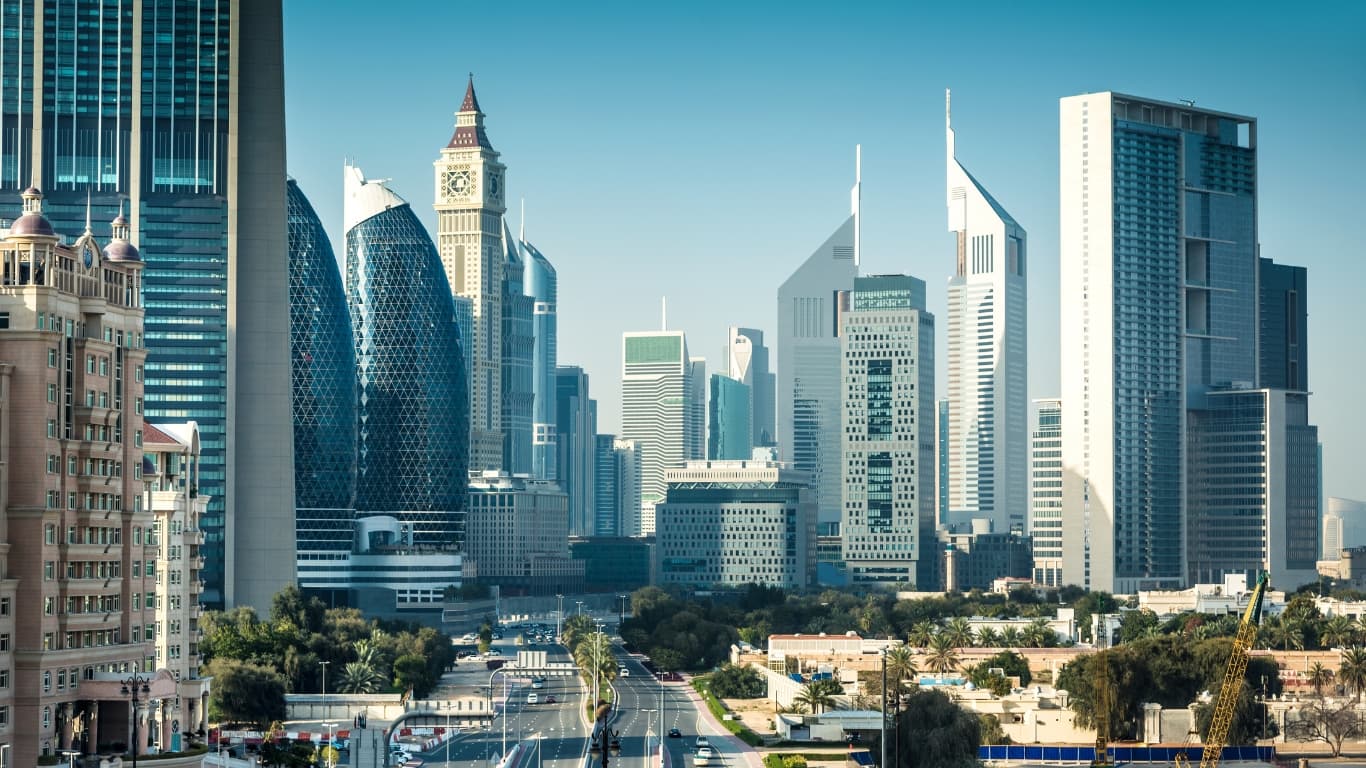
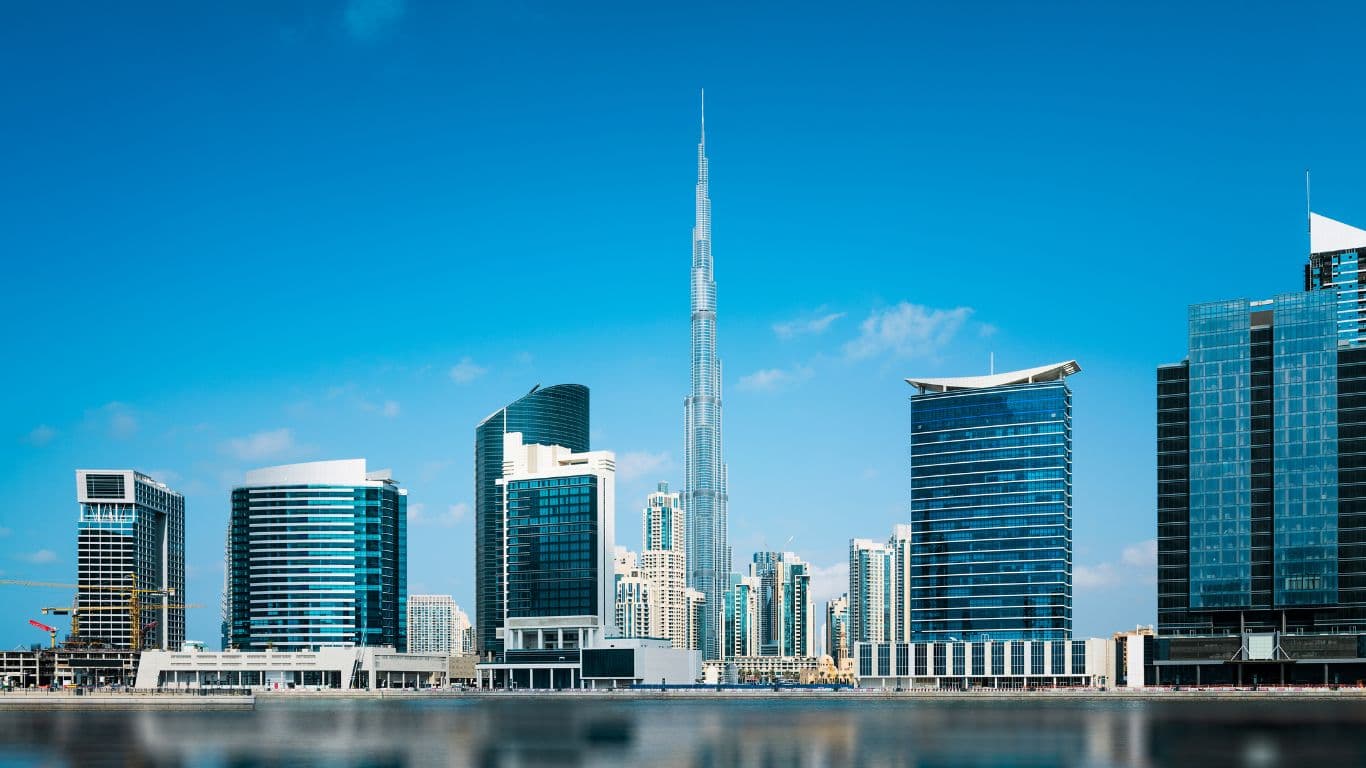
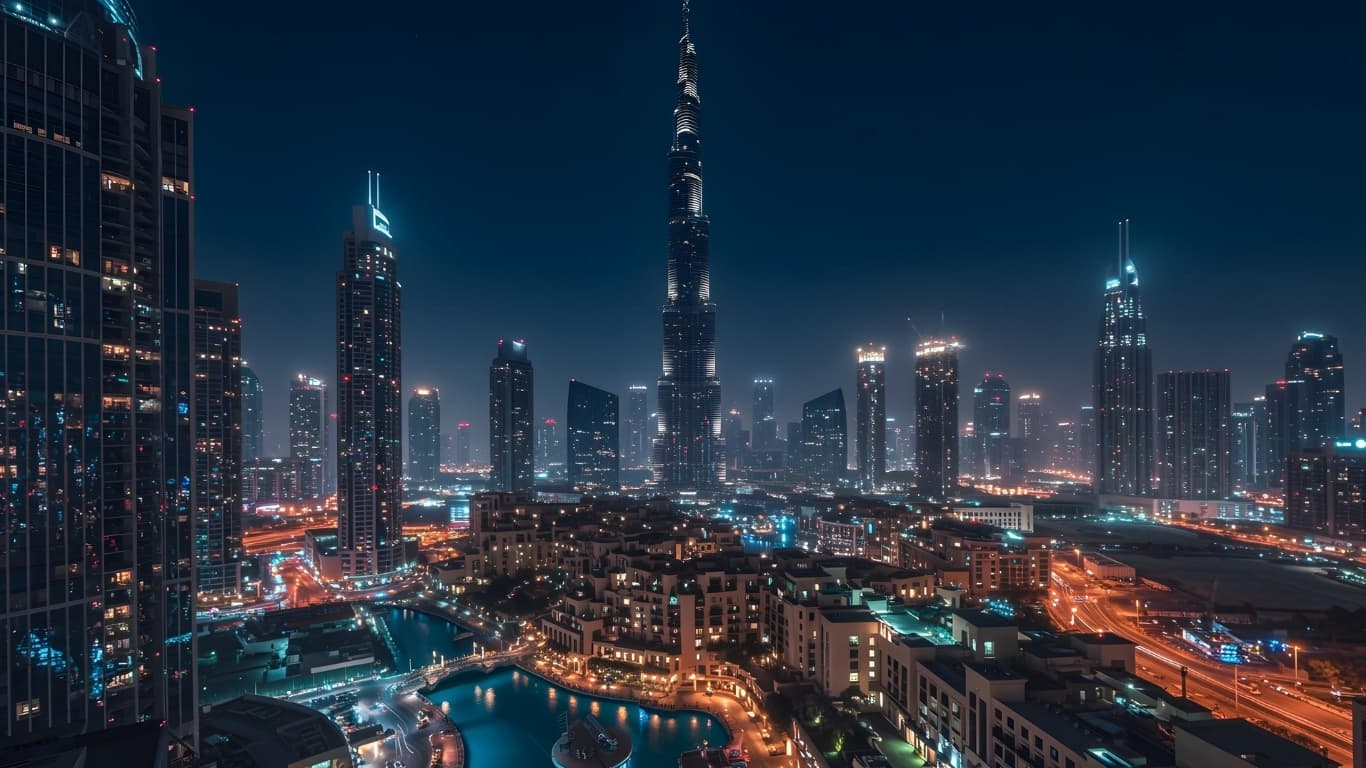
The architectural ambition that defines the UAE's residential offer is unusual at any global scale. Foster and Partners (the Index, ICD Brookfield Place), Zaha Hadid Architects (the Opus, the al Wasl Plaza), Adrian Smith and Gordon Gill (the Burj Khalifa), and Norman Foster's continuing work in Abu Dhabi place the country's prime-residential conversation at the centre of contemporary architectural practice.
Mansion Global, Robb Report and Architectural Digest have each devoted substantial coverage to the past five years of Emirati architectural output.
- The UAE real estate market enters 2026 with sustained momentum across Dubai and Abu Dhabi, supported by strong international buyer flows, attractive yields and the Golden Visa framework.
- We see Dubai Land Department transaction data showing continued record activity, with prime areas including Palm Jumeirah, Downtown Dubai and Emirates Hills setting fresh pricing benchmarks.
- Off-plan delivery from major developers including Emaar, Damac, Sobha and Nakheel continues at pace, with absorption rates remaining healthy across most segments of the market.
- Branded residences have proliferated across the UAE, with hospitality-grade services supporting the premium pricing at the top end of the Dubai and Abu Dhabi markets.
- Golden Visa eligibility for property investors above the AED 2 million threshold continues to support the international buyer appeal of the UAE prime market.
- For most considered international investors we view the UAE as offering one of the more liquid and tax-efficient property exposures in the broader emerging-market complex.
- Who is this for?
- International investors evaluating UAE property exposure, alongside the advisers, brokers and family office staff framing portfolio allocation decisions for Gulf real estate.
- What is happening?
- A market overview of UAE real estate, covering Dubai and Abu Dhabi pricing, the major developers, off-plan dynamics, branded residences and the Golden Visa framework.
- When did this emerge?
- The article reflects 2026 market conditions through Dubai Land Department, Property Monitor, ValuStrat and Knight Frank UAE data alongside our own observations.
- Where is this happening?
- The piece covers the UAE broadly, including Dubai, Abu Dhabi, Sharjah and the broader emirates including Ras Al Khaimah and Ajman.
- Why does it matter?
- UAE real estate has crossed an important threshold in international buyer perception, which is why understanding the structural dynamics matters before committing capital.
The UAE property market today
Dubai's all-residential property price index climbed 20. 71 percent year on year (16. 81 percent inflation-adjusted) in Q1 2026, per Reidin.com.
Apartment prices rose 20. 43 percent annually and villa prices rose 22. 08 percent.
By the end of 2025, the average purchase price of a Dubai apartment sat at AED 1,500,000 (around US$408,386). Villas averaged AED 3,200,000 (around US$871,222), with the prime tier above AED 10 million pulling away from the broader average.
Abu Dhabi's all-residential property price index rose 7. 53 percent year on year in Q1 2026. Apartment prices increased 6.
42 percent annually and villa prices rose 12. 97 percent.
Transaction volumes tell their own story. Dubai recorded 133,134 registered sales transactions in 2025, up 38 percent year on year, while Abu Dhabi posted a 75 percent jump to 13,298 units. The momentum carried into 2026: Dubai posted 16 percent growth in transaction value and 20 percent in volume in Q1; Abu Dhabi saw a 17 percent rise in volume.
Dubai: the structural prime market
Dubai's transaction value in 2025 reached AED 571. 3 billion (US$155. 54 billion), a 45.
8 percent year-on-year surge. Apartment sales transactions amounted to AED 218 billion (US$59. 35 billion), up 48.
2 percent. Villa sales transactions totalled AED 65. 7 billion (US$17.
89 billion), up 8. 2 percent.
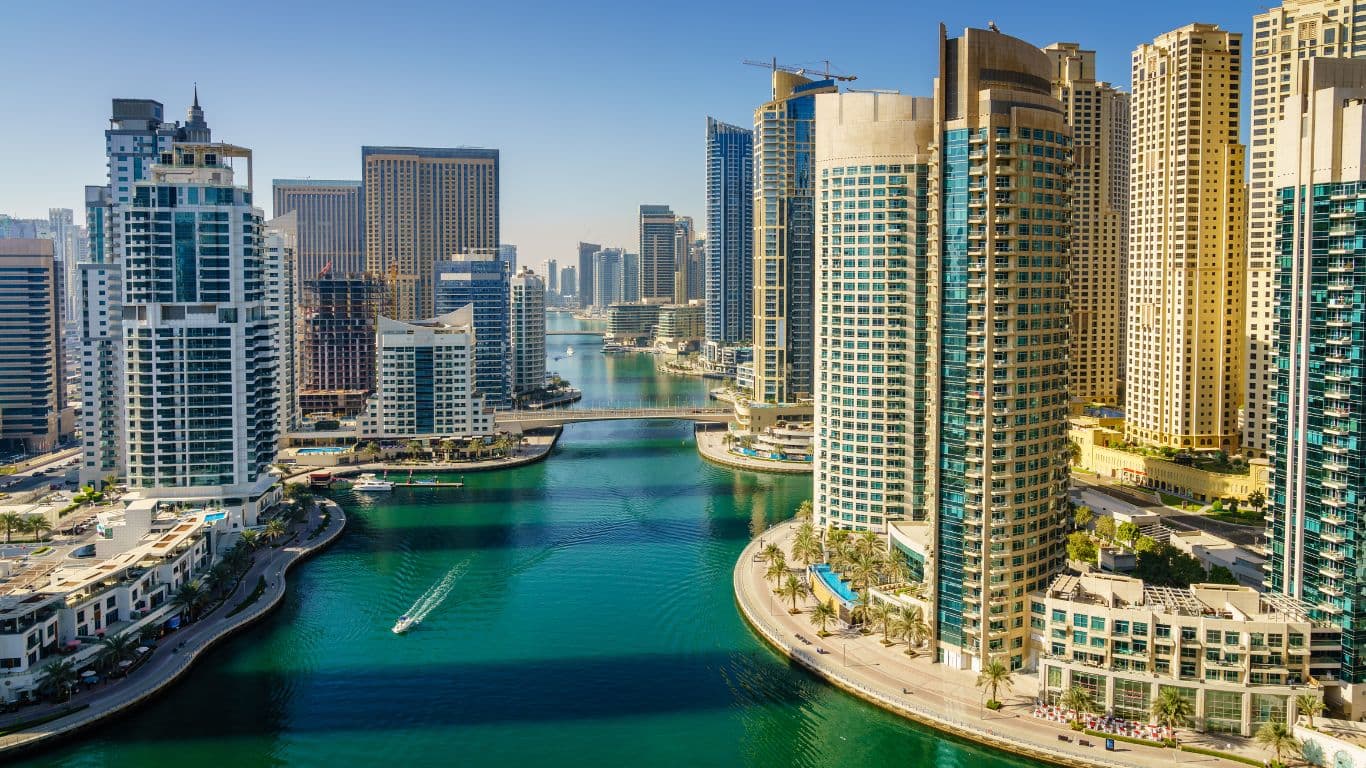
The neighborhoods drawing the most consistent transaction value tell their own architectural story. Dubai Marina led with AED 36. 7 billion (US$10 billion) in 2025 activity.
Palm Jumeirah followed at AED 28. 51 billion (US$7. 76 billion), much of it the Nakheel-developed villa stock.
Jebel Ali Industrial First and Wadi Al Safa 3 rounded out the top four. Engel and Volkers, Sotheby's International Realty and Christie's International Real Estate each rank the same handful of submarkets at the top of their prime indices.
Property Finder and the Dubai Land Department report continued strength heading into 2026, with foreign buyer demand particularly concentrated among Russian, Chinese, Indian and increasingly British purchasers. The Golden Visa program, substantially expanded in 2022 to reduce the required investment threshold and lift residency restrictions, has reshaped the buyer composition meaningfully.
Abu Dhabi: the institutional capital
Abu Dhabi recorded 13,298 transactions in 2025, up 75 percent year on year. Total transaction value surged 120 percent year on year to AED 44 billion (US$11. 98 billion).
Q1 2026 alone saw AED 15. 9 billion (US$4. 32 billion) in combined sales and mortgage transactions.
The off-plan market has been particularly active, with Asteco reporting roughly 15 percent price growth between initial and most recent launch phases for premium developments like Aldar's Gardenia Bay (launched September 2023). Foreign buyer activity from Russia and China has been especially visible, and Mansion Global has profiled Saadiyat Island as one of the prime stories of the cycle.
The Golden Visa and the foreign-ownership story
The UAE introduced the Golden Visa in 2019 as a long-term residence program for investors, professionals and skilled talent. The 2022 update reduced the threshold and dropped restrictions on how long holders could spend outside the country. October 2023 rules opened the door to off-plan property purchases.
Updated requirements: a 10-year Golden Visa requires AED 2 million (US$545,000) in property; AED 750,000 (US$204,000) qualifies for a two-year residence visa. By comparison, Greece's Golden Visa now sits at EUR 250,000 to EUR 800,000 depending on zone, Portugal's pre-2023 real-estate route was withdrawn, and Spain ended its program entirely in 2024, which is part of why the UAE has captured so much of the global wealthy-migration flow.
Foreign nationals can buy freehold property in designated areas in Dubai (Dubai Marina, Palm Jumeirah, Downtown Dubai, Emirates Hills, Arabian Ranches, JBR, Business Bay) and Abu Dhabi (Al Reem Island, Saadiyat Island, Yas Island, Al Raha Beach). The expansion of these freehold zones and the Golden Visa pathway has structurally reshaped the buyer composition over the past five years.
What is shaping the UAE in 2026
Several structural forces define the market. The UAE economy grew 3. 1 percent in 2025, with the IMF and the UAE central bank projecting further growth of 4 to 4.
2 percent for 2026. The UAE GDP per capita on a purchasing power parity basis reached US$92,073 in 2025, placing the country among the wealthiest in the world per IMF figures.
Foreign capital flows continue to reshape the prime market, particularly from Russia (post-2022 sanctions environment), China (asset-diversification pressure), India (the established expatriate community), and increasingly from the UK and Europe (lifestyle and tax considerations).
Major infrastructure works, including the continuing buildout of the Dubai Metro, the Abu Dhabi Etihad Rail freight network, and the master-planned developments around Yas Island, Saadiyat Cultural District (Louvre Abu Dhabi, Guggenheim Abu Dhabi), and Al Maryah Island, continue to reshape demand.
Where the UAE real estate market reads now
Dubai prices are projected to climb a further 5 to 8 percent through 2026, with continued strength in the prime villa segments of Palm Jumeirah, Emirates Hills, Jumeirah Bay Island, and the new luxury developments around Dubai Hills. Abu Dhabi prices are forecast to climb 4 to 6 percent, with concentration in Saadiyat Island and Yas Island. Sharjah and Ajman are seeing structural shifts as the freehold framework expands.
What this means for buyers
For the buyer who values architectural ambition at global scale, one of the world's most consequential prime-residential offers, and a tax framework that has structurally reshaped global wealthy migration patterns, the UAE continues to read as a structurally important property market.
The neighborhoods responding most distinctly to the design-led international buyer shift, namely Palm Jumeirah, Saadiyat Island, Dubai Hills and Yas Island, are quietly outperforming the headline averages. We last reviewed this analysis in May 2026.
Frequently asked
How is the UAE real estate market evolving in 2026?
Dubai prices are projected to rise 5 to 8 percent and Abu Dhabi 4 to 6 percent in 2026, supported by continued international buyer demand and the expanded Golden Visa framework. JLL MENA and Reidin both track this trajectory across their indices.
Which areas are seeing the most buyer attention?
Palm Jumeirah, Emirates Hills, Dubai Hills, Saadiyat Island and Yas Island are drawing the most consistent international demand. Mansion Global and Architectural Digest have profiled each of these as flagship prime markets in the global comparison set.
Can foreign nationals buy property in the UAE?
Yes, in designated freehold zones across Dubai and Abu Dhabi. The Golden Visa pathway provides residency for buyers above specified thresholds: AED 2 million for the 10-year visa and AED 750,000 for a two-year residence visa.
How does the UAE compare against other global prime markets?
Knight Frank's Wealth Report ranks Dubai among the top three global destinations for ultra-high-net-worth property buyers, alongside London and New York. Prime per-sqm pricing in Dubai Marina now sits within striking distance of Manhattan and well below Monaco or Mayfair.


Savvas Agathangelou
Savvas Agathangelou co-founded The Luxury Playbook and has spent years reporting from the prime postcodes the magazine covers — Mayfair, Knightsbridge, the Athens Riviera, Dubai's Palm crescents, and the southern Mediterranean coastlines where the world's wealthy keep coming back. His background is in international hospitality, and that frame shapes how he writes about property: the developer's choices, the architect's signature, the agency's bench of named brokers, the building's service standard once the buyer moves in. He files developer spotlights, agency profiles, and the seasonal "Properties That Defined" listicles, and he hosts the magazine's founder-and-leadership interviews on the Voices side.