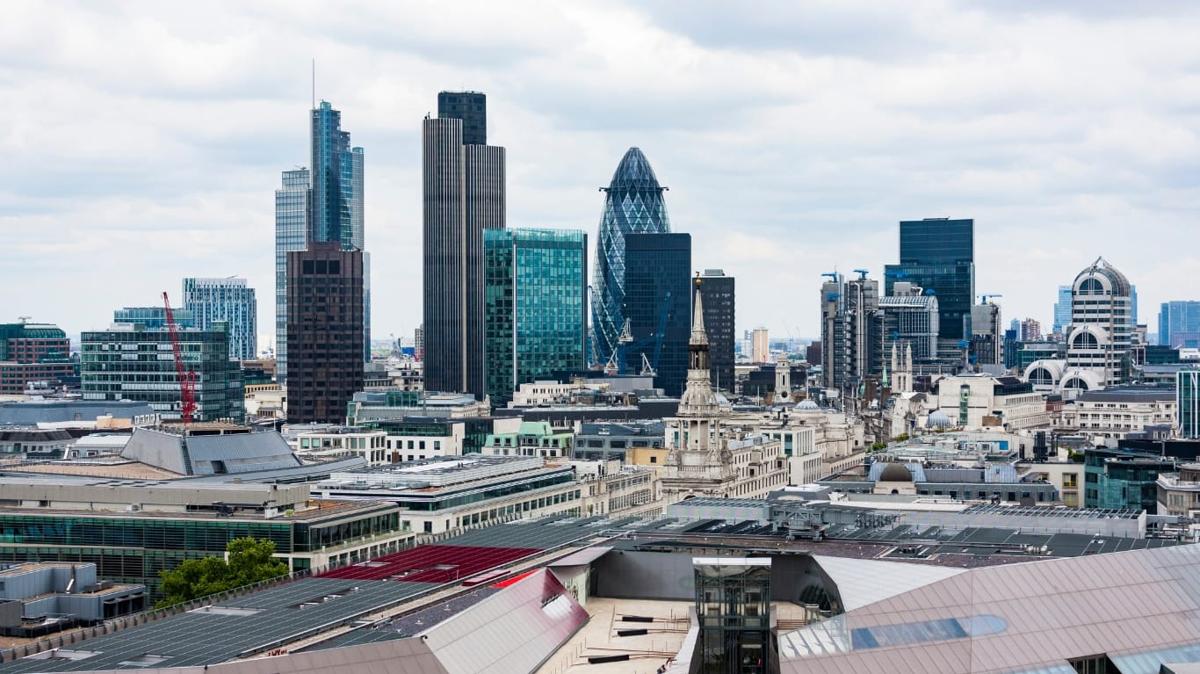

The UK property market in 2026 reads as one of the most architecturally legible and internally varied in Europe.
From the Mayfair Georgians and the Cotswolds heritage stock at the upper end through to the regenerating Northern industrial cities (Manchester, Liverpool, Newcastle), the rapidly maturing Midlands markets (Leeds, Nottingham, Derby) and the emerging regional secondary cities (Middlesbrough, Durham, Cardiff, Belfast), the picture is more layered than the headline London-focused coverage typically suggests.
Knight Frank's Wealth Report, Savills's UK residential research, the PwC and Urban Land Institute Emerging Trends in Real Estate Europe rankings, and Mansion Global's coverage of UK secondary cities all describe the same picture. A more architecturally and locationally specific cohort of buyers is concentrating attention on a recognisable set of markets.
We track the UK as the deepest internally varied prime conversation in Europe. The price arc runs from Mayfair trophy stock at GBP 30,000 to GBP 40,000 per square metre (per Savills's World Cities Prime tracker) through to Liverpool Anfield at GBP 1,700 per square metre, an arc of roughly twenty-to-one.
- The most coveted UK property markets in 2026 span prime central London, Edinburgh New Town, the Cotswolds, Surrey commuter belt and selected coastal arcs in Cornwall and Dorset.
- We see prime central London anchoring the upper end at meaningful discount to historical peaks, with Mayfair, Belgravia, Kensington, Chelsea and Notting Hill leading buyer interest.
- Edinburgh New Town remains the strongest Scottish prime market, with Georgian architectural heritage and the city's professional services base supporting consistent international demand.
- The Cotswolds and Surrey commuter belt continue to attract relocator demand, with the lifestyle premium supporting prime country house pricing despite the broader rural market cooling.
- Coastal premium markets in Cornwall, Dorset and the New Forest have held up well through recent cycles, with second-home demand from London principals as the dominant pricing driver.
- For most considered UK buyers we view geographic diversification across the coveted markets as offering more resilient long-term exposure than concentrated single-market positioning.
- Who is this for?
- UK and international buyers selecting prime UK markets for acquisition, alongside the advisers, brokers and family office staff framing portfolio-level allocation decisions.
- What is happening?
- A 2026 read of the UK's most coveted property markets, covering prime central London, Edinburgh New Town, the Cotswolds, Surrey and the coastal premium arcs.
- When did this emerge?
- The article reflects 2026 market conditions through Knight Frank Prime London, Savills, Halifax HPI, Nationwide HPI and major broker data alongside our own observations.
- Where is this happening?
- The piece covers the UK broadly, including prime central London, Edinburgh, the Cotswolds, Surrey and the coastal premium markets in Cornwall, Dorset and the New Forest.
- Why does it matter?
- UK prime market selection determines the universe of available opportunities, which is why upfront geographic discipline pays back across every subsequent property-level decision.
Manchester
Manchester remains the most active UK regional prime market. The architectural register includes the converted Victorian mill stock of Ancoats (Murray's Mills, the listed Ancoats Hospital), the contemporary commissions led by Hodder + Partners and Buttress Architects, the Daniel Libeskind Imperial War Museum North at Salford Quays, and the Mayfield, Victoria North and St John's regeneration corridors.
CoStar's commercial real-estate data and Savills's Northern residential research both confirm Manchester as a leading UK regional market. Average residential pricing sits near GBP 241,000, with prime central stock above GBP 4,700 per square metre.
Leeds
Leeds has built a reputation for consistency in the UK property market. The kind of measured year-on-year movement that anchors long-term holdings. Annual price movement around 4.
8 percent against an average house price near GBP 173,260.
The Yorkshire and Pennines architectural inheritance, the universities, and the contemporary commercial real-estate development (the Leeds South Bank regeneration) anchor the market. Knight Frank's Leeds coverage and JLL UK Cities both track the city as a steady regional performer.
Liverpool
Liverpool combines the Victorian maritime heritage anchored by the Three Graces (Royal Liver Building, Cunard Building, Port of Liverpool Building), Jesse Hartley's Albert Dock (1846), and Giles Gilbert Scott's Liverpool Cathedral with the active Liverpool Waters and Knowledge Quarter regeneration. The Baltic Triangle has matured from neglected warehouse district into one of the country's strongest creative-industry zones.
Knight Frank's UK Cities tracking and Savills's residential research both register substantial international and domestic buyer interest. Average pricing sits at GBP 182,000, the most affordable among major regional English cities, with annual movement around 8.5 percent.
Derby
Derby has been one of the more interesting Midlands stories. The Rolls-Royce employer footprint, the Lombe Silk Mill and Derwent Valley Mills UNESCO World Heritage Site context, and the GBP 3.5 billion City Centre Masterplan have all anchored a sustained property recovery.
Property prices rose by 9 percent in 2022 and the wage growth feeding the local market has continued through 2024 and 2025. The Alstom (former Bombardier) rail-manufacturing complex at Litchurch Lane and the Toyota plant at Burnaston extend the employer base.
Nottingham
Nottingham combines accessible pricing relative to comparable UK cities with strong demographic and architectural character. The medieval Lace Market, Nottingham Castle and the broader heritage core, alongside contemporary commercial-development activity, anchor the market.
The 10.9 percent annual price movement of recent years has reflected a tight demand-supply balance. JLL UK Cities and Savills both track Nottingham as a steady East Midlands performer.
Newcastle
Newcastle's prime-residential and rental markets benefit from the Newcastle University and Northumbria University academic anchor, the contemporary developments around the Quayside and the Sage Gateshead (Foster + Partners, 2004), and the broader regeneration of the Tyne corridor. Institutional capital (including Legal & General-backed projects) has been concentrating in the city.
Knight Frank's Newcastle coverage and Engel & Völkers UK both describe a market where the cultural calendar (the Baltic Centre for Contemporary Art, the Sage Gateshead) and the universities anchor a steady buyer composition.
Belfast
Belfast property prices remain roughly 22 percent below their 2008 peak, a structural value position that has anchored substantial US and international interest. Foreign direct investment into Belfast has been substantial, with over 25 percent of US FDI inflows going into software and IT.
This anchors a workforce dynamic that supports housing demand. The Belfast City Council's GBP 18.7 million City Centre Investment Fund is part of a broader urban-regeneration framework.
Cardiff
Cardiff is emerging as a serious Welsh prospect. The combination of urban density (around 84.6 percent urban population), positive net migration and the broader devolved-government investment in education and innovation has anchored sustained property demand.
The architectural inheritance includes the Cardiff Bay redevelopment with its contemporary commercial and residential character. The senior brokerage networks have been steadily building Cardiff capacity.
The London prime market
London prime (Mayfair, Belgravia, Knightsbridge, Kensington, Chelsea, the riverside regeneration corridors) remains the deepest UK property market and one of the most internationally bid in Europe. The architectural inheritance, the cultural infrastructure and the senior brokerage networks (Christie's International Real Estate, Sotheby's International Realty, Beauchamp Estates, Knight Frank Private Office, Foxtons, Savills) all anchor a market that operates in a category of its own.
Mayfair trophy stock now sits around GBP 30,000 to GBP 40,000 per square metre per Savills's World Cities Prime tracker, broadly comparable to Manhattan prime at the trophy line. The Bank of England's gradual easing through 2025 has begun to support transactional activity, and the off-market segment remains particularly active. Detailed coverage of London prime lives in our London property market piece.
The Cotswolds and the rural prime markets
The Cotswolds, the Surrey Hills, the New Forest, the Cornwall coastal market, the Lake District, the Scottish Highlands estates and shooting properties (the rural prime UK market) have their own architectural and cultural register. Knight Frank's Country House Index and the senior rural-prime brokers (Strutt & Parker, Knight Frank, Savills's country-house teams) operate the institutional infrastructure.
The Cotswolds heritage stone manor stock, the Surrey Hills detached estates, the Scottish Highlands shooting estates and the Cornwall coastal trophy positions together build a rural-prime conversation that runs alongside the London-anchored urban conversation.
Emerging regional secondary markets
Middlesbrough, Durham, Sheffield, Hull, Plymouth and Glasgow each carry distinctive architectural and cultural inheritance. Middlesbrough's contemporary low entry pricing combined with infrastructure-led regeneration is interesting. Durham's medieval heritage and university-anchored demand provide a stable secondary-city profile.
Sheffield's industrial-heritage architecture and the strong universities anchor a similar pattern. Glasgow's Victorian and Edwardian residential inheritance extends the secondary-city set further. The senior brokerage networks have been progressively building capacity in these markets.
How UK prime compares with international markets
Mayfair trophy at GBP 30,000 to GBP 40,000 per square metre sits below Monaco prime (near EUR 55,000 per square metre per Savills's World Cities Prime tracker) and broadly comparable to Manhattan prime (USD 16,000 to USD 20,000 per square metre). Mayfair sits well above central Manchester (around GBP 4,700 per square metre), Bristol Clifton (GBP 5,500 to GBP 6,200) and Liverpool central (GBP 3,000 to GBP 3,800).
Dubai Marina prime at around AED 22,000 per square metre (roughly GBP 4,800) sits broadly in line with central Manchester. The Greek Golden Visa (EUR 250,000 in qualifying regions, EUR 800,000 in central Athens, Thessaloniki, Mykonos and Santorini from August 2024) and the Cyprus PR pathway sit in different categories; the UK Tier-1 Investor visa closed in February 2022.
Stamp duty surcharges for non-UK-resident buyers and second homes apply to UK residential purchases. The Mayfair to Liverpool arc of roughly twenty-to-one on a per-square-metre basis is the durable feature of the UK market.
What unites the UK markets drawing serious buyers
The cohesive picture across UK markets in 2026 runs across several dimensions. Architectural depth (Mayfair Georgian and Belgravia at the prime tier; Victorian and Edwardian industrial heritage in the Northern cities; medieval and Tudor heritage in the rural prime). Deep cultural infrastructure and legal frameworks that protect property rights.
The senior brokerage networks (Knight Frank, Savills, Strutt & Parker, Christie's International Real Estate, Sotheby's International Realty, Beauchamp Estates) operate cross-regionally. The architects and designers most active across UK residential commissioning (Foster + Partners, John Pawson, David Chipperfield, Annabelle Selldorf, Squire & Partners, Hodder + Partners, Buttress, Wilkinson Eyre) are the through-line that makes the design-led conversation cohere.
What this means for buyers
The UK rewards the buyer who treats real estate as a long-term architectural and cultural commitment rather than a yield calculation. The Mayfair-to-Liverpool arc offers genuinely different entry points for buyers with different capital positions and lifestyle priorities.
For international buyers, London prime remains the deepest cross-border conversation. For UK-based and design-led buyers comparing regional cities, the Manchester Ancoats stock, the Bristol Clifton Georgians, the Edinburgh New Town, the Cardiff Bay redevelopment and the Belfast value-tier each carry distinctive architectural cases.
Stamp duty surcharges for non-UK-resident buyers and second homes are a meaningful structural cost across all UK positions. EPC minimum-rating requirements apply to rented properties. The senior brokerage networks operate the institutional infrastructure that makes the cross-regional UK conversation cohere.
We last reviewed this analysis in May 2026.
Frequently asked
Which UK markets are drawing the most serious buyer attention in 2026?
London prime (Mayfair, Belgravia, Knightsbridge, Kensington, Chelsea), the Cotswolds rural-prime cohort, Manchester Ancoats and Salford Quays, Bristol Clifton and Liverpool Baltic Triangle anchor the most consistent interest.
How do UK regional cities compare with London prime on pricing?
Mayfair trophy stock sits at roughly six to eight times Manchester per square metre, ten times Liverpool, five to seven times Bristol Clifton. The arc spans roughly twenty-to-one across the country.
What residency-by-investment pathways are available for UK buyers?
The UK Tier-1 Investor visa closed in February 2022. Property ownership is open to non-UK-resident buyers, but stamp duty surcharges apply for second homes and non-UK residents.
How does UK prime compare with international peer markets?
Mayfair trophy sits below Monaco prime (near EUR 55,000 per square metre) and broadly comparable to Manhattan prime. Dubai Marina prime at around AED 22,000 per square metre sits broadly in line with central Manchester.