
What actually drives fine wine prices and quality is a smaller, more stable set of fundamentals than the headline market suggests. Terroir, grape variety, vintage character, producer reputation, production volume, critical consensus, provenance, and demand geography do most of the work. The Liv-ex Fine Wine 1000, the broadest tracker of the international market, reflects exactly these variables once you decompose its sub-indices.
- A smaller, more stable set of fundamentals drives fine wine prices and quality than the headline market suggests.
- Terroir, grape variety, vintage character, producer reputation, and production volume sit at the structural base of the price relationship.
- Critical consensus across Decanter, Wine Spectator, the Wine Advocate, and Vinous amplifies or dampens the structural price signal materially.
- Provenance documentation has become a structural pricing variable, with bonded warehouse storage and chain-of-custody adding measurable premium.
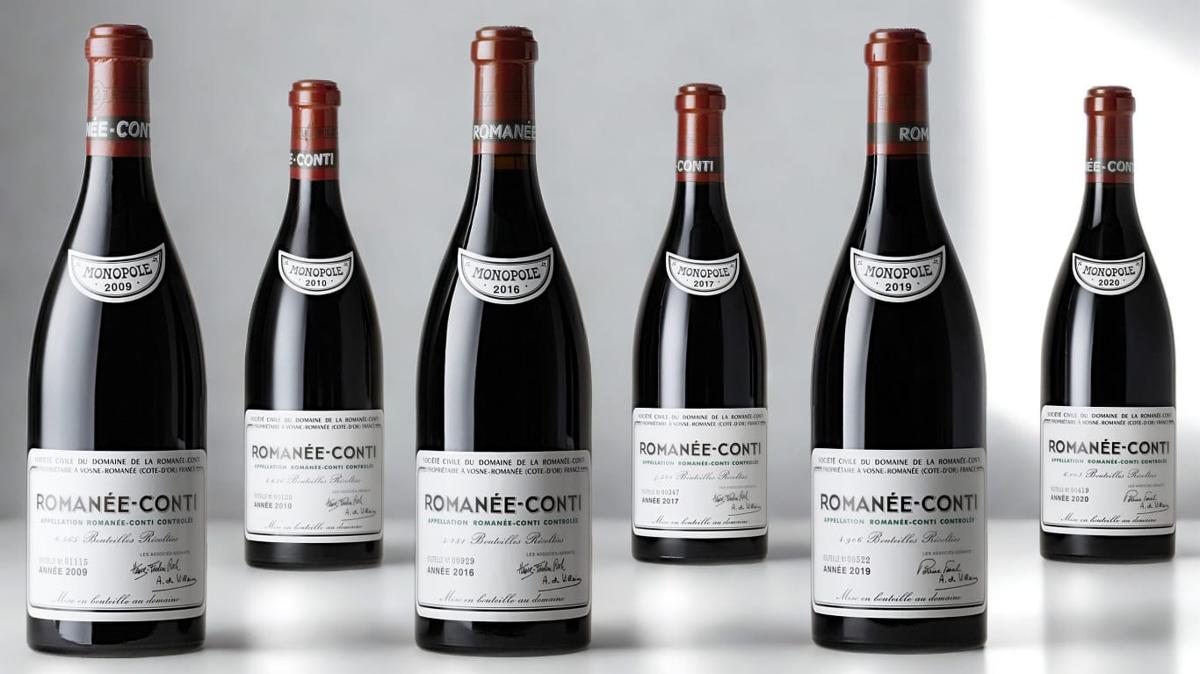
- Production volume sets the structural ceiling on liquidity, with DRC's Romanee-Conti at roughly 5,000 bottles a year defining the apex scarcity tier.
- For collectors understanding which fundamentals are durable and which are transient is the structural work that separates good buying from speculation.
- Who is this for?
- Serious collectors trying to understand the structural price-quality relationship in fine wine, and active buyers reading the contemporary market.
- What is happening?
- We work through what actually drives fine wine prices and quality, with the terroir, producer, vintage, provenance, and volume variables that anchor the relationship.
- When did this emerge?
- The piece reads the contemporary post-2020 market, where production volume and provenance have moved structurally toward greater pricing weight.
- Where is this happening?
- The international fine-wine market, with Bordeaux, Burgundy, Champagne, Tuscany, and Napa as the structural traded regions that anchor the analysis.
- Why does it matter?
- Pricing in fine wine is more structurally stable than the speculative narratives suggest, and understanding the durable fundamentals is the foundation of long-haul cellar performance.
The trade understands this well. Collectors building cellar depth benefit from understanding it too, because the variables are stable across decades while the headline narratives change.
This is our editorial read on what actually drives fine wine prices and quality, anchored to the public benchmarks the market uses to score itself.
Terroir: the structural foundation of fine wine prices
Terroir, the combination of soil, climate, exposition, and elevation that gives a wine its sense of place, is the foundation of fine wine quality and pricing. The clay-rich soils of Pomerol's flat plateau produce Pétrus the way they do. The limestone of Burgundy's Côte d'Or produces grand crus the way it does, and the gravel of the Médoc supports Cabernet Sauvignon-led blends in ways that other soils don't.
The terroir doesn't shift. The wines made from it carry that terroir's signature year after year.
The pricing implication is direct. Wines from the most distinctive terroirs in the canonical regions, namely Bordeaux's Premier Cru classé, Burgundy's grand crus, Champagne's grand cru villages, Tuscany's Bolgheri, and Piedmont's Barolo MGAs, command structural premiums that have held across generations. The Liv-ex Bordeaux 500 and the Liv-ex Burgundy 150 sub-indices show exactly this clustering: the highest-priced wines are concentrated in the smallest set of recognized sites.
Grape variety, vintage character, and the role of scores
Each major grape variety brings characteristic ageability and stylistic register. Cabernet Sauvignon ages long and rewards patience. Pinot Noir is more delicate and more terroir-expressive, Nebbiolo is extraordinarily age-worthy, and Riesling is one of the great age-worthy whites.
Vintage character compounds the variety. A great vintage produces wines of exceptional concentration, balance, and ageability. The Bordeaux 2010 vintage (Robert Parker scored multiple First Growths at 98 to 100 points), the Burgundy 2015 vintage, and the Champagne 2008 are the kinds of vintages that drive multi-decade cellaring decisions and secondary-market premiums.
Critical consensus is how the trade translates vintage quality into price signals. The Wine Advocate, Wine Spectator, Vinous (Antonio Galloni), Decanter, and Jancis Robinson all carry meaningful weight, and the Bordeaux primeur tastings in late March or early April remain the most-watched event in the calendar.
Weather conditions and what they mean for collectors
The year's weather is the proximate cause of vintage variation. Adequate rainfall in the growing season, dry weather at harvest, warm days for ripening, cool nights to preserve acidity, and minimal hail or frost pressure all matter. The year's specific conditions determine the character of the resulting wines and, in many cases, the volume produced.
Difficult years often produce smaller volumes from the named producers, who reduce their output rather than declassify wines that don't meet their standards. The reduced volume from a difficult year can produce its own pricing dynamic for collectors who track the producer's standards.
Oak ageing, winemaking decisions, and the production-cost layer
The winemaker's decisions, from picking dates to fermentation temperatures, oak ageing regime, blending choices, and bottling timing, translate the raw fruit into the finished wine. The oak dimension is particularly visible in pricing. Wines aged in new French oak (typically Allier, Tronçais, or Vosges) carry meaningfully higher production costs than wines aged in older oak or steel.
The oak's contribution to the wine's structure, vanillin character, and ageing potential is reflected in pricing across nearly every category. Production-volume decisions matter equally. The named producers who limit yields, sort fruit aggressively, and declassify wines that don't meet their standards produce smaller volumes of finished wine, and the scarcity feeds directly into pricing.
Scarcity and rarity: the variable amateurs underweight
Production volume is the structural driver of fine wine pricing that amateur collectors most often underappreciate. Domaine de la Romanée-Conti's La Tâche runs to perhaps 1,800 cases globally per vintage. Coche-Dury's Corton-Charlemagne perhaps 300 cases, and Pétrus's annual production is small enough that the entire vintage clears merchant inventory in days.
The named Burgundy domaines, the Right Bank Bordeaux icons, and the cult Napa Cabernets each operate at production volumes small enough that demand from serious collectors and the trade routinely outpaces supply. The pricing implications follow directly.
Wines from the smallest producers tend to outperform broader market trends, single-vineyard or limited-production bottlings command premiums over their estate-wide counterparts, and library releases routinely command premiums over current vintages.
The Sotheby's New York 2018 sale of a 1945 Romanée-Conti at $558,000 is the canonical scarcity-driven lot most collectors cite, but the same dynamics play out at every price tier.
Brand prestige and the slow build of producer reputation
Producer reputation, built across decades or in some cases centuries, is the structural driver of fine wine pricing that the market most reliably rewards. Domaine de la Romanée-Conti has been making the wines that anchor Burgundy's grand cru market since 1869. Château Lafite Rothschild has been a First Growth since the 1855 classification, and Krug, Cristal, and Salon have each built multi-generation reputations that support today's pricing structure.
The producer reputation builds slowly and erodes slowly. Producers who maintain quality across difficult vintages, including Henri Jayer's library releases that continue to clear extraordinary prices long after his death, tend to compound their reputations across decades.
Producers who slip, through commercial expansion, quality compromises, or generational transitions handled poorly, sometimes do permanent damage to their pricing trajectories.
Critic ratings and the post-Parker pluralism
Critic scores from the major publications translate directly into secondary-market pricing for the wines they cover. The Bordeaux primeur tastings drive the en primeur campaign and shape the secondary market across the following years.
The influence of any single critic has diminished since Robert Parker's retirement from active reviewing in 2019. The current landscape is more pluralistic. William Kelley at the Wine Advocate, Antonio Galloni at Vinous, the Decanter panel, and Jancis Robinson all carry meaningful weight in different categories.
The collectors who do best track three or four publications and weight their broader views accordingly. A 100-point score from Vinous on a Burgundy grand cru moves the market more than the same score from a less-respected outlet.
Market demand and the geographic shifts that reshape pricing
The demand side of the equation moves with broader shifts in collector geography, critical attention, and macroeconomic conditions. The China pullback from First Growth Bordeaux around 2014 to 2015 wiped out a multi-year run-up. The Burgundy boom from 2018 onward saw the category outpace Bordeaux for the first time in living memory, with the Liv-ex Burgundy 150 outperforming the Bordeaux 500 across most of that window.
Champagne's run since 2018 has been the most-watched move in the category, and the Liv-ex Champagne 50 has reflected it. Each shift reflects underlying demand dynamics that the market eventually prices in.
The Asian market's increasing weight on the broader fine-wine demand picture since 2018 is the structural shift most relevant to the current decade. Hong Kong, Singapore, Tokyo, and the broader Greater China market now account for a meaningful share of secondary-market activity at the top of the price range.
Authenticity and provenance: the variable that can wipe value
Provenance, the documented chain of custody from producer to current owner, is the single largest variable in long-term cellar value. The Rudy Kurniawan case in 2008, the conviction of the Indonesian collector who counterfeited an estimated $35 million in rare Burgundy and Bordeaux, restructured the entire authentication discipline of the fine-wine market.
Bottles with intact original wooden cases, verifiable storage history, and unbroken capsules routinely command 15 to 25 percent premiums over loosely sourced counterparts at major auctions. Bottles without verifiable provenance increasingly struggle to clear at all in the most-faked categories, including 1945 Mouton, the great older Pétrus and Le Pin vintages, and any pre-1980 DRC.
The pricing implication is direct. Provenance is now part of the value, not a separate consideration, and the authentication programmes run by Sotheby's, Christie's, Acker, Zachys, and Hart Davis Hart provide the practical defence against counterfeit risk concentrated at the top of the market.
Is price the best indicator of quality?
The honest answer is "mostly, but not always". The structural drivers described above produce a market that prices wines reasonably efficiently across most of the spectrum. The most-expensive bottles from the most-coveted producers in the strong vintages are typically (though not invariably) wines of exceptional quality.
The exceptions are real and worth knowing. Blind tastings have produced their share of upsets where less-expensive wines outperformed costlier neighbours, and vintage character can vary by region within a year. Mature wines from second-tier producers in great vintages sometimes outperform young wines from icon producers in lesser ones.
The discipline serious collectors apply is to use price as one indicator among several, alongside critical consensus, the producer's track record, the vintage's character, and personal tasting experience.
What this means for collectors
The cellar built carefully across these inputs is the cellar that compounds best across decades. The bottles that get opened from it tend to reward the collector regardless of whether any specific bottle's secondary-market trajectory has matched its release-day pricing.
We'll watch three signals through 2026. Whether the Liv-ex Bordeaux 500 stabilizes after its multi-year correction, whether Burgundy's structural premium narrows, and whether Champagne continues to outperform the broader index.
We last reviewed this analysis in May 2026.