Naive art is the category that the institutional canon spent most of the 20th century either dismissing or quietly absorbing. The 2024 Tate retrospective of self-taught practice, the Centre Pompidou's revisiting of the Art Brut and naive cohorts, and the major auction-house catalogue programmes have all repositioned the category as a serious institutional and market conversation. The shift is not new; the pace at which it has accelerated in 2026 is.
The simple definition is the part that matters. Naive art is work made by artists outside the formal training of the academy, working with the visual language they invented for themselves rather than the conventions they were taught.

- Naive art is the category that the institutional canon spent most of the twentieth century either dismissing or quietly absorbing, with the pace of reassessment accelerating in 2026.
- The 2024 Tate retrospective of self-taught practice and the Centre Pompidou’s revisiting of the Art Brut and naive cohorts have repositioned the category as a serious conversation.
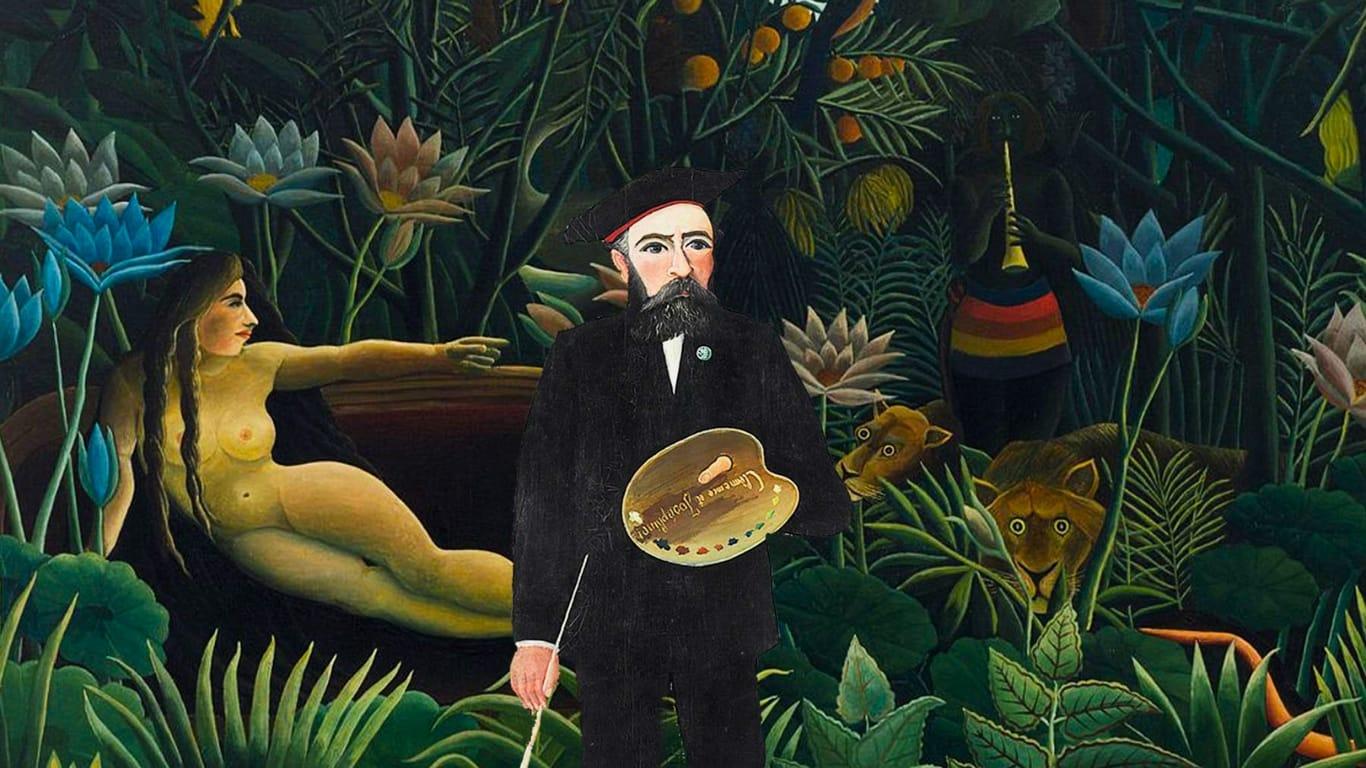
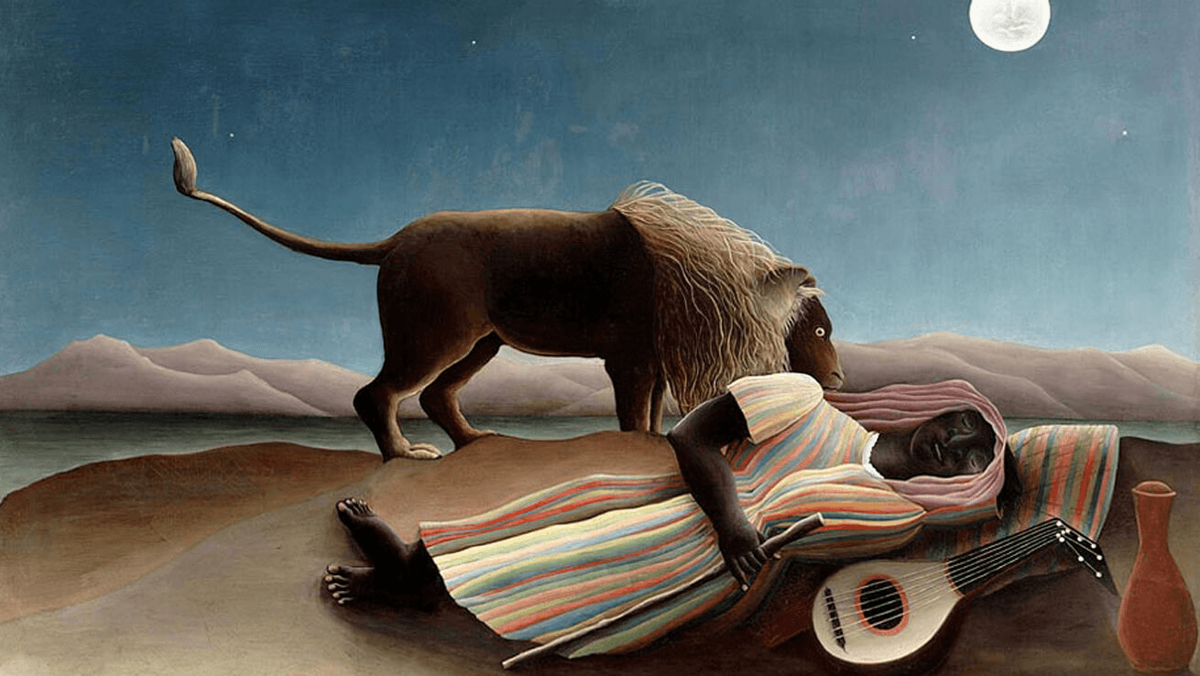
- Henri Rousseau remains the structural anchor, with major canvases holding central positions at MoMA, the Pompidou, the Musee d’Orsay and the National Gallery of Art.
- Grandma Moses anchors the American tradition, with the Bennington Museum collection providing the institutional record and a stable multi-decade compounding curve for her market.
- The broader historical cohort includes Niko Pirosmani in Georgia, the Haitian naive tradition, the Yugoslav naive school and the wider international roster documented by major surveys.
- The cultural moment has two layers: institutional reweighting away from the trained academy and a wider response to the saturation of highly-credentialed contemporary work.
- Who is this for?
- Contemporary collectors, advisors and curators interested in naive art as a serious institutional category alongside mainstream contemporary collecting through 2026.
- What is happening?
- An editorial read on what naive art actually is and why it feels relevant now, covering the historical canon, the cultural moment, the auction record and where the category sits in serious collections.
- When did this emerge?
- Most relevant around the dedicated naive and outsider-art programmes at major institutions and the parallel sales at the major auction houses through the year.
- Where is this happening?
- Centred on Paris, Lausanne and New York as the historical and institutional anchors for naive and outsider material, with growing market presence at the major contemporary fairs.
- Why does it matter?
- Understanding the naive category correctly matters because the institutional reweighting is real and the cohort offers genuine scholarly depth at often modest price points for serious collectors.
What naive art actually is
The category sits at the intersection of three related but distinct conversations. The first is the historical naive cohort: Henri Rousseau in late-19th-century Paris, Grandma Moses in mid-century America, and the broader cohort of self-taught artists whose work entered serious institutional collections through the 20th century.
The second is Art Brut and outsider art, the related but distinct tradition that Jean Dubuffet codified in the 1940s and which the Lausanne Collection de l'Art Brut now anchors. Our colleagues have covered the broader category in the Art Brut field guide, and the conceptual overlap with naive art is meaningful.
The third is the contemporary cohort of self-taught practitioners whose institutional reception has accelerated through the past decade, with major museum acquisitions and survey shows running in parallel.
The historical canon
Henri Rousseau remains the structural anchor of the category. His major canvases hold central positions in MoMA, the Pompidou, the Musée d'Orsay and the National Gallery of Art. The market depth for major Rousseau works at the trophy tier is thin but resilient, and the secondary market for the smaller and study works has held up through the recent cycle.
Grandma Moses anchors the American tradition. The Bennington Museum's collection and the various major American museum holdings provide the institutional record, and the market for her work has run on a stable, multi-decade compounding curve rather than speculative spikes.
The broader historical cohort includes Niko Pirosmani in Georgia, the Haitian naive tradition (Hector Hyppolite, Wilson Bigaud), the Yugoslav naive school (Ivan Generalić), and the wider international cohort that the major surveys at the Pompidou, the Tate and the New York Folk Art Museum have documented over decades.
Why the category feels so relevant in 2026
The cultural moment has two layers. The first is the institutional reweighting away from the trained academy. The major museums have spent the past decade explicitly broadening their collecting and exhibition programming to include self-taught, outsider, and historically marginalised practice.
The contemporary canon has structurally widened.
The second is the response to the saturation of the highly-credentialed contemporary cohort. After a decade of MFA-driven contemporary practice dominating the speculative tier, a meaningful cohort of collectors and curators has rebalanced towards artists whose work sits outside the academy framework.
The category also resonates because of how directly the work engages with the cultural moment. The 2024 Tate exhibition framed the contemporary naive cohort as a response to the current condition, and the catalogue scholarship has built on that framing across multiple major museum programmes.
What the auction record actually says
The category has thickened materially over the past five seasons. Christie's, Sotheby's and Phillips have all expanded their naive and outsider catalogue programming, and the contemporary self-taught cohort has produced meaningful new auction highs through 2024 and 2025.
The depth varies by cohort. The historical canon (Rousseau, Moses, Pirosmani) carries the deepest comparable record. The contemporary self-taught cohort carries the most growth in fresh market depth.
The Art Brut and outsider segments sit in between, with thicker institutional records than contemporary auction comparables.
How to read the category
Three tests separate serious work from interesting work. The first is the institutional record: museum acquisitions, survey-show inclusion, and the breadth of named institutions engaging with the practice. The second is the catalogue documentation: provenance, condition, and the documentary record of the work's exhibition and ownership history.
The third is the technical achievement of the work itself, evaluated against the artist's broader practice.
The category has historically been less rigorous on provenance than the trained-academy cohort, and the documentation gap is one of the most reliable sources of pricing inefficiency. Serious collectors do the work; the inefficiency closes meaningfully fast as the institutional record thickens.
Where the category sits in a serious collection
Naive and self-taught work has historically functioned alongside two adjacent categories. The first is the broader Modern and contemporary canon, where the historical naive cohort sits as a parallel conversation to the trained-academy tradition. The second is the outsider and Art Brut segment, where the conceptual lineage runs explicitly through the European 20th-century critical framing.
The contemporary art field guide and the broader frameworks for building a serious art collection in 2026 apply to the category directly. The art funds covering broad contemporary exposure have also begun to engage with the cohort at scale.
The institutional pipeline through 2026
Three exhibition cycles will shape the conversation through the rest of the year. The Tate's contemporary self-taught programming continues. The Pompidou's Art Brut and outsider programming is in active phase.
The American institutional cohort (the New York Folk Art Museum, the Smithsonian's American Folk Art holdings, and major regional museums) is running survey programming that places the historical and contemporary cohorts in direct dialogue.
The market has historically responded to institutional pipeline with a meaningful lag. Collectors building positions in the category through 2026 should expect the auction depth to thicken further as the institutional record continues to expand.
What this means for collectors
Naive art is no longer the institutional curiosity it was a generation ago. It is a serious parallel conversation to the trained-academy canon, with its own institutional record, its own market depth, and its own collector cohort.
The category rewards careful documentary work. Provenance, exhibition history, conservation condition, and the catalogue scholarship around the artist's practice are the load-bearing elements of any serious acquisition, and they are also the segments where pricing inefficiency lives.
The cohort of self-taught artists shaping 2026 is the inheritor of a long historical tradition that the institutional canon has finally caught up with. Collectors who engage with the category now are buying ahead of a curve that is still steepening.
Frequently asked questions
How does naive art differ from outsider art and Art Brut?
Naive art is a broader category covering self-taught practitioners across the historical and contemporary canon. Art Brut, as Jean Dubuffet defined it, is a narrower cohort of self-taught artists working outside cultural institutions, often in psychiatric or marginalised contexts. The two categories overlap meaningfully, and our Art Brut field guide covers the more specific framework.
Who are the canonical historical naive artists?
Henri Rousseau is the structural anchor of the category. Grandma Moses anchors the American tradition. Niko Pirosmani anchors the Georgian tradition.
The Haitian naive school (Hector Hyppolite, Wilson Bigaud) and the Yugoslav school (Ivan Generalić) anchor the broader international cohort.
What should serious collectors verify before buying naive art?
Provenance documentation, exhibition history, condition report, and the institutional record of the artist's broader practice. The category has historically been less rigorous on provenance than the trained-academy cohort, and the documentation work is where pricing inefficiency consistently lives.
How does the market for contemporary self-taught artists compare to the historical canon?
The historical canon (Rousseau, Moses, Pirosmani) carries the deepest auction comparable record. The contemporary self-taught cohort carries the most growth in fresh market depth, with new auction highs through 2024 and 2025 across multiple named artists. The two segments behave differently and reward different approaches.
We last reviewed this analysis in May 2026.