Tissot occupies a particular position in contemporary Swiss watchmaking. Credible enough to anchor the accessible end of mechanical Swiss production, broad enough in distribution to be the entry-tier Swiss watch most buyers actually encounter first, and limited enough in collector consideration that the brand's role tends to be misread in either direction. The honest read on Tissot in 2026 is more useful than either the marketing or the dismissals tend to allow.
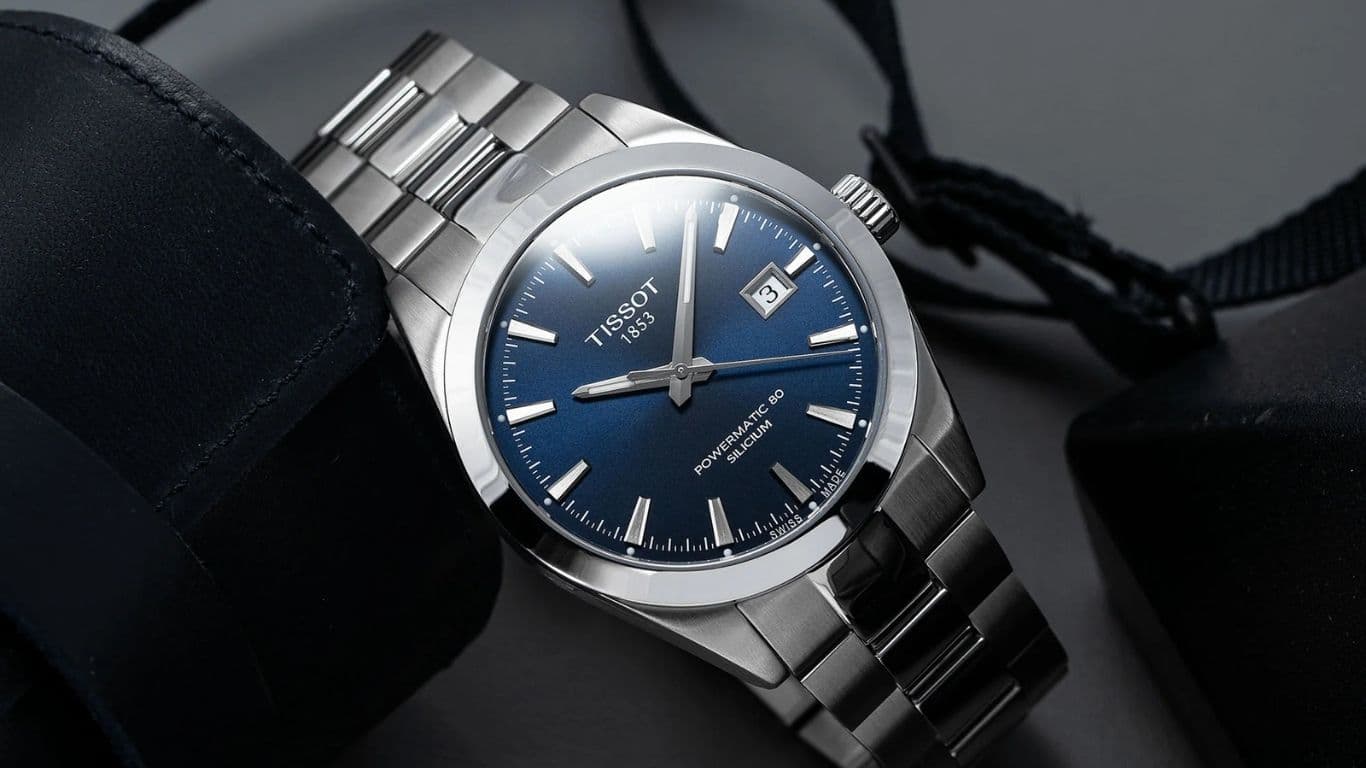
- Tissot in 2026 delivers genuine mechanical watchmaking at price points that no other Swiss brand reliably matches, anchored on the in-house Powermatic 80 calibre.
- The PRX, Gentleman, and Heritage Visodate references lead the current collector-friendly catalogue, with finishing standards that punch above the entry-tier pricing.
- Secondary-market depth on Tissot remains limited, which means buyers should anchor decisions on wearing intent rather than long-term value retention.
- We see the PRX Powermatic 80 as the strongest single Tissot purchase, with bracelet integration and dial design that competes directly with much pricier alternatives.
- Service costs and parts availability favour Tissot meaningfully, with Swatch Group infrastructure supporting decades of ownership at sensible cost.
- A collector's Tissot purchase typically serves a specific functional role rather than competing for trophy-tier attention, which clarifies the value proposition.
- Who is this for?
- New collectors building a first shelf, gift buyers, and established collectors exploring accessible Swiss watchmaking for daily-wear options.
- What is happening?
- A grounded collector's read on Tissot in 2026, covering the Powermatic 80 calibre, the PRX and Gentleman cornerstones, and the realistic value proposition.
- When did this emerge?
- The current read reflects 2026 manufacturer programmes, with Powermatic 80 rollouts and PRX line extensions reshaping the accessible-Swiss landscape.
- Where is this happening?
- Authorised Tissot dealers globally stock the current catalogue, with pre-owned options widely available through Chrono24 and dedicated specialists.
- Why does it matter?
- Tissot delivers serious mechanical watchmaking at accessible price points, which makes the brand the strongest single Swiss option for collectors building entry-tier depth.
The brand makes credible Swiss mechanical watches in a price band no other Swiss brand really competes in seriously. The references that earn collector attention are a smaller subset of the catalogue than the brand's marketing suggests. Collectors who navigate to the brand with the right expectations tend to be satisfied; collectors who expect the broader catalogue to perform like the next tier up tend not to be.
The PRX: Tissot's contemporary defining reference
The Tissot PRX Powermatic 80, the 2021 revival of the brand's 1978 PRX reference originally named for the case construction (Precise, Robust, eXcellent), has become the most-discussed Tissot reference in modern collecting. Retail around $725 in the steel 40mm reference; secondary market trades close to retail. The 40mm case, the integrated bracelet, the original PRX waffle dial design language, and the 80-hour power reserve from the modified ETA 2824 caliber give the watch the kind of accessible-tier integrated-bracelet credibility that no other reference at the price band offers.
The various PRX 35mm and PRX Chronograph extensions of the line carry their own following. The PRX 35mm sister reference (launched 2022) addresses the smaller-case-preference demographic; the PRX Powermatic 80 Chronograph variants (the Valjoux 7753-based chronograph references at around $1,725) extend the line into the more elaborate register.
The various dial-colour configurations (the green, the ice-blue, the recent salmon, the various special-edition pieces) all contribute to the broader PRX catalogue.
Hodinkee, GQ and Worn & Wound have all covered the line consistently across its first five production years.
The Le Locle and the dressier catalogue
The Tissot Le Locle Powermatic 80 anchors the brand's classical dress catalogue. Sapphire crystal, the modified ETA caliber with 80-hour power reserve, and the 39mm case make it the credible Tissot dress reference at around $750 retail. The Le Locle is the watch most often cited as the entry-tier credible Swiss dress mechanical at this price.
The broader Le Locle catalogue with the various dial variants and case configurations extends the line. The reference's name comes from Tissot's home town of Le Locle in the Swiss Jura, where the brand has been based since 1853. That historical anchor is one of the underused stories in the Tissot catalogue; few accessible-tier Swiss brands carry that depth of continuous production history.
The Tissot T-Classic and Heritage lines extend into the more considered classical end of the brand's catalogue. The Heritage 1973 (a chronograph reference referencing the brand's 1973 chronograph production), the various Visodate and Marine Star references, and the broader vintage-inspired tier. Pricing across this band runs from around $700 through $1,200 to $1,500 in the more elaborate references.
The Heritage 1973 chronograph specifically has acquired a steady following among collectors weighting the heritage-line accessible-tier execution.
Where Tissot's limits actually sit
The honest case for Tissot has limits worth being clear about. The brand operates at production volumes (Tissot is one of Swatch Group's largest-volume Swiss mechanical brands, producing several million watches annually across the catalogue) that don't support the kind of finishing detail collectors at higher tiers expect. The modified ETA calibres across the catalogue are credible but not in-house manufacture movements.
The secondary-market trading depth is shallow compared to Tudor or Omega at the next tier up.
Collectors who buy Tissot expecting it to perform like a Swiss brand at the $3,000-plus tier tend to be disappointed. Collectors who buy Tissot understanding what the price band actually allows tend to be satisfied. The brand's Touch Solar and various quartz references occupy a separate register that doesn't really intersect with serious mechanical collecting.
The marketing-led upper-tier Tissot references (the various special editions, the high-priced quartz pieces, the upper end of the Heritage line) tend to underperform in the secondary market relative to the standard mechanical PRX and Le Locle production. The contrast with Tudor at the next tier up is instructive: Tudor's in-house MT5400/MT5600 movement architecture, the heritage-derived design language tracing back to the historical Submariner references, and the brand's auction-house standing all set the bar for accessible-tier collector credibility in a way Tissot doesn't quite duplicate at its price band.
What collectors look for in modern Tissot
For modern Tissot, the references that come up most consistently in serious collector conversation are the PRX Powermatic 80 in the 40mm steel reference (the cleanest expression of the contemporary brand), the PRX 35mm for collectors preferring smaller cases, the Le Locle Powermatic 80 as the credible dress alternative, and the various Heritage line references in the 1973 and Visodate configurations. Box-and-papers documentation matters less at this price point than at the upper end but still affects resale value.
Vintage Tissot, particularly the 1960s and 1970s Visodate and Seastar references, and the rare PR516 chronograph pieces, has its own following at modest pricing levels (typically $200 to $1,500 depending on reference and condition). The vintage market for Tissot is meaningfully thinner than for Omega or Rolex of the same era; clean examples surface less regularly and the established specialist dealers for vintage Tissot are smaller.
The 1853-era pocket-watch heritage that distinguishes Tissot historically isn't yet fully reflected in the brand's modern collector category, but the foundation is there for collectors weighting the historical depth.
The Touch Solar and the marketing-led tier
The Tissot Touch Solar (the brand's solar-powered, touch-sensitive sapphire crystal reference with the various sports-watch features) sits in a separate register that doesn't really intersect with serious mechanical collecting. The reference is interesting as a technical curiosity but doesn't earn collector consideration in the way the mechanical PRX and Le Locle production does.
The various marketing-led special editions and the upper-tier Heritage variants similarly tend not to anchor the serious-collector category.
What this means for collectors paying attention to Tissot
The longer story collectors recognise is that Tissot serves a specific role in the catalogue of modern Swiss watchmaking. Credible mechanical execution at price points the upper tier doesn't compete in. The brand isn't a Tudor or an Omega in collector consideration, and trying to read it as one tends to disappoint.
Read as the most credible accessible-tier Swiss mechanical at its actual price band, the brand earns its place. The PRX in particular is the contemporary reference most likely to read well in a collection that includes pieces several tiers above it. Our take: the more useful framing is that Tissot is the credible Swiss accessible-tier mechanical brand the modern catalogue needs, and the PRX is the one reference where the brand operates at the absolute top of its possible game.
We last reviewed this analysis in May 2026.

Frequently Asked Questions
- Do Tissot watches retain their value?
- No. Tissot watches are known for their poor value retention. Unlike luxury watches where scarcity drives premiums, Tissot’s mass-production model keeps supply high and demand modest. As a result, values collapse quickly, and vintage pieces rarely command auction premiums.<br><br>

Stefanos Moschopoulos
Stefanos Moschopoulos founded The Luxury Playbook in Athens and has spent the better part of a decade following the auction calendar, the en primeur releases, and the watchmakers, gallerists, and shipyards the magazine covers. He writes the field guides and listicles that anchor the Connoisseur section — pieces built on Phillips and Christie's results, Liv-ex movements, and conversations with collectors he has met across Geneva, Bordeaux, Basel, and Monaco. His own collecting habits sit closer to watches and wine than art, and it shows in the level of detail in the magazine's coverage of those categories. Under his direction, The Luxury Playbook now publishes long-form field guides, market-defining year-end listicles, and the Voices interview series with the founders behind the houses and the brands.