The blue-chip tier of the art market is where institutional engagement, secondary-market liquidity, and cultural durability converge. The artists who anchor it are the names that museum acquisitions departments, major-house specialist desks, and serious collector communities all recognise as foundational, and the structural pricing they hold reflects that consensus.
In 2026 the tier remains tightly defined, and identifying which artists actually sit in it (versus the names that approach but have not yet crossed the threshold) is the central craft of serious contemporary and modern collecting.
What follows is the magazine's editorial read on the blue-chip artists defining 2026. The list is not exhaustive, but it identifies the names that anchor the tier across the modern, post-war, and contemporary categories, and the structural reasons each holds its position.
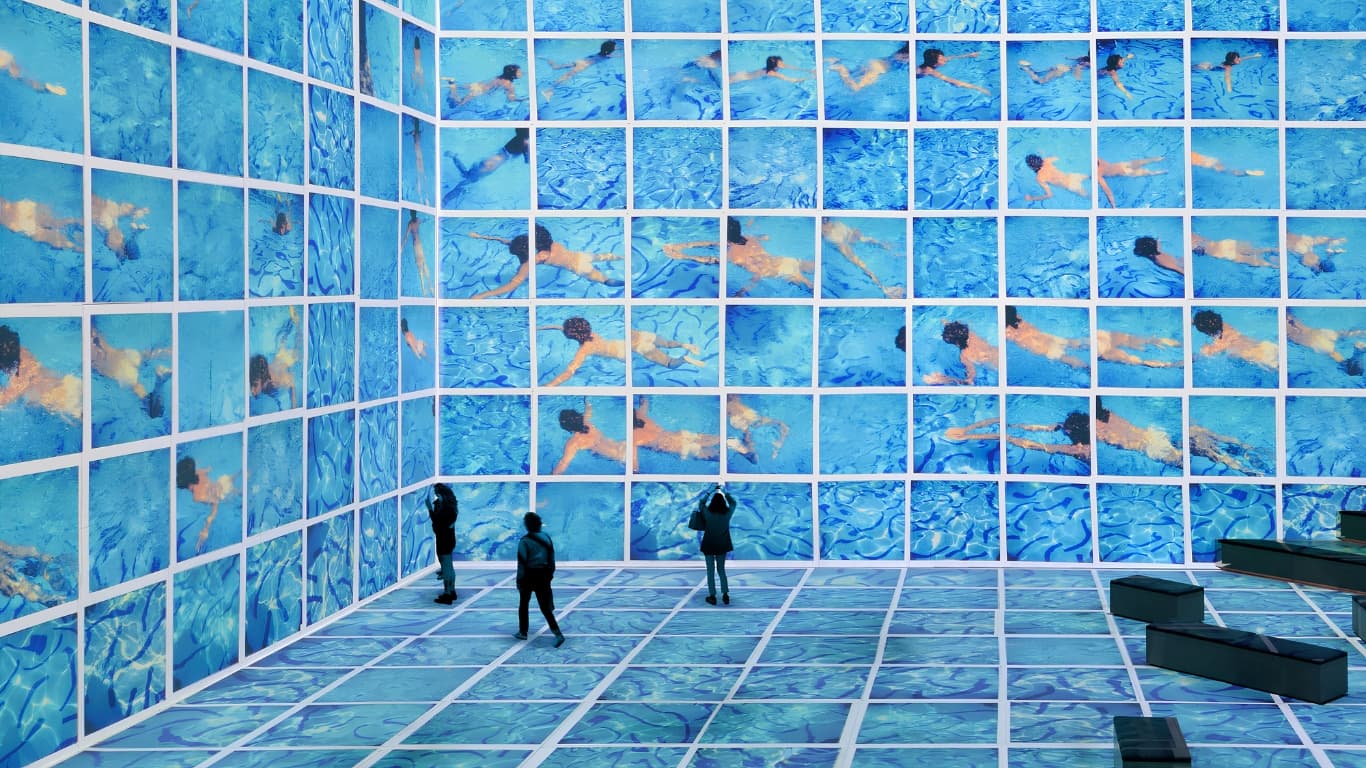
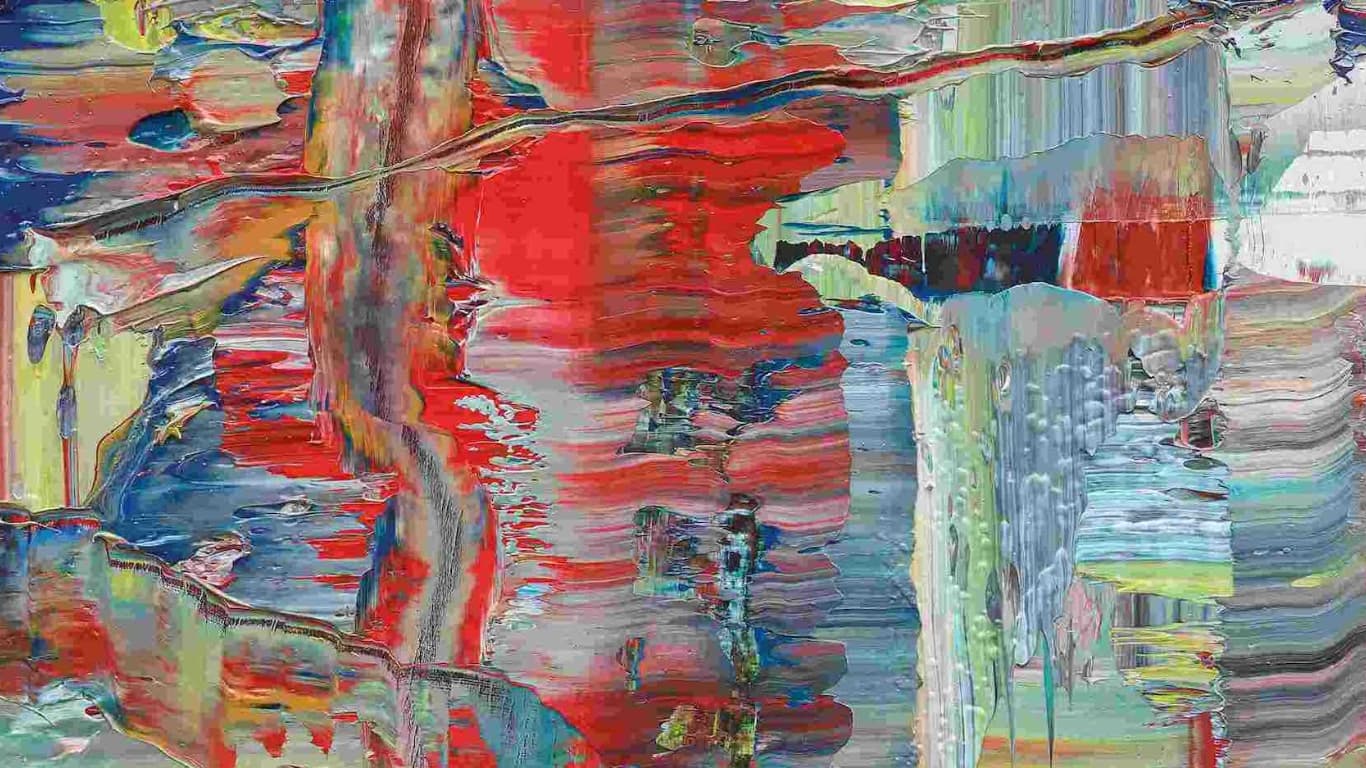
- The blue-chip artists defining 2026 include Picasso, Warhol, Basquiat, Richter, Twombly, Kiefer, Doig and Hockney, who anchor the deepest evening-sale prices.
- A second tier of established post-war and contemporary names including Rothko, Pollock, de Kooning and Calder continues to drive consistent institutional demand.
- Living blue-chip names such as Hockney, Richter and Marshall combine museum reach with strong gallery support, which protects long-term collector confidence in the work.
- Top-tier prices at Christie’s, Sotheby’s and Phillips evening sales continue to set the headline benchmarks that define what blue chip really means in any given season.
- Selectivity at the top has sharpened, with collectors increasingly favouring the strongest works rather than the broadest production of even the most canonical artists.
- Blue chip ultimately means a combination of institutional depth, scholarly attention and consistent market behaviour across multiple cycles, not simply a high recent sale price.
- Who is this for?
- Serious collectors, advisors and family offices building positions in blue-chip art, alongside readers who want a clear read on which artists genuinely anchor the 2026 market.
- What is happening?
- An editorial overview of the blue-chip artists defining 2026, covering canonical modern names, post-war painters and the living artists with the deepest institutional support.
- When did this emerge?
- Most relevant around the May and November evening sales at Christie’s, Sotheby’s and Phillips, and during the Art Basel and Frieze fair cycles that anchor the global calendar.
- Where is this happening?
- Centred on the New York, London, Hong Kong and Paris salesrooms, with growing institutional demand from museums and private collectors across Asia and the Middle East.
- Why does it matter?
- Understanding which artists actually carry blue-chip status protects collectors from short-cycle fashion and supports the kind of disciplined buying that holds value across institutional cycles.
What blue-chip actually means
Blue-chip is a market term that imports an equities-market concept into the art market context.
The structural definition runs across several dimensions: deep institutional engagement (major museum holdings, sustained curatorial attention, monograph publication record), durable secondary-market liquidity (frequent surfacing at major auction houses with reliable price discovery), sustained collector demand across multiple generations of buyers, and the cultural durability that comes from established art-historical importance.
The tier admits new entrants slowly. An artist typically crosses into blue-chip after a decade or two of serious institutional engagement, after the secondary market has developed sufficient depth to support reliable price discovery, and after the cultural conversation has placed the artist in the historical record rather than the contemporary discourse.
The modern blue-chip canon
The modern blue-chip tier runs through the late-19th and early-20th-century European traditions. Pablo Picasso anchors the tier; Picasso's most valuable works include Les Femmes d'Alger Version O at $179.4 million at Christie's New York in May 2015, and the broader Picasso market continues to generate hundreds of millions of dollars in annual transaction volume across the various periods of his career.
Claude Monet, Pierre-Auguste Renoir, Edgar Degas, Édouard Manet, Paul Cézanne, Vincent van Gogh, Paul Gauguin, Henri Matisse, Gustav Klimt, Egon Schiele, Amedeo Modigliani, Constantin Brâncuși, and Auguste Rodin collectively anchor the modern blue-chip tier alongside Picasso. The auction-market records each has set (Monet's Meules at $110. 7 million, Klimt's Lady with a Fan at $108.
4 million at Sotheby's London in June 2023) demonstrate the structural pricing depth.
The post-war blue-chip canon
The post-war blue-chip tier runs through the American and European traditions after 1945.
The New York School (Pollock, Rothko, Newman, Still, de Kooning, Kline, Frankenthaler), the European post-war tradition (Lucio Fontana, Yves Klein, Alberto Giacometti, Francis Bacon, Lucian Freud), the Minimalists and Conceptualists who emerged in the 1960s and 1970s (Donald Judd, Carl Andre, Sol LeWitt, Agnes Martin), and the Pop Art tradition (Andy Warhol, Roy Lichtenstein, Robert Rauschenberg, Jasper Johns) collectively anchor the tier.
The auction-market records reflect the structural pricing. Bacon's Three Studies of Lucian Freud cleared $142. 4 million at Christie's New York in November 2013.
Warhol's Shot Sage Blue Marilyn cleared $195 million at Christie's New York in May 2022, the highest price ever paid for an American artwork at auction. Rothko's Orange, Red, Yellow cleared $86. 9 million at Christie's New York in May 2012.
Each of these results sits within a deep pattern of comparable transactions for the named artists.
The contemporary blue-chip tier
The contemporary blue-chip tier (artists who have reached blue-chip status from the post-1980 generation) is more selective and contested than the modern and post-war tiers. The structural anchors include Jean-Michel Basquiat above all, whose market-defining works have set the reference points that the broader post-graffiti and Neo-Expressionist tier prices against. Basquiat's Untitled (1982) cleared $110.
5 million at Sotheby's New York in May 2017.
Beyond Basquiat, the contemporary blue-chip tier includes Gerhard Richter (German, born 1932; multiple works above $40 million), Anselm Kiefer (German, born 1945), Cy Twombly (American, 1928 to 2011; the Three Studies from the Temeraire cleared $46 million), Andreas Gursky (German photographer, born 1955; Rhein II at $4.3 million), Mark Bradford (American, born 1961; major institutional engagement), Julie Mehretu (Ethiopian-American, born 1970; Mogamma A Painting in Four Parts at $9.2 million), Mark Grotjahn, Christopher Wool, and a handful of others whose institutional and secondary-market positions sit at the threshold.
The emerging blue-chip names
Several contemporary artists are approaching the blue-chip threshold but have not yet structurally crossed it. Lynette Yiadom-Boakye, Kerry James Marshall, and Mark Bradford sit at varying points on this transition.
Each has built deep institutional engagement, deep curatorial attention, and meaningful secondary-market depth, and the path from approaching the threshold to crossing it depends on continued institutional engagement plus the sustained secondary-market activity that confirms the durability.
For collectors building toward exposure to the contemporary blue-chip tier, the structural choice runs across two routes. Acquire the established blue-chip names at the prices they command (typically in the multi-million-dollar range), or acquire the approaching-blue-chip names at their current price points with the structural thesis that they will cross the threshold over the next decade.
Each route has its own discipline; the latter requires sustained engagement with the institutional ecosystem to identify which artists are actually on the trajectory rather than just at the price points.
The institutional infrastructure that anchors blue-chip
The blue-chip tier exists because of the institutional infrastructure that anchors it. The major museums (MoMA, the Tate, the Pompidou, the Whitney, the Met, the Kunstmuseum Basel, the Stedelijk, the Reina Sofía) maintain deep holdings across the blue-chip canon and continue to add works when meaningful examples become available.
The major galleries (Pace, David Zwirner, Hauser & Wirth, Gagosian, Lisson, Marian Goodman) represent or have represented the contemporary blue-chip names and manage their primary markets.
The major auction houses (Christie's, Sotheby's, Phillips) run specialist departments dedicated to the blue-chip canon and route the most significant works through evening sales that anchor the structural pricing. The major academic institutions and the serious art-historical publications maintain the scholarly engagement that establishes the historical record.
This institutional infrastructure is what distinguishes blue-chip from non-blue-chip. An artist whose primary engagement is with galleries and auction houses but who lacks the museum and academic anchoring is operating in the market without the structural depth that blue-chip requires.
The 2026 trends within the blue-chip tier
Two structural trends shape the blue-chip tier in 2026. First, the continued expansion of the canon to include serious historical and contemporary work by women artists. The blue-chip tier has admitted Agnes Martin, Joan Mitchell, Helen Frankenthaler, Bridget Riley, Yayoi Kusama, Cindy Sherman, and several others over the past two decades, and the addition of Yiadom-Boakye, Mehretu, and others approaching the threshold suggests further expansion through 2026 and beyond.
Second, the continued geographic broadening of the canon to include serious non-Western blue-chip names. Zao Wou-Ki (Chinese-French, 1920 to 2013) crossed the blue-chip threshold definitively over the past decade with multiple works above $30 million. Other Asian, Latin American, and African artists are at various points on similar trajectories.
What this means for collectors
The blue-chip tier is the structural backbone of any serious modern or contemporary collection. For collectors building toward serious depth, the question is not whether to engage with the tier but how, and the answer depends on the collector's available capital, the relationships they have built, and the specific categories within blue-chip that align with their developing point of view.
The structural priority for any blue-chip acquisition is the same regardless of the specific artist: condition, provenance, exhibition history, and the work's quality within the relevant period of the artist's career. The differences between major and minor works within the same artist's catalogue are structurally enormous in pricing terms, and the discipline required to identify the major examples is the central craft. For collectors thinking about which blue-chip names to commit to, the highest-priced works in the broader market provide a useful structural map, and the artists who anchor that map are the names that will continue to anchor the blue-chip tier through 2026 and beyond.
We last reviewed this analysis in May 2026.

Frequently Asked Questions
- How do I determine if an artwork is blue-chip?
- Blue-chip artworks are created by established artists with strong auction histories, institutional recognition, and global demand. Their works are consistently featured in major museums, galleries, and private collections.<br><br>
Stefanos Moschopoulos
Stefanos Moschopoulos founded The Luxury Playbook in Athens and has spent the better part of a decade following the auction calendar, the en primeur releases, and the watchmakers, gallerists, and shipyards the magazine covers. He writes the field guides and listicles that anchor the Connoisseur section — pieces built on Phillips and Christie's results, Liv-ex movements, and conversations with collectors he has met across Geneva, Bordeaux, Basel, and Monaco. His own collecting habits sit closer to watches and wine than art, and it shows in the level of detail in the magazine's coverage of those categories. Under his direction, The Luxury Playbook now publishes long-form field guides, market-defining year-end listicles, and the Voices interview series with the founders behind the houses and the brands.