
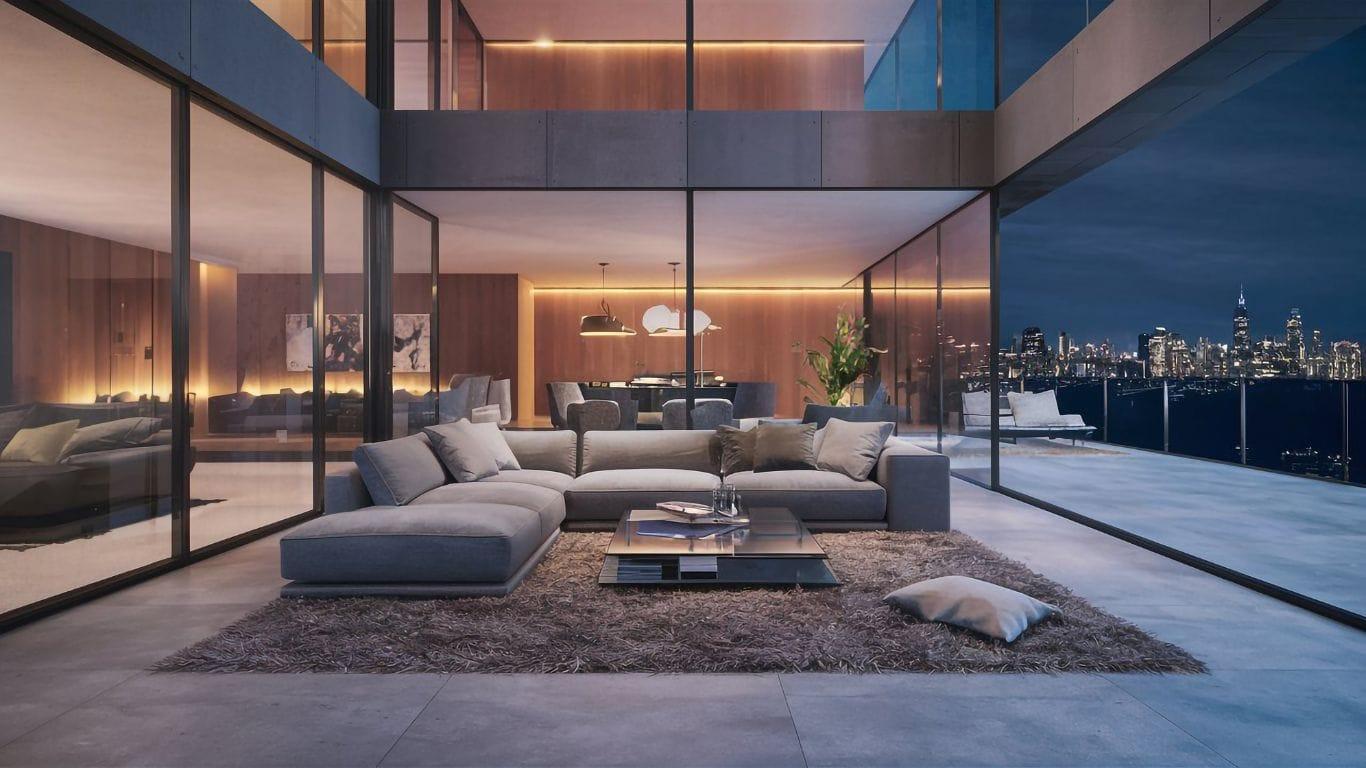
Renovation work on prime residential property in 2026 is a different conversation from the standard remodel guides that populate the home-improvement category. At the prime level, the question isn't "what renovations add value", it's "what renovations honor the architecture, work for the family's actual life, and survive at the standard the building deserves over a multi-decade horizon." Below, our editorial cut of the renovation work that actually does this for prime buyers landing on serious property in 2026.
- Renovations that consistently add property value in 2026 include kitchen updates, bathroom refreshes, energy efficiency improvements and modest curb appeal investments.
- We see kitchen renovations typically returning sixty to eighty percent of investment on resale, with quality materials and timeless design choices outperforming trend-driven specifications.
- Bathroom updates similarly recover sixty to seventy percent of investment, with master bathroom upgrades generally outperforming secondary bathroom investments in resale value.
- Energy efficiency improvements including heat pump installations, insulation upgrades and solar panels have become defensive investments given tightening regulation across major markets.
- Curb appeal investments including front door updates, landscaping refresh and exterior paint often deliver among the highest percentage returns on relatively modest spend.
- For most considered owners we view renovation investment as warranting honest after-tax return analysis rather than emotional preference, since not every project justifies its cost on resale.
- Who is this for?
- Property owners considering renovation investments, alongside agents, advisers and contractors supporting value-focused renovation decisions across owner-occupied and investment property.
- What is happening?
- A practical guide to renovations that actually add property value in 2026, covering kitchens, bathrooms, energy efficiency, curb appeal and the projects worth avoiding.
- When did this emerge?
- The article reflects current renovation cost benchmarks and resale return data as observed through 2025 and 2026, including the latest energy efficiency regulation effects.
- Where is this happening?
- The reasoning translates across major Anglophone and continental European residential markets, with regional variation in renovation cost structures and resale return benchmarks.
- Why does it matter?
- Renovation investment frequently delivers below the spend in resale value, which is why explicit return analysis matters before committing to any major project at the property.
Kitchen and primary-living areas, done by serious architects
The cost-benefit math on renovation is documented in depth by the major data providers. Zillow publishes recurring research on which renovations actually move closing prices, and Redfin tracks complementary data on time-to-sell impact.
From a UK angle, Rightmove and Nationwide publish recurring research on the renovation features that command price premiums. Pairing both with RICS valuation guidance is how disciplined buyers calibrate spend against expected uplift.
The most consequential renovation in any prime home is the primary-living layout. The kitchen, the dining-and-living area, the relationship between them and the gardens or outdoor terraces. The architects who do this work at the level prime buildings deserve, Studio Indigo, Waldo Works, Tom Bartlett, Studio Reed in London; Atelier Pritchard, Joseph Dirand, India Mahdavi in Paris; Roman and Williams, Studio Sofield, Steven Gambrel in Manhattan, produce work that holds for decades.
The cost layer is meaningful. Mansion Global's 2025 prime renovation dispatch put central London top-end kitchen-and-living-room work at £1,500-2,500 per square foot for finished work. The result, when commissioned well, is an architectural standard that elevates the entire building.
The primary suite restoration
The primary bedroom suite, bedroom, dressing room, bathroom, often a private sitting area, is the second most consequential renovation in prime homes. The work involves not just the spaces themselves but the relationship between them: how light moves through the suite, how the dressing room flows from the bedroom, how the bathroom is laid out.
The serious bathroom designers, practices like Bagno Design, the Drummonds collaborations, the work of Studio Indigo and Tom Bartlett on London townhouses, produce primary suites that genuinely improve the daily life of the owner.
The architectural restoration of original detail
For listed and period-significant buildings, the most valuable renovation work is often restoration rather than alteration. Original cornices, ceiling roses, fireplaces, joinery, parquet floors, and chimneypieces are the architectural assets that distinguish prime buildings from generic residential property. The conservation specialists, practices like Donald Insall Associates, Thomas Ford & Partners, the conservation desks at Allies and Morrison, work in this register.
The work is technically demanding and benefits from specialists who understand the period and the materials.
Restoration done well typically increases the property's resale value at the prime end (when buyers eventually do change), but more importantly, it produces a quality of architecture that no contemporary renovation can replicate.
Mechanical and structural systems
The unromantic but most operationally important renovation work in prime buildings is the mechanical layer: heating, cooling, electrical, plumbing, water management, and the building envelope (roof, walls, windows, insulation). Prime homes built before 1960 often need substantial modernization in these areas. The work isn't visible after completion, but it determines whether the property is comfortable to live in, expensive to operate, and structurally sound over the next fifty years.
The contractors capable of this work at the standard prime buildings deserve are firms like London-based MJM Construction, the heritage divisions at Hassell and Mace, and the prime residential desks at the major US contractors (Lendlease's residential desk, M&A Engineering, Skanska's high-end residential team). The cost layer is meaningful but the impact on long-term ownership is substantial.
The garden and outdoor architecture
For properties with gardens, the landscape work is often the most enjoyable renovation.
The serious garden designers, Tom Stuart-Smith, Dan Pearson, Marian Boswall, Arabella Lennox-Boyd in the UK; Louis Benech, Jacques Wirtz, Erik Dhont on the Continent; Piet Oudolf for the perennial work; Edmund Hollander, Hollander Design Landscape Architects, Janice Parker for US prime, produce gardens that become as much a part of the property as the building itself.
The work is multi-year, the rewards compound across seasons, and the resulting outdoor architecture often becomes the defining feature of the property.
The library, study, and home-working spaces
The post-2020 reset of working patterns has made dedicated home-working spaces meaningfully more important. The serious cabinetmakers and joinery firms, Tom Faulkner, Pinch, the bespoke desks at firms like Gray's of Westminster, produce libraries, studies, and working spaces that integrate into the architecture of the property.
Mansion Global's 2025 buyer survey placed home-working space among the top-three renovation priorities for prime buyers landing on properties in 2026, alongside primary suite work and primary-living area architecture.
Wine cellars, gym, and wellness
Wine cellars, fitness rooms, and wellness spaces have become standard components of prime residential renovation. The wine-cellar specialists, firms like Spiral Cellars, Wine Cellars International, and the bespoke work of Smallbone of Devizes, produce climate-controlled cellars that integrate into existing buildings without compromising the architectural register.
Wellness spaces, saunas, steam rooms, treatment rooms, have moved from spa-resort context into private-home design, with manufacturers like KLAFS, Tylö, and the bespoke work of designers like 1508 London producing serious work.
What doesn't actually work
The renovation work that consistently produces disappointing outcomes at the prime level falls into a recognizable pattern. Removing original architectural detail to "modernize" a period building. Compromising the architectural register with imported style cues that don't fit the building's vintage.
Choosing contractors based on cost rather than depth of period experience. Treating renovation as a transaction rather than as a multi-year architectural commitment. These mistakes recur across the buyers we cover, and they tend to be expensive to remediate.
The owner's takeaway
The renovation work that actually serves prime residential property is work that honors the architecture, fits the family's daily life, uses contractors and architects with deep period experience, and is done with a long horizon in mind.
The cost layer is meaningful, but the durability of the result, a property that genuinely improves over time, holds its character through cycles, and serves successive generations, justifies the work. Buyers who approach renovation as architectural commissioning rather than as remodel-for-resale tend to land in homes that hold for generations.
Buyers who optimize for short-term resale value tend to compromise the architectural register in ways that ultimately underdeliver. The work is operational, architectural, and patient. Doing it well produces homes worth keeping.
We last reviewed this analysis in May 2026.