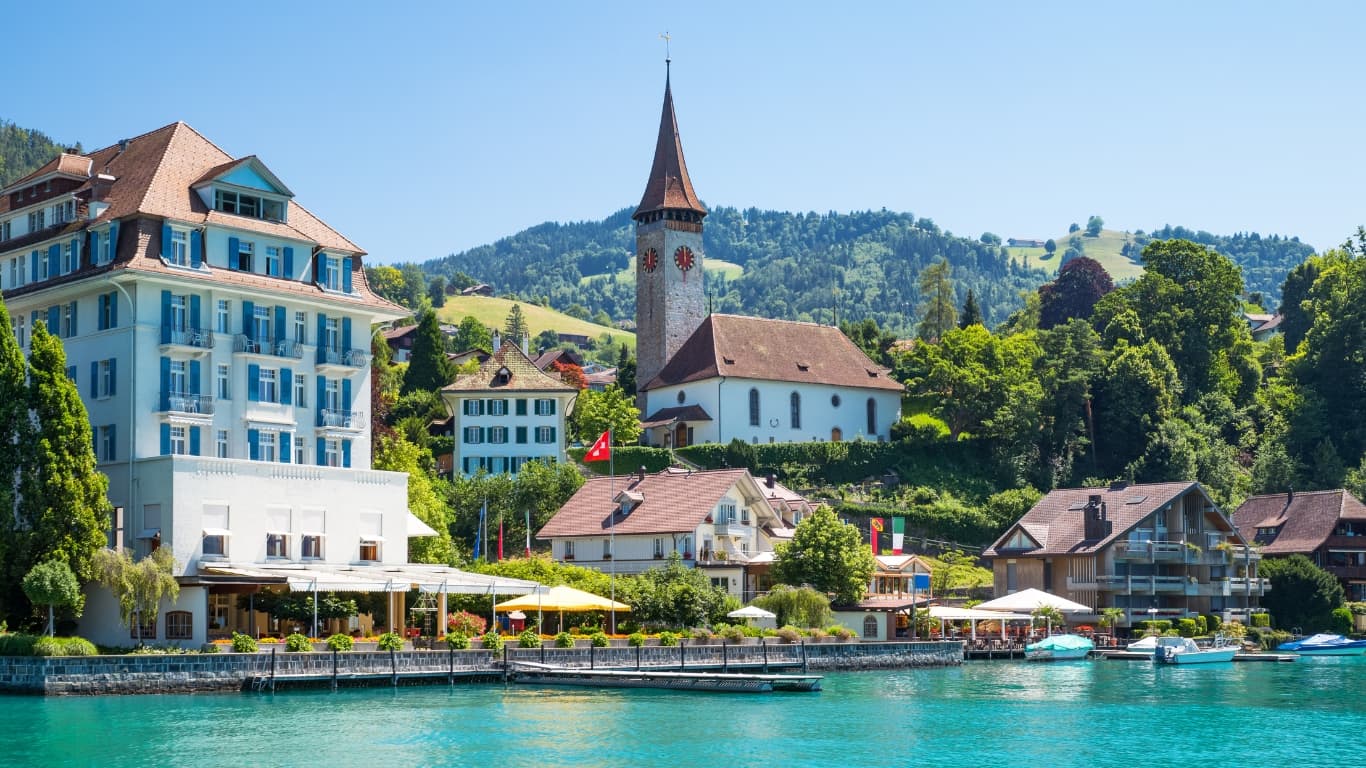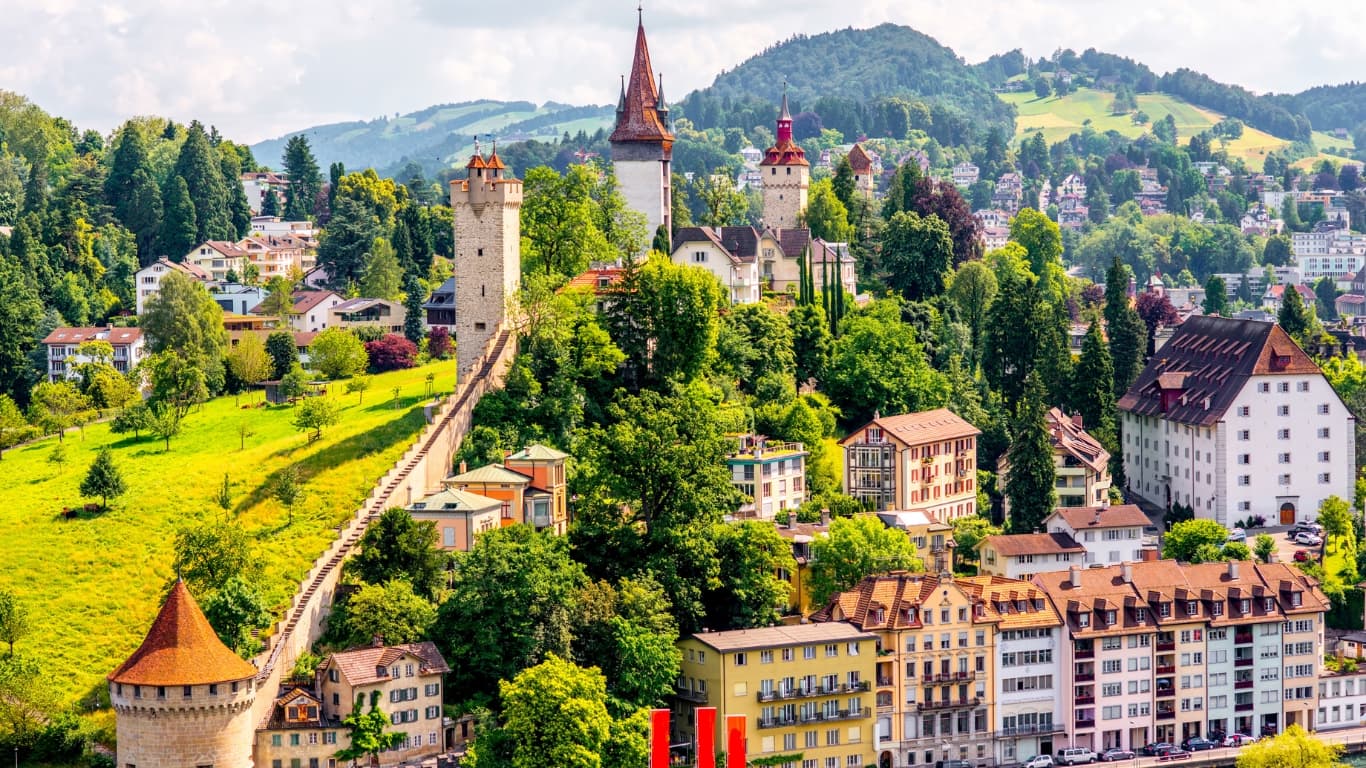
The Swiss National Bank cut its policy rate to 0 percent in March 2025, the first time since 2022 the country has returned to the zero bound. Mortgage rates followed within weeks. The signal to the property market was unambiguous, and prime cantons reacted as the SNB knew they would.
By the SNB's own Financial Stability Report, Swiss residential prices were already 25 to 35 percent above fundamental valuation in Zurich, Geneva and Zug before the cut. UBS flags as having localized bubble characteristics several of these same micro-markets. We'd argue the central bank has chosen between two unattractive options and accepted the cost on the property side.
Cross-border investor events including rise have spent the past 18 months mapping how a zero-bound Switzerland reshuffles the global safe-haven hierarchy, and the read coming out of those rooms is consistent.

- The Swiss National Bank rate cut to zero has reshaped the cost of borrowing across the residential market, with cheaper mortgages adding fuel to an already constrained supply picture.
- We see the rate cut benefiting borrowers in the near term while raising the broader question of whether residential price stability has been traded for economic stimulation.
- Wuest Partner and UBS Real Estate data shows residential prices responding to the lower-rate environment, with affordability deteriorating despite cheaper mortgage payments.
- The combination of cheap credit and constrained supply has historically driven asset price inflation, with Switzerland now navigating this familiar tension at a meaningful scale.
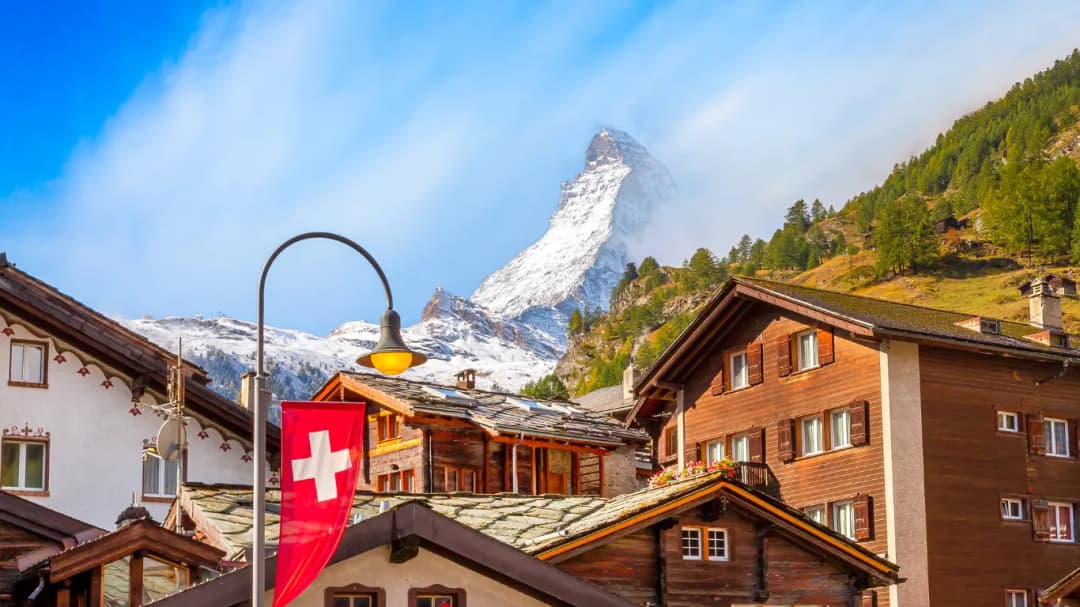
- Lex Koller restrictions continue to limit foreign demand channels, which partially mitigates the overheating risk but does not eliminate the domestic affordability pressure.
- For most considered Swiss observers we view the rate cut as a textbook trade-off, with the medium-term residential implications likely outweighing the near-term economic relief.
- Who is this for?
- Swiss residents, mortgage borrowers, policy observers and the advisers tracking the SNB monetary policy implications for the residential market.
- What is happening?
- A read of whether the zero rate cut sacrificed Swiss property stability, covering mortgage cost dynamics, supply constraints and the policy trade-off framework.
- When did this emerge?
- The article reflects 2025 and 2026 conditions following the SNB rate cut, with reference to historical episodes of cheap-credit-driven asset inflation.
- Where is this happening?
- The piece covers Switzerland broadly, with reference to the cross-cantonal variation in residential response to the rate environment.
- Why does it matter?
- Monetary policy choices shape residential market trajectories, which is why understanding the rate-cut trade-off matters for borrowers, savers and policy observers alike.
Cheaper Mortgages, Re-Ignited Bidding
Five-year fixed mortgages cleared 1. 25 percent within six weeks of the cut, the lowest level since 2022, according to Helvetia Baloise rate sheets. The transmission to bidding behaviour was almost immediate.
Sotheby's International Realty's Zurich and Geneva desks both reported a step-up in best-and-final processes through Q2 and Q3.
The mechanics are familiar to anyone who has read Swiss Federal Administration data on housing affordability. Prime cantonal property is overwhelmingly bought with mortgage finance, and even Swiss UHNW buyers structure the position around leverage for tax efficiency.
What that means in practice is that a 100 basis point shift in mortgage rates feeds almost directly into bid ceilings. Engel and Voelkers' Lake Geneva desk has noted the same dynamic in its 2025 commentary.
The contrast with what is happening across the Atlantic is striking. We covered the contrast with what's happening in U.S. luxury home prices, where rate-cycle transmission has been far weaker because the cash-buyer cohort dominates the premium tier.
Is the SNB Steering Toward a Cliff Edge
The SNB's own valuation model puts the Swiss prime tier at the upper end of its 25-year historical band. Layering cheaper credit onto a market already at that valuation is, by any conventional reading, increasing tail risk in exchange for short-term stimulus. The Manhattan rental market offers a revealing parallel: when leverage gets cheaper but housing supply does not, the price level resets up, not the affordability ratio.
The Lex Koller framework, which restricts foreign acquisition of Swiss residential property, has historically been the safety valve preventing the kind of speculative overshoot seen in other safe-haven property markets. Lex Koller is doing real work here. Without it, Geneva and Lake Zurich would look much more like London prime or Vancouver did pre-2017.
Knight Frank's Zurich research desk has flagged that Lex Koller exemptions, particularly in resort cantons including Vaud and the Grisons, have become the practical channel for international demand. That channel is now flowing more easily, not less.
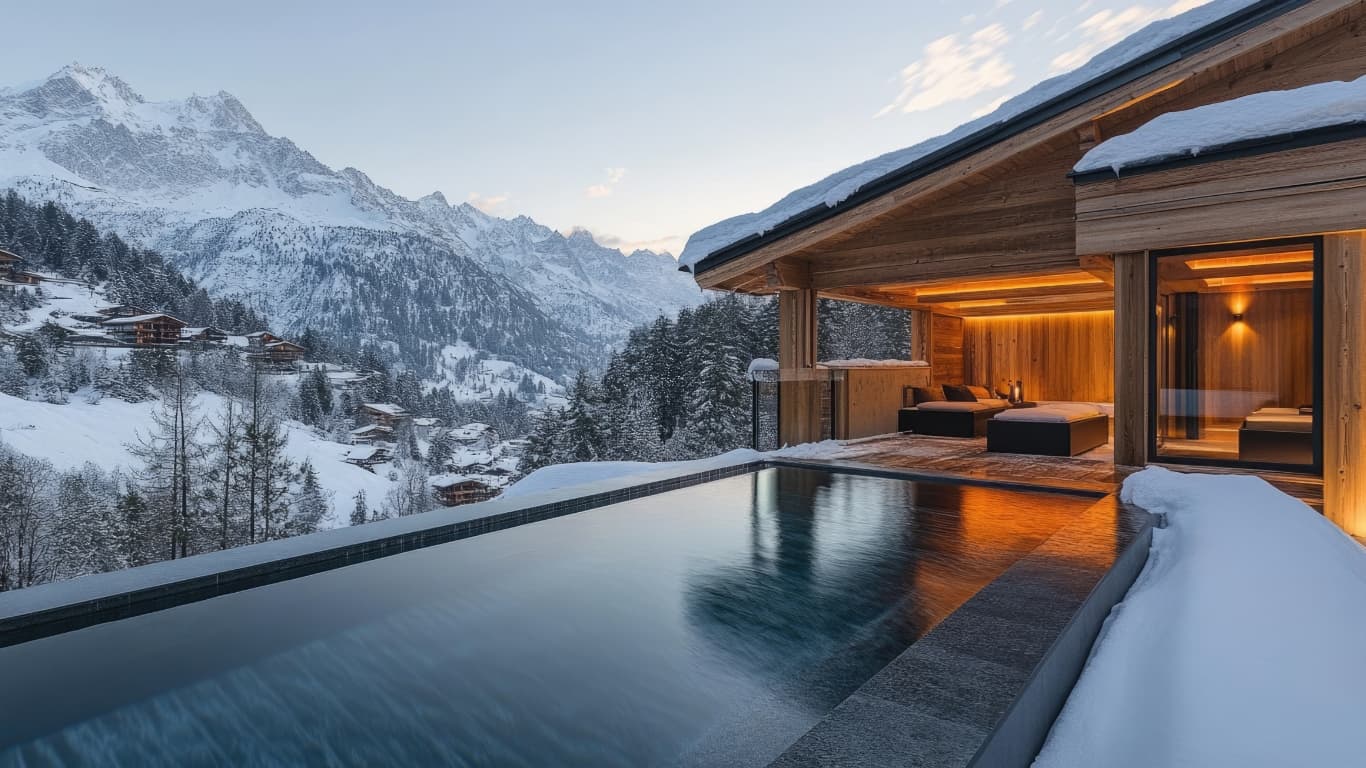
Pricing in Gstaad's real estate market is the cleanest barometer. Prime chalet inventory now trades comfortably above 35,000 Swiss francs per square metre on the headline streets, with discreet bids reported in the 40,000 to 50,000 band. The cut amplified the bid book.
Christie's International Real Estate's Swiss desks have reported a step-up in trophy-chalet listings registered through 2025. That is itself a tell. Brokers list when they expect a market thicker than the prior cycle, not when they expect retrenchment.
Mansion Global's coverage of the Engadin and Bernese Oberland through 2025 supports the same read. The bid book at the top of the Swiss market has been re-energised, not exhausted.
Can Switzerland Avoid Triggering Multiple Traps
The risk the SNB is managing is a triple trap. First, a franc that strengthens excessively against the euro and damages the export base. Second, an affordability collapse in domestic urban property that prices a generation of Swiss professionals out of the market entirely.
Third, a banking-sector exposure to property risk that, post-Credit Suisse, the country cannot afford to reignite.
JLL, Cushman and Wakefield and CBRE all flag the affordability arc as the highest-conviction risk for the next 24 months. Bloomberg's Zurich-based reporting has been consistent in pointing out that the SNB has effectively prioritised the export channel and the franc, and accepted the property-side cost.
The signal for buyers is in the macro architecture, not the headline rate. Prime Swiss property is now structurally more expensive in francs and structurally more attractive to foreign buyers using strengthening currencies to enter the bid.
What This Means for Buyers
Lex Koller-exempt resort property remains the cleanest entry route for non-Swiss buyers, particularly in cantons where prime chalet inventory still trades at discounts to the headline alpine resorts. The cut has thickened the bid for that exact product.
The Geneva Real Estate Market warrants particular attention because the cantonal authorities have signalled they will not amend Lex Koller restrictions despite federal-level discussion. That makes Geneva structurally protected from foreign-money overshoot and a candidate for steadier compounding rather than spike performance.
For UHNW buyers, the underwriting that holds up is the all-cash bid on freehold trophy assets in the Lex Koller-restricted segment, sourced through the long-tenured brokerage network rather than open-market listings. Christie's International Real Estate's Swiss coverage and Sotheby's International Realty's mountain-resort desk are the right starting points.
The wider question of understanding which real estate types hold up under regulatory pressure resolves into a simple framework here: scarcity-protected, regulator-protected, currency-protected. Prime Swiss property has all three. We last reviewed this analysis in May 2026.

Savvas Agathangelou
Savvas Agathangelou co-founded The Luxury Playbook and has spent years reporting from the prime postcodes the magazine covers — Mayfair, Knightsbridge, the Athens Riviera, Dubai's Palm crescents, and the southern Mediterranean coastlines where the world's wealthy keep coming back. His background is in international hospitality, and that frame shapes how he writes about property: the developer's choices, the architect's signature, the agency's bench of named brokers, the building's service standard once the buyer moves in. He files developer spotlights, agency profiles, and the seasonal "Properties That Defined" listicles, and he hosts the magazine's founder-and-leadership interviews on the Voices side.