Most complications announce themselves. A chronograph, a date, a second time zone: useful, legible, everywhere. The rarest watch complications do the opposite. They hide in plain sight, understood by a few, attempted by fewer, and made in numbers a collector can almost count on two hands. The equation of time sits near the head of that quiet list, the rarest complication you will still meet in mainstream haute horlogerie.
When Phillips and Christie's assemble their marquee watch sales, the lots that draw the deepest bidding are rarely the loudest. A running equation of time, a grande sonnerie, a celestial chart: these are the pieces that empty a room of casual interest and concentrate the serious money. Hodinkee and the salerooms have spent a decade teaching collectors to read the complication first and the brand second. This is a guide to the rarest watch complications of all time, and to the one we would argue is the rarest you will actually encounter.

Key Takeaways & The 5Ws
- The rarest watch complications are defined by mechanical difficulty and by how few benches can build them, not by usefulness.
- The equation of time is the rarest complication still found in mainstream haute horlogerie, above all in its running form.
- The grande sonnerie and the minute repeater are the chiming summits, voiced by only a handful of houses.
- Astronomical complications, from celestial charts to planetariums, are among the scarcest mechanisms ever made.
- The most complicated watches ever built, such as the Vacheron Constantin Reference 57260, gather many of these rarities into one case.
- Who is this for?
- Collectors and enthusiasts who want to understand which watch complications are genuinely rare, and why they command such devotion.
- What is it?
- A ranked guide to the rarest watch complications of all time, with the equation of time as the rarest mainstream example.
- When does it matter most?
- When you are reading an auction catalogue, comparing two haute complications, or deciding what a watch is really worth on the wrist.
- Where does it apply?
- Across high horology, from the chiming benches of Geneva and Glashütte to the astronomical specialists of the Low Countries.
- Why consider it?
- Because complication, not brand, increasingly decides what serious collectors chase and what the salerooms reward.
What Makes a Watch Complication Rare
A complication is any function a watch performs beyond telling the time. A date is a complication. So is a second time zone. By that measure complications are everywhere, which is exactly why rarity has nothing to do with the function itself and everything to do with how hard it is to build. The rarest watch complications share three traits: a mechanism that pushes the limits of what gears and springs can do, a tiny number of watchmakers anywhere who can finish one to standard, and annual production a serious collector could tally from memory.
The field arranges itself as a gradient. At the accessible end sit the chronograph and the GMT, complications so well understood they appear at almost every price. In the middle live the perpetual calendar and the tourbillon, once genuine rarities, now the gateway to high horology and produced in real volume. Then come the summits, the chiming and astronomical complications that only a few houses attempt, where a single piece can take a master a year or more to assemble. That last tier is where the rarest watch complications actually live.
The Equation of Time, the Rarest You Will Actually Meet
The equation of time charts a small, slow truth: the clock keeps an even day, and the sun does not. Across the year the two drift apart by as much as a quarter of an hour in each direction before agreeing again on four dates. A watch fitted with the complication shows that gap on the dial. State the idea once and the astronomy is done, because the interesting part is the watchmaking.
Two versions exist, and only one is genuinely rare. The common marching display gives a small hand or subdial that jumps to today's value. The far scarcer running equation drives a second, true solar minute hand directly, through a slowly rotating cam shaped like a kidney, a feat tied above all to Breguet. Most makers never attempt it; a short list that includes Patek Philippe and Vacheron Constantin keeps it alive. It does nothing you need, and that is the point. It is astronomy worn quietly, and the same instinct that draws a collector to it explains why Breguet belongs in a serious collection. Of all the great mechanisms, this is the rarest you will still find without leaving the mainstream.
The Top 10 Rarest Watch Complications of All Time
Rank rarity by difficulty and by the number of benches that dare it, and a pantheon emerges. Our countdown runs from the scarcest mechanisms in horology to the rarities a determined collector can still hope to own.
- Grande sonnerie. The grand strike chimes the hours and quarters in passing, automatically, like a miniature cathedral on the wrist. Almost no house builds one, and the few that do treat it as a statement of everything they know.
- Minute repeater. It voices the time on demand, hours, quarters and minutes, through tuned gongs. The acoustic tuning alone takes a watchmaker years to master, which is why even great houses make them sparingly.
- Celestial complication. A rotating chart shows the real night sky over your city, as in Patek Philippe's Sky Moon Tourbillon. Only a handful appear in a generation.
- Running equation of time. The kidney cam driving a true solar hand, the subject of this piece, and the rarest complication still found in mainstream collections.
- Planetarium and tellurium. A solar system on the dial, the planets turning at their true periods, a specialty of Christiaan van der Klaauw and a very small group of independents.
- Constant force, or remontoir. A device that feeds the escapement perfectly even power as the mainspring runs down. Greubel Forsey and a few independents persevere with it where most do not.
- Karrusel. The rarer cousin of the tourbillon, invented by Bonniksen, with a slower carriage driven a different way. It is close to extinct outside a few benches.
- Split seconds chronograph, the rattrapante. Twin chronograph hands time two events at once, a mechanism so demanding that even storied houses build it in small numbers.
- Secular perpetual calendar. A perpetual calendar that also obeys the century rule, correcting itself across 2100, 2200 and 2300 without a touch. Vanishingly few exist.
- Multi axis tourbillon. The tourbillon turned the rarest complication of the nineteenth century into the gateway of the twenty first, yet the double and triple axis versions keep the old difficulty, and the old scarcity, intact.
Who Builds the Rarest Complications
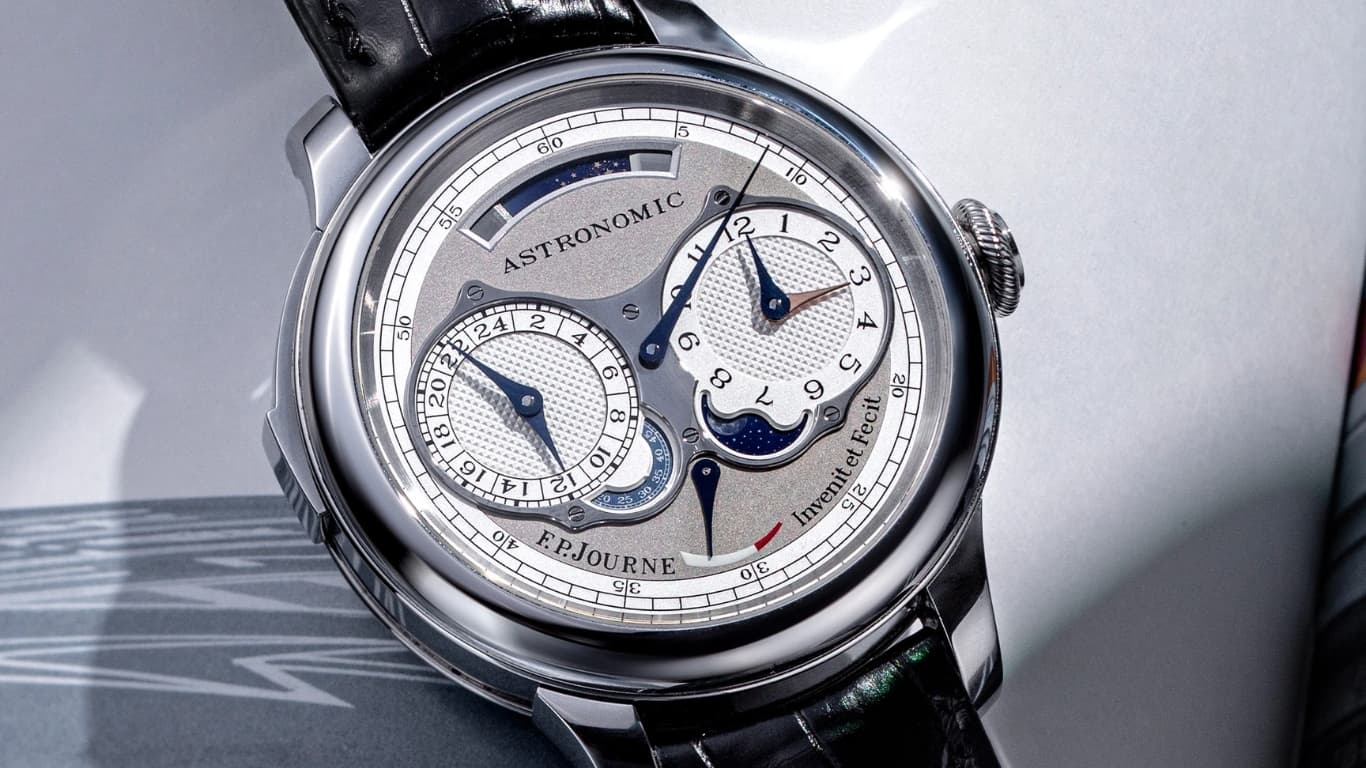
The names recur for a reason. Patek Philippe, Vacheron Constantin, Audemars Piguet, A. Lange & Söhne and Breguet hold the chiming and calendar summits between them, while independents such as Greubel Forsey and F.P. Journe push constant force and the tourbillon into new territory. For the astronomical end of the spectrum, Christiaan van der Klaauw has made the planetarium almost a house signature. The depth of that bench is part of why Patek Philippe stays a cornerstone of serious collecting.
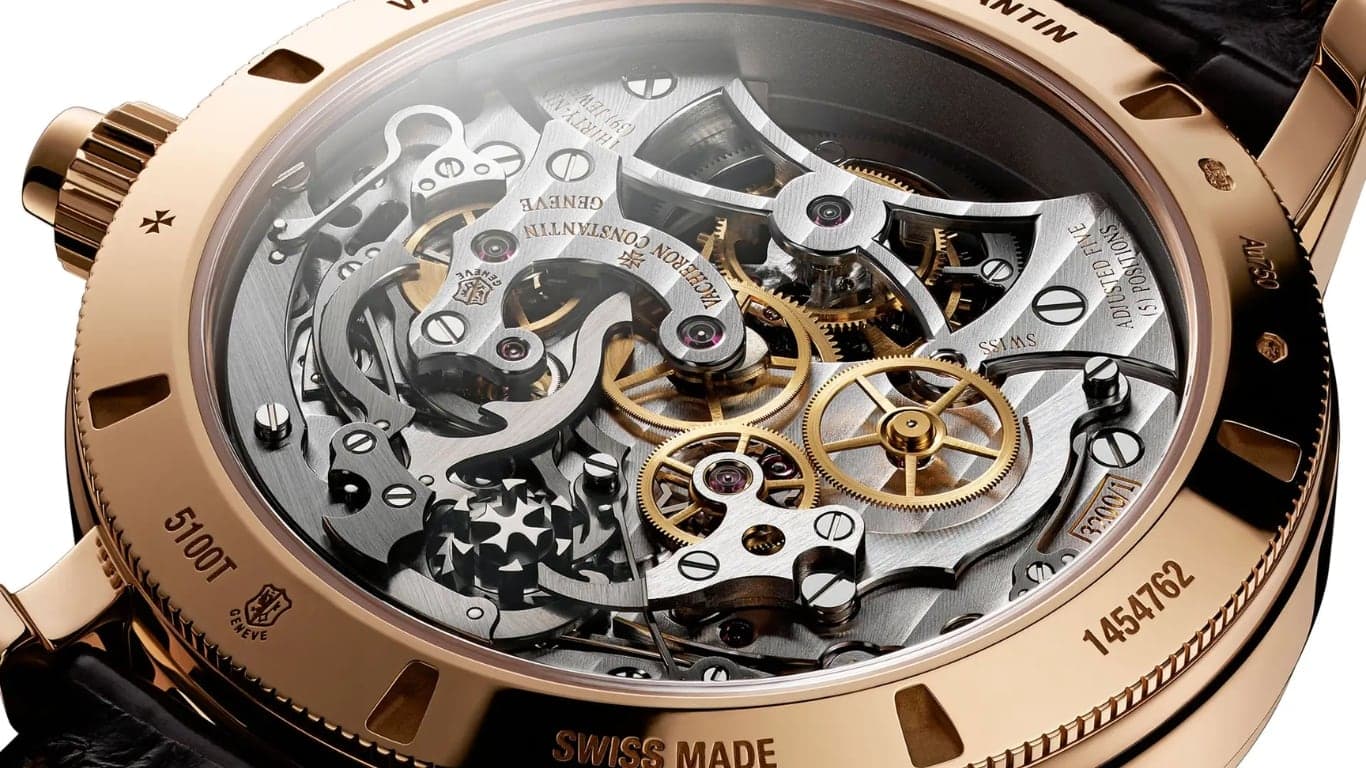
The grandest pieces gather several rarities into a single case. Vacheron Constantin's Reference 57260, completed in 2015, holds the title of the most complicated watch ever made with 57 complications. Patek Philippe's Grandmaster Chime, with 20, is the brand's most complicated wristwatch. Read either specification and you are reading an anthology of the rarest watch complications, bound together by one team over years.
Why Collectors Chase the Rarest Complications
Scarcity here is structural, not manufactured. When only a few people on earth can build a mechanism, supply is fixed at the level of human talent, and demand simply concentrates. The salerooms make the point in numbers. A unique steel Patek Philippe Grandmaster Chime sold for roughly 31 million Swiss francs at a charity auction in 2019, then the highest price ever paid for a wristwatch, precisely because it carried so many of these rarities at once. The same logic quietly lifts the standing of the pieces collectors treat as museum grade watches.
There is a connoisseur's reward beyond the price. Understanding the mechanism changes how a watch feels on the wrist, because you are no longer wearing a brand, you are wearing a problem someone spent a career solving. The rarest watch complications are not louder than the rest of horology. They are deeper, and the people who chase them tend to want depth more than noise.
The rarest watch complications reward the patient eye. Most of horology shouts; these whisper, and the whisper is the appeal. The equation of time remains the rarest you will meet without leaving the mainstream, a piece of astronomy carried quietly on the wrist and a door into a pantheon the salerooms have learned to prize above almost everything else. Learn to read the complication first, and the whole hierarchy of watchmaking rearranges itself in front of you.
Frequently Asked Questions
- What is the rarest watch complication?
- The grande sonnerie is widely regarded as the rarest and most difficult, chiming the hours and quarters automatically in passing. Only a few houses, among them Patek Philippe and Audemars Piguet, build one. Astronomical complications such as celestial charts and planetariums are comparably scarce, made in tiny numbers each generation.
- Is the equation of time a rare watch complication?
- Yes. The equation of time is the rarest complication still found in mainstream haute horlogerie, especially in its running form, where a kidney shaped cam drives a true solar hand. Breguet is the name most associated with it, and only a short list of makers, including Patek Philippe and Vacheron Constantin, keep it in production today.
- What is the most complicated watch ever made?
- The Vacheron Constantin Reference 57260, completed in 2015, holds the title with 57 complications. Among wristwatches, Patek Philippe's Grandmaster Chime, with 20 complications, is the brand's most complicated. Both gather many of the rarest watch complications into a single case.
- How rare is a minute repeater?
- Very rare. A minute repeater chimes the time on demand through tuned gongs, and the acoustic tuning takes a master watchmaker years to perfect. Even the great houses produce them in small numbers, and antique examples by makers such as Breguet and Patek Philippe are among the most sought after lots at Phillips and Christie's.

Stefanos Moschopoulos
Stefanos Moschopoulos founded The Luxury Playbook in Athens and has spent the better part of a decade following the auction calendar, the en primeur releases, and the watchmakers, gallerists, and shipyards the magazine covers. He writes the field guides and listicles that anchor the Connoisseur section — pieces built on Phillips and Christie's results, Liv-ex movements, and conversations with collectors he has met across Geneva, Bordeaux, Basel, and Monaco. His own collecting habits sit closer to watches and wine than art, and it shows in the level of detail in the magazine's coverage of those categories. Under his direction, The Luxury Playbook now publishes long-form field guides, market-defining year-end listicles, and the Voices interview series with the founders behind the houses and the brands.