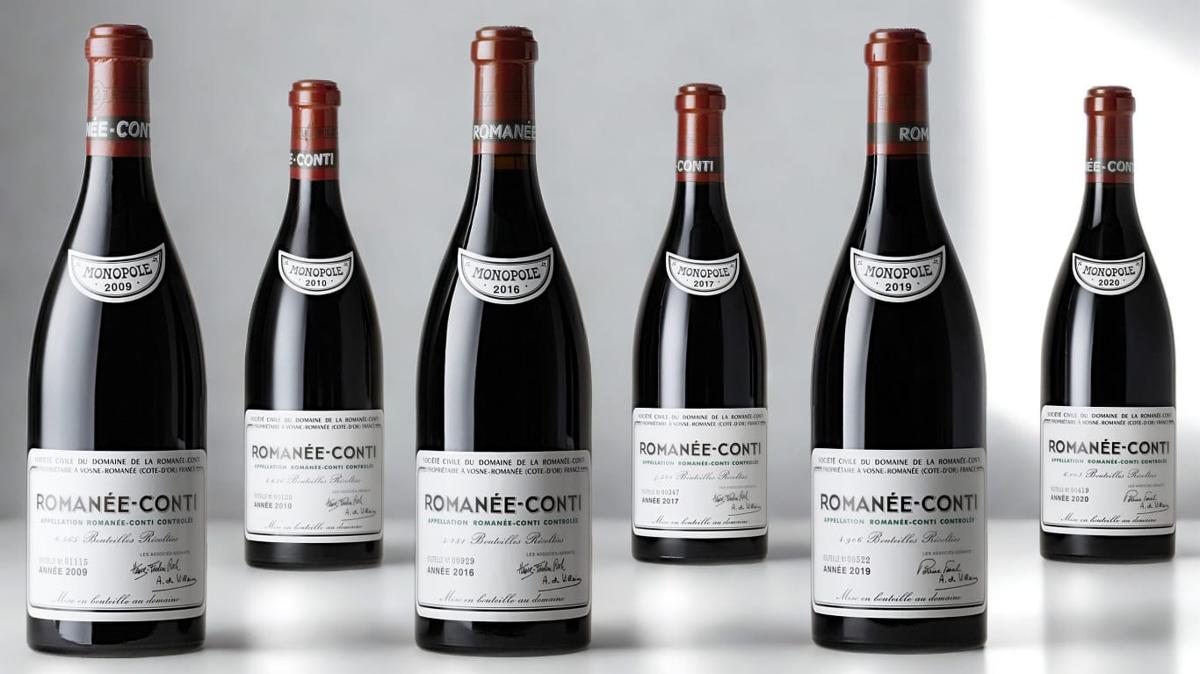

The tax treatment of wine cellars is one of the few areas where the cultural and the practical genuinely overlap. The bottles a collector buys today will, over a 10-to-25-year holding window, pass through inheritance regimes, capital gains regimes, VAT structures, bonded-storage rules, and, if the collector decides to sell at auction, sales tax considerations that vary by jurisdiction. Most serious wine collectors learn the relevant rules early.
- The tax treatment of wine cellars is one of the few areas where cultural enjoyment and practical financial planning meaningfully overlap.
- In the UK, duty and VAT on wine held in bond are suspended until release, and most wine can qualify as a wasting chattel outside Capital Gains Tax, though HMRC excludes fortified wines.
- US collectors face gains on bottle sales at up to the 28 percent collectibles rate, plus 3.8 percent investment income tax for higher earners, with state treatment varying materially.
- EU regimes diverge: France taxes gains on movable property such as wine on a scale that tapers to nil after 22 years, while Germany taxes private sales only when made within a year of purchase.
- Inheritance planning matters more than annual capital gains for cellars held across decades, and the structural rules differ sharply between jurisdictions.
- For serious collectors the cellar architecture and the holding structure interact, and the tax advice should run alongside the buying decisions.
- Who is this for?
- Serious collectors with cellars at meaningful scale, particularly those holding across multiple jurisdictions or planning estate transitions.
- What is happening?
- We read the structural tax treatment of fine wine in the US and major European jurisdictions, with the practical variables that affect long-haul holding.
- When did this emerge?
- The piece reflects the rules as of October 2026, including current UK Capital Gains Tax rates and the 2026 US estate tax exemption.
- Where is this happening?
- The United States, the United Kingdom, France, Italy, Germany, and the broader EU jurisdictions where serious cellars are typically held.
- Why does it matter?
- Wine is one of the few collecting categories where tax structure can move multi-decade returns by single-digit percentages, and that compounds materially over a serious cellar's life.
Partly because the rules are interesting in their own right, and partly because the differences between jurisdictions are large enough to matter. This is our editorial read on how the wine cellar interacts with tax in the major collecting jurisdictions, including the United Kingdom, the United States, France, and the broader European framework.
This is journalism rather than tax advice. Specific positions belong with a qualified accountant or tax lawyer in the relevant jurisdiction, and any high-value disposal should be reviewed with that specialist before it happens.
Why the wine cellar gets favourable treatment in many jurisdictions
Wine sits in an unusual category in many tax codes. Neither a financial instrument nor a productive asset, but a "consumable" or "wasting chattel" that depreciates through the act of being drunk. That classification, where it applies, tends to produce favourable treatment relative to other collectible categories, and the most-discussed example is the United Kingdom's "wasting asset" treatment of fine wine. Continental Europe takes other routes: France taxes gains on movable property such as wine at 19% plus social levies, with sales of €5,000 or less exempt and the charge tapering to nil after 22 years of ownership, while Germany taxes private sales only where the asset is sold within a year of purchase.
The UK position: the wasting-chattel exemption
Under the UK framework, fine wine is often treated as a "wasting asset", defined in the legislation as a chattel with a predictable life of no more than 50 years when acquired. Where that treatment applies, it exempts the gain from Capital Gains Tax regardless of the holding period or the size of the gain.
A bottle of Pétrus bought for $200 in 2000 and sold for $5,000 today is generally not subject to UK CGT for an individual holder. Lafite 1869, the bottle that sold for $233,972 at Sotheby's Hong Kong in 2010, is the kind of trophy where that classification would be tested.
The exemption is not unconditional. HMRC's own manual says port and other fortified wines are not wasting assets, and for long-lived fine wines treats the question as one of fact: has the wine turned, or merely matured? The treatment also requires the wine to be held genuinely as a personal collection rather than as part of a trading activity, and frequent buying and selling can re-classify the holder as a wine trader with all the income-tax consequences that follow.
The chattels exemption operates separately. Disposals of chattels for £6,000 or less are exempt from CGT outright; above that, marginal relief limits the taxable gain. Where a gain is taxable, individuals now pay 18% or 24%, the rates since October 2024, after an annual exempt amount of £3,000.
The US position: collectibles tax at 28%
The United States treats fine wine as a collectible, which puts it in the same long-term capital gains bracket as art, antiques, coins, and stamps. The maximum federal rate on long-term collectibles gains is 28%, against the 0%, 15% and 20% rates that apply to most other appreciated property; for 2026 the 20% band starts above $545,500 of taxable income for single filers and $613,700 for joint filers. Higher earners can also owe the 3.8% net investment income tax.
State tax adds on top of the federal rate, with rates varying widely by state. California taxes capital gains as ordinary income, at up to 13.3%; Texas and Florida have no state income tax. Wine is not eligible for like-kind exchange treatment under Section 1031, since the 2017 Tax Cuts and Jobs Act restricted 1031 to real property.
The 28% federal rate makes the US position one of the steeper among major collecting jurisdictions. Many serious US wine collectors who plan to sell in any meaningful volume eventually consider how disposals are staged across tax years and whether an entity (an LLC or family trust) suits the estate plan.
VAT: the bonded-storage advantage
Value-added tax in Europe (and equivalent regimes elsewhere) applies to wine at a rate that varies by country. UK VAT on wine is currently 20%, France is 20%, and Italy is 22%. VAT is added at the point the wine is removed from bonded storage for consumption, alongside UK duty, charged by strength since 2023 and raised in February 2026 to £30.62 per litre of pure alcohol for most still wine, about £3.10 a 75cl bottle at 13.5%.
The widely-used solution for serious cellars in Europe is bonded storage. Wines held in HMRC-approved bonded warehouses (or the European equivalents) sit "in bond", with neither VAT nor duty paid, and can be sold from one bonded buyer to another without triggering either. The wine only attracts VAT when it leaves bond, typically when the collector decides to take physical delivery for drinking.
The major UK bonded-storage facilities (Octavian Vaults, London City Bond, EHD) are used routinely by both private collectors and the secondary-market trade for exactly this reason. Across the EU, the same duty-suspension principle runs through authorised tax warehouses under the bloc's excise rules, though VAT treatment varies by member state.
Inheritance tax: where the planning gets serious
Inheritance and estate taxes are where the wine cellar interacts most consequentially with the broader wealth picture. UK inheritance tax applies at 40% above the £325,000 nil-rate band, now frozen until April 2031; US federal estate tax applies at 40% above an exemption of $15 million per individual for 2026; and France operates a graduated estate tax that reaches 45% on direct-line transfers above €1,805,677. Since April 2025, UK inheritance tax on worldwide assets has turned on long-term residence rather than domicile.
The wine cellar is generally treated as part of the estate at fair market value at the time of death, which for US heirs also resets the cost basis. Professional cellar appraisals through major auction houses (Sotheby's Wine, Christie's Wine) or specialist valuation firms (Wineappraiser, the auction-house in-house teams) provide the basis. Many collectors structure cellars through family LLCs or trusts to spread the inheritance impact, particularly where the cellar represents a meaningful slice of the estate.
The UK's seven-year rule on potentially exempt transfers applies to wine as it does to other property. A gift made more than seven years before death generally falls outside the inheritance tax net, with taper relief reducing the tax on gifts made three to seven years before death where gifts exceed the nil-rate band. A cellar the donor keeps drinking from may count as a gift with reservation.
The bonded-storage and entity structures collectors actually use
Across the serious collectors we have watched build cellars over the long run, two structural patterns recur. The first is bonded storage held within a UK or European bonded facility, with the wines bought and sold "in bond" through specialist merchants whose own infrastructure routes through the same warehouses. This delays VAT until the moment of consumption and keeps the secondary market frictionless.
The second is entity ownership for collectors above a meaningful scale. A family LLC or limited partnership holding the cellar, with the wines treated as a long-hold collection rather than a trading activity, allows multi-generational planning, smoother inheritance treatment, and (in the US) the option to spread gains across tax years through partial-position disposals.
Neither structure is universally appropriate. The decision depends on the size of the cellar, the collector's jurisdiction, the broader estate plan, and the holding window the collector envisions. The merchants who specialise in serious cellars (Berry Bros & Rudd, Justerini & Brooks, Hedonism, Acker, Atherton, Bordeaux Index) are familiar with both structures and can introduce the relevant accounting and legal specialists.
Auction sales: the practical mechanics
Major auction houses (Christie's Wine, Sotheby's Wine, Acker, Hart Davis Hart, Zachys) handle the practical tax mechanics on the seller's behalf in most cases. Buyer's premiums and seller's commissions are well-documented; sales tax obligations vary by jurisdiction and auction location. Wines sold from bond in the UK to bonded buyers continue to move VAT-free; wines sold from bond to a buyer who intends to take delivery in the UK attract duty and VAT when released.
The auction houses provide consignors with sale documentation that supports the cost basis and disposal records the collector's accountant will need. For US collectors, the duty to report the gain sits with the seller.
Cross-jurisdiction holdings and the practical complications
Many serious collectors hold cellars across multiple jurisdictions. Bonded storage in the UK, a working cellar at home in the US, occasion bottles in a vacation property in France or Italy. The cross-border tax treatment can be complex.
Wine moved between jurisdictions for personal use is generally permissible within sensible volumes: the EU's indicative guide level is 90 litres of wine, while travellers arriving in Great Britain may bring 18 litres duty-free. Commercial movements trigger duty and VAT obligations in the destination country. Collectors with serious multi-jurisdiction holdings tend to work with accountants experienced specifically in collectibles and high-net-worth international estate planning, and the auction houses' private client teams maintain referral networks for exactly these situations.
What this means for collectors
The wine cellar's tax treatment is one of the small handful of practical considerations that meaningfully affect how a serious collection is built and held over decades. The UK wasting-chattel exemption, the US 28% collectibles rate, the European bonded-storage infrastructure, and the inheritance frameworks are the structural facts that shape how serious cellars are organised.
Collectors with cellars of any meaningful size benefit from working through the specifics with a qualified specialist accountant in the relevant jurisdiction. Not as a financial-advisory exercise, but as the same kind of professional administration that serious collecting in any category eventually requires. The wines themselves remain the point, and the structure exists to keep the wines in the hands of the people who care about them.
We last reviewed this analysis on 17 October 2026.