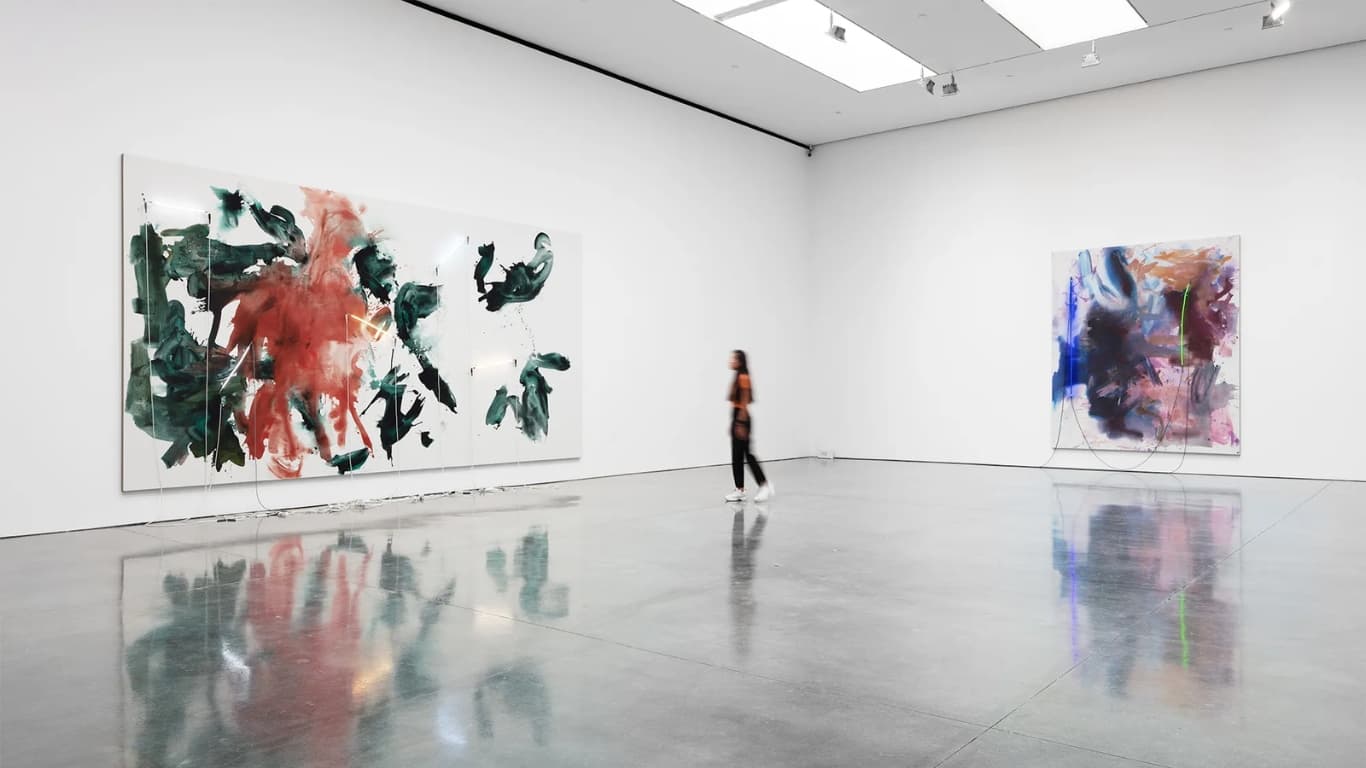
There is a particular hush in a Gagosian opening, the kind that money makes when it is trying to look casual. The rooms are vast and pristine, the lighting is museum grade, the work on the walls would anchor a national collection, and the people circling it include the collectors who could buy any of it before the doors officially open. No dealer has staged this scene more often, or in more cities, than Larry Gagosian. He did not invent the commercial gallery. He industrialised it.
That transformation is the subject here. Gagosian is the gallery founded by Larry Gagosian, a man who began by selling posters from a parking lot in Los Angeles and ended up building the defining mega gallery of the contemporary era. It now operates around nineteen spaces across the United States, Europe and Asia, a footprint closer to a museum network than a single dealership. Art Basel, the fair that sets the rhythm of the market, treats a Gagosian booth as a fixed point of gravity. The gallery represents and handles many of the biggest names in modern and contemporary art, and it wields power in both the primary and the secondary market that few rivals can approach. The question is how one dealer built all of this, and what it did to the way top art is sold.

Key Takeaways & The 5Ws
- Gagosian is the gallery founded by Larry Gagosian, who began by selling posters in Los Angeles.
- It operates around nineteen spaces across the United States, Europe and Asia.
- It represents and handles many of the biggest names in modern and contemporary art.
- It wields enormous power in both the primary market and the secondary market.
- It publishes the Gagosian Quarterly, extending the gallery into editorial and scholarship.
- Who is this for?
- Anyone drawn to the contemporary art world who wants to understand how the mega gallery works and why one dealer dominates it.
- What is it?
- A profile of Gagosian, tracing how Larry Gagosian industrialised the blue chip gallery and reshaped how top art is sold.
- When does it matter most?
- When reading an auction result, watching a fair booth, or trying to understand who really sets prices at the top of the market.
- Where does it apply?
- Across the global art trade, from Los Angeles, New York and London to Paris, Rome, Hong Kong and beyond.
- Why consider it?
- Because no single dealer has shaped the modern market more, in both new work and resale, than Gagosian.
From a Los Angeles Parking Lot to the Top of the Trade
The origin story is genuinely improbable, which is part of its power. Larry Gagosian did not arrive through the usual channels of family money or curatorial training. He started in Los Angeles in the 1970s selling posters and inexpensive prints, framing them himself, learning the basic arithmetic of buying low and selling higher. From that unglamorous beginning he taught himself the trade the hard way, moving up into original works, cultivating collectors, and developing the single skill that would define him: an almost supernatural instinct for who owned what, who wanted it, and what they would pay.
What turned a hustling dealer into a force was the move to New York and the realisation that the real money lived not only in selling new work but in placing important pictures with the right people. Gagosian built relationships with collectors and artists with a relentlessness that became legendary, and he understood earlier than most that a dealer who could quietly broker the resale of a major painting held a kind of power that a gallery showing emerging artists did not. He was, from the start, as much a matchmaker for masterpieces as a presenter of new shows, and that dual identity would become the template for the empire.
The Nineteen Spaces and the Museum Scale Model
The most visible measure of Gagosian's ambition is the sheer physical footprint. Where a traditional gallery occupied a single building, Gagosian built a network of around nineteen spaces spread across the United States, Europe and Asia, from New York and Los Angeles to London, Paris, Rome, Geneva, Basel and Hong Kong. The scale is not vanity. It is logistics. A global roster of artists and collectors needs a global set of rooms, and a gallery operating at this size can mount museum quality exhibitions on several continents at once, often with catalogues and scholarship to match.
This is the heart of what we mean by the mega gallery, and it changed the economics of the trade. The spaces are large enough to show monumental work that smaller dealers cannot physically handle, which makes Gagosian the natural home for ambitious artists. The geographic spread means a collector in Asia and a collector in Europe can both be served close to home. And the museum scale presentation lends the commercial transaction an air of institutional gravity, the kind that now shapes how the most ambitious players think about institutional art treasury, blurring the line between gallery and museum in a way that flatters buyer and artist alike. The model proved so effective that rivals were forced to expand or accept a smaller league, even as the cost of operating at this scale reshaped which galleries can afford to compete at the level of the major fairs.
The Roster That Defines a League
A mega gallery is ultimately defined by who hangs on its walls, and here Gagosian's reach is the clearest signal of its standing. The gallery represents and handles many of the biggest names in modern and contemporary art, both living artists and the estates of the canonical dead. To be taken on by Gagosian is widely read as a marker of arrival, a confirmation that an artist has entered the top tier of the market, with the resources, exhibitions and collector access that follow.
The significance runs deeper than prestige. By concentrating so many major names under one roof, the gallery gains extraordinary leverage over how their work is shown, priced and placed. It can stage historically serious exhibitions, lend to museums, control supply and shape the narrative around an artist with a coordination that a smaller dealer cannot match. This is the primary market at its most powerful, the business of bringing new work from artists to collectors, and Gagosian operates it at a scale that lets the gallery influence reputations as well as prices, the same gravitational pull that explains why a handful of names command record auction prices. The roster is not just a client list. It is a concentration of cultural authority, and it explains why a single dealer can move the centre of gravity of an entire field.
The Secondary Market Power Few Galleries Can Match
If the roster shows Gagosian's strength in new work, the resale business reveals where much of the real power sits. The secondary market, the resale of major works that already exist, is where the largest sums change hands and where a dealer's network matters most. Gagosian has long been a dominant force here, able to locate a significant painting in a private collection, find a buyer prepared to pay, and broker the transaction privately, away from the public theatre of the saleroom. This is quiet work, and it is enormously lucrative.
The advantage is one of information and relationships, accumulated over decades. A dealer who knows who owns the important pictures, and who wants them, can transact masterpieces that never appear at Christie's or Sotheby's, capturing value that the auction houses would otherwise take. This private channel has become so important that it now shapes the strategy of serious buyers and sellers alike, many of whom prefer the discretion of a dealer brokered sale to the exposure of a public auction, part of a wider shift toward private sales among serious collectors. Operating at the top of both the primary and the secondary market, Gagosian occupies a position of unusual command. The gallery does not merely respond to the market. In significant measure, it makes it.
The Gagosian Quarterly and the Reach Beyond the Walls
The final piece of the empire is the one that looks least like selling, and that is precisely the point. Gagosian publishes the Gagosian Quarterly, a glossy magazine of essays, interviews and scholarship that extends the gallery well beyond its physical rooms. On the surface it is a cultural object, serious in tone, generous in production, the kind of thing one might mistake for an independent art journal. In practice it is a sophisticated instrument of authority, a way for the gallery to frame its artists, shape the conversation and reinforce its standing as a cultural institution rather than a mere shop.
This editorial reach matters because reputation, at this level, is the product. By publishing scholarship and commissioning serious writing, Gagosian lends its commercial activity the texture of institutional permanence, the sense that the gallery belongs in the same sentence as the museum. It is the same instinct that drives the museum scale exhibitions and the elegant spaces: a relentless effort to associate the act of buying with the language of culture. The Quarterly is the clearest sign of how completely Gagosian has reimagined what a dealer can be, no longer a middleman behind a desk but a publisher, an impresario and a shaper of taste, with influence that increasingly overlaps with the optimism and momentum of the major fair calendar, the same forces shaping how the 2026 art market recovery will take shape.
Larry Gagosian started with posters in a Los Angeles parking lot and built the defining gallery of his era, a network of around nineteen spaces that operates more like a museum system than a dealership. He did it by understanding earlier and more ruthlessly than his rivals that power in art flows to whoever controls access, to the artists, to the collectors, and above all to the great works that change hands in private. The mega gallery he industrialised has reshaped how the most important art is sold, concentrating authority over both new work and resale in a way the trade had never seen. Other dealers have followed the model, but the original still sets the scale. Gagosian did not just sell the art of his time. He rebuilt the machine that sells it.

Stefanos Moschopoulos
Stefanos Moschopoulos founded The Luxury Playbook in Athens and has spent the better part of a decade following the auction calendar, the en primeur releases, and the watchmakers, gallerists, and shipyards the magazine covers. He writes the field guides and listicles that anchor the Connoisseur section — pieces built on Phillips and Christie's results, Liv-ex movements, and conversations with collectors he has met across Geneva, Bordeaux, Basel, and Monaco. His own collecting habits sit closer to watches and wine than art, and it shows in the level of detail in the magazine's coverage of those categories. Under his direction, The Luxury Playbook now publishes long-form field guides, market-defining year-end listicles, and the Voices interview series with the founders behind the houses and the brands.