The serious wine cellars we have watched develop over the long run share a recognisable architecture. The spine is Bordeaux and Burgundy, weighted toward the strong vintages of the past three decades. The next layer is Champagne, the Rhône, and the great Italian and Tuscan bottlings.
- The serious cellars we track share a recognisable architecture: a Bordeaux and Burgundy spine, weighted toward the strong vintages of the past three decades.
- The second layer is Champagne, the Rhone, and the great Tuscan and Piedmont reds, with allocations that complement rather than duplicate the spine.
- The third layer is the international cluster, with Napa cult Cabernet, Australian Shiraz, Spanish Rioja, and German Riesling rounding out the breadth.
- Drink-window discipline matters as much as buying discipline, with cellars routinely losing value when bottles age past their prime.
- The producer relationships built across years of allocation buying are the cellar's most underrated long-term asset.
- Rounding out a cellar is less about acquiring everything and more about achieving structural balance across regions, vintages, and drinking timelines.
- Who is this for?
- Cellar builders with a Bordeaux or Burgundy spine in place, looking to add structural breadth across the other major regions and producer tiers.
- What is happening?
- We work through the architecture of a rounded serious cellar, with the spine, second layer, and international cluster that mature cellars consistently include.
- When did this emerge?
- The piece reads the contemporary post-2018 market, where Burgundy has cooled materially and Bordeaux remains the structural anchor.
- Where is this happening?
- Bordeaux, Burgundy, Champagne, the Rhone, Tuscany, Piedmont, Napa, Australia, Spain, and Germany as the structural regional cluster.
- Why does it matter?
- A spine-only cellar concentrates risk and forgoes the cultural and structural benefits of breadth, and rounding out is the second-decade work that separates serious cellars from collections.
Beyond that, the cellar starts to take on the personality of the collector. The producers they have come to back, the regions they have travelled, the bottles they reach for at specific dinners. The depth is in those choices, and the cellars that compound best across decades are the ones that have made those choices deliberately.
This is our editorial read on how serious collectors actually round out a cellar. Not as a portfolio diversification exercise, but as the slower work of building a collection with the right kind of breadth in the right places, the way Wine Spectator, Decanter and Vinous describe it when they cover mature private cellars.
Why depth across regions matters more than concentration
The Liv-ex Fine Wine 100 has had its dramatic moves over the past two decades. The 2008–2009 financial crisis took the index down sharply. China's pullback from First Growth Bordeaux around 2014–2015 wiped out a multi-year run-up.
The Burgundy boom from 2018 onward saw the category outpace Bordeaux for the first time in living memory. Champagne's run since 2018 has been the most-watched move in the category. None of these shifts was predictable from the prior three years' data.
A cellar built exclusively around whatever was last fashionable is a cellar that will eventually be on the wrong side of one of these moves. The discipline experienced collectors apply is to build depth across the canon, with multiple regions, multiple vintages, and multiple producers within each region, and let the broader market move around the underlying quality of what is in the cellar.
Building breadth across the regions that matter
Bordeaux as the anchor
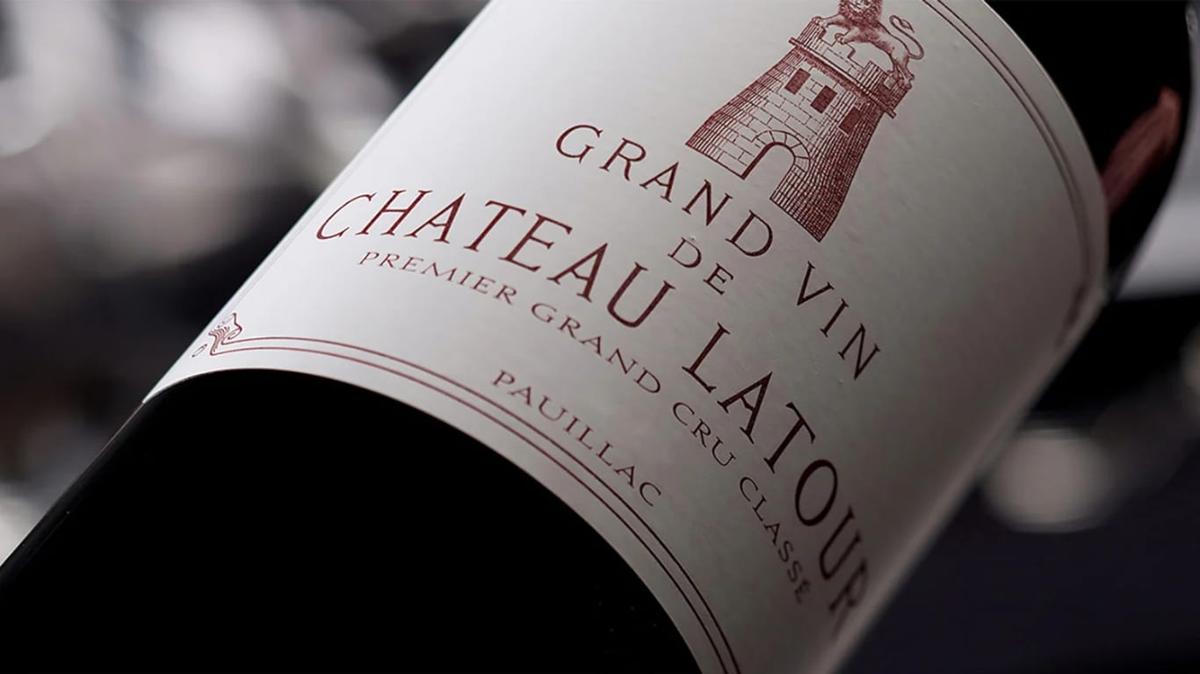
Bordeaux remains the single most-traded category in fine wine. The First Growths (Lafite, Latour, Margaux, Mouton, Haut-Brion) and the Right Bank icons (Pétrus, Le Pin, Cheval Blanc, Lafleur, Ausone) anchor any serious cellar.
Beyond the headline names, the Super-Second tier (Léoville Las Cases, Pichon Lalande, Cos d'Estournel, Léoville Barton, Ducru-Beaucaillou) provides depth at workable prices. En primeur from a strong vintage (2005, 2009, 2010, 2015, 2016, 2018) remains one of the more reliable ways to access these wines at a sensible basis through Bordeaux Index and Berry Bros & Rudd.
Burgundy as the second pillar
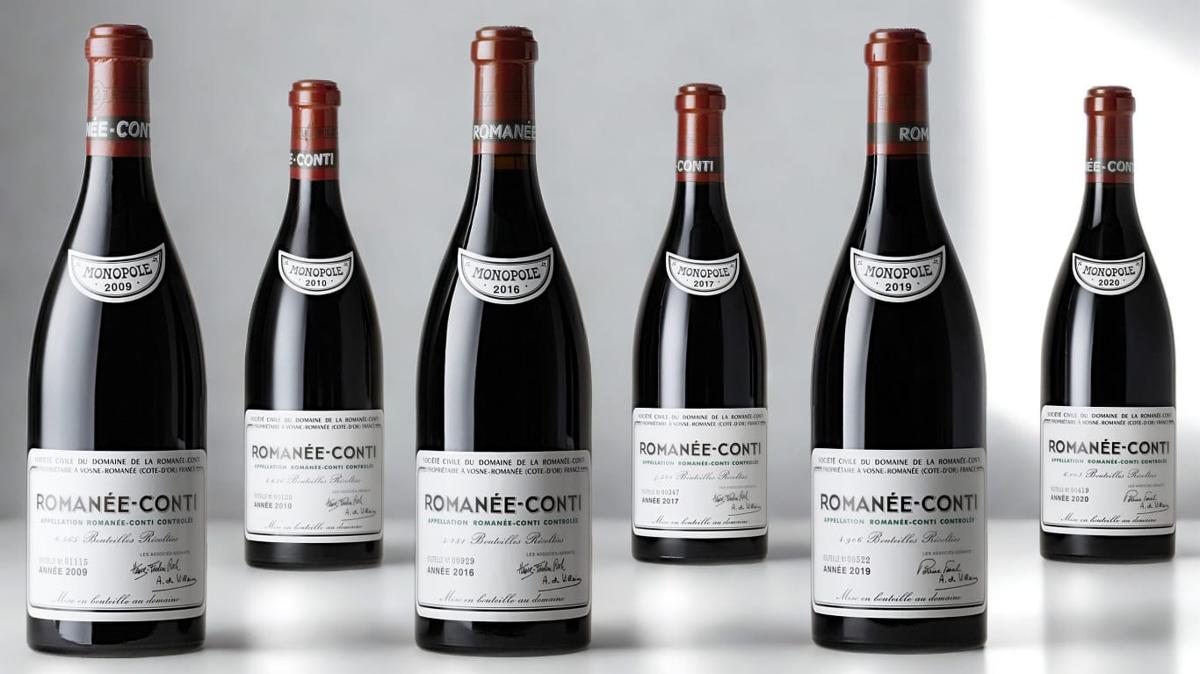
Burgundy from the named domaines has been the standout category in fine wine over the past decade. Domaine de la Romanée-Conti, Domaine Leroy, Domaine Leflaive, Coche-Dury, Comte Georges de Vogüé, Mugnier, Roumier, Rousseau. Allocations are tight; relationships with the named merchants matter more than money.
The grand crus from these domaines can clear five figures a bottle on the secondary market for the strong vintages. The Romanée-Conti 1945 record at $558,000 (Sotheby's New York, 2018) marks the high water for the category.
Champagne as the third pillar
Vintage Krug, Cristal, Salon, Dom Pérignon (particularly the late-released Plénitude tiers), Pol Roger Sir Winston Churchill, Bollinger La Grande Année. Plus the grower-Champagne icons (Selosse, Egly-Ouriet, Larmandier-Bernier, Ulysse Collin) that have built a parallel market over the past fifteen years. Champagne's run since 2018 has been one of the more dramatic stories in the category, and Liv-ex's Champagne 50 sub-index tracks the move in detail.
Rhône, Italy, and the rest of the canon
Guigal's La-La trilogy from Côte-Rôtie, Chave Hermitage, Jaboulet La Chapelle anchor the northern Rhône section. Sassicaia, Solaia, Tignanello, Masseto from Tuscany cover the Super Tuscan canon. Giacomo Conterno's Monfortino, Bartolo Mascarello, Bruno Giacosa, Gaja from Piedmont fill out the Italian core, while Spain's Vega Sicilia and Pingus, and Portugal's Vintage Port from Quinta do Noval Nacional, Taylor's, Fonseca, and Graham's, round out the southern European set.
The New World contribution
Napa Valley's First Growth equivalents (Screaming Eagle, Harlan Estate, Scarecrow, Schrader, Dominus, Opus One) lead the band. Washington's Quilceda Creek and Leonetti Cellar, Australia's Penfolds Grange and Henschke Hill of Grace, South Africa's Mullineux, and New Zealand's Felton Road. The New World contribution to a serious cellar is selective, since depth in three or four producers tends to outperform breadth across twenty.
Building breadth across vintages
The case for vintage diversity is the same as the case for regional diversity. A cellar built entirely around one strong vintage will eventually face the moment when those wines pass their drink window simultaneously. A cellar built across six or eight strong vintages spaced across two or three decades has a continuous supply of wines arriving at peak, and a continuous flow of bottles available to drink, sell, or hold for the long window.
The strong Bordeaux vintages of the past three decades are well-documented: 1990, 1995, 1996, 2000, 2005, 2009, 2010, 2015, 2016, 2018. The strong Burgundy vintages: 1990, 1996, 1999, 2002, 2005, 2009, 2010, 2015, 2017, 2019. The strong Champagne vintages: 1996, 2002, 2008, 2012, 2013.
The cellar that holds depth across these years is a cellar that will be opened thoughtfully for decades. Wine Spectator's annual vintage charts and Vinous's vintage reports are the standard references for navigating the spread.
Building breadth across grape varieties
The variety question often gets framed as a stylistic decision rather than a cellaring one, which understates how much it matters. A cellar dominated by Cabernet Sauvignon, even from the great producers, is a cellar that will eventually feel one-note when opened across multiple consecutive evenings. The depth that serious collectors build is across red and white, across Old World and New, across grapes that lend themselves to long ageing (Cabernet, Nebbiolo, Pinot Noir, Riesling) and grapes that reward earlier consumption (Grenache, Beaujolais cru, the better Sangiovese).
The major varieties to anchor the cellar are well-known. Cabernet Sauvignon (Bordeaux Left Bank, Napa); Merlot (Right Bank Bordeaux, Bolgheri); Pinot Noir (Burgundy, Sonoma Coast, Central Otago); Syrah/Shiraz (Hermitage, Côte-Rôtie, Barossa); Nebbiolo (Barolo, Barbaresco); Sangiovese (Brunello di Montalcino, Chianti Classico Riserva); Chardonnay (Burgundy white grand crus, Coche-Dury, Domaine Leflaive); Riesling (Mosel, Rheingau, Wachau); Tempranillo (Rioja gran reserva, Ribera del Duero).
Building breadth across producers
Within any one region, depth across multiple producers tends to outperform concentration in any single name, even the iconic ones. A Burgundy cellar that is 80% DRC and 20% everything else is a cellar betting heavily on a single domaine maintaining its current trajectory. A cellar across DRC, Leroy, Leflaive, Coche-Dury, Mugnier, Roumier, and Rousseau is a cellar that has already built the diversification within Burgundy that the broader market has rewarded.
The pattern serious collectors converge on is roughly five to ten producers per region, with depth (multiple cases across multiple vintages) in two or three names within each region.
Building breadth across price points
The price-point question is where amateur collectors most often go wrong. The temptation is to hold only the most expensive bottles in the cellar. The Pétrus, the DRC La Tâche, the Krug Clos d'Ambonnay.
The cellar that consists only of those bottles is uncomfortable to drink from, because every dinner becomes an occasion bottle moment, and the everyday wines that make a cellar genuinely livable are missing.
The pattern most serious collectors converge on: roughly 40% of the cellar at the everyday tier ($30–$100 a bottle), 40% at the mid-tier ($100–$500 a bottle), 15% at the premium tier ($500–$2,000), 5% at the icon tier (above $2,000). The proportions shift over decades as the cellar matures and earlier bottles get opened or sold, but the broad structure tends to hold.
Balancing what's drinkable now with what needs holding
The cellar that compounds best across decades is the cellar that gets drunk regularly. Bottles ready for drinking get pulled and opened; bottles past their drink window or whose secondary-market position justifies it get sold at major auctions; bottles in their drinking window stay in the cellar for occasions.
The smart pattern is to hold roughly 30–40% of the cellar in current-drinking wines and 60–70% in long-hold positions, with the proportions adjusting as the long-hold positions enter their drink windows.
What this means for collectors managing a cellar across decades
The practical mechanics that hold a serious cellar together over the long run are unglamorous but load-bearing.
A digital cellar inventory with provenance documentation and photographs (CellarTracker remains the most-used among serious collectors); professional storage with climate alarms and audit trails; appraisals every three to five years through major auction houses or specialist firms; insurance through specialist brokers (Berkley Asset Protection, AXA Art, Chubb's collectibles coverage); merchant relationships built across years of buying through the same channels.
The cellar isn't a portfolio. It is a working collection that gets enjoyed, replenished, and refined over decades. The breadth that serious collectors build is in service of the experience of holding the cellar, not as an end in itself.
We last reviewed this analysis in May 2026.