Hublot in 2026 is one of the more polarising brands in serious watch collecting, and the honest read on Hublot at this point is that the brand offers genuine technical and design ambition in a register the broader collector market continues to find divisive. The references that hold serious collector attention are a smaller subset than the brand's marketing might suggest, but those references earn the consideration they get.
- An honest 2026 read on Hublot reflects the brand's genuine material innovation and the equally genuine secondary-market depreciation that the broader catalogue continues to face.
- Big Bang Unico Magic Sapphire, Classic Fusion Titanium, and the limited-edition Ferrari collaborations represent the strongest collector value tier within the broader Hublot catalogue.
- Manufacturer pricing on the broader Big Bang catalogue continues to face material secondary-market depreciation, with the broader collector hierarchy reflecting the value retention reality.
- We see Hublot as the strongest brand for collectors drawn to material innovation, with carbon, ceramic, and sapphire case work that no other luxury house matches at the same scale.
- Independent maker outperformance has absorbed serious collector attention through 2026, with Hublot facing the same broader credibility pressure as the largest Swiss luxury alternatives.
- Buyers entering the Hublot market should anchor on titanium, ceramic, and sapphire case construction, with material innovation supporting the value retention the broader catalogue cannot match.
- Who is this for?
- Hublot collectors, material innovation enthusiasts, and buyers weighing Hublot value retention against broader luxury watch alternatives.
- What is happening?
- A grounded 2026 honest read on Hublot for serious collectors, covering Big Bang Unico Magic Sapphire, Classic Fusion Titanium, and the broader catalogue depreciation reality.
- When did this emerge?
- The current Hublot honest read reflects 2025 and 2026 secondary-market dynamics, with material innovation continuing to inform the broader value retention conversation.
- Where is this happening?
- Authorised Hublot boutiques globally stock the modern catalogue, while Chrono24 and specialist Hublot dealers handle the broader secondary market.
- Why does it matter?
- Understanding the honest Hublot position informs better purchase decisions, with the material innovation tier supporting the strongest long-term collector positioning.
The "Art of Fusion" register, the combination of unexpected materials, bold case construction, and the deliberate refusal to fit into traditional Swiss watchmaking categories, generates strong opinions in both directions. Phillips and Christie's catalogues rarely place modern Hublot in dedicated trinity-tier lots. Chrono24 and WatchCharts data show meaningful divergence between the considered references and the broader catalogue.
The collectors we hear from tend to settle into two camps. The first engages with Hublot at a specific subset of references and finds genuine watchmaking. The second approaches the brand through the broader marketing register and tends to walk away disappointed.
The honest read on Hublot in 2026 sits between those two reactions.
The Big Bang Unico and the contemporary catalogue
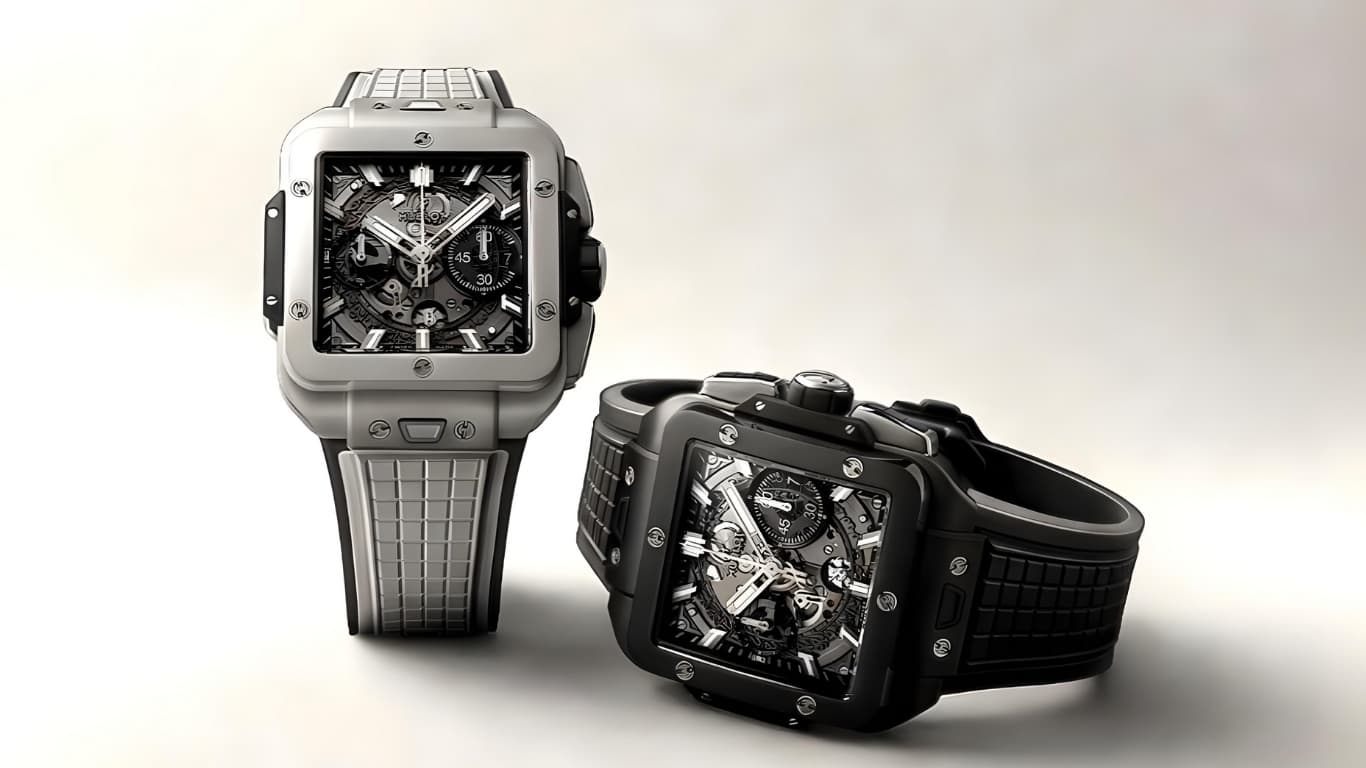
The Big Bang, the brand's defining contemporary reference launched in 2005, anchors the modern Hublot conversation. The current Big Bang Unico with the in-house Calibre HUB1280 chronograph movement retails from around $20,000 in steel through significantly higher pricing in the precious-metal and skeleton variants. The reference is the brand's contemporary sport-luxury chronograph and the cleanest example of Hublot at its considered best.
The various material configurations, King Gold, ceramic, sapphire, carbon, and the brand-collaboration variants, extend the line. Our Big Bang-specific read covers the line in more depth across the dial and material configurations. The Big Bang Unico in steel at around $20,000 retail trades close to retail on the secondary market; the ceramic variants run higher; the King Gold and precious-metal variants extend the line into the upper register.
The HUB1280 movement is genuinely credible work. The flyback chronograph architecture, the column-wheel construction, and the 72-hour power reserve all read as serious manufacture watchmaking. Collectors who weight the in-house movement story tend to find what they value in the Unico, even if the broader case design remains divisive.
The Classic Fusion and the measured Hublot register
The Classic Fusion is the brand's cleaner contemporary reference, with the 45mm steel version available from around $7,500 retail. The line reads as substantially more traditional than the Big Bang catalogue. Collectors who find the broader Hublot design language too aggressive often gravitate to the Classic Fusion as the more credible contemporary execution.
The Classic Fusion is the Hublot we would actually recommend to a buyer entering the brand for the first time. The case proportions are more conventional. The dial configurations are quieter.
The Calibre HUB1110 base movement is competent. The reference does not announce itself the way the Big Bang does, and for many collectors that restraint reads as a virtue.
The Spirit of Big Bang and the upper-tier complications
The Spirit of Big Bang, the tonneau-cased reference at around $25,000, sits between the Big Bang and the upper-tier complications. The various MP-collection upper-tier pieces and the Hublot Sang Bleu collaboration variants extend the brand's catalogue into the more considered upper tier.
The MP-09 tourbillon, the various MP-skeleton references, and the upper-tier complicated work demonstrate that the brand's contemporary watchmaking ambition extends beyond the Big Bang fashion register. The MP-05 LaFerrari sits in its own category as one of the more technically ambitious limited editions of the past two decades. Phillips has handled MP-collection references in dedicated lots more than once at major sales.
What the secondary market is actually showing
The broader Hublot catalogue, particularly the brand-collaboration limited editions and the upper-tier marketing-led variants, tends to underperform on the secondary market relative to the more measured catalogue references. The collaboration pieces with sports teams, automotive brands, and various celebrity-endorsed variants regularly trade 30 to 50 per cent below original retail on Chrono24.
That gap is the cleanest tell on the brand's collector standing. The value-retention question sits at the centre of the honest collector read on Hublot. The references that hold their numbers are the ones that read as genuine watchmaking. The references that lose their numbers are the ones that read as marketing exercises.
The MP-collection upper-tier complications sit in their own collecting tier that behaves more like the upper trinity complicated register than like the broader Hublot catalogue. Those references hold value across cycles because they are produced in genuinely small numbers and document real technical achievement.
Where Hublot sits inside contemporary Swiss watchmaking
Hublot occupies a particular structural position inside contemporary Swiss watchmaking. The brand is part of LVMH Watchmaking alongside TAG Heuer and Zenith, which gives it institutional infrastructure and movement-development resources smaller independents lack. The brand is not a Patek or a Lange in the trinity tradition.
It is not trying to be.
Read accurately, Hublot earns the consideration it gets in a particular subset of contemporary collecting. The subset values material innovation, bold case construction, and the deliberate refusal to fit into traditional Swiss watchmaking categories. Read inaccurately, the broader catalogue tends to disappoint because the comparison base is wrong.
The serious-collector subset that engages with Hublot tends to weight the in-house movement work, the HUB1280 chronograph and the various MP-collection complicated movements, and the genuine material innovation, the King Gold, ceramic, sapphire, and carbon variants. That subset finds genuine watchmaking. The broader marketing register the brand's communications support is a different proposition, and it does not earn the same collector standing.
What collectors actually pay attention to
For Hublot, the references that come up most consistently in serious collector conversation are the Big Bang Unico across the dial and material configurations, the Classic Fusion as the more measured alternative, the Spirit of Big Bang for collectors weighting the tonneau case construction, and the various MP-collection upper-tier pieces for collectors operating at the upper tier.
Box-and-papers documentation matters. Service-network access through Hublot's authorised facilities is the practical baseline. Original bracelets and straps matter on the Big Bang line in particular, where the proprietary integrated rubber strap is part of the reference's identity.
The collector subset that engages with the brand at the considered references tends to find what it values.
What this means for collectors
Hublot serves a particular role in modern Swiss watchmaking. The brand is not competing on the trinity register, and it is not competing on the integrated-bracelet sport-luxury register where the Royal Oak, the Nautilus, and the Overseas sit. The brand's argument is in the material-innovation and manufacture-movement work.
The references that hold serious collector attention are the ones that read as genuine contemporary watchmaking rather than marketing exercises. For collectors weighing the brand, the Big Bang Unico, the Classic Fusion, and the MP-collection upper-tier pieces continue to look like the references worth the consideration. The broader collaboration catalogue tends to disappoint on the secondary market.
Read accurately, Hublot earns the consideration it gets at that subset. Read inaccurately, the broader catalogue tends to disappoint. The honest answer on Hublot in 2026 sits between those two reactions.
We last reviewed this analysis in May 2026.

Frequently Asked Questions
- Do Hublot watches hold their value?
- Most Hublot watches retain only 40-60% of original retail value, with limited-edition models, collaborative releases, and rare materials like sapphire or Magic Gold performing slightly better, retaining 60-70% within 5-10 years.<br><br>
- Which Hublot watch has the best resale value?
- The Spirit of Big Bang (0.54 VDI), Square Bang (0.50 VDI), and ultra-rare MP Collection pieces show strongest resale value, with limited editions like Ferrari collaborations and Sang Bleu artist editions also commanding premium prices in the secondary market.<br><br>
- How much can Hublot watches appreciate per year?
- Most Hublot models depreciate rather than appreciate, with the Big Bang declining 29.7% over 5 years, though select limited editions and Spirit of Big Bang references can maintain stable values or gain 5-10% annually in exceptional cases.

Stefanos Moschopoulos
Stefanos Moschopoulos founded The Luxury Playbook in Athens and has spent the better part of a decade following the auction calendar, the en primeur releases, and the watchmakers, gallerists, and shipyards the magazine covers. He writes the field guides and listicles that anchor the Connoisseur section — pieces built on Phillips and Christie's results, Liv-ex movements, and conversations with collectors he has met across Geneva, Bordeaux, Basel, and Monaco. His own collecting habits sit closer to watches and wine than art, and it shows in the level of detail in the magazine's coverage of those categories. Under his direction, The Luxury Playbook now publishes long-form field guides, market-defining year-end listicles, and the Voices interview series with the founders behind the houses and the brands.