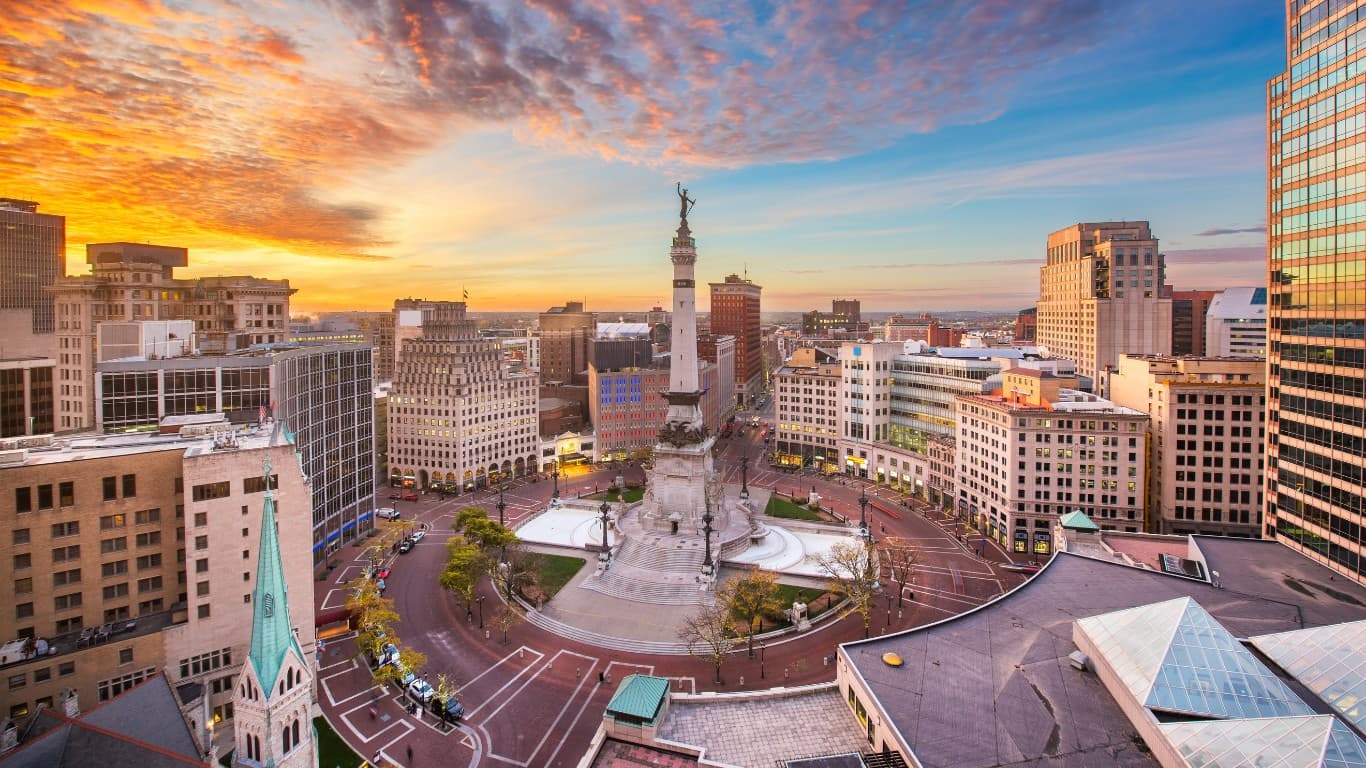
The 2026 Indianapolis real estate market has quietly become one of the Midwest's standout performers, blending affordability, economic stability and consistent housing demand in a way that few cities can match. As of Q1 2026, the metro reads as one of the most accessible mid-tier US markets, with prices well below the coastal large metros and absorption rates pacing the broader Sun Belt.
Knight Frank's 2026 US Cities Prime Index flags Indianapolis as the cleanest Midwest value play for both family buyers and yield-focused holders.
We've compared the historical performance of real estate versus stocks against equity returns, and the Indianapolis case keeps reading as one of the more compelling Midwest property arguments.
The MIBOR Realtor Association data, alongside the brokerages tracking the prime side (Compass, F.C. Tucker, Carpenter Realtors, Berkshire Hathaway HomeServices Indiana Realty), describes a market that has stabilized after the 2022 peak while continuing to draw inbound capital. The picture is one of measured, demand-driven growth.
For context on the broader Midwest property thesis we also profiled the rise programming, which has flagged the corridor between Indianapolis and Columbus as one of the more capital-receptive US growth bands.
This analysis covers: Overview of The Indianapolis Housing Market | Neighborhood Analysis | Indianapolis Rental Market Overview | Factors Influencing the Indianapolis Housing Market | Indianapolis Housing Market Forecast for 2026 | Is It Worth Buying a Property in Indianapolis? | FAQ.
- Indianapolis remains one of the more affordable major Midwestern markets, with median prices well below the national average and continuing to attract value-focused buyer demand.
- We see healthcare, manufacturing, life sciences and the Eli Lilly anchor providing employment diversification that supports steady, if unspectacular, long-term housing demand.
- Inventory has improved through 2025 and 2026, with months-of-supply moving closer to balanced conditions across most price tiers in the metropolitan area.
- Carmel, Zionsville and Fishers continue to anchor the upper end of the suburban market, with their school districts driving strong family-buyer demand from across the region.
- Property tax structure including the Indiana circuit breaker keeps the ownership burden moderate, with effective rates well below those in Texas and other peer Sun Belt markets.
- For most considered buyers we view Indianapolis as a steady-state value market offering Midwest access at materially more accessible price points than the coastal alternatives.
- Who is this for?
- Buyers and investors evaluating Indianapolis for primary residence or rental property, alongside relocation clients and the brokers, lenders and advisers supporting Greater Indianapolis transactions.
- What is happening?
- A market overview and 2026 forecast for the Indianapolis real estate market, covering price levels, inventory dynamics, healthcare and life sciences employment drivers and the suburban dynamics.
- When did this emerge?
- The article covers conditions through 2025 and 2026, with reference to the post-pandemic inventory cycle and the latest healthcare, manufacturing and life sciences employment data.
- Where is this happening?
- The piece focuses on the Indianapolis metropolitan area, including Carmel, Zionsville, Fishers and the broader Marion and surrounding county submarket landscape.
- Why does it matter?
- Indianapolis offers genuine Midwest value with steady employment diversification in 2026, which is why the affordability case deserves explicit consideration from value-focused buyers.
Overview of The Indianapolis Housing Market
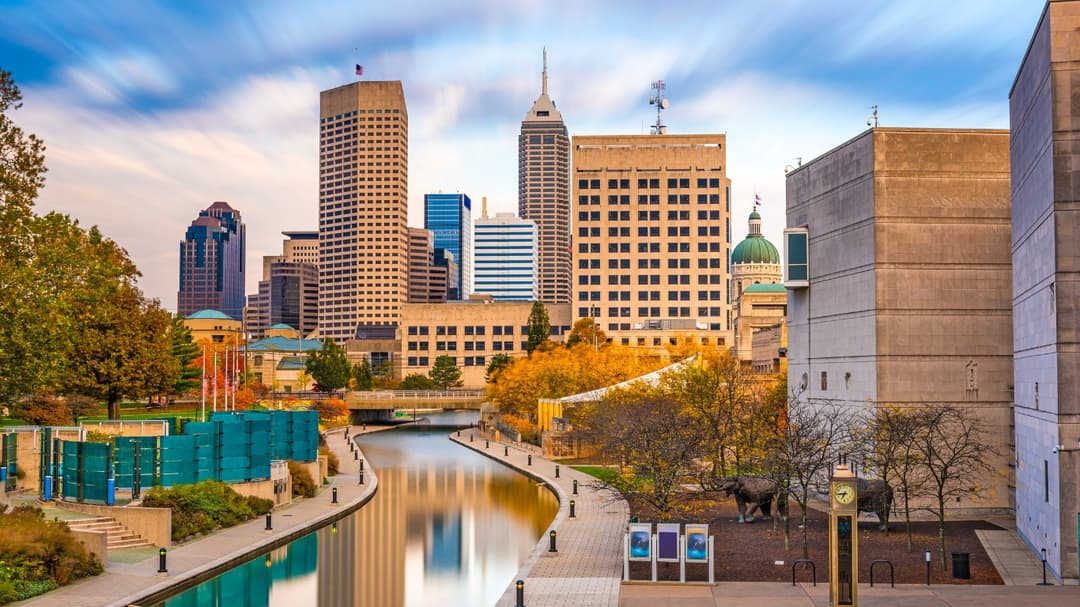
Indianapolis enters 2026 with property fundamentals underpinned by population growth, a diversified employment base and a consistently low cost of living. The median home price sits at around $245,000, up roughly 4. 2 percent year-on-year.
Mansion Global has profiled Indianapolis as one of the more disciplined Midwest large-metro recoveries through the 2022-2024 rate cycle.
That steady appreciation reflects ongoing demand from in-migrating professionals, retirees and yield-focused holders. Eli Lilly's expanding manufacturing and R&D footprint, alongside the broader medical-device and pharmaceutical concentration, anchors the demand floor.

Housing inventory is gradually rising. Active listings are up 5. 4 percent year-on-year, easing the intense competition of prior cycles.
Per Zillow Research’s latest housing outlook, the Indianapolis median sale-to-list ratio of 98. 9 percent confirms that move-in-ready homes are still trading close to asking.
Bloomberg and the broader US tracker data suggest Indianapolis will continue to outperform the national Midwest average on both home-value growth and rental absorption. Median sale prices currently work out to roughly $152 per square foot, with an average market time of 32 days.
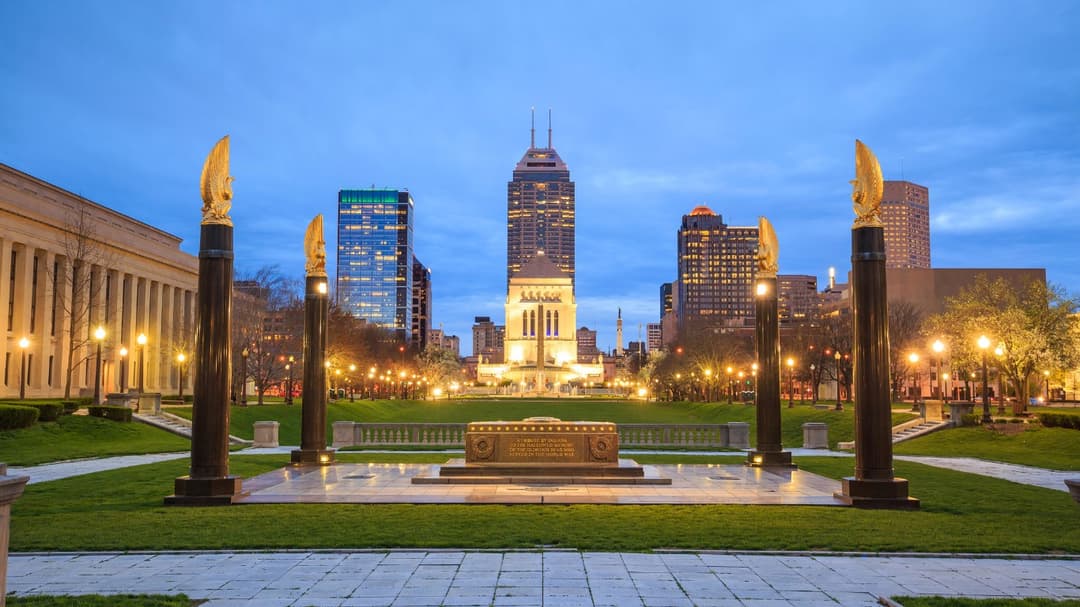
Key Market Indicators, Q1 2026
- Median Sale Price: $245,000 (up 4.2 percent YoY)
- Price per Sq Ft: $152
- Days on Market: 32 days
- Active Listings: up 5.4 percent YoY
- Sale-to-List Ratio: 98.9 percent
Indianapolis affordability outpaces peer Midwest metros like Cincinnati, Columbus and Milwaukee, while economic diversification gives the market resilience against single-sector shocks. CoStar’s commercial and multifamily data tracks Indianapolis multifamily absorption rates as among the most disciplined Midwest large-metro stories of the cycle.
Neighborhood Analysis
Indianapolis operates as several distinct submarkets stacked across the metro. The prime Meridian-Kessler and Carmel corridors anchor the high end, while the design-driven Fountain Square and Broad Ripple stories carry the mid-market. The brokers tracking the prime side flag five neighborhoods carrying the citywide narrative.
Meridian-Kessler
Meridian-Kessler remains one of Indianapolis's most coveted neighborhoods. Median home prices sit at approximately $585,000, up 4. 4 percent year-on-year.
Mature trees, restored 19th-century housing stock and proximity to downtown anchor demand.
Compass and F.C. Tucker track Meridian-Kessler as the city's most stable prime submarket through the 2022-2024 rate cycle.
Carmel
Carmel, the affluent northern suburb, draws family buyers and corporate relocations. The median home price sits at $545,000, up 4. 1 percent year-on-year.
Strong schools, master-planned design and a steadily widening walkable downtown sustain demand.
Broad Ripple
Broad Ripple, the urban-walkable village on the city's north side, anchors the under-$500K design-driven mid-market. The median home price sits at $395,000, up 4. 6 percent year-on-year.
Restored craftsman and bungalow stock dominates the activity.
Fountain Square
Fountain Square has been the city's most consistent gentrification story for a decade. The median home price sits at $325,000, up 5. 1 percent year-on-year.
Restored Victorian and craftsman stock, alongside the maturing restaurant and arts culture, sustain demand from design-oriented buyers.
Fishers
Fishers, on the metro's northeast edge, has become one of the fastest-growing suburbs. The median home price sits at $385,000, up 4.3 percent year-on-year, with new construction continuing to deliver into expanding school districts.

Indianapolis Rental Market Overview
The Indianapolis rental market stays strong through 2026, driven by sustained population growth, a healthy job market and rising homeownership costs. Per National rent trend data from Apartment List, Indianapolis rent levels remain comfortably below the national large-metro average.
The Indianapolis tenant base skews toward professionals at Eli Lilly, the broader medical-device sector, Salesforce's Midwest hub and the Anthem footprint. Rental demand has grown across all property types as affordability challenges keep some would-be buyers on the sidelines. Whether whether buying a property to rent out is worth it is the right call locally depends on neighborhood and price band.
Average Rent Prices
- Studio Apartments: Approximately $895 per month
- One-Bedroom Apartments: Around $1,095 per month
- Two-Bedroom Apartments: About $1,345 per month
- Three-Bedroom Apartments: Approximately $1,695 per month
Broad Ripple, Fountain Square and downtown carry the tightest rental absorption. JLL's 2026 Midwest Multifamily Outlook flags Indianapolis as one of the more resilient large-metro rental markets through the second half of the decade.
Factors Influencing the Indianapolis Housing Market
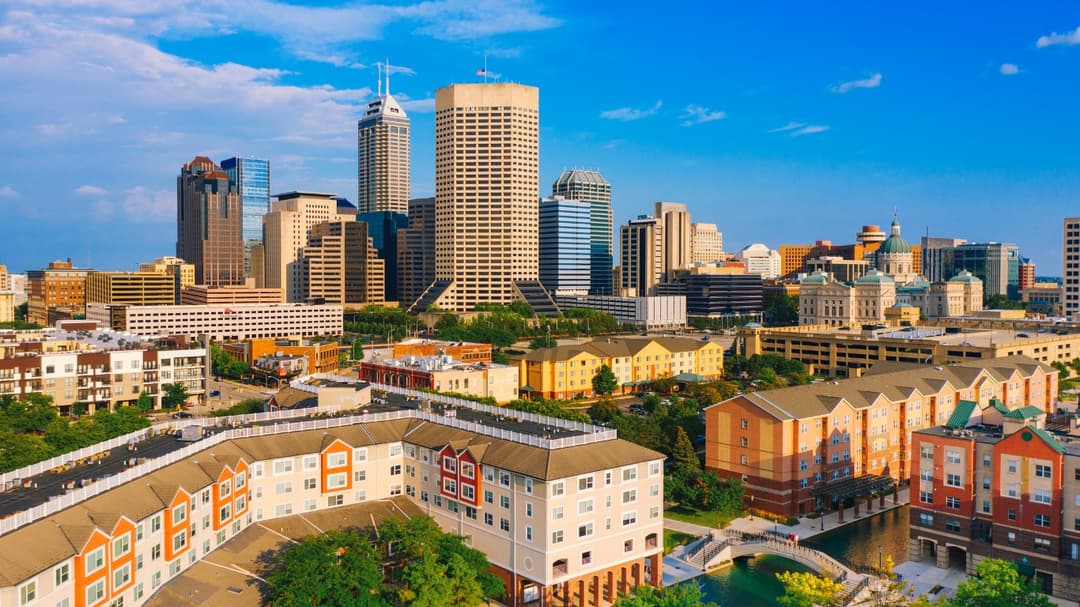
Three structural forces drive Indianapolis demand. Population growth (the metro added roughly 18,000 residents in 2024) provides a steady demand floor. Anchor employment in healthcare, pharma, life sciences (Eli Lilly's expansion), and the rapidly growing logistics base around the Indianapolis International Airport sustains the inbound capital flow.
The value relocation from higher-cost coastal and Sun Belt metros adds a third lane of demand.
The cost-of-living differential against the coastal large metros remains the second-most-cited migration driver. Indiana's flat state income tax of 3.05 percent sharpens the appeal further. Employment data from the Bureau of Labor Statistics shows Indianapolis ranking near the top of large-metro employment growth rates in 2024.
Mortgage rates in the 6.5 to 7 percent range have rebalanced first-time buyer activity but not the prime tier, where cash-buyer share regularly clears 25 percent. The Indianapolis infrastructure investment underway (the Red Line BRT expansion, the airport build-out, the I-69 corridor work) continues to reshape buyer attention across the metro.
Lifestyle and demographics matter too. Indianapolis attracts young professionals, families and retirees in roughly balanced proportions. The diversification ensures the market does not depend on any single buyer segment.
Indianapolis Housing Market Forecast for 2026
Indianapolis's 2026 outlook is solid. Home prices are projected to rise 3.5 to 5 percent through 2026, with the strongest gains in the prime corridor (Meridian-Kessler, Carmel) and the design-driven gentrification stories (Fountain Square, Broad Ripple).
Rents are forecast to climb 3 to 4 percent across the metro, with stronger growth in one- and two-bedroom units. Inventory below $300,000 will stay competitive, keeping pressure on the entry tier.
Is It Worth Buying a Property in Indianapolis?
For long-tenure buyers, yes. The structural tailwinds (Eli Lilly's pharma expansion, life-sciences depth, value migration from coastal metros, Indiana's flat tax regime) sustain price stability. Indianapolis's mid-tier positioning, compared with the long-term comparison between real estate and stock investing literature, reads as one of the more capital-efficient US property opportunities for non-coastal buyers.
For shorter-horizon buyers, the picture is more cautious. The 2022-2024 correction was mild but real, and the post-correction floor reads as stable rather than accelerating. The prime tier remains the most resilient segment.
We last reviewed this analysis in May 2026.
FAQ
Is Indianapolis a good market for property in 2026?
Yes. Population growth of around 18,000 residents in 2024, Eli Lilly's expanding pharma footprint, and Indiana's 3. 05 percent flat state income tax all sustain demand.
Knight Frank's 2026 US Cities Prime Index flags Indianapolis as the cleanest Midwest value play.
Which Indianapolis neighborhoods are appreciating fastest?
Fountain Square leads the citywide rate at 5. 1 percent, followed by Broad Ripple at 4. 6 percent and Meridian-Kessler at 4.
4 percent. The prime corridor (Meridian-Kessler, Carmel) remains the city's prime anchor per Compass and F.C. Tucker.
How affordable is Indianapolis compared with other US markets?
Median sale prices at $245,000 run at roughly half the national average for large metros, well below coastal large metros like New York and Los Angeles. Bureau of Labor Statistics employment data confirms Indianapolis as a top-tier Midwest large-metro story.
Is Indianapolis a good rental market?
Yes. Average rents below the national large-metro median, combined with vacancy below 6 percent in the prime corridor, give reasonable rent-to-price ratios. Broad Ripple, Fountain Square and downtown carry the tightest absorption.


Savvas Agathangelou
Savvas Agathangelou co-founded The Luxury Playbook and has spent years reporting from the prime postcodes the magazine covers — Mayfair, Knightsbridge, the Athens Riviera, Dubai's Palm crescents, and the southern Mediterranean coastlines where the world's wealthy keep coming back. His background is in international hospitality, and that frame shapes how he writes about property: the developer's choices, the architect's signature, the agency's bench of named brokers, the building's service standard once the buyer moves in. He files developer spotlights, agency profiles, and the seasonal "Properties That Defined" listicles, and he hosts the magazine's founder-and-leadership interviews on the Voices side.