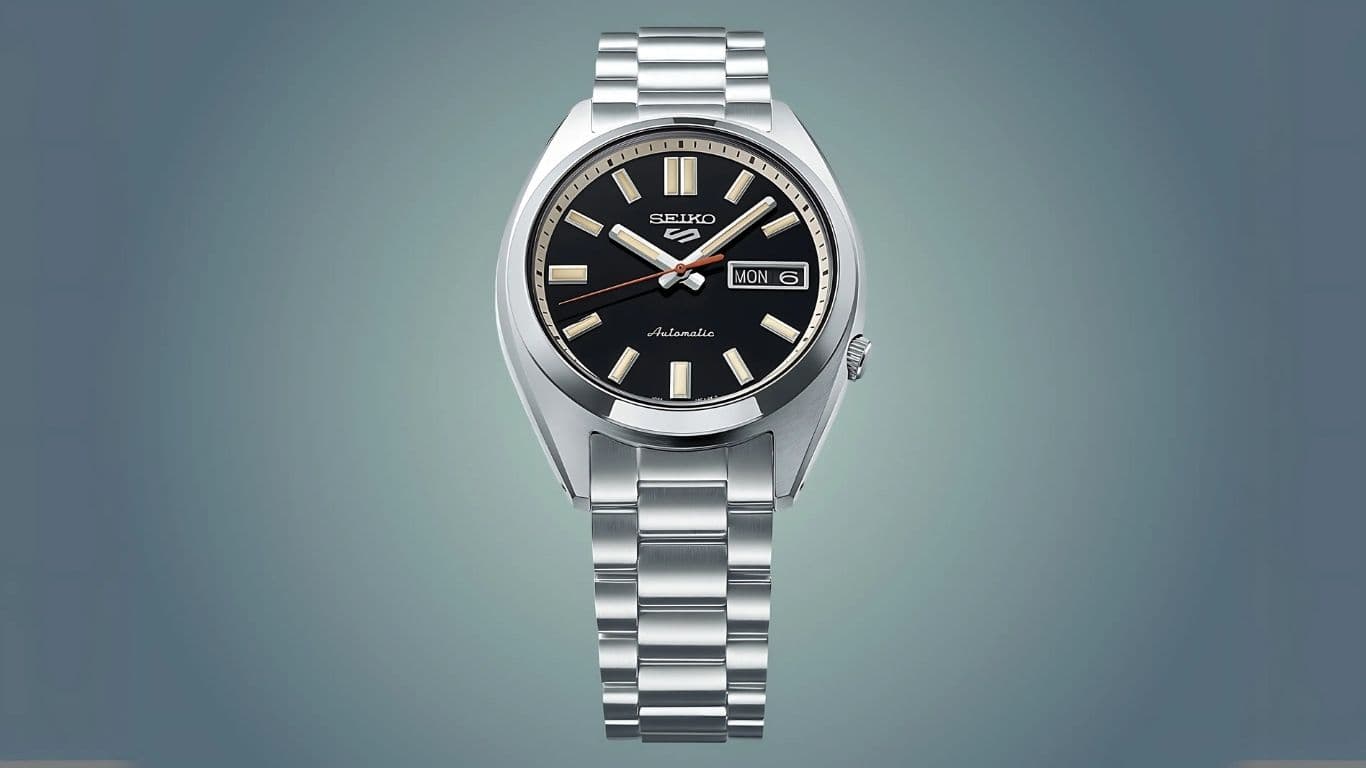
The Seiko 5 has built one of the most loyal collector followings in modern watchmaking, at a fraction of the price of any Swiss equivalent. Originally launched in 1963 as Seiko's accessible automatic, the line has produced essentially continuous variants for more than sixty years.
- The Seiko 5 demonstrates that serious watch collecting does not require Rolex or Patek, with the SNK and SRPD references offering manufacturer-movement value at sub-three-hundred-dollar pricing.
- Reference SRPD55, SRPD63, and the modern SRPK28 anchor the modern catalogue, with the 4R36 automatic calibre supporting daily-wear reliability across decades.
- The original Seiko 5 from 1963 and the 1970s 6309 and 7009 references draw growing collector competition, with discontinued condition driving meaningful secondary premiums.
- We see the Seiko 5 as the strongest entry-tier collector reference available globally, with build quality and automatic movement combined at pricing no Swiss alternative can match.
- The 2019 Seiko 5 Sports line refresh brought modern case finishing and bracelet quality that materially improved the everyday wearability of the catalogue.
- Collecting depth and breadth on the Seiko 5 catalogue rewards patient buyers, with the broader 4R36 references supporting decades of low-friction ownership.
- Who is this for?
- New collectors entering the category, accessible-luxury buyers, and established collectors building Japanese movement depth.
- What is happening?
- A grounded read on why the Seiko 5 proves that serious collecting does not require Rolex, covering the modern catalogue, vintage 6309, and the 2019 line refresh.
- When did this emerge?
- The Seiko 5 has anchored accessible-luxury collecting since 1963, with the 2019 line refresh continuing to drive collector momentum through 2026.
- Where is this happening?
- Authorised Seiko dealers globally stock the modern catalogue, while Chrono24, eBay, and dedicated Seiko specialists handle the vintage market.
- Why does it matter?
- The Seiko 5 offers manufacturer-movement value and Japanese watchmaking pedigree at pricing that proves serious collecting does not require deep capital exposure.
The contemporary Seiko 5 Sports SRPK series at around $325 retail provides credible Japanese mechanical execution at a price point no Swiss brand competes in seriously. The catalogue's depth across the various dial colours, case configurations, and movement variants supports the kind of focused collecting that doesn't require Rolex-tier capital. In our coverage of the past three Watches and Wonders cycles, the Seiko 5 has steadily moved from accessible introduction to considered standalone collecting category.
The Seiko 5 catalogue in 2026
The current Seiko 5 Sports SRPK series, the contemporary refresh of the line introduced in 2019, anchors the modern catalogue at around $325 retail. The 4R36 movement provides 41-hour power reserve and the technical baseline most accessible-tier mechanical Seiko production runs. The various dial colour variants (the standard black and blue, the seasonal and special editions) carry their own followings.
The Seiko 5 GMT references (SSK001, SSK003, SSK005, SSK023) introduced in 2022 brought GMT functionality to the line at around $475 retail. The price point is one of the most accessible for any GMT-complication mechanical watch in modern production, and the references have built genuine secondary-market support.
The various 5KX heritage references, the contemporary continuations of the historical Seiko 5 design language, extend the catalogue into the heritage register. The 5KX line specifically draws from the 1960s and 1970s Seiko 5 case designs, and the contemporary execution has earned measured trade-press coverage.
Vintage Seiko 5 and the considered collecting tier
Vintage Seiko 5, the various 7S26-powered references from the 1990s and early 2000s, the earlier 6309 and 7019 references, and the rare Japanese-domestic-market variants, anchors the considered vintage Seiko 5 collecting tier. Clean examples trade at modest pricing levels in the broader market.
The rarer dial variants and military-issued examples carry their own following at higher tiers. The 1968 Seiko 5 Sports references with the original Speed-Timer dials and the various 1970s Bell-Matic alarm references command meaningful premiums when they surface in clean original condition at the specialist Japanese dealers.
Why the Seiko 5 anchors a serious collector category
Three reasons. First, the accessibility. The price point lets collectors build broad reference depth without the capital commitment Swiss collecting requires.
Second, the technical credibility. The 4R36 and earlier 7S26 movements aren't trinity-tier executions, but they're credible Japanese mechanical work that provides reliable timekeeping across decades of use. Seiko has produced more than 1.
5 billion movements since 1881, more than any other watchmaker in history.
Third, the catalogue depth. The line's sixty-plus years of continuous production has generated enough references that focused collecting can build out into genuinely interesting depth. The Seiko 5 collecting category supports the kind of vertical specialisation (military-issued references, dial-variant collecting, decade-by-decade catalogue building) that the broader watch hobby rewards.
The Seiko 5 against the broader Japanese watchmaking conversation
Seiko's broader catalogue, from the Grand Seiko upper tier through the Prospex sport range, the Presage dress line, and the King Seiko revival, frames the Seiko 5's position in the brand's serious collecting register. The Seiko 5 sits at the accessible entry point that introduces collectors to the broader brand depth.
Hodinkee and the various Seiko-focused publications have consistently treated the Seiko 5 with the editorial respect that the catalogue actually earns rather than as a budget category. The reference's place in modern collecting reflects the broader recognition that Japanese mechanical watchmaking has built across the past two decades.
What collectors look for in a serious Seiko 5 pick
For modern Seiko 5, the references that come up most consistently in serious collector conversation are the SRPK Sports series in the various dial configurations, the SSK GMT references, and the various 5KX heritage continuations. Box-and-papers documentation matters less at this price point than at upper tiers but still affects modest resale value.
For vintage, the various 7S26-powered references in clean condition, the rare military-issued variants, and the Japanese-domestic-market references with the original signature anchor the considered vintage Seiko 5 collecting tier. The specialist Japanese dealers (the established Tokyo and Osaka vintage Seiko specialists, the various US-based vintage Seiko dealers with credible Japanese supply networks) provide the practical sourcing channel.
What this means for collectors
The longer story collectors recognise is that serious collecting doesn't require trinity-tier or Rolex-tier capital. The Seiko 5 demonstrates that focused collecting at the accessible tier can build the kind of catalogue depth and personal collection coherence that the broader category often misses.
The collectors who navigate the Seiko 5 catalogue carefully tend to discover that genuine collecting satisfaction extends across price tiers far below where the broader watch press tends to focus. The case for the Seiko 5 as the foundation of a serious mechanical watch collection (rather than merely an introduction to it) is structurally clearer in 2026 than at any prior point in the line's sixty-plus-year run.
For collectors weighing the line in 2026, the practical sequencing is the contemporary SRPK Sports series for the cleanest current execution, the SSK GMT references for collectors weighting the travel-watch register, and the various vintage 7S26-powered references for collectors building toward the considered historical tier.
The specialist Japanese dealer network supports the sourcing pattern for the rarer dial variants and military-issued examples, and box-and-papers documentation anchors the modest secondary-market premiums the considered references command.
We last reviewed this analysis in May 2026.

Frequently Asked Questions
- Will discontinued Seiko 5 models increase in value?
- Yes, discontinued models show strong appreciation. The SNK809 went from $85 to $168 (90.5% gain over 5 years, 27% in one year). SNXS79 gained 12.2% over five years. Vintage 1960s-1970s models now command $400-$900 for pristine examples. Future discontinuations in the 5 Sports SRPD or GMT SSK lines could see similar appreciation patterns.<br><br>

Stefanos Moschopoulos
Stefanos Moschopoulos founded The Luxury Playbook in Athens and has spent the better part of a decade following the auction calendar, the en primeur releases, and the watchmakers, gallerists, and shipyards the magazine covers. He writes the field guides and listicles that anchor the Connoisseur section — pieces built on Phillips and Christie's results, Liv-ex movements, and conversations with collectors he has met across Geneva, Bordeaux, Basel, and Monaco. His own collecting habits sit closer to watches and wine than art, and it shows in the level of detail in the magazine's coverage of those categories. Under his direction, The Luxury Playbook now publishes long-form field guides, market-defining year-end listicles, and the Voices interview series with the founders behind the houses and the brands.