The Tissot PRX is a wearer's win, not a collector's cornerstone, and the distinction matters because the watch press has, across the past four years, occasionally suggested the PRX should be read as more than what it is. The honest reading is that the PRX is the most considered accessible-tier integrated-bracelet sport-luxury reference on the contemporary market, and that the wearer following the watch has built is genuinely earned.
- The Tissot PRX delivers wearer satisfaction at accessible price points, with bracelet integration and Genta-adjacent design language that competes directly with much pricier alternatives.
- The PRX Powermatic 80 anchors the line, with eighty hours of power reserve and chronometer-grade accuracy supporting daily-wear flexibility.
- Secondary-market depth on the PRX remains limited, which means buyers should anchor decisions on wearing intent rather than long-term value retention.
- We see the PRX as a wearer's win rather than a collector's cornerstone, with everyday satisfaction defining the value proposition rather than auction-room visibility.
- PRX 35mm variants have opened the line to smaller-wrist wearers, with the same design language and Powermatic 80 calibre supporting broader audience reach.
- Quartz PRX variants offer the integrated-bracelet design at even more accessible price points, with the mechanical alternative justifying the step up for serious wearers.
- Who is this for?
- New wearers building a first watch, gift buyers, and established collectors exploring accessible Swiss watchmaking for daily-wear additions.
- What is happening?
- A grounded read on the Tissot PRX as a wearer-focused purchase, covering the design lineage, the Powermatic 80 calibre, and the realistic value proposition.
- When did this emerge?
- The current PRX line reflects 2026 manufacturer programmes, with the Powermatic 80 calibre and integrated bracelet design defining the reference family.
- Where is this happening?
- Authorised Tissot dealers globally stock the current catalogue, with pre-owned options widely available through Chrono24 and dedicated specialists.
- Why does it matter?
- The PRX offers integrated-bracelet design and Powermatic 80 reliability at price points that respect new wearers, which clarifies its position as a wearer's win.
But it isn't a Royal Oak. It isn't a Nautilus. It isn't even a Tudor Black Bay 58 in the secondary-market depth or auction-house standing.
Read accurately, the PRX deserves its wearer following without the inflated narrative the enthusiast press has occasionally constructed around it.
Why the PRX is a wearer's win
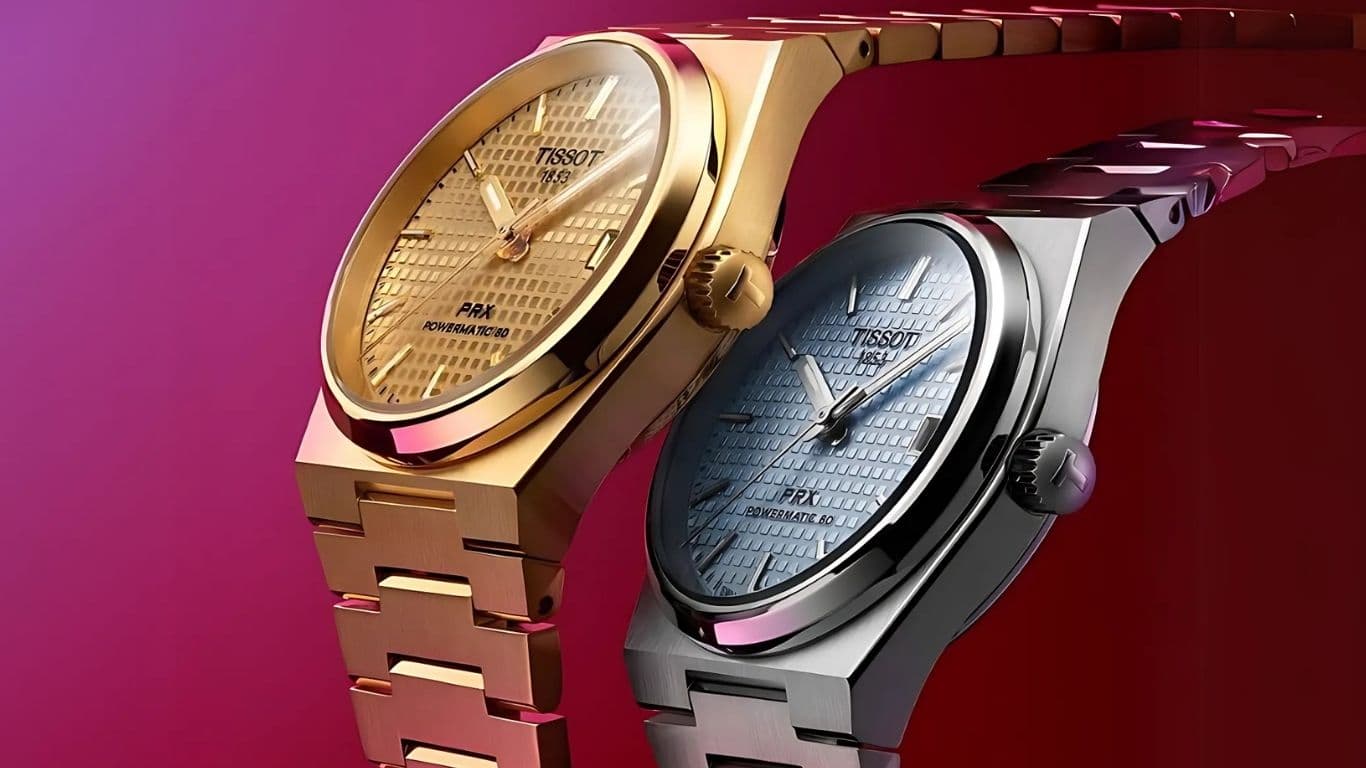
Three structural reasons. The case-and-bracelet integration reads cleaner than most accessible-tier sport-luxury references manage. The dial geometry is genuinely distinctive, particularly in the waffle-textured configurations that reference the original 1978 PRX.
The 80-hour power reserve from the Powermatic 80 caliber is one of the more useful contemporary improvements to entry-tier mechanical execution.
The watch finishes its weekend on the wrist Sunday evening and starts again Monday morning without intervention. That isn't a small thing at the accessible tier, and it compounds across years of ownership in ways the standard 38- to 42-hour-reserve accessible category doesn't really match.
Buyers who acquire a PRX tend to wear it heavily. The watch has earned its broad collector following on the merits of how it actually wears at the wrist. WatchCharts data on PRX secondary trading shows median time-to-sell in the 20-day band, with consistent demand from buyers across age cohorts.
The PRX has become, in a way few brands have managed at the accessible tier, the integrated-bracelet sport-luxury reference for the buyer who wants the design language without the upper-tier financial commitment.
What the PRX actually is
The PRX (Tissot's 2021 revival of the brand's 1978 PRX reference, originally named for the case construction: Precise, Robust, eXcellent) sits at around $725 retail in the steel Powermatic 80 reference. The 40mm case with the integrated bracelet, the modified ETA 2824 movement with the 80-hour Powermatic 80 power reserve, and the original PRX waffle dial design language make it one of the most coherent contemporary integrated-bracelet sport-luxury references at any accessible price point.
Hodinkee, GQ, and Worn & Wound have all covered the line consistently across its first five production years. The consensus reading is that the watch executes a very specific design brief unusually well. The 2021 launch references in the Powermatic 80 catalogue, with the standard steel 40mm in green, blue, ice-blue, and black dial variants, anchored the main contemporary line.
The PRX 35mm sister reference (launched 2022 for collectors preferring smaller cases), the PRX Powermatic 80 Chronograph variants (the Valjoux 7753-based chronograph references at around $1,725), and the various dial-colour configurations extend the line into adjacent registers. The discontinued original-quartz PRX references at $375 sit below the mechanical line at the accessible-quartz tier.
Why it isn't a collector cornerstone
The collector cornerstone case isn't supported by the structural conditions. The PRX trades close to retail in the secondary market. The production volumes (Tissot is one of the highest-volume Swiss mechanical brands, owned by Swatch Group with industrial capacity that doesn't create supply-constraint depth) don't create the kind of scarcity that anchors collector premiums.
The auction houses don't list PRX references at their watch sales because the watch sits below the price tier the major auction houses engage with. Phillips, Christie's, and Sotheby's all start their wristwatch catalogues materially above the PRX's secondary range. The credible specialist dealers stock the PRX as accessible-tier inventory rather than as a curated collector reference.
The watch's place in serious modern collecting is the same as a Seiko 5 KX series, a Hamilton Khaki Field Mechanical, or a Mido Ocean Star. Each is credible accessible-tier mechanical execution that anchors entry-level mechanical collecting without participating in the upper-tier collector category. That isn't a slight; it's the correct framing.
The PRX versus the Tudor Black Bay 58
Comparing the PRX to the Tudor Black Bay 58, the actual accessible-tier collector cornerstone reference, clarifies the distinction. The Black Bay 58 has the in-house MT5402 movement (a genuine in-house Tudor caliber rather than a modified ETA base); the deeper secondary-market trading depth (over 2,000 documented sales annually on Chrono24 alone, with median time-to-sell around 17 days); the heritage-derived narrative anchoring the reference in Tudor's vintage Submariner lineage; and the brand-level technical credentials the Tissot brand doesn't quite duplicate.
The Tudor sits at the next tier up: $4,000 to $4,500 retail rather than $725. The gap reflects the structural differences in supply discipline, movement architecture, and heritage depth. The PRX is excellent at its price point; the Black Bay 58 is excellent at a price point one tier above.
What this means in practice: a buyer choosing between the two is choosing between a wear-and-enjoy accessible reference and an entry into the upper-accessible collector tier. Both are legitimate; they answer different questions.
What collectors look for in a PRX
For PRX collectors specifically, the references that come up most consistently in serious accessible-tier conversation are the steel 40mm Powermatic 80 in the various standard dial colours. The green is the most-discussed contemporary configuration, with the ice-blue and the recent salmon variants following. The 35mm sister reference matters for collectors preferring smaller cases.
The various PRX Chronograph variants extend the line for collectors weighting the complication case. The discontinued original-quartz PRX from the 1978 production run anchors a small subcategory of vintage Tissot collecting at very modest pricing levels (typically $200 to $500 depending on condition). The historical references are interesting reading for the design-history context rather than for collector premium.
Box-and-papers documentation matters less at this price point than at upper tiers but still affects modest resale value. The PRX trades reliably through specialist accessible-tier channels and through standard Chrono24 inventory; the boutique allocation discipline is straightforward, and the secondary trading liquidity holds steady across the cleaner configurations.
The honest reading
The PRX is the right watch for the right buyer: the buyer who wants a credible Swiss-made accessible-tier integrated-bracelet sport-luxury reference at a price point no comparable Swiss watch competes in. Read accurately, the PRX earns the wearer following it has built. Read inaccurately as a collector cornerstone, it disappoints.
The buyers who acquire it understanding what it is tend to be very satisfied. The buyers who acquire it expecting it to perform like the next collector-tier reference up tend not to be. That distinction is worth holding clearly when reading the broader PRX coverage.
What this means for collectors
The more useful framing is that the PRX is a wear-and-enjoy reference rather than a collect-and-hold reference. That's a perfectly legitimate role for a watch to play. The serious accessible-tier collector category has space for watches that earn their place on the wrist rather than on the auction-house lot list, and the PRX sits comfortably in that pool.
The watches at the next tier up (the Tudor Black Bay 58, the Omega Seamaster Diver 300M, the Longines Spirit and Hydroconquest references) anchor the accessible-tier collector category. The PRX anchors the tier below, and there is genuine merit in being the most considered watch in that category. We'd argue the PRX is the right watch for what it actually is; the trick is reading it clearly rather than letting the enthusiast press read it as something it isn't.
We last reviewed this analysis in May 2026.

Frequently Asked Questions
- Can Tissot PRX watches hold their value over time?
- No. Market data shows consistent downward pressure with no appreciation trends.<br><br>
- Should I Buy The Tissot PRX At Retail Or Look For Discounts?
- If you decide to buy, it usually makes more sense to target grey-market or lightly used prices rather than full retail. The gap between boutique pricing and secondary-market levels is wide enough that paying retail simply locks in avoidable losses.<br><br>
- Who Is The Tissot PRX Best Suited For?
- The PRX is best for buyers who want an affordable, good-looking integrated-bracelet watch and accept normal depreciation. It suits new enthusiasts, casual collectors, and anyone who values aesthetics and comfort over resale value.<br><br>

Stefanos Moschopoulos
Stefanos Moschopoulos founded The Luxury Playbook in Athens and has spent the better part of a decade following the auction calendar, the en primeur releases, and the watchmakers, gallerists, and shipyards the magazine covers. He writes the field guides and listicles that anchor the Connoisseur section — pieces built on Phillips and Christie's results, Liv-ex movements, and conversations with collectors he has met across Geneva, Bordeaux, Basel, and Monaco. His own collecting habits sit closer to watches and wine than art, and it shows in the level of detail in the magazine's coverage of those categories. Under his direction, The Luxury Playbook now publishes long-form field guides, market-defining year-end listicles, and the Voices interview series with the founders behind the houses and the brands.