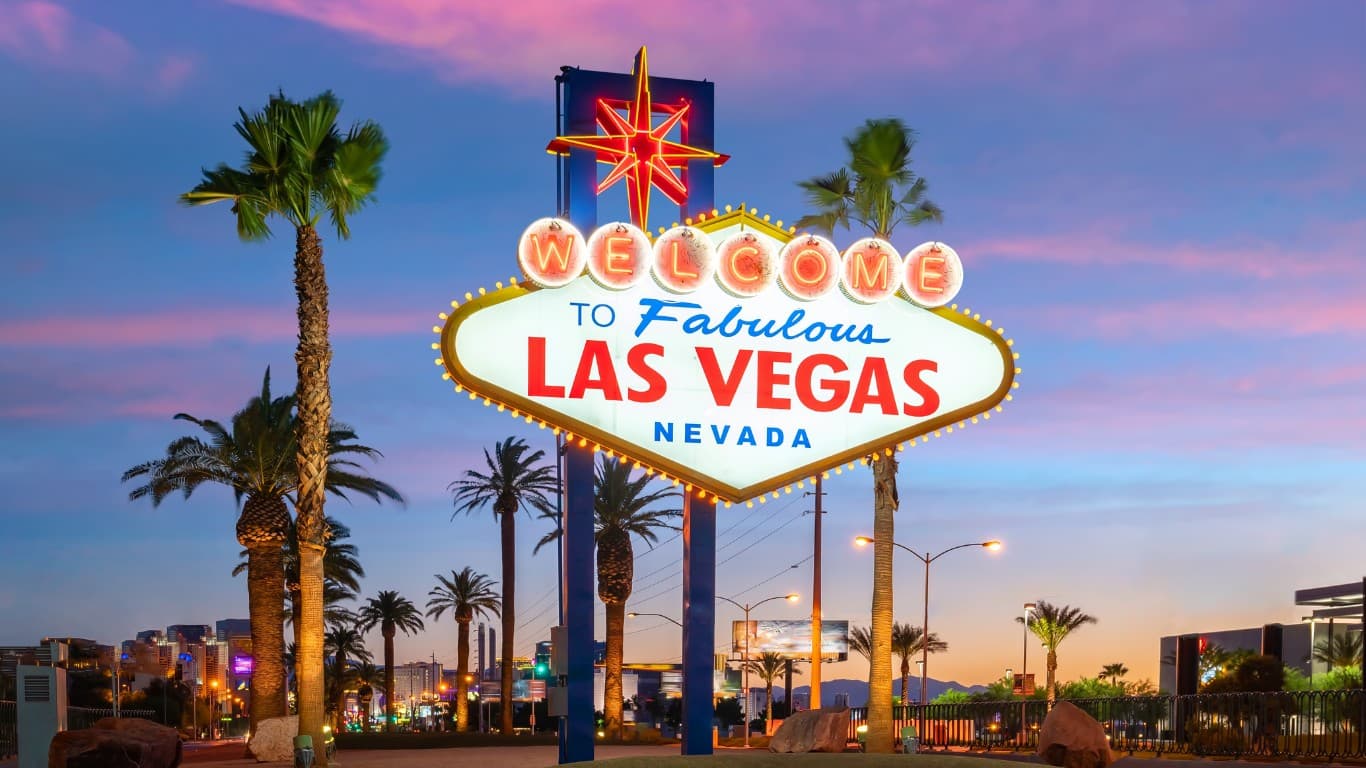
The Las Vegas real estate market has spent the past decade transforming from an essentially gaming-and-tourism economy into one of the more genuinely diversified property markets in the American West. The median property price now sits at $420,000, up 2. 9 percent year on year, with the median sold price at approximately $412,000 (Greater Las Vegas Association of Realtors data, cross-checked against Compass and Coldwell Banker Premier Realty desks).
The narrow gap between asking and closing tells the same story brokers in Phoenix and Houston describe: durable demand, persistent inventory shortages, and steady inbound migration from California and the broader West Coast.
Knight Frank's prime US markets coverage now flags Las Vegas alongside Phoenix and Austin as one of the structurally significant Sun Belt stories of the cycle. Compass and Coldwell Banker Premier Realty describe a market increasingly shaped by working professionals and retirees rather than the speculative cycles of the Strip's earlier eras.
The architectural breadth that defines Las Vegas's prime-residential offer has shifted meaningfully over the past decade. The Howard Hughes Corporation's Summerlin master-plan represents one of the most consequential planned communities in the American West.
MacDonald Highlands and The Ridges have produced some of the more architecturally significant contemporary residential work in the Mojave, with homes designed by named architects working in the desert-modern register pioneered by Albert Frey and Richard Neutra further west.
Henderson's Inspirada and the redevelopment of the Arts District downtown extend the conversation through new architectural eras.
- Las Vegas continues to attract sustained in-migration from California and other higher-cost markets, with the absence of state income tax supporting demand into 2026.
- We see hospitality, gaming, professional sports and the broader entertainment industry providing the employment base, with logistics and tech adding meaningful diversification.
- Median prices have stabilised after the pandemic-era appreciation, with the market settling into a more sustainable growth trajectory across most submarkets.
- The Ridges in Summerlin, MacDonald Highlands in Henderson and the broader Lake Las Vegas area continue to anchor the upper end of the regional luxury market.
- Inventory has loosened through 2025 and 2026, with months-of-supply moving closer to balanced conditions across most price tiers in the metropolitan area.
- For most considered buyers we view Las Vegas as a structurally attractive long-term hold given the demographic tailwinds and the Nevada tax framework supporting relocation demand.
- Who is this for?
- Buyers and investors evaluating Las Vegas for primary residence, second home or income property, alongside relocation clients and the brokers, lenders and advisers supporting metro transactions.
- What is happening?
- A market overview and 2026 forecast for the Las Vegas real estate market, covering price levels, inventory dynamics, in-migration demand drivers and the suburban luxury landscape.
- When did this emerge?
- The article covers conditions through 2025 and 2026, with reference to the post-pandemic inventory cycle and the latest California migration and tech sector employment data.
- Where is this happening?
- The piece focuses on the Las Vegas metropolitan area, including The Ridges in Summerlin, MacDonald Highlands in Henderson, Lake Las Vegas and the broader Clark County submarkets.
- Why does it matter?
- Las Vegas offers structural California migration support with the Nevada tax framework advantage in 2026, which is why the long-term hold case deserves explicit consideration here.
The Las Vegas housing market today
Inventory remains constrained, with roughly 3,246 active listings and only 812 new listings entering the market in Q1 2026. Homes are moving fast, with average days on market down to 37, noticeably quicker than 2024. About 35.
1 percent of homes are selling above list price, with the strongest competition concentrated in Henderson, Summerlin and Spring Valley.
The median price per square foot sits at $245, with sharp variation by neighborhood. The Lakes and Green Valley Ranch exceed the average; Whitney and North Las Vegas offer relative value below $200 per sqft.
- Median property price: $420,000, up 2.9 percent YoY
- Median sold price: $412,000
- Active listings: 3,246
- Average days on market: 37
- 35.1 percent of homes selling above list price
- Median price per square foot: $245
Las Vegas neighborhoods defining the prime tier in 2026
Summerlin
Summerlin remains the Las Vegas flagship master-planned community, with golf courses, upscale retail and proximity to Red Rock Canyon. The median home price sits at approximately $680,000, up 3. 1 percent year on year.
Architecturally, Summerlin's prime sections represent the most consistent contemporary residential standards in the metro.
Henderson
Henderson, just southeast of the Strip, has grown into a vibrant suburban hub. The median listing price runs around $530,000, up 2. 7 percent year on year.
Demand is especially high in MacDonald Highlands and Inspirada, where new builds and custom homes draw the strongest design-led buyer attention.
Green Valley
Green Valley is one of Henderson's original planned communities, offering established infrastructure and a steady demand profile. The median home price stands at $470,000, up 2.4 percent year on year.
Spring Valley
Spring Valley, west of the Strip, offers an urban-suburban mix and a wide range of property types. The median listing price runs at approximately $420,000, up 3.3 percent year on year.
North Las Vegas
North Las Vegas offers some of the most accessible inventory in the metro. Median home prices currently sit at $370,000, up 3.8 percent year on year, supported by rising interest in affordable housing and expanded infrastructure.
The Las Vegas rental landscape
The Las Vegas rental market remains robust, supported by population growth and affordability pressures on homeownership. Average rents sit at $1,075 for studios, $1,400 for one-bedrooms, $1,720 for two-bedrooms and $2,150 for three-bedrooms, climbing approximately 3 percent year on year.
Summerlin one-bedrooms average $1,675. Henderson one-bedrooms run $1,500. Downtown Las Vegas one-bedrooms sit at $1,300.
The vacancy rate hovers around 6 percent, supported by steady inbound migration and limited new construction in the affordable segment.
What is shaping Las Vegas real estate in 2026
Several forces are pushing the market in the same direction. Population growth remains the structural story: Las Vegas continues to attract residents from California, Oregon and Washington, drawn by the absence of a state income tax, lower cost of living and Sun Belt lifestyle. The employment base has diversified meaningfully.
Beyond gaming and hospitality, the metro now anchors significant healthcare, logistics and technology presence.
Mortgage rates between 6. 5 and 7 percent on the 30-year fixed have shifted some demand into the rental sector. Major redevelopment works (the continued buildout of the Arts District, the expansion of the Las Vegas Valley airport infrastructure, and major league sports investments including the Raiders and the upcoming A's relocation) are reshaping demand around specific corridors.
CBRE's Las Vegas desk has been tracking those corridor-specific dynamics carefully.
Where Las Vegas real estate reads now
Home prices are projected to climb between 3 and 5 percent through the back half of 2026. Growth is expected to concentrate in Henderson, Summerlin and the Arts District. Rents are forecast to climb 3 to 5 percent.
Vacancy is expected to stay around 6 percent, with the steady California migration story providing the structural support.
What this means for buyers
For the buyer who values affordability against the broader American West, an increasingly diversified employment economy, and one of the most architecturally consistent contemporary master-planned offers in the Sun Belt, Las Vegas continues to read as a structurally important property market. The neighborhoods responding most distinctly to the demographic shifts, namely Summerlin, Henderson's MacDonald Highlands and the redeveloping Arts District, are quietly outperforming the headline averages. Our broader US property market overview places Las Vegas in the wider context of the cycle. We last reviewed this analysis in May 2026.
Frequently asked
How is the Las Vegas housing market evolving in 2026?
Home prices are projected to rise 3 to 5 percent through 2026, supported by inbound migration from California and the city's diversified employment story. Knight Frank's prime US markets coverage flags Las Vegas alongside Phoenix and Austin as one of the structurally significant Sun Belt stories of the cycle.
Which Las Vegas neighborhoods are seeing the most buyer attention?
Summerlin, Henderson (particularly MacDonald Highlands and Inspirada), Green Valley and the redeveloping Arts District are drawing the most consistent demand.
How long are homes staying on the market?
The average is 37 days, with prime properties moving substantially faster. Around 35.1 percent of homes are clearing above list price, with the strongest competition in Henderson, Summerlin and Spring Valley.
How does Las Vegas compare against other Western US cities?
Las Vegas remains meaningfully more accessible than California's coastal metros while offering Sun Belt tax advantages (no state income tax) and an increasingly diversified employment base across healthcare, logistics and technology.


Savvas Agathangelou
Savvas Agathangelou co-founded The Luxury Playbook and has spent years reporting from the prime postcodes the magazine covers — Mayfair, Knightsbridge, the Athens Riviera, Dubai's Palm crescents, and the southern Mediterranean coastlines where the world's wealthy keep coming back. His background is in international hospitality, and that frame shapes how he writes about property: the developer's choices, the architect's signature, the agency's bench of named brokers, the building's service standard once the buyer moves in. He files developer spotlights, agency profiles, and the seasonal "Properties That Defined" listicles, and he hosts the magazine's founder-and-leadership interviews on the Voices side.