Memphis sits at one of the more genuinely interesting crossroads in the southern United States residential market. The city's musical heritage, the riverfront architectural texture and the wider Mid-South economic backdrop all flow into a property conversation that is doing meaningful work in 2026. Knight Frank's North American desk, Cushman & Wakefield's Tennessee coverage and Mansion Global's continuing Memphis dispatches have all noted the city's reset across the past three years.
Below, our read on where Memphis sits and what the city offers for owners considering a Mid-South address in 2026.
- Memphis remains one of the most affordable major Southeast markets, with median prices well below the regional average and continuing to attract value-focused investor demand.
- We see logistics, healthcare, FedEx anchor presence and the broader services sector providing employment stability that supports steady, if unspectacular, housing demand.
- Inventory has improved through 2025 and 2026, with months-of-supply moving toward balanced or buyer-favourable conditions across most price tiers in the metropolitan area.
- East Memphis, Germantown and Collierville continue to anchor the upper end of the Greater Memphis market with the most desirable inventory and school districts.
- Tennessee's absence of state income tax adds to the structural appeal, with the relatively low property tax rates further supporting the affordability picture.
- For most considered buyers we view Memphis as a genuine value play with stable employment underpinning, particularly suited to income property investors targeting strong cash-on-cash returns.
- Who is this for?
- Buyers and investors evaluating Memphis for primary residence or income property, alongside the brokers, lenders, advisers and out-of-state investors supporting Greater Memphis transactions.
- What is happening?
- A market overview and 2026 forecast for the Memphis housing market, covering price levels, inventory dynamics, logistics and healthcare employment drivers and the Tennessee tax framework.
- When did this emerge?
- The article covers conditions through 2025 and 2026, with reference to the post-pandemic inventory cycle and the latest FedEx, healthcare and logistics employment data.
- Where is this happening?
- The piece focuses on the Memphis metropolitan area, including East Memphis, Germantown, Collierville and the broader Shelby County submarket landscape.
- Why does it matter?
- Memphis offers genuine value with stable employment underpinning and the Tennessee tax advantage in 2026, which is why the cash-flow case warrants consideration from income-focused investors.
The price texture and the neighbourhood map
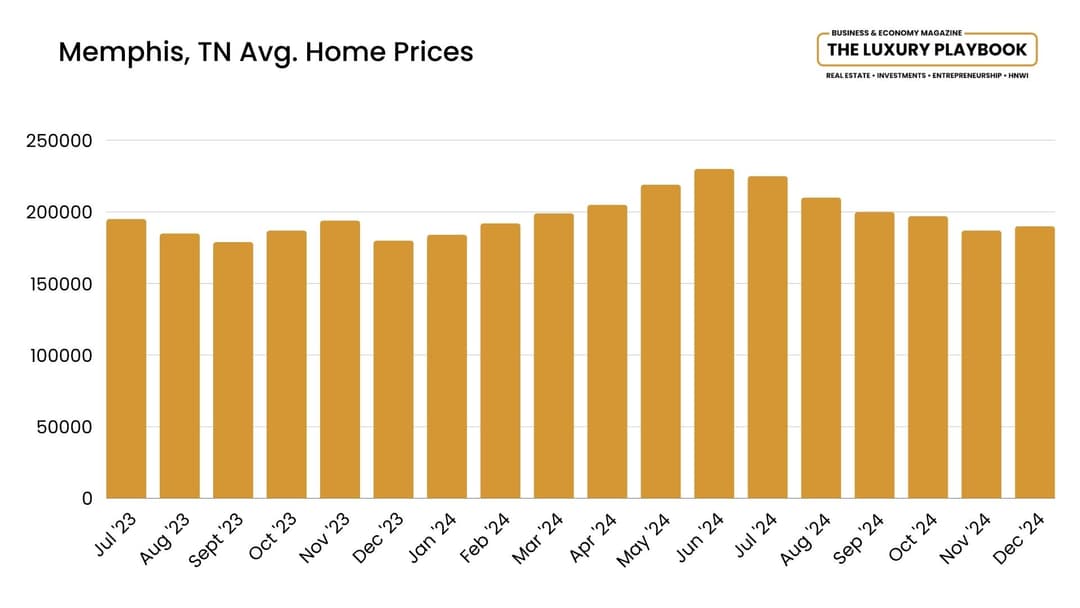
Memphis residential prices in 2026 cluster around a citywide median in the $215,000 range, with prime neighbourhoods like the Evergreen Historic District, Central Gardens, Chickasaw Gardens and parts of East Memphis anchoring the higher per-square-foot bands. The wider city has absorbed a meaningful appreciation cycle since 2020, with the central and historic neighbourhoods pulling the headline numbers upward.
Realtor.com data through Q1 2026 places the citywide days-on-market figure in the mid-30s, with the prime band clearing in well under three weeks for well-presented stock. Christie's International Real Estate's Tennessee affiliate reports strong interest from out-of-state owners across the past 18 months. The wider US residential modelling framework reads cleanly on Memphis given the city's price-point reach.
Neighbourhood-level pricing
The neighbourhood map is more textured than the citywide headline suggests. The table below captures the median listing prices across the named Memphis neighbourhoods at the start of 2026.
| Neighborhood | Median Listing Home Price | Listing $/SqFt |
|---|---|---|
| Sea Isle Park | $284.5K | $146 |
| Central Gardens | $428K | $167 |
| High Point Terrace | $349K | – |
| Colonial Acres | $246.5K | – |
| South Main | $345K | $236 |
| Cooper Young | $300K | $216 |
| Hyde Park | $86.5K | $72 |
| River Oaks | $629K | – |
| Evergreen Historic District | $394.9K | $190 |
| Mud Island | $386.5K | – |
| Hickory Hill | $172.3K | $68 |
| Vollintine – Evergreen | $206K | – |
| Walnut Grove | $359.8K | – |
| Alta Vista | $94.9K | $78 |
| North Parkway Village | $159.9K | – |
| Normandy Meadows East | $369K | – |
| Riverside | $74.9K | $47 |
| Klondike Smokey City | $100K | $69 |
| Binghampton | $194.9K | $131 |
| Orange Mound | $83.2K | – |
The pricing spread reflects Memphis's varied architectural texture, from the Victorian-and-Colonial Revival mansions of Central Gardens and Evergreen to the Craftsman-and-bungalow streets of Cooper-Young and Sea Isle Park. Engel & Völkers' Tennessee desk operates a separate book for the upper-tier off-market stock across East Memphis and the named historic districts.
The architectural texture and the riverfront
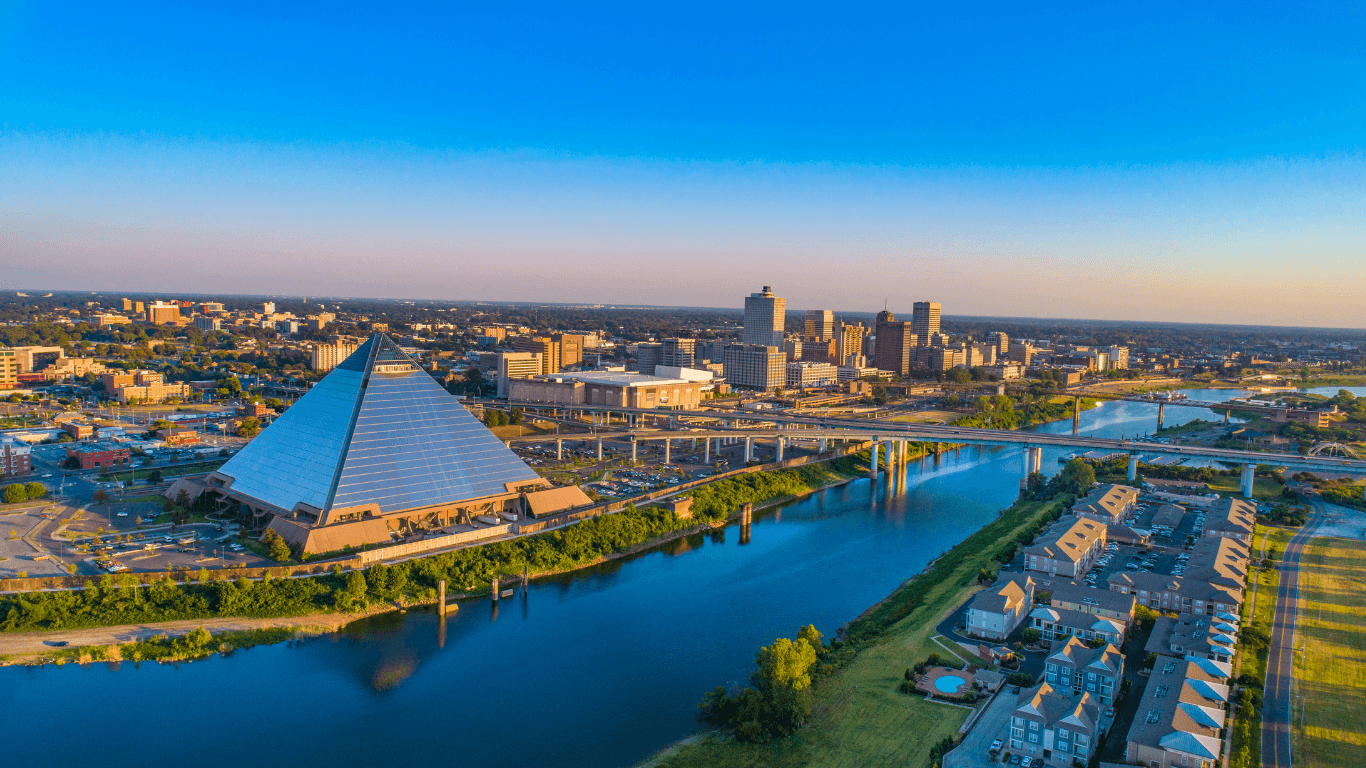
Memphis's architectural depth is the city's defining commercial argument. The Central Gardens, Evergreen Historic District and Chickasaw Gardens neighbourhoods hold the early-twentieth-century mansion stock, with work by E.L. Harrison, Walk C. Jones and the wider Memphis architectural practice scene of the 1910s through 1940s. The Memphis Pyramid, the National Civil Rights Museum at the Lorraine Motel and the Pink Palace Mansion anchor the cultural register.

The South Main and Downtown districts have absorbed a meaningful warehouse-and-loft conversion cycle. The Mud Island and Harbor Town residential developments anchor the riverfront prime. The Cooper-Young district holds the contemporary creative-class urban texture, with restaurants, design studios and the Memphis College of Art (until its closure in 2020) clustered along the Cooper Street and Young Avenue axis.
The architectural commissioning across the wider city includes work by Looney Ricks Kiss Architects, the Memphis desks of HKS Architects and contemporary practices like brg3s Architects. Owners commissioning restoration work in the historic districts have access to a deep architectural layer.
The economic backdrop and the buyer field
Memphis's economic structure is anchored by FedEx (the global headquarters), International Paper, the University of Memphis and the wider distribution-and-logistics base. The Memphis International Airport is the busiest cargo airport in the world by tonnage, a function of the FedEx hub. The medical-and-research cluster, including St Jude Children's Research Hospital, anchors a separate employment base.
The buyer field has rotated meaningfully across the past three years. Where the 2010s cycle leaned heavily on internal-Tennessee and regional Mid-South buyers, the 2024-2025 wave has absorbed waves of Nashville-based families, out-of-state remote workers and a growing international segment. The wider Sun Belt cycle has reinforced the Memphis price reset.
Macro uncertainty and the days-on-market texture
Macro uncertainty has reshaped some of the wider Mid-South patterns. Global tensions have shaped the pace of US buyer commitments across 2025 and into 2026, though Memphis has been more insulated than the coastal cities. Average days on market in the city has compressed across 2024 and 2025.
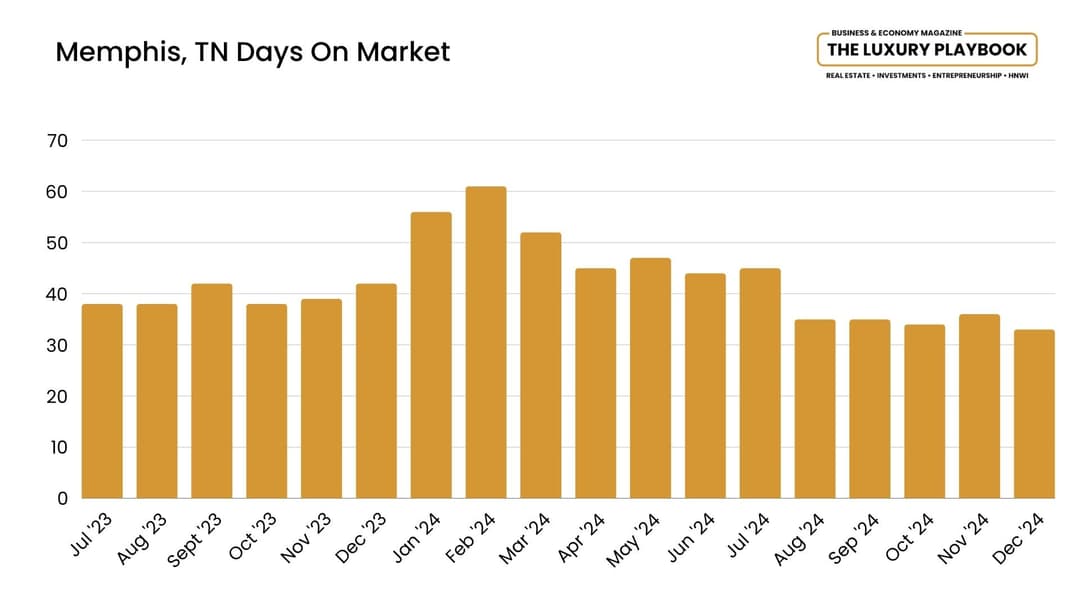
The prime neighbourhoods clear in well under three weeks for well-presented stock. Central Gardens, Evergreen and East Memphis run the fastest sale cycles. The wider city averages hold in the mid-30s.
The rental and ownership balance
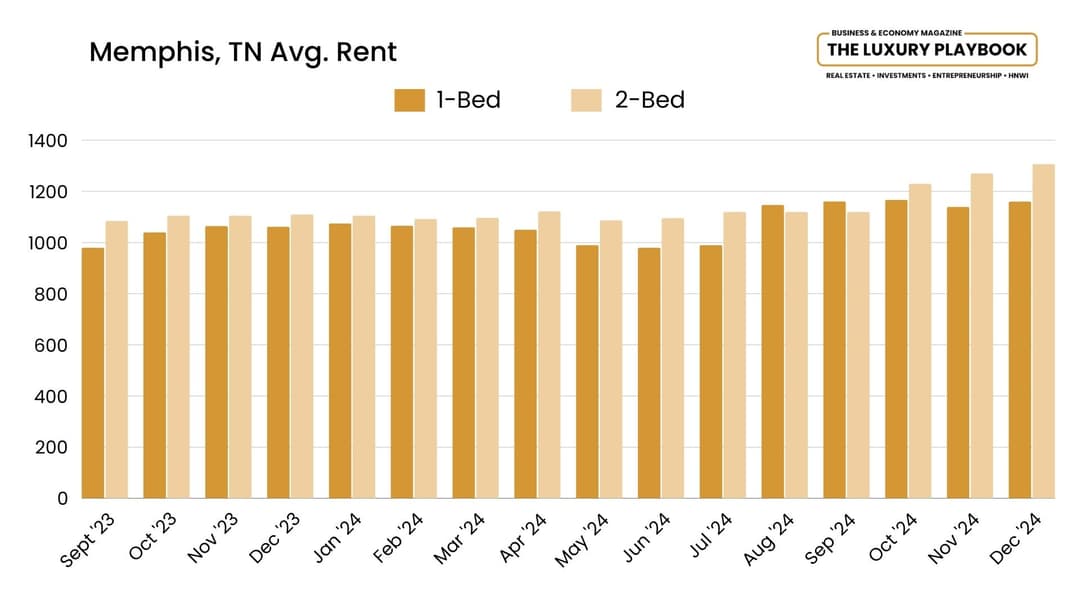
The rental layer in Memphis remains active. Average rents in the prime neighbourhoods cluster between $1,300 and $2,800 per month for two-bedroom stock, with the South Main and Harbor Town condominium towers anchoring the upper band. The wider city has absorbed a meaningful conversion of warehouse and industrial buildings to residential stock.
For owners considering long-term holding, the wider US property-management framework works for Memphis as it does for the Nashville or Houston comparables. The institutional brokerage layer (Knight Frank, Christie's International Real Estate, Sotheby's International Realty) has thickened across the city through 2024 and 2025.
The infrastructure and the school field
Memphis's transport infrastructure is the city's main operational consideration. The Memphis International Airport reaches major North American hubs cleanly through the FedEx-anchored hub. The MATA bus and trolley network covers the central districts.

The independent school field includes Memphis University School, St Mary's Episcopal School, Hutchison School, St Agnes Academy and Lausanne Collegiate School. The Methodist Le Bonheur Healthcare network and the Baptist Memorial Health Care system anchor the upper-tier private healthcare layer alongside St Jude.
What this means for buyers
For owners considering broader US opportunities, Memphis in 2026 offers a credible Mid-South prime conversation at price points well below the comparable Nashville, Atlanta or Charlotte bands. The architectural depth in the historic districts is real, the operational infrastructure has matured and the buyer field has rotated to include a meaningful out-of-state cohort.
For owners landing on the city in 2026, the work is choosing the neighbourhood (Central Gardens, Evergreen, Chickasaw Gardens, Cooper-Young, East Memphis) and committing to a multi-year holding horizon. The Knight Frank, Christie's International Real Estate, Engel & Völkers and Cushman & Wakefield desks all cover the city now.
That institutional thickening is a meaningful signal about how the brokerage layer treats Memphis in 2026. We last reviewed this analysis in May 2026.


Savvas Agathangelou
Savvas Agathangelou co-founded The Luxury Playbook and has spent years reporting from the prime postcodes the magazine covers — Mayfair, Knightsbridge, the Athens Riviera, Dubai's Palm crescents, and the southern Mediterranean coastlines where the world's wealthy keep coming back. His background is in international hospitality, and that frame shapes how he writes about property: the developer's choices, the architect's signature, the agency's bench of named brokers, the building's service standard once the buyer moves in. He files developer spotlights, agency profiles, and the seasonal "Properties That Defined" listicles, and he hosts the magazine's founder-and-leadership interviews on the Voices side.