Tourbillons sit in their own register at the upper end of contemporary watchmaking. Originally devised by Abraham-Louis Breguet in 1795 and patented in 1801 to improve pocket-watch timekeeping by averaging the gravitational error across positions, the complication has become, in the wristwatch era where positional gravity matters substantially less, primarily a demonstration of finishing and movement-design ambition.
- The most coveted tourbillon references of 2026 sit at the intersection of finishing, complication architecture, and brand heritage, with Patek Philippe and Greubel Forsey defining the absolute top.
- Patek Philippe Reference 5175 and 5101 tourbillons remain the most quietly traded among Holy Trinity tourbillons, with auction visibility limited by collector retention.
- Greubel Forsey tourbillon programmes, including the Quadruple Tourbillon and Double Tourbillon 30 Degrees, anchor the modern independent-maker tourbillon ceiling.
- We see A. Lange & Söhne tourbillon references as the strongest value among Holy Trinity-adjacent options, with Glashütte finishing and Lange-specific architecture supporting the asking premiums.
- Audemars Piguet Royal Oak Tourbillon Extra-Thin and equivalent integrated-bracelet tourbillons continue to draw serious collector competition.
- Cartier tourbillon references, including the Privé Cintrée and Astronomique pieces, have entered the most-coveted conversation through design originality and shaped-case work.
- Who is this for?
- High-complication collectors, tourbillon students, and serious buyers exploring the upper end of mechanical watchmaking.
- What is happening?
- A current ranking of the most-coveted tourbillon references of 2026, covering Patek Philippe, Greubel Forsey, A. Lange & Söhne, Audemars Piguet, and Cartier highlights.
- When did this emerge?
- The current rankings reflect 2026 collector behaviour, with independent maker tourbillons continuing to reshape the established hierarchy.
- Where is this happening?
- Geneva, Glashütte, and the independent maker workshops host the manufacturing, with major auction houses handling the meaningful secondary market.
- Why does it matter?
- Tourbillon references anchor the upper end of complication collecting, with finishing and architecture choices that reward serious study before purchase.
The most coveted tourbillon references in 2026 are the watches where that demonstration lands hardest.
The contemporary tourbillon scene splits between the historical maisons (Breguet's modern reissues, Patek's tourbillon production), the German contemporary makers (Lange's Pour le Mérite series, Glashütte's tourbillon work), and the independents (Roger Smith, F.P. Journe, Greubel Forsey, Voutilainen, MB&F). Each tier has its own collector logic. Phillips and Sotheby's have done much of the work consolidating the upper end of the category at auction.
Breguet: the historical tourbillon reference
Breguet's modern Tradition 7047 (the visible-tourbillon dress watch with the historical fusée-and-chain mechanism inspired by the original Breguet pocket watches of the early nineteenth century) and the Classique Tourbillon 5377 (the more conventional tourbillon dress reference) anchor the brand's contemporary tourbillon production. Both reference Breguet's historical work directly.
The Tradition particularly, with its open architecture exposing the tourbillon and the various movement components in Abraham-Louis Breguet's original visual language.
Pricing runs from around 120,000 euros through 200,000-plus depending on case material and complication combinations. Phillips and Christie's both handle Breguet at their major sales; the brand's place at the top of historical watchmaking is structural. The reference traces back to the original Breguet workshop in Paris in ways few contemporary tourbillon references can claim.
A. Lange & Söhne: the Pour le Mérite series
Lange's tourbillon work is anchored by the Pour le Mérite series, the brand's pinnacle complication line named for the Prussian military and academic honour. The Tourbillon Pour le Mérite (the original, with the fusée-and-chain mechanism that links the watch directly to the historical highest tier of pocket-watch construction), the Datograph Pour le Mérite, the 1815 Tourbillon Pour le Mérite, and the various subsequent Pour le Mérite references are produced in small annual quantities at the upper-six-figure-and-above pricing tier. Collector recognition is high among the specialist tourbillon collecting community.
The Saxonia Tourbograph Perpetual and the various tourbillon-and-complication combinations in the modern Lange catalogue extend the brand's tourbillon work into the more accessible (in relative terms) upper tier. The Lange 1 Tourbillon Handwerkskunst and the various Handwerkskunst small-batch references demonstrate the brand's hand-finishing ambition at the highest level.
Gold dials with hand-engraved patterns, mother-of-pearl elements, the various artisanal techniques the Handwerkskunst category exists to showcase.
The independents: Roger Smith, Journe, Greubel Forsey, MB&F
Roger Smith's Series 2 and Series 5 tourbillons (produced from the Isle of Man at single-digit annual production volumes) are the most considered hand-finished British tourbillons on the contemporary market. Each piece carries Smith's personal hand work in significant proportion; the waiting list runs years and the established collector relationships matter substantially more than at the broader independent tier.
Hodinkee, A Collected Man and the dedicated independent-watchmaking press all give Smith's work consistent coverage.
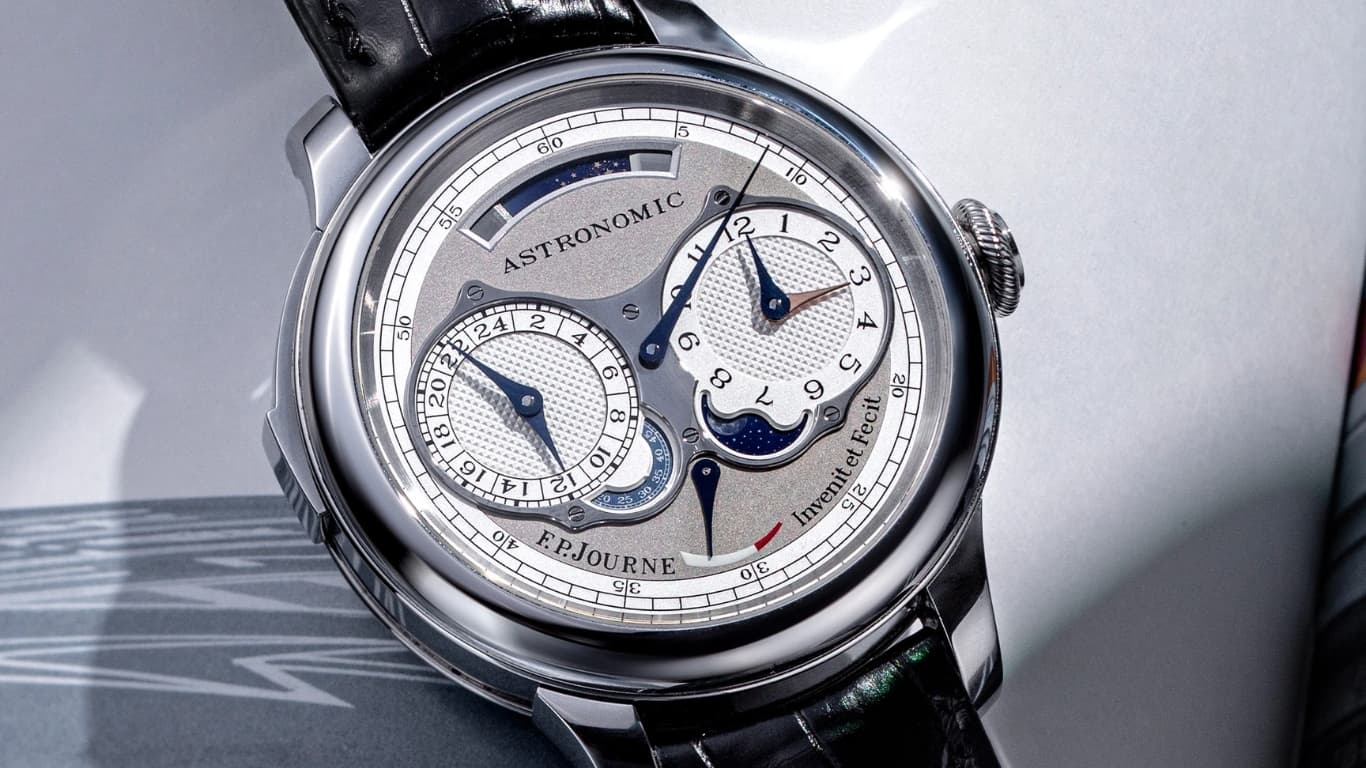
F.P. Journe's Tourbillon Souverain (the upright tourbillon with the dead-beat seconds and the rare-metal movement plates) anchors the brand's tourbillon production at annual volumes that keep secondary-market access to the references genuinely thin. The historical Journe tourbillons with the gold movements (produced 2003-2013 in very small numbers) anchor the upper tier of Journe collecting at substantial premiums to retail.
Phillips's Journe-focused sales have produced the headline numbers for the brand's tourbillon work.
Greubel Forsey's Double Tourbillon 30°, Quadruple Tourbillon, Tourbillon 24 Secondes Vision, and the various inclined-tourbillon constructions push the complication into territory that's primarily about movement-design ambition rather than historical reference. The brand's annual production sits in low double digits across the entire catalogue; pricing runs into seven figures for the upper references.
The inclined-tourbillon constructions are visible from the front through the dial cutouts and from the back through the display case, in a manner few other makers attempt.
MB&F's Legacy Machine series tourbillons (LM Thunderdome, LM FlyingT, the various Horological Machine tourbillons) demonstrate the brand's avant-garde approach applied to the traditional complication. The flying-tourbillon constructions, the dial-side balance wheels, the unusual case architectures all define the brand's contemporary work.
Maximilian Büsser's collaborations with various master watchmakers extend the brand's tourbillon catalogue into territory the more traditional makers don't approach.
Patek Philippe and the trinity
Patek's modern tourbillon production runs through the Grand Complications catalogue. The various reference 5101 and 5102 tourbillon references, the various complicated combinations with the perpetual calendar and minute repeater, and the upper-end Reference 5316 minute-repeater-tourbillon-perpetual-calendar grand complication. Production is small; pricing runs into the upper-six-figure range and well beyond.
The vintage Patek tourbillons (the various early-twentieth-century pieces, the small-production-run tourbillons of the 1990s) anchor the brand's tourbillon collecting at the historical-piece tier.
Audemars Piguet's tourbillon work (the various Royal Oak Tourbillon references, the Code 11.59 Tourbillon, and the upper-end concept-watch tourbillons) extends the brand's contemporary design language into the complication tier. The Royal Oak Tourbillon Extra-Thin reference 26510 is the contemporary defining AP tourbillon. Vacheron's Patrimony Tourbillon, Traditionnelle Tourbillon, and Métiers d'Art Tourbillon references anchor the brand's contemporary tourbillon production with the artisanal-dial techniques the maison's Métiers d'Art workshop specialises in.
What collectors look for in a tourbillon
Tourbillon collecting splits between the historical and the technical registers. Collectors drawn to the historical case (the Breguet reissues, the Lange Pour le Mérite series, the Patek Grand Complications tourbillons) gravitate toward references that read as continuations of the pocket-watch tradition.
Collectors drawn to the technical case (Greubel Forsey's inclined tourbillons, MB&F's avant-garde constructions, the various contemporary independent makers) gravitate toward references that demonstrate contemporary movement-design ambition.
Voutilainen's Vingt-8 Tourbillon (the contemporary Finnish-Swiss maker's pinnacle reference) sits between the two registers. Historical influence with contemporary finishing techniques. Either register, the discipline is the same.
Hand-finishing quality reads under loupe; movement architecture matters substantially; the cage construction, the balance wheel, the escapement geometry, and the bridge finishing all carry consequences. The watchmakers who work at this tier (the master watchmakers at Lange, Patek, AP, Vacheron, the independents like Smith, Journe and Voutilainen) tend to know each other's work in detail. The collector conversation at this tier tends to follow the watchmakers as much as the brands.
What this means for collectors paying attention
The longer story serious tourbillon collectors recognise is that the complication itself has long since stopped being primarily about timekeeping accuracy. Its place in contemporary watchmaking is as a demonstration of finishing ambition and movement-design discipline. The references that hold up over decades tend to be the ones where the underlying watchmaking justifies the complication, rather than the ones where the tourbillon is added primarily for the visible spectacle.
Our take: the contemporary tourbillon scene is the richest period for the complication since the 1920s. The combination of the historical maisons holding their tradition, the German makers extending their classical work, and the independents pushing the design-and-engineering envelope makes 2026 a strong moment to be paying close attention to the complication.
We last reviewed this analysis in May 2026.

Frequently Asked Questions
- Which Tourbillon Watch Holds Its Value Best?
- Watches from brands like Richard Mille, F.P. Journe, and Vacheron Constantin are known for their consistent value retention and appreciation. Specific models such as the Richard Mille RM 52-02 Pharrell Williams, F.P. Journe Tourbillon Souverain Vertical, and Grand Seiko Masterpiece SLGT005 Kodo at Daybreak often perform exceptionally well in both primary and secondary markets.<br><br>
- Why Are Tourbillon Watches So Expensive
- Tourbillon watches are expensive because of their high level of craftsmanship, technical innovation, and limited production numbers. The mechanism itself is extremely difficult to manufacture and assemble, often requiring hundreds of hours of work by skilled watchmakers. Additionally, many tourbillon watches feature precious materials like platinum, gold, and sapphire crystal, further driving up their price.<br><br>
- Are Entry-Level Tourbillon Watches Worth It?
- Absolutely. Entry-level tourbillon watches, such as the TAG Heuer Carrera Chronograph Tourbillon, provide an accessible gateway into haute horology. While they may not carry the same prestige as ultra-luxury models, they still offer technical excellence, brand recognition, and strong resale value.

Stefanos Moschopoulos
Stefanos Moschopoulos founded The Luxury Playbook in Athens and has spent the better part of a decade following the auction calendar, the en primeur releases, and the watchmakers, gallerists, and shipyards the magazine covers. He writes the field guides and listicles that anchor the Connoisseur section — pieces built on Phillips and Christie's results, Liv-ex movements, and conversations with collectors he has met across Geneva, Bordeaux, Basel, and Monaco. His own collecting habits sit closer to watches and wine than art, and it shows in the level of detail in the magazine's coverage of those categories. Under his direction, The Luxury Playbook now publishes long-form field guides, market-defining year-end listicles, and the Voices interview series with the founders behind the houses and the brands.