Paul Cézanne (1839-1906) is the painter the modern market cannot place neatly in either camp, which is exactly why he anchors the conversation. The Cézanne we buy at Christie's and Sotheby's evening sales is simultaneously the last great impressionist and the first cubist, and the auction record makes both arguments at once.
That structural position, the bridge between the 1870s impressionist project and the 1907 Cubist breakthrough, is what holds Cézanne above the rest of the impressionist field on price. The Mont Sainte-Victoire paintings, the late Bathers, and the still lifes that anchored Picasso's and Braque's early studio thinking are the lots the market treats with the most weight.
- Paul Cezanne, working between 1839 and 1906, anchors the bridge between the impressionist project of the 1870s and the cubist breakthrough that followed in 1907.
- The Card Players sold privately to the Royal Family of Qatar in 2011 at a reported two hundred and fifty million dollars, the highest known painting price at the time.
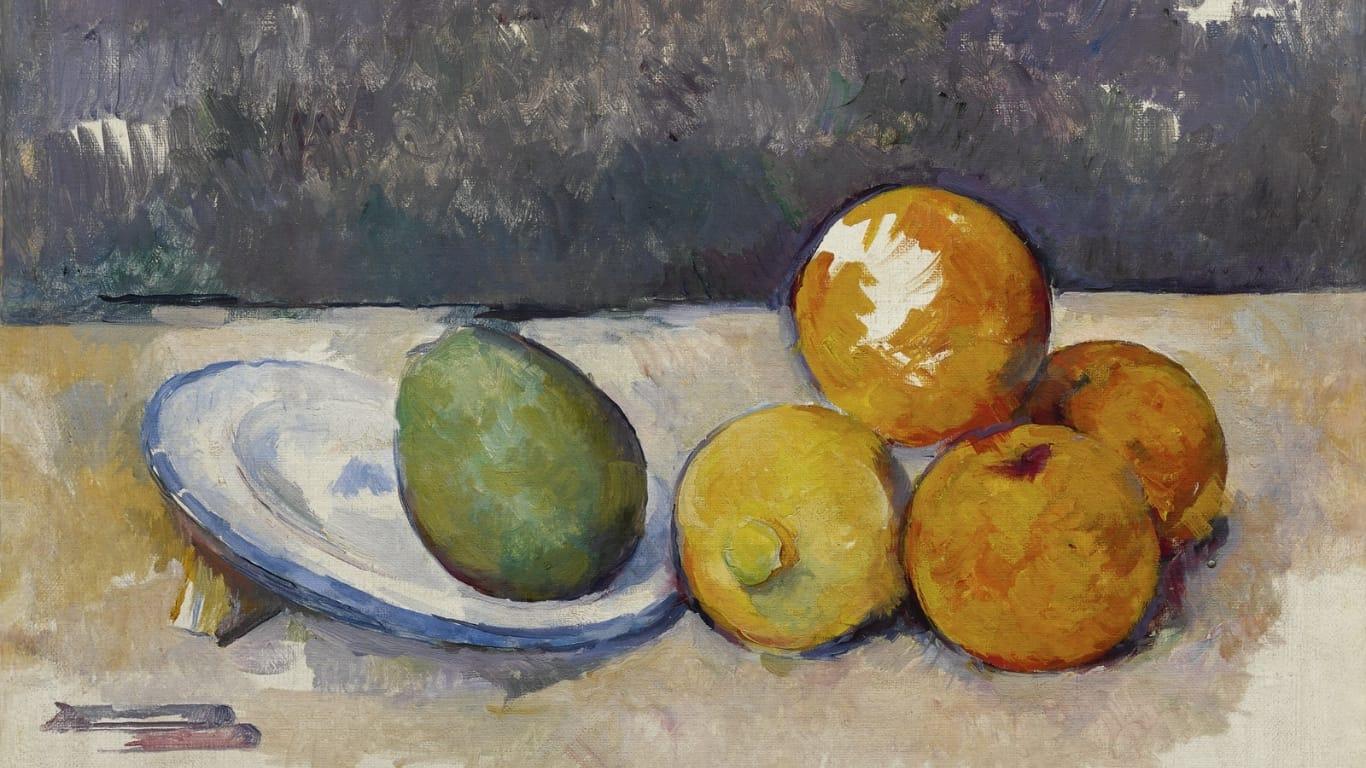
- Rideaux Cruchon et Compotier from 1893 to 1894 sold at Sotheby’s New York in May 1999 for sixty point five million dollars and remains a benchmark for the still-life market.
- Multiple Mont Sainte-Victoire variants have transacted in the thirty to one hundred million dollar band across the past two decades at the major houses.
- The late constructivist phase from the mid-1880s through his death in 1906 is the market’s centre of gravity and the period that shaped Picasso and Braque’s 1907 studio thinking.
- The 1907 Salon d’Automne retrospective is the structural pivot, with Picasso and Braque both seeing the show and reorganising twentieth-century painting around what Cezanne built.
- Who is this for?
- Modern art collectors, advisors and family offices building positions in late nineteenth-century painting and the bridge into early modernism that Cezanne structurally defines.
- What is happening?
- An editorial read on how Cezanne bridges the impressionist and modern markets, covering the price arc, the late work, the Bathers cohort and the still-life market that anchored cubism.
- When did this emerge?
- Most active around the May and November Impressionist and Modern evening sales at Christie’s and Sotheby’s in New York and London each year.
- Where is this happening?
- Centred on the New York and London salesrooms, with major institutional holdings across the Philadelphia Museum of Art, the National Gallery London, the Barnes Foundation and the Musee d’Orsay.
- Why does it matter?
- Understanding Cezanne’s structural position clarifies how the impressionist and modern markets actually connect and supports collectors thinking through where the bridge between the two segments sits.
The price arc Cézanne built
The benchmark sales tell the story. "The Card Players" (one of five versions) sold privately to the Royal Family of Qatar in 2011 at a reported $250M, the highest known price for any painting at the time. "Rideaux, Cruchon et Compotier" (1893-1894) sold at Sotheby's New York in May 1999 at $60.5M, and multiple Mont Sainte-Victoire variants have transacted in the $30M to $100M band across the past two decades.
For broader context on the impressionist market Cézanne emerged from, our impressionism collectors field guide sets out the cohort and the price tiers.
The lots that anchor the upper register are almost always either the Card Players, the late Bathers, or the Mont Sainte-Victoire series. Each subject has its own collector base and its own museum dialogue, and the trade tracks them as separate sub-markets.
Why the late work matters most
Cézanne worked in roughly three phases: a dark early period through the 1860s, the impressionist phase from 1872 to roughly 1883 working alongside Pissarro at Pontoise, and the late constructivist phase from the mid-1880s until his death in 1906.
The late phase is the market's centre of gravity. The Mont Sainte-Victoire paintings, the Provence landscapes of L'Estaque and the Bibémus quarry, and the major still lifes of the 1890s are the works that drew Picasso and Braque to the studio in 1907 and produced the Cubist breakthrough that followed.
The 1907 Salon d'Automne retrospective the year after Cézanne's death is the pivot moment. Picasso saw the show, Braque saw the show, and within two years the entire framework of how 20th-century painting was understood had reorganised around what Cézanne had built.
The Bathers cohort
The Bathers are the most ambitious cohort Cézanne produced. Three major late paintings, the Philadelphia Museum of Art's "Large Bathers" (1900-1906), the National Gallery London's "Bathers" (1894-1905), and the Barnes Foundation's "Bathers" (1898-1905), anchor the public-collection holdings.
The smaller and intermediate Bathers compositions transact rarely but at the top of the market when they do. The cohort has a distinct collector base from the Mont Sainte-Victoire material: more museum-driven, more institutional, less private.
Sotheby's and Christie's evening-sale records on Bathers material reflect that institutional pull. When a major Bathers composition does surface, it tends to draw bidding from European national museums alongside private collectors.
The still life market
Cézanne's still lifes are the most actively traded segment of his corpus by frequency. Apples, pears, pitchers, draped tablecloths, and the carefully constructed table corners of the 1890s anchor the cohort, and the market has built a deep comparables history on them.
Quality dispersion is significant. A late Cézanne still life with strong provenance and exhibition history transacts at evening-sale prices; a smaller, less complete or less documented example transacts materially lower. The Vollard Inventory, the dealer Ambroise Vollard's records from the late 1890s onward, is the working reference for provenance authentication on the segment.
For broader coverage of the modern segment Cézanne anchors, our modern art collectors field guide sets out the dealers, fairs, and houses where the cohort transacts.
Why Cézanne is the bridge
Impressionism was an optical project. The cohort, Monet, Pissarro, Sisley, Renoir at his best, painted what the eye saw under specific atmospheric conditions, and the discipline was speed, light, and direct observation.
Cézanne started there and ended somewhere else entirely. The Mont Sainte-Victoire paintings of the 1890s and 1900s are not optical records of a mountain; they are structural propositions about how planes of colour build space on a flat canvas. That move is what Picasso and Braque picked up.
The market knows this. Cézanne trades at multiples of Monet, Pissarro, and Sisley not because he was more famous in his lifetime, he was less, but because his late work sits at the structural pivot of 20th-century painting. The price is the structural premium.
Who else carries the bridge logic
The other names that share the bridge position, Cézanne's mature still-life logic carried into the early cubist period, are Picasso's pre-Demoiselles work, Braque's L'Estaque landscapes of 1907-1908, and Juan Gris's first cubist still lifes. The cohort is small and the market reflects that.
For broader context on the impressionist cohort and the artists actively shaping the segment now, our impressionist artists defining the market in 2026 coverage tracks the current state of the segment.
What this means for collectors
Cézanne is the modernist anchor most serious modern collections want and few can hold. The serious lots transact infrequently and at the top of the market, and the institutional competition is intense whenever they do surface.
Collectors building exposure to the segment can work down through the still life cohort, which still transacts with depth, and into the works on paper and watercolour material, which sits at materially more accessible price points without losing the artist's structural seriousness.
We last reviewed this analysis in May 2026.
Frequently Asked Questions
Why is Cézanne more expensive than the other impressionists?
His late work sits at the structural pivot of 20th-century painting. Picasso and Braque drew directly from the Mont Sainte-Victoire paintings and the late still lifes to build the Cubist breakthrough of 1907 and 1908. Cézanne is priced as the bridge between impressionism and modernism, not as a senior impressionist.
What is the most expensive Cézanne painting?
"The Card Players" sold privately to the Royal Family of Qatar in 2011 at a reported $250M, the highest known price for any painting at the time. At public auction, "Rideaux, Cruchon et Compotier" sold at Sotheby's New York in May 1999 at $60.5M, and Mont Sainte-Victoire variants have transacted in the $30M to $100M band across multiple sales.
Which Cézanne subjects are the most collected?
The Mont Sainte-Victoire paintings, the late Bathers, and the major still lifes of the 1890s. Each sub-market has its own collector base. The Bathers draw more institutional bidding, the Mont Sainte-Victoire material draws both private and museum buyers, and the still lifes are the most actively traded segment by frequency.
How should I enter the Cézanne market?
Through the works on paper and watercolour segment. Cézanne's watercolours of the 1890s and 1900s sit at materially more accessible price points than the oil paintings without losing the artist's structural seriousness, and the Vollard Inventory provides cleaner provenance routes than many comparable artists offer.