Pinot Grigio versus Chardonnay is the structural cellar comparison that sets the contemporary terms for collectible white wine. The two grapes occupy structurally different positions. Pinot Grigio remains predominantly an early-drinking category, while Chardonnay anchors the long-term white-wine collecting market through Burgundy's grand cru tier and the apex Californian producers.
- Pinot Grigio versus Chardonnay is the structural cellar comparison that sets the contemporary terms for collectible white wine.
- Pinot Grigio remains predominantly an early-drinking category, with limited apex-tier collectibility outside a small Friuli cluster.
- Chardonnay anchors Burgundy's grand cru white tier, with Le Montrachet and the Chevalier-Montrachet producers driving the international apex.
- Chardonnay also drives the apex Champagne tier as the structural blanc de blancs grape, with Krug Clos du Mesnil and Salon Le Mesnil as references.
- New World Chardonnay, particularly Napa and the Russian River, has built credible long-haul collector positions over the past two decades.
- For collectors the structural cellar weight sits overwhelmingly on Chardonnay, with Pinot Grigio rarely earning a serious long-haul allocation.
- Who is this for?
- Cellar builders structuring their white-wine architecture, particularly those evaluating Italian Pinot Grigio against Burgundy and Champagne Chardonnay.
- What is happening?
- We compare Pinot Grigio and Chardonnay as structural white-wine cellar positions, with the regional, producer, and long-haul variables that distinguish each.
- When did this emerge?
- The piece reads the contemporary post-2020 market, with the modern Burgundy white-wine apex and the broader Pinot Grigio commercial category as live context.
- Where is this happening?
- Burgundy's Cote d'Or, the Champagne apex tier, and the New World Chardonnay producers for Chardonnay, with Friuli and broader Italy for Pinot Grigio.
- Why does it matter?
- Sizing Pinot Grigio and Chardonnay correctly is foundational for any serious white-wine architecture, and the structural cellar weight should rest almost entirely on Chardonnay.
The Liv-ex Burgundy 150's white-wine component gives the public benchmark for collectible Chardonnay. Pinot Grigio does not have a dedicated index reference, which itself is informative about where the grape sits in the structural picture.
This is our editorial read on how Pinot Grigio and Chardonnay compare as cellar holdings.
What each grape actually does
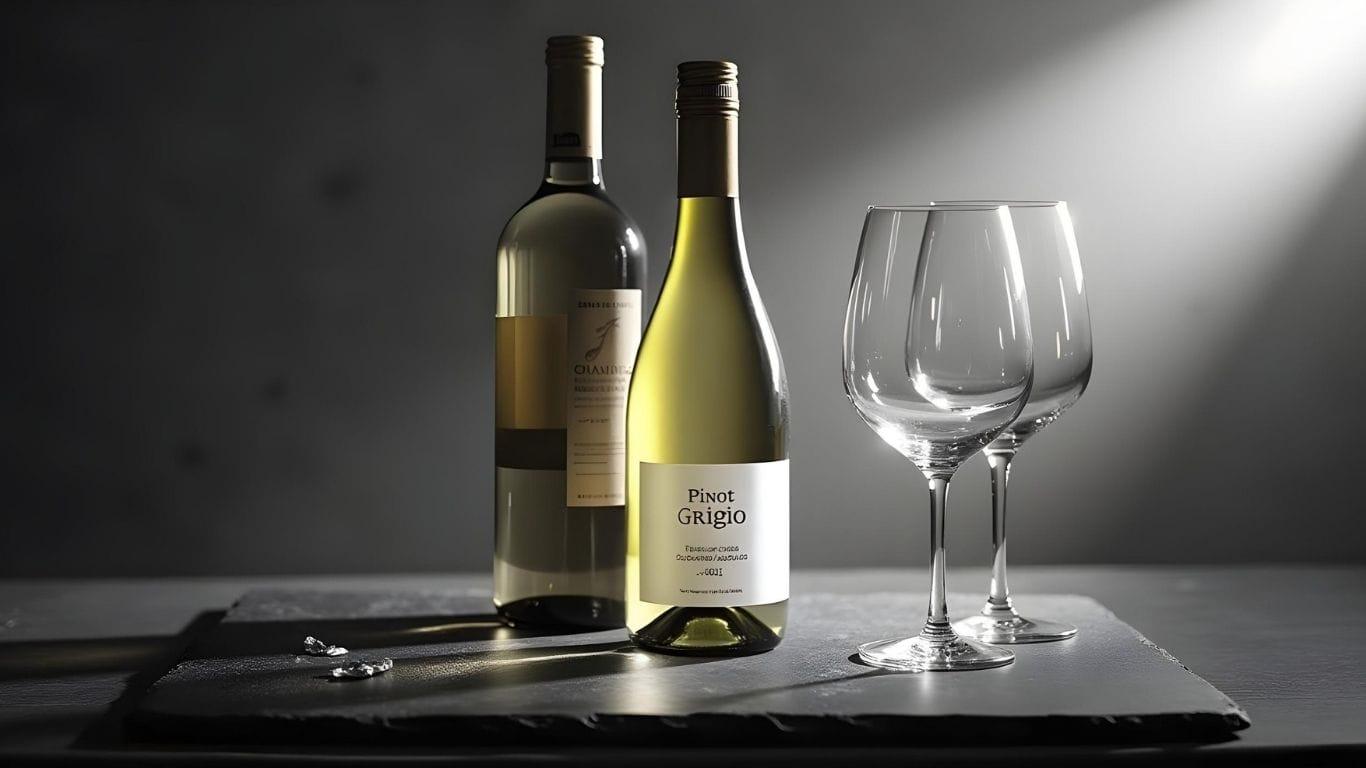
Pinot Grigio produces wines of relative lightness, citrus and stone-fruit character, and limited ageing capacity in most expressions. The Italian Pinot Grigio category, anchored by Alto Adige, Friuli, and the Veneto, runs at large volumes and short drinking windows.
The apex Alsace Pinot Gris tier (the same grape under a different regional name) tells a different story. Producers including Trimbach, Hugel, Zind-Humbrecht, and Albert Boxler make Pinot Gris with structural depth, ageing capacity, and serious critical pedigree. The category is structurally underweighted in international cellars.
Chardonnay produces wines across the entire structural range, from light and unoaked through the apex Burgundy grand crus that age 30 to 40 years. The grape's versatility is its structural strength.
Ageing curves and drinking windows
Standard Pinot Grigio is built for consumption within two to four years of release. The wine's structure does not support extended bottle ageing in most expressions, and the secondary market reflects this with negligible collector activity for the standard category.
Apex Alsace Pinot Gris, particularly the late-harvest Vendanges Tardives and Sélection de Grains Nobles bottlings, ages on substantially longer arcs. Trimbach's Pinot Gris Réserve and the Vendanges Tardives from named producers routinely show beautifully at 15 to 30 years, and the structural argument for collecting the category sits here.
Chardonnay's ageing curve depends heavily on origin. Burgundy grand cru white routinely shows at 20 to 40 years in great vintages. Californian apex Chardonnays from Aubert, Kistler, and Marcassin age more variably, with shorter structural drinking windows.
New World cool-climate Chardonnay (Western Australia, Tasmania, parts of New Zealand) has built its own ageing track record over the past two decades.
Production volumes and the secondary-market picture
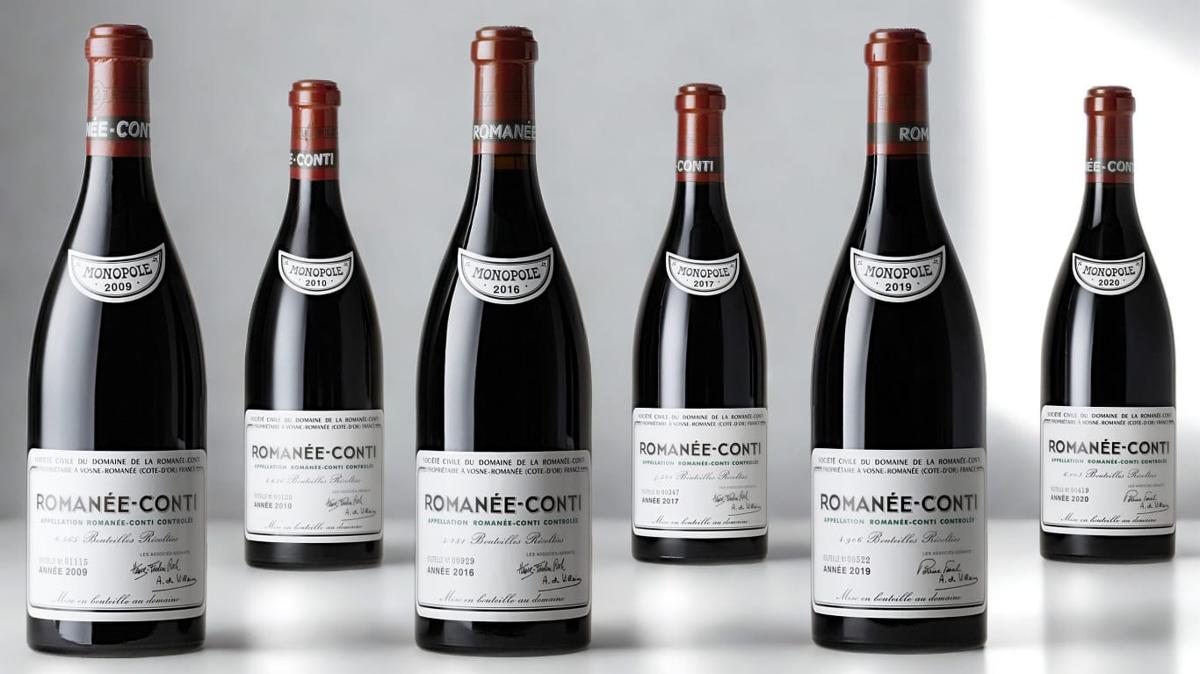
Chardonnay's apex tier operates at small production volumes. Coche-Dury's Corton-Charlemagne runs to perhaps 300 cases per vintage. Domaine Leflaive's grand cru bottlings, the Le Montrachet from the named producers, and the apex Côte de Beaune communal villages all operate at similarly small scales.
Pinot Grigio's structural production is large. The standard Italian Pinot Grigio category clears tens of millions of cases globally per vintage. The apex Alsace Pinot Gris tier operates at smaller volumes, but the category as a whole does not have the structural scarcity that drives long-term secondary-market value.
The Liv-ex Burgundy 150's white-wine component has tracked the Chardonnay apex tier's structural strength across the past five years. Pinot Grigio has no equivalent benchmark.
Critical pedigree and the named-producer effect
Chardonnay's apex tier carries the deepest critical pedigree of any white-wine category. The Wine Advocate, Vinous, Decanter, and Jancis Robinson all cover the Burgundy white grand crus in depth, and the secondary market prices the wines accordingly.
The apex Alsace Pinot Gris tier carries credible critical attention from Decanter and Vinous specifically. Standard Pinot Grigio receives minimal critical coverage and trades at price levels consistent with that positioning.
The named-producer effect runs heavily in Chardonnay's favour at the apex of the comparison.
Terroir transparency and regional differences
Chardonnay is unusually terroir-transparent for a white grape. The same producer making Chardonnay from neighbouring sites in the Côte d'Or produces structurally different wines, and the trade reads the differences as serious information about the underlying terroir.
Pinot Grigio's terroir transparency is variable. The standard Italian category produces wines whose character reflects winemaking choices more than site, while the apex Alsace tier shows more genuine terroir expression in the Grand Cru sites including Rangen, Sommerberg, and Brand.
For collectors interested in terroir-driven white wine, Chardonnay is structurally the more rewarding category.
Climate impact across the two categories
Burgundy's white-wine tier has been affected by recent climate volatility. The 2016 and 2021 vintages were hit by frost, producing meaningfully smaller volumes and tightening the structural supply picture. The Liv-ex Burgundy 150's white-wine outperformance has reflected the supply pressure.
Alsace's Pinot Gris tier has been less affected by recent frost events, though the broader climate shift has changed picking dates and acid retention in the wines. Italian Pinot Grigio has continued production at scale without meaningful climate-driven supply pressure.
The asymmetric climate impact has reinforced the structural pricing gap between the two categories.
What collectors build with each grape
Pinot Grigio enters serious cellars mainly through the apex Alsace tier. A meaningful Pinot Gris allocation looks like a few bottles from Trimbach, Hugel, Zind-Humbrecht, and Albert Boxler at the Vendanges Tardives and Sélection de Grains Nobles level. The structural argument is character and ageing potential, not secondary-market liquidity.
Chardonnay anchors the white-wine portion of serious international cellars. A meaningful Chardonnay allocation looks like measured depth in Burgundy grand crus and the premier crus from named producers, with optional supplementation from the apex Californian and cool-climate New World producers.
Our coverage of white wines that hold their value over decades and our Chardonnay collector's field guide walk through the structural questions in detail.
Authentication considerations
Both categories carry lower counterfeit risk than the apex red-wine categories, but the risk is not zero. Coche-Dury, Domaine Leflaive, and Domaine d'Auvenay bottles have all appeared in counterfeit incidents over the past two decades.
For collectors building serious depth in apex Burgundy white, provenance discipline matters in the same way as for the red category. Direct-from-producer allocation, named-merchant provenance, and major-auction-house authentication all add structural defence.
Standard Italian Pinot Grigio carries effectively zero counterfeit risk for structural pricing reasons.
The structural comparison frame
The comparison between Pinot Grigio and Chardonnay is structurally asymmetric. Chardonnay anchors the apex of the collectible white-wine market through Burgundy's grand cru tier. Pinot Grigio enters the collecting conversation primarily through the apex Alsace tier, which represents a small subset of the total Pinot Grigio category.
Collectors interested in Pinot Grigio depth should focus on the Alsace tier specifically. Collectors interested in serious white-wine collecting should anchor in Chardonnay through Burgundy.
Our coverage of the Pinot Grigio versus Sauvignon Blanc cellar comparison sets useful additional context on where Pinot Grigio sits relative to other white grapes.
What this means for collectors
Chardonnay and Pinot Grigio occupy different structural positions in serious cellars. Chardonnay anchors the white-wine portion of the cellar through Burgundy's grand cru tier. Pinot Grigio enters the cellar through the apex Alsace category as a complement rather than a structural anchor.
The collector building a serious white-wine cellar in 2026 should weight accordingly. The Liv-ex Burgundy 150's structural outperformance has confirmed the framework, and the categories above have weathered worse corrections than the current one.
What we'll watch next
Three signals will tell us how the Pinot Grigio versus Chardonnay landscape evolves. First, whether the apex Alsace Pinot Gris tier earns broader critical attention from the Wine Advocate or Vinous. Second, whether Burgundy's white-wine outperformance against the broader white-wine market extends or normalizes.
Third, whether climate-driven supply pressure on Burgundy whites continues to tighten the structural supply picture.
The structural variables described above will continue to shape the comparison across the next decade.
We last reviewed this analysis in May 2026.