Rare manuscripts are the quietest serious market in collecting, and serious collectors prefer it that way. Christie's, Sotheby's, and Bonhams each run dedicated manuscript and books sales, the trade has its own dealer roster, and the segment moves on a different rhythm from painting.
The market we cover sits between the public auction calendar and a deep private network of institutional libraries, university acquisitions departments, and a tight community of advanced collectors. The lots that anchor the calendar, illuminated medieval manuscripts, autograph letters of historical significance, foundational printed books, transact at painting-tier prices without painting-tier publicity.
- Rare manuscripts are the quietest serious market in collecting, with Christie’s, Sotheby’s and Bonhams each running dedicated manuscript and books sales each year.
- The segment covers medieval and Renaissance illuminated manuscripts, autograph material from historical figures and printed books from the incunable period to roughly 1800.
- The Codex Leicester, Leonardo da Vinci’s autograph notebook of scientific observations, sold at Christie’s New York in November 1994 for thirty point eight million dollars to Bill Gates.
- The Bay Psalm Book sold at Sotheby’s New York in November 2013 for fourteen point two million dollars, the highest price ever paid for a printed book at the time.
- The Magna Carta sold at Sotheby’s New York in December 2007 for twenty-one point three million dollars, the highest price for a single document at auction.
- Books of Hours anchor the illuminated manuscript segment, with brutal quality dispersion separating thirty-thousand-dollar Flemish examples from seven-figure fully illuminated commissions.
- Who is this for?
- Collectors, advisors and institutional librarians interested in the quietest serious tier of the collecting market, where rare manuscripts trade at painting-tier prices without painting-tier publicity.
- What is happening?
- A collector field guide to rare manuscripts, covering illuminated medieval material, autograph letters and printed books, with the benchmark transactions that define the segment’s upper register.
- When did this emerge?
- Most relevant around the dedicated manuscript and books sales at Christie’s, Sotheby’s and Bonhams and during major institutional library acquisition cycles throughout the year.
- Where is this happening?
- Centred on the New York and London salesrooms at the three major houses, with institutional reference holdings across the British Library, the Morgan Library, the Vatican and major university collections.
- Why does it matter?
- Rare manuscripts offer painting-tier importance at painting-tier prices without the publicity, and a disciplined entry into the segment can compound quietly across decades.
What the segment actually covers
Three broad categories. Medieval and Renaissance illuminated manuscripts (the Books of Hours, codices, antiphonals, and individual leaves). Autograph material (letters, diaries, working manuscripts of literary, scientific, and political figures).
And printed books from the incunable period to roughly 1800, where condition, completeness, and provenance separate seven-figure copies from four-figure ones.
Within each category the trade applies the same discipline: provenance, condition, completeness, and rarity. A Book of Hours produced in Bruges around 1450 in original binding with all leaves intact is a different lot from one with twelve replaced leaves and a 19th-century rebind, even when both are described as "Flemish, c. 1450."
For collectors building a serious position in the segment, our piece on how to build a serious art collection in 2026 sets out the broader framework manuscripts sit within.
The benchmark transactions
The Codex Leicester, Leonardo da Vinci's autograph notebook of scientific observations, sold at Christie's New York in November 1994 for $30.8M to Bill Gates. That sale remains the benchmark for autograph scientific material and helped define the market's upper register.
The Bay Psalm Book, the first book printed in British North America (1640), sold at Sotheby's New York in November 2013 for $14. 2M, the highest price ever paid for a printed book at the time. The Magna Carta sold at Sotheby's New York in December 2007 for $21.
3M, the highest price for a single document at auction.
These lots are outliers in price but representative in pattern. A manuscript with unimpeachable provenance, foundational cultural significance, and verified condition will draw institutional and private bidding that the painting market would recognise.
For broader context on how the major houses approach the segment, our coverage of Christie's, Sotheby's, and Phillips auction sales sets out the structural calendar.
The Book of Hours market
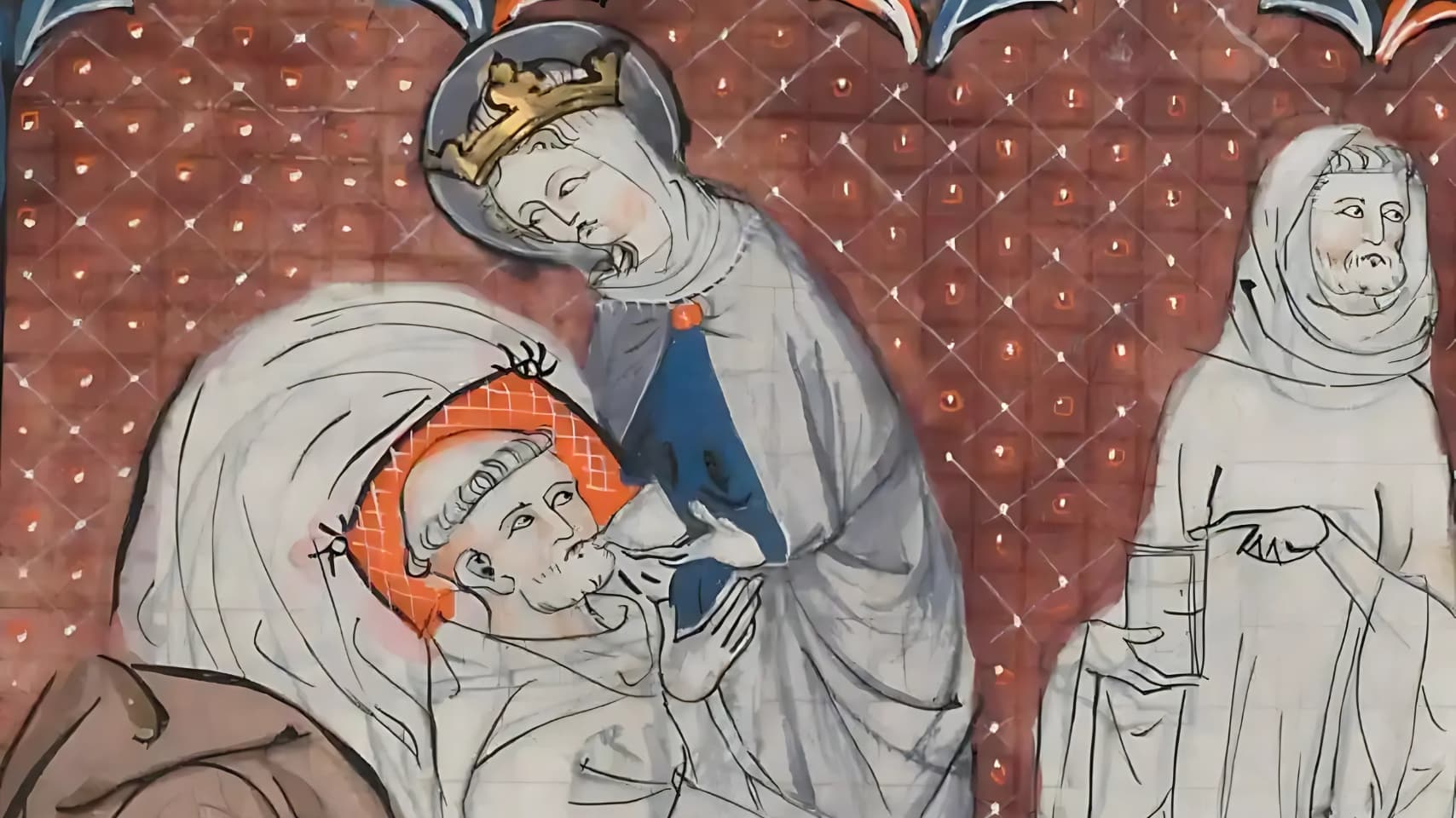
Books of Hours, the personal prayer books produced for lay devotion across northern Europe between roughly 1300 and 1550, anchor the illuminated manuscript segment. Quality dispersion is brutal: a standard Flemish Book of Hours of average illumination might transact at $30K, while a fully illuminated Parisian manuscript with named miniaturist attribution can reach $1M or more.
The Spitzer Hours, the Hours of Catherine of Cleves (Morgan Library), the Belles Heures of Jean de Berry (Met Cloisters), and the Très Riches Heures (Chantilly) define the canon. Most peer examples are institutionally held; what reaches the market are the second-tier production-house copies that still represent the period at its best.
Sotheby's London and Christie's Paris sales are the principal public market for the segment, with Les Enluminures and Heribert Tenschert anchoring the active dealer trade.
Autograph material
Autograph letters, signed working manuscripts, and inscribed first editions form the most actively traded segment of the rare manuscripts market. The rolls of the period sit on a spectrum from cultural-historical (Lincoln, Napoleon, Einstein) to literary (Austen, Joyce, Hemingway) to scientific (Newton, Darwin, Curie).
The market's rhythm is event-driven. Anniversaries, biographies, and institutional exhibitions generate fresh waves of interest in specific figures, and the trade adjusts accordingly. The 2025 cycle has been notably active in Einstein and Darwin material as both archives complete their public-domain releases.
Christie's Fine Manuscripts sales and Sotheby's English Literature and History sales are the public-facing calendar. The Maggs Bros., Bernard Quaritch, and Sokol Books are the principal active dealers in London.
Why the segment is quiet
Manuscripts don't photograph in the way paintings do. A single page of an illuminated codex is striking, but the lot is a closed object that asks the viewer to engage with text, provenance, and condition rather than visual impression at a glance.
That keeps the speculator out. The collectors who do business in the segment tend to hold for decades, lend frequently to institutions, and treat the collection as a scholarly project as much as an asset. Private sales are common, and our piece on why serious collectors are moving to private sales covers the broader pattern.
What collectors should know
The trade is condition-led. A manuscript is only as good as its preservation, and modern collectors should be prepared to commission conservation reports as a standard part of due diligence. Reputable dealers expect the request and provide the access.
The reading list is short and worth knowing. Christopher de Hamel's "Meetings with Remarkable Manuscripts" is the standard introduction to the field. Sotheby's and Christie's catalogue essays from the past two decades function as a working reference for the canon.
Les Enluminures' published catalogues are exhibition-quality scholarship.
What this means for collectors
The rare manuscripts market is one of the few segments where serious collectors can still build at price points the painting market has long since abandoned. The discipline is the same: provenance, condition, scholarship.
The reward is a category where the field is small enough that the trade still knows every serious collector by name, and where the holdings appreciate on a scale measured in generations rather than seasons.
We last reviewed this analysis in May 2026.
Frequently Asked Questions
What is the most expensive manuscript ever sold at auction?
The Codex Leicester, Leonardo da Vinci's autograph scientific notebook, sold at Christie's New York in November 1994 for $30. 8M. The Magna Carta followed at Sotheby's New York in December 2007 at $21. 3M, and the Bay Psalm Book at Sotheby's New York in November 2013 at $14.
2M. These remain the benchmark transactions for the segment.
How do I authenticate an illuminated manuscript?
Authentication is a combined exercise in paleography, art-historical attribution, and material analysis. The active scholarly community is small, and the principal dealers, Les Enluminures, Heribert Tenschert, Sotheby's and Christie's manuscript departments, all maintain authentication standards that institutional buyers rely on. Buy only from established sources with clean provenance.
What is a Book of Hours?
A Book of Hours is a personal prayer book produced for lay devotion across northern Europe between roughly 1300 and 1550. The texts are standard, the canonical hours of the day, but the illumination is bespoke, which means quality dispersion is enormous. A standard Flemish example might transact at $30K; a fully illuminated Parisian manuscript with named miniaturist attribution can reach $1M or more.
Why do collectors prefer private sales for manuscripts?
Confidentiality, longer due diligence windows, and the ability to consult institutional advisors without public visibility. Manuscripts are the kind of asset where institutional libraries and university acquisitions departments are credible buyers, and the negotiations work better outside the auction calendar. Christie's and Sotheby's both run substantial private-sale practices alongside their public auction departments.


Stefanos Moschopoulos
Stefanos Moschopoulos founded The Luxury Playbook in Athens and has spent the better part of a decade following the auction calendar, the en primeur releases, and the watchmakers, gallerists, and shipyards the magazine covers. He writes the field guides and listicles that anchor the Connoisseur section — pieces built on Phillips and Christie's results, Liv-ex movements, and conversations with collectors he has met across Geneva, Bordeaux, Basel, and Monaco. His own collecting habits sit closer to watches and wine than art, and it shows in the level of detail in the magazine's coverage of those categories. Under his direction, The Luxury Playbook now publishes long-form field guides, market-defining year-end listicles, and the Voices interview series with the founders behind the houses and the brands.