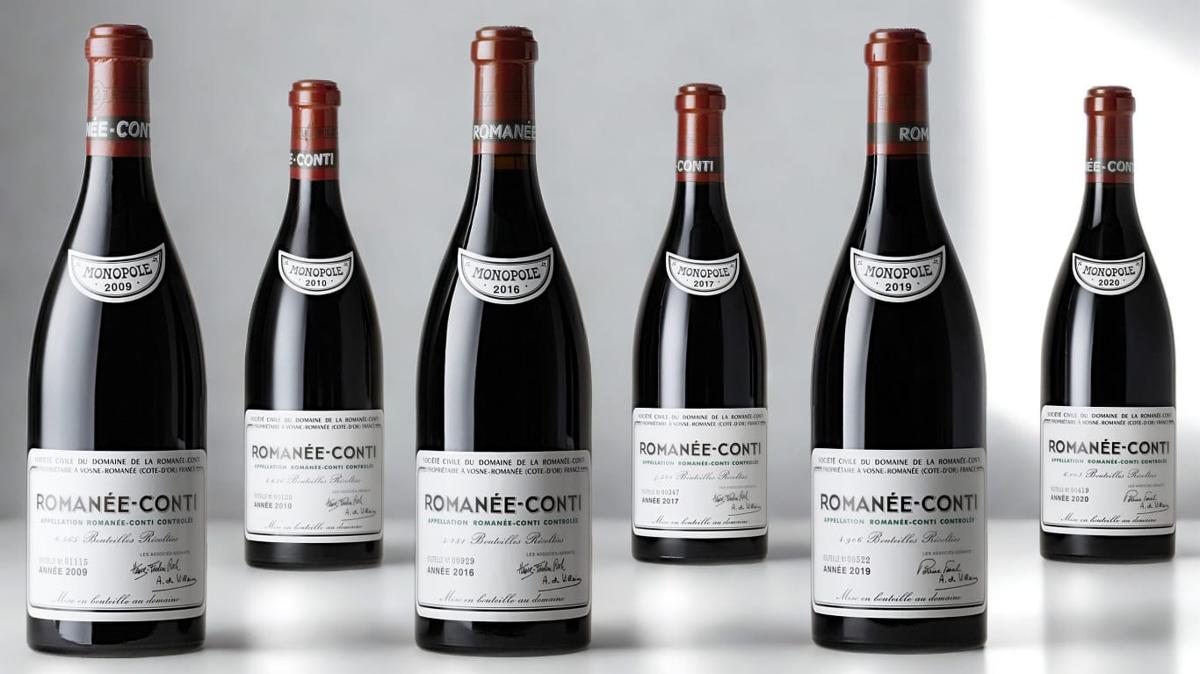
Most serious wine conversations start and end with the canonical varieties: Cabernet Sauvignon, Chardonnay, Pinot Noir, Merlot, Sangiovese, Nebbiolo. The auction calendar reinforces it. Bordeaux First Growths, Burgundy grand crus, Brunello Riservas, and Barolo from named producers anchor every major fine-wine sale at Sotheby's, Christie's, and Acker.
- Most serious wine conversations start and end with the canonical varieties, Cabernet Sauvignon, Chardonnay, Pinot Noir, Merlot, Sangiovese, Nebbiolo.
- Behind the headlines a meaningful shift has been building, with collectors turning serious attention to grape varieties from regions outside the standard Burgundy-Bordeaux-Tuscany axis.
- Petite Arvine from the Valle d'Aosta and Valais has built credible cellar standing, with Anselmet and Marie-Therese Chappaz anchoring the structural apex.
- Assyrtiko from Santorini, particularly the apex bottlings from Domaine Sigalas and Hatzidakis, has earned genuine international collector momentum.
- Furmint from Tokaj in Hungary, particularly dry Szamorodni and apex Aszu, anchors a small but credible serious-collector category.
- Wine Spectator, Decanter, and Antonio Galloni's Vinous have all expanded coverage of these previously overlooked categories across the past decade.
- Who is this for?
- Cellar builders with the canonical categories in place, looking for selective positions in rare grape varieties drawing quiet collector attention.
- What is happening?
- We work through the rare wine grapes drawing serious collector attention in 2026, with Petite Arvine, Assyrtiko, Furmint, and Mtsvane as the structural references.
- When did this emerge?
- The piece reads the contemporary post-2020 market, where the rare-grape category has built genuine critical coverage and selective secondary-market presence.
- Where is this happening?
- Valle d'Aosta and the Valais for Petite Arvine, Santorini for Assyrtiko, Tokaj for Furmint, plus Georgia for Mtsvane and adjacent regions.
- Why does it matter?
- The rare-grape category adds cultural depth and selective long-haul positions that the canonical varieties cannot provide, and missing it entirely narrows a serious cellar's reach.
Behind the headlines, a meaningful shift has been building over the past decade. Collectors with depth across the canonical categories have started turning serious attention to grape varieties that produce wines of genuine quality from named producers in regions that don't appear on the standard Burgundy-Bordeaux-Tuscany axis. Wine Spectator, Decanter, and Antonio Galloni's Vinous have all expanded coverage of these previously overlooked categories.
This is our editorial read on the rare wine grapes drawing quiet collector attention in 2026, varieties that combine genuine structural quality with small production volumes that reward early collector attention.
Assyrtiko (Santorini, Greece)
Assyrtiko is the indigenous white grape of Santorini, grown in the volcanic soils of the Aegean island under the distinctive low-trained kouloura basket-weave training system. The variety produces wines of pronounced minerality, structural acidity, and aromatic intensity (citrus zest, white flowers, smoke, sea salt) that age 8 to 15 years from named producers in strong vintages.
The serious producers serious cellars have started tracking include Domaine Sigalas (Kavalieros and Mylos single-vineyard bottlings), Hatzidakis (the late vigneron's Skytali bottling remains highly sought), Argyros, Estate Argyros, and Gaia Wines (the Wild Ferment bottling).
Current-vintage pricing for the named Santorini producers' single-vineyard bottlings runs $30 to $120 per bottle. The 2018, 2019, 2020, and 2022 vintages have produced strong recent quality from the named producers, with Decanter ratings consistently in the 92 to 95 range.
Furmint and Hárslevelű (Tokaj, Hungary)
Tokaj's serious revival as a fine-wine region has been one of the most-watched stories in Central European wine over the past two decades. The Furmint and Hárslevelű varieties anchor both the dry single-varietal wines (which have built consistent critical recognition since the early 2000s) and the great sweet Tokaji Aszú and Aszú Eszencia bottlings (the structural depth of Tokaj's historic identity).
The serious producers: Royal Tokaji, Disznókő, Oremus, Szepsy, and Királyudvar. Current-vintage pricing for the dry single-varietal Furmint and Hárslevelű bottlings runs $30 to $100 per bottle. The Aszú Eszencia from the great vintages (1972, 1995, 1999, 2000, 2003, 2008, 2017) clears $300 to $1,500+ per 50cl bottle at major auctions, with library releases trading higher still.
Petite Arvine (Valais, Switzerland)
Switzerland's Valais produces some of the most distinctive Alpine white wines in the world from the indigenous Petite Arvine variety. The wines combine structural acidity, aromatic complexity, and the salinity that defines Valais's high-altitude vineyard sites.
The serious producers: Domaine Marie-Thérèse Chappaz (one of Switzerland's most-respected biodynamic producers), Domaine Jean-René Germanier, Cave du Rhodan, and Domaine du Mont d'Or.
Current-vintage pricing for the named Valais Petite Arvine bottlings runs $40 to $120 per bottle. Production volumes are tiny. Switzerland exports very little of its serious wine, which makes Petite Arvine one of the most genuinely difficult-to-find serious whites available to collectors building Alpine depth.
Trousseau and Poulsard (Jura, France)
The Jura's serious revival has built quietly through the 2010s as the region's distinctive light-coloured red varieties (Trousseau, Poulsard) and oxidative whites (Vin Jaune, Vin de Paille from Savagnin and Chardonnay) attracted attention from serious natural-wine producers and the broader cellars willing to deepen Jura positions.
The serious producers: Domaine Tissot, Domaine Ganevat, Domaine Macle, Domaine Pignier, and Jacques Puffeney (the vigneron retired in 2014, with library releases of his wines now trading at meaningful prices).
Current-vintage pricing for the named Jura Trousseau and Poulsard bottlings runs $40 to $150 per bottle. The Vin Jaune from named producers runs $80 to $300 for the standard bottlings. The rare library releases of Puffeney's wines clear meaningfully higher.
Nerello Mascalese (Etna, Sicily)
Etna's volcanic-slope vineyards produce some of the most distinctive Italian reds outside the canonical regions, anchored by the indigenous Nerello Mascalese variety (often blended with Nerello Cappuccio). The wines combine structural lift, aromatic complexity, and the volcanic-soil character that runs across the region.
The serious producers: Frank Cornelissen, Passopisciaro, I Custodi delle Vigne dell'Etna, Tenuta delle Terre Nere, and Pietradolce. Current-vintage pricing for the named Etna producers' single-cru bottlings runs $40 to $200 per bottle.
The 2017, 2018, 2019, 2020, and 2022 vintages have produced strong quality from the named producers. Auction prices for the named bottlings have moved meaningfully over the past five years as international collector recognition has firmed.
Ribolla Gialla (Friuli-Venezia Giulia, Italy)
The Friuli-Venezia Giulia region in northeast Italy produces serious whites from the Ribolla Gialla variety, particularly through the orange-wine tradition that producers including Joško Gravner and Stanko Radikon have built into a structural category over the past two decades. The wines combine the variety's natural acidity with extended skin contact ageing in amphora and oak.
The serious producers: Gravner, Radikon, Damijan Podversic, Princic, and La Castellada. Current-vintage pricing for the named Friuli orange-wine producers runs $50 to $250 per bottle. Gravner's named single-vintage bottlings clear meaningfully higher at major auctions.
Mencía (Bierzo, Spain)
The Bierzo region in northwest Spain produces serious reds from the Mencía variety, a once-overlooked grape that the modern Bierzo producers have built into a category attracting genuine collector attention. The serious producers: Raúl Pérez, Descendientes de J. Palacios (Álvaro Palacios's Bierzo project, including the famous Las Lamas, Moncerbal, and Faraona single-vineyard bottlings), Mengoba, and Pittacum.
Current-vintage pricing for the named Bierzo Mencía bottlings runs $30 to $200 per bottle. The Descendientes Faraona bottling regularly clears $500 to $1,500 at major auctions for the named vintages.
Why these wines are drawing attention
Several factors explain the broader collector shift. First, the canonical categories (Bordeaux First Growths, Burgundy grand crus) have moved to per-bottle clearing prices that exclude broader collector buying patterns. Second, the rise of serious wine media coverage of regions outside the canonical axis (Antonio Galloni's Vinous, Eric Asimov in The New York Times, The World of Fine Wine) has built knowledge bases that didn't exist a generation ago.
Third, the production volumes of the rare-grape categories above are genuinely small, which means collectors building positions early can build meaningful cellar depth in categories that broader market attention will eventually reach.
What this means for collectors
The rare-grape categories above don't replace canonical Bordeaux-Burgundy-Tuscany depth in serious cellars. They complement it. The cellars built across both the canonical categories and the named producers in the rare-grape categories above develop the stylistic depth and varietal variety that defines serious wine collecting at its most engaging.
The risk question is real. Some of the rare-grape categories above sit in regions with structural climate, political, or economic challenges that affect long-term production stability. Collectors building positions in these categories should treat them as additions to cellar depth rather than primary holdings.
The categories are interesting precisely because they sit outside the canonical conversation, but the canonical conversation exists for a reason.
The cellars that compound best across decades typically build canonical depth as the structural anchor and then add rare-grape positions for stylistic variety. The producers above provide a strong working list for collectors starting that build.
We last reviewed this analysis in May 2026.