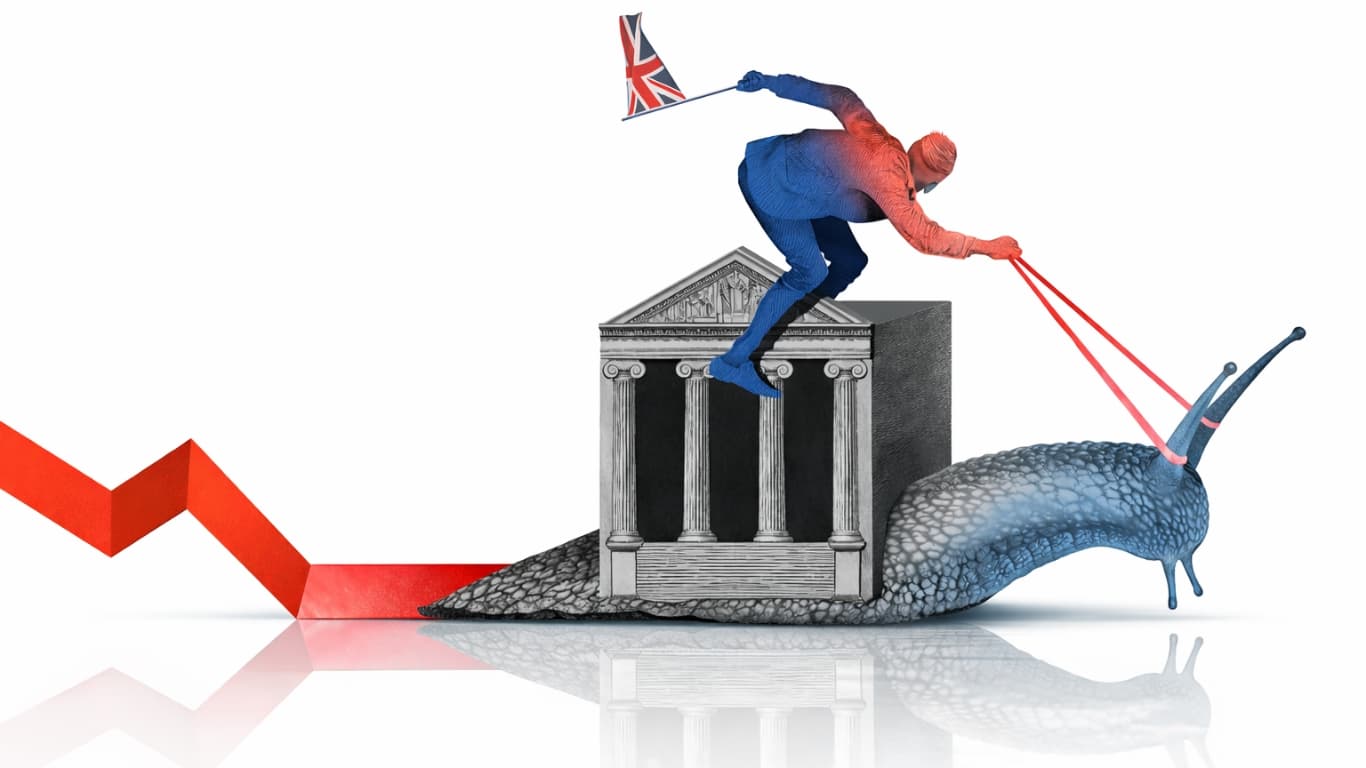
Reducing trading fees and trading costs is one of the smartest moves you can make for your portfolio. Every dollar saved on fees is a dollar that compounds in your favor. The most effective strategies you can use right now are choosing a low-fee broker, adopting a per-share pricing structure, avoiding over-trading, and taking full advantage of broker promotions.
- Choosing a Broker With Low Trading Fees: Opt for brokers with competitive fee structures or zero-commission trading options.
- Using a Per-Share Price Structure: Ideal for small trades, this pricing model reduces costs on lower-volume transactions.
- Avoiding Over-Trading: Excessive trading leads to mounting fees, often eroding potential profits.
- Taking Advantage of Broker Promotions and Discounts: Leverage sign-up bonuses, referral programs, and seasonal offers to save on trading fees.
Each of these approaches tackles a different side of your trading expenses, so you can mix and match based on how often you trade, your style, and where you want to take your portfolio. Pair these cost-cutting moves with disciplined habits and a clear eye on market conditions, and you put yourself in a far stronger position to keep fees from quietly eating your returns.
The structural picture of trading-cost compression is well documented by the major regulators and data providers. FINRA tracks commission structures and order-handling rules, while SEC filings disclose the payment-for-order-flow economics that sit underneath zero-commission brokerage.
From an allocator angle, Morningstar's long-running research on fund-expense compression makes the cumulative-cost math concrete. S&P Global's SPIVA reports show how fees alone can flip a fund from outperformance to underperformance over multi-year horizons.
What Are The Main Trading Fees & Costs
Whether you’re trading stocks, forex, crypto, or commodities, trading fees have a direct impact on your bottom line. These are the costs you face every time you execute an order, maintain an account, or manage assets on a platform. Getting familiar with the different fee types means you can spot where you’re overpaying and make smarter decisions before you commit to any platform.
- Trading Commissions: A fixed or percentage-based fee charged per trade. It typically applies to every buy or sell order executed on a trading platform.
- Spread Fees: The difference between the buying (ask) price and the selling (bid) price of an asset. Brokers profit from this margin, and it can vary depending on market conditions and asset liquidity.
- Maker Fees: Fees charged to traders who add liquidity to the market by placing limit orders that are not immediately executed. Maker fees are usually lower to encourage market liquidity.
- Taker Fees: These fees apply when traders remove liquidity from the market by placing market orders executed instantly. Taker fees are typically higher than maker fees.
- Withdrawal Fees: A fee charged when transferring funds out of a trading platform. Withdrawal costs vary depending on the asset type and the platform’s policies.
- Deposit Fees: Some platforms impose fees when funds are deposited into a trading account, though many platforms offer free deposits to attract more users.
- Inactivity Fees: Charged when a trading account remains dormant for a specified period, usually several months or more. These fees encourage active trading or account closure.
- Overnight or Swap Fees: Applied when holding leveraged positions overnight, common in forex and cryptocurrency trading. These fees cover the cost of keeping positions open across trading sessions.
- Account Maintenance Fees: Periodic charges applied to maintain an active trading account, particularly on premium platforms offering advanced tools and features.
- Conversion Fees: Charged when funds or assets are converted between different fiat currencies or cryptocurrencies. These fees can add up when trading across multiple asset types.
Every trading platform runs its own fee structure, and those costs add up fast over time. Before you lock yourself into any platform, take a hard look at their fee policies and ask honestly whether those charges fit how you trade. The good platforms will give you a clear breakdown of every applicable fee upfront, so there are no unpleasant surprises down the line.

Brokerage Fee Structures
Brokerage fee models are built for different types of investors, and the one you choose can have a real impact on what you actually pay over the course of a year.
- Flat Fees: Fixed charges per trade, typical with discount brokers. For example, Robinhood, Charles Schwab, and Fidelity offer $0 trading fees for stocks and ETFs.
- Percentage of Account Balances: Fees based on the total account balance, typically around 0.5% annually for maintenance at discount brokerages.
- Volume-Based Discounts: High-volume trading can lead to reduced commission rates.
- Negotiated Fees: Investors with substantial assets or long-term investment horizons can negotiate their fees for better rates.
Understanding how each structure works is the foundation of picking a brokerage that works for your wallet. Here is a closer look at the fees tied to different brokerage types.
Choose a Broker With Low Trading Fees
If you are serious about cutting trading costs, your single most impactful move is choosing a low-fee or zero-commission broker. This matters most for active traders, day traders, and retail investors running smaller portfolios, where even a few dollars per trade quietly chips away at your returns over time.
Platforms like Robinhood, Charles Schwab, Fidelity, and Webull have pushed the industry toward commission-free trading, wiping out the standard fees of $4.95 to $9.99 per trade that were the norm just a few years back.
According to FINRA and Statista data, over 80% of U.S. retail trades are now executed without any base commission. That shift has been a genuine turning point for everyday investors.
That move toward zero-commission trading has opened the markets to a much wider pool of investors who no longer get punished by high costs for simply participating. Here are a few things worth knowing about how this plays out in practice.
- A trader making 100 trades per year at $6.95 per trade would spend $695 annually in fees—that’s money saved when using a zero-commission platform.
- Investors building positions through fractional shares—such as buying $25 worth of Apple (AAPL) or Tesla (TSLA)—can now do so without paying more in fees than the value of the trade.
But here is what most people miss. Zero-commission platforms still make money, just through different channels. The main ones you need to know about are payment for order flow, interest on uninvested cash, and margin lending fees.
- Payment for Order Flow (PFOF): Brokers like Robinhood route your orders to large market makers (e.g., Citadel Securities, Virtu Financial) in exchange for a small payment. While this keeps your trades commission-free, it may slightly impact the execution price due to wider bid-ask spreads.
- Margin Lending: If you borrow funds to trade on margin, brokers charge interest, often between 9% and 13% APR, depending on your account balance and the broker.
- Cash Sweep Programs: Uninvested cash in your account may be swept into low-interest bank products, with the broker earning the yield difference.
These hidden revenue streams are exactly why you need to look past the headline and think about the true cost of every trade you make on a so-called free platform.
In the current environment, where tight spreads, algorithmic trading, and high-frequency execution dominate the market, simply cutting upfront fees is not the whole picture. Total trading efficiency is what counts. For retail investors, the focus should be on order execution quality, platform reliability, and the actual spread you receive on each fill.
- Analyzing execution quality reports (publicly available from most brokers)
- Understanding PFOF disclosures
- Comparing margin rates and interest on idle cash
- Using brokers with transparent pricing policies
Platforms like Interactive Brokers offer a tiered pricing model that suits traders who want direct market access and tighter spreads, even if that means paying a small per-trade commission. For high-volume traders, that tradeoff often comes out ahead.
Balancing cost savings with transparent order execution, solid regulatory compliance, and quality trade fills is how you protect your capital and sharpen your edge. If you want to go deeper on how global diversification can further protect your returns, why investing across countries is becoming the new standard is worth your time.
Use a Per-Share Price Structure
One of the most underused tactics for cutting trading fees, especially if you are an active trader, scalper, or working with a smaller capital base, is switching to a per-share pricing structure rather than the flat-rate commission model most people default to.
Instead of paying a fixed fee regardless of how big or small your trade is, per-share pricing charges you a small amount for each individual share you buy or sell. Your costs scale with your volume, which creates real savings when you are running low-share, high-frequency trades.
Here is how the math works. If your broker charges $0.01 per share with a $1 minimum, a 50-share trade costs you just $0.50. Compare that to the $4.95 flat fee still charged by some legacy brokers and the savings are obvious.
Multiply that across dozens of trades a month and the numbers become very meaningful.
This model tends to work best for a specific type of trader, and understanding whether you fit that profile is the first step before making the switch.
- Day traders building positions in increments
- Micro-investors allocating small amounts to volatile stocks or ETFs
- Algorithmic or high-frequency traders seeking to optimize every basis point
Several well-regarded brokers support per-share pricing, each built around a slightly different trader profile. Knowing which one aligns with your style can save you a meaningful amount each month.
- Interactive Brokers: Offers a tiered model at $0.005 per share, with a $1 minimum per order. Known for professional-grade tools, IBKR is ideal for advanced traders managing risk per share.
- TradeStation: Charges $0.01 per share, also with a $1 minimum. Its platform combines institutional-grade analytics with user-friendly dashboards, perfect for traders leveling up from basic platforms.
- Lightspeed: Designed for serious day traders and professionals, Lightspeed offers pricing as low as $0.0045 per share, depending on volume tiers. They’re known for ultra-fast order execution and access to direct market routing (DMA).
Flat Fee vs. Per-Share Model
Let’s put a real-world comparison on the table so you can see exactly where each model wins and loses.
| Trade Size | Per-Share Fee ($0.01/share) | Flat-Rate Broker ($6.95/trade) | Savings |
|---|---|---|---|
| 50 shares | $0.50 | $6.95 | $6.45 |
| 100 shares | $1.00 | $6.95 | $5.95 |
| 1,000 shares | $10.00 | $6.95 | -$3.05 |
Per-share pricing clearly has the edge at lower trade volumes, but it can flip on you with larger trades. That is the core tradeoff and it is one you need to think through carefully before switching models.
Who Should Use This Pricing Model?
This structure works best for traders who fit a particular profile. If you recognize yourself in the following, per-share pricing is worth a serious look.
- Execute 10–100 trades per week
- Buy and sell low-priced stocks, micro-cap equities, or volatile growth names
- Prefer incremental scaling over lump-sum investing
- Want access to direct market access (DMA) or smart order routing
If your strategy involves frequent rebalancing or testing breakout momentum in smaller lots, per-share pricing can cut your costs sharply compared to flat-rate brokers. It is a structural advantage that compounds over time. You can also explore how XM Broker stacks up on fees and platform quality as a point of comparison.

Avoid Over Trading
One of the most powerful ways to reduce trading fees is also the most overlooked one. Stop over-trading. This trap catches both beginners and seasoned retail traders, and it does not just inflate your commission bill.
It amplifies emotional risk, leads to poor decisions, and quietly destroys long-term performance.
What Is Over-Trading?
Over-trading happens when you start making too many trades chasing quick profits, trying to claw back losses, or reacting to short-term market noise. The driver is almost always emotion, whether that is fear, greed, or frustration, rather than a disciplined, well-reasoned strategy.
Morningstar’s behavioral finance research and studies from FINRA have consistently shown that emotional trading produces far worse outcomes than systematic, rules-based approaches. The data on this is pretty clear.
Traders who over-trade tend to enter positions without clear setups, defined targets, or proper risk controls. The result is a cycle where fees pile up while profits shrink.
How Over-Trading Increases Costs
Every trade you place carries both direct and indirect costs that you need to account for before you click buy or sell.
- Commission Fees: Even with low-cost brokers like Interactive Brokers, Webull, or Fidelity, trading frequently still adds up. Options contracts, for example, may still carry $0.65 per contract even on “zero-commission” platforms.
- Bid-Ask Spreads: With high-frequency trades, small slippages in execution, often just a few cents, can compound into real losses.
- Brokerage and Platform Fees: High volume traders may trigger tiered pricing or platform access fees depending on the broker.
Here is a concrete example that puts the cost of over-trading into perspective.
Trader B earns $50 per trade, bringing in $500 gross, and walks away with $400 after fees. Fewer, higher-quality trades can produce better net returns even with a lower total number of wins.
- Trader A makes 50 trades a month with a $10 fee per trade = $500 in fees/month
- Trader B makes 10 trades with better setups = $100 in fees/month
Even if Trader A pulls an average profit of $15 per trade for $750 gross, the net result after fees drops to just $250. That gap is entirely avoidable with more selective trading.
Long-term vs. Short-term Gains
Getting the balance right between long-term and short-term trading strategies is one of the most effective ways to keep your overall trading costs in check.
- Short-Term Trading: Traders who use strategies like scalping or day trading often execute numerous small trades to capitalize on minor price fluctuations. While this approach can generate consistent gains, the frequent trades often incur substantial commissibon fees, sometimes negating profits entirely.
- Long-Term Trading: In contrast, a buy-and-hold strategy focuses on holding positions for extended periods, minimizing the frequency of trades. This approach naturally reduces trading fees and can result in more substantial long-term gains.
For most retail traders, prioritizing quality trades over sheer quantity produces better results and eliminates a large chunk of unnecessary cost. Discipline here pays dividends in ways that are easy to underestimate.
Over-trading is almost always rooted in psychology. In most areas of life, working harder and putting in more effort produces better outcomes. Trading does not work that way.
The market moves on its own logic, and no volume of trades can manufacture profits that the setup does not justify.
What successful trading actually demands is discipline, patience, and the willingness to wait for genuinely strong setups rather than chasing every tick. The goal is deliberate, well-analyzed trades, not a flurry of impulsive decisions driven by how the market is making you feel in the moment.
Strategies to Avoid Over Trading
- Develop a Trading Plan: Creating a well-defined trading plan with clear entry and exit points can help you stay disciplined. A robust plan reduces impulsive decisions, ensuring that each trade is part of a broader strategy.
- Set Realistic Goals: Setting realistic, achievable goals can prevent the urge to over-trade. Understand that consistent, modest gains over time can be more beneficial than sporadic large profits.
- Monitor Your Trades: Regularly reviewing your trades helps identify patterns of over-trading. Analyzing past trades can provide insights into your trading behavior, allowing you to make adjustments to avoid unnecessary trades.
- Take Breaks: Taking regular breaks from trading can prevent burnout and emotional decision-making. Stepping away from the market allows you to reassess your strategy and return with a clear mindset.
- Use Technology: Utilize trading software and alerts to help manage your trades effectively. These tools can assist in adhering to your trading plan and avoiding impulsive trades based on market fluctuations.

Take Advantage of Broker Promotions and Discounts
Another smart way to cut your trading fees is to actively use broker promotions and discounts. Most brokerage firms run incentive programs to attract new clients or keep existing ones happy, and those deals can make a real dent in your trading expenses. That said, always read the terms carefully. A promotion that looks attractive on the surface can come with conditions that do not suit your trading habits or goals.
- Sign-Up Bonuses and Free Trades: Many brokers offer sign-up bonuses or a specific number of commission-free trades when you open a new trading account. For example, a broker might provide 50 free trades or waive trading fees for the first three months. These bonuses can be particularly beneficial for active traders who execute multiple trades each month, as they allow you to reduce initial costs and test the broker’s platform before committing long-term.
- Reduced Fees for High-Volume Trading: Some brokers offer tiered pricing structures, where trading fees decrease as your trading volume increases. If you’re an active trader, choosing a broker with volume-based discounts can lead to substantial savings over time. For example, trading fees might drop from $5 per trade to $2 per trade once you cross a certain monthly volume threshold.
- Referral Programs: Referral programs are another way to lower trading costs. Brokers often reward existing clients with trading credits, cashback, or discounted fees for referring new clients. This approach not only reduces your own trading expenses but also allows you to earn additional benefits for sharing the platform with others.
- Seasonal Promotions and Special Offers: Brokers frequently run seasonal promotions during major financial quarters, holidays, or market events. These offers might include fee waivers, cashback incentives, or discounted trading plans. Staying informed about these promotions can help you time your trades to maximize savings on trading fees.
- Account Types with Lower Fees: Some brokers offer specialized account types designed to minimize costs. For instance, margin accounts might come with reduced trading fees compared to standard cash accounts. Similarly, VIP accounts or premium memberships often provide additional perks, including lower commissions, dedicated customer support, and access to advanced trading tools.
- Discounts for Long-Term Commitments: Certain brokers reward clients who commit to long-term relationships or deposit larger sums upfront. For example, pre-paying for an annual trading plan might include discounted fees or additional free trades. This structure is particularly useful for traders who plan to remain active on the platform for an extended period.
How to Maximize Broker Promotions and Discounts
- Compare Offers Across Brokers: Research multiple brokers to identify promotions that align with your trading frequency and investment goals.
- Understand the Fine Print: Always read the terms and conditions of promotions to ensure there are no hidden costs or restrictions.
- Stay Informed: Follow brokers on social media, subscribe to newsletters, and monitor their official websites to catch new promotions as they launch.
- Evaluate Long-Term Benefits: Consider whether the promotion provides long-term value or is merely a short-term incentive.
Example of Effective Use of Broker Promotions
Picture a broker offering 100 free trades for your first three months. If you normally pay $5 per trade, that is $500 back in your pocket straight away. And if that same broker drops to reduced fees for high-volume traders after the promotional window closes, the long-term savings stack up further. If you want to explore alternative ways to grow your wealth beyond trading, the Konvi rare investment platform review covers an interesting angle worth knowing about.
Using broker promotions strategically is one of the easiest wins available to you as a trader. When you stack those savings on top of disciplined habits like avoiding over-trading and using the right pricing structure, you build a genuinely robust approach to keeping your trading costs where they belong. For a broader view on how smart investors think about fees and tax efficiency, the art investment tax guide offers useful principles that translate across asset classes.
FAQ
What’s the best way to reduce trading fees?
Start by using a zero-commission broker like Robinhood, Webull, or Fidelity. Then, avoid over-trading, stick to well-researched trades, and choose a fee structure (like per-share pricing) that aligns with your trade volume.
Are zero-commission trading platforms really free?
No. While they don’t charge base commissions, they make money through payment for order flow (PFOF), margin lending, and interest on idle cash. These hidden costs can affect trade execution and your total return.
When is per-share pricing better than flat-rate fees?
Per-share pricing works best for small, frequent trades. If you typically trade fewer shares per order, it’s often cheaper than paying a flat fee per trade. For large volume trades, flat-rate models may be more cost-effective.
How does over-trading increase my trading costs
Over-trading leads to more commissions, wider spreads, and emotional mistakes. The more you trade, the more fees you pay, often eating into or erasing your profits.
Do all brokers charge the same fees?
No. Brokers differ in commission structures, margin rates, platform fees, and options contract pricing. Always compare platforms like Interactive Brokers, TradeStation, and Lightspeed based on your trading style
What trading strategies help reduce costs?
Focus on long-term investing, buy-and-hold strategies, or selective swing trading. These reduce trade frequency and fees while increasing the potential for tax efficiency and compound growth.
Are there hidden fees when trading options at expiration?
Yes. Exercising options at expiration can trigger assignment fees, commission costs, and potential margin interest. Closing positions before expiry or using cash-settled options can reduce these charges.
We last reviewed this analysis in May 2026.


Alex Tzoulis
Alex Tzoulis is Co-Owner and Markets Analyst at The Luxury Playbook, specializing in equities, crypto, forex, and global financial markets. His work focuses on analyzing macroeconomic trends, geopolitical developments, and monetary policy, translating them into actionable insights across both traditional and digital asset classes. He leads the platform's financial market coverage, providing structured analysis across stock market investing, trading strategies, and cryptocurrency markets. His expertise strengthens the publication's authority in financial markets and capital allocation, bridging traditional finance with emerging digital investment ecosystems.