For serious watch collectors, rarity is the factor that defines a watch's value beyond pure mechanical specification. Production numbers, historical significance, craftsmanship, and provenance documentation all play their role; when several of these factors align in a single piece, the result is a watch that anchors the upper tier of collecting at prices that read like fiction to anyone outside the rarefied world.
- The ten rarest watches in the world sit at the intersection of historical importance, unique-piece status, and price points that often exceed twenty million dollars.
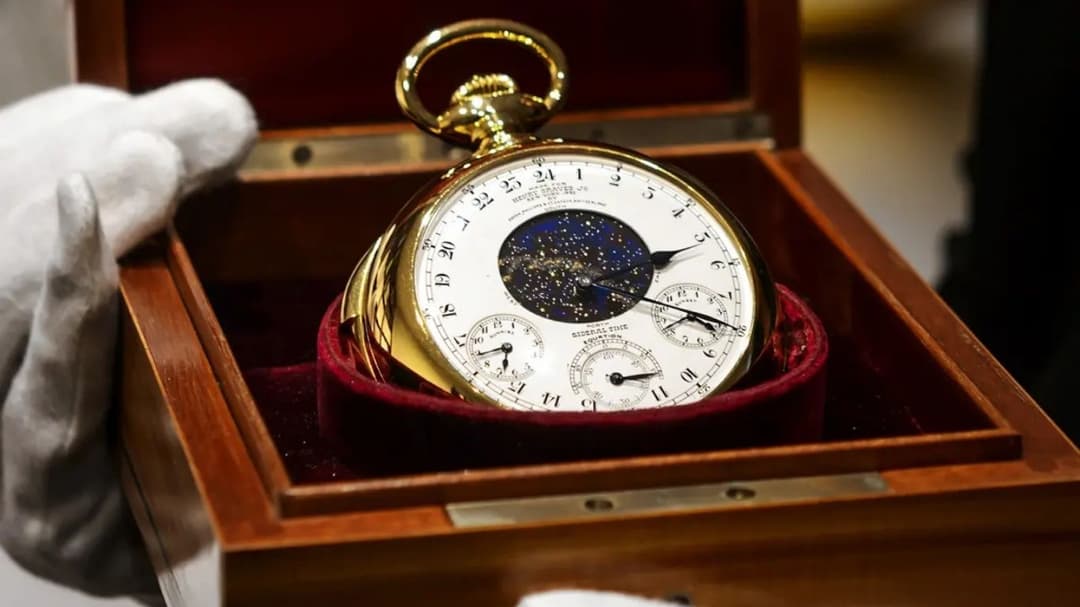
- Patek Philippe Henry Graves Supercomplication remains the benchmark, with provenance, complication count, and Patek lineage combining to define the trophy category.
- Patek Philippe Reference 1518 in steel sits among the most coveted production references ever made, with the four known examples commanding generational pricing.
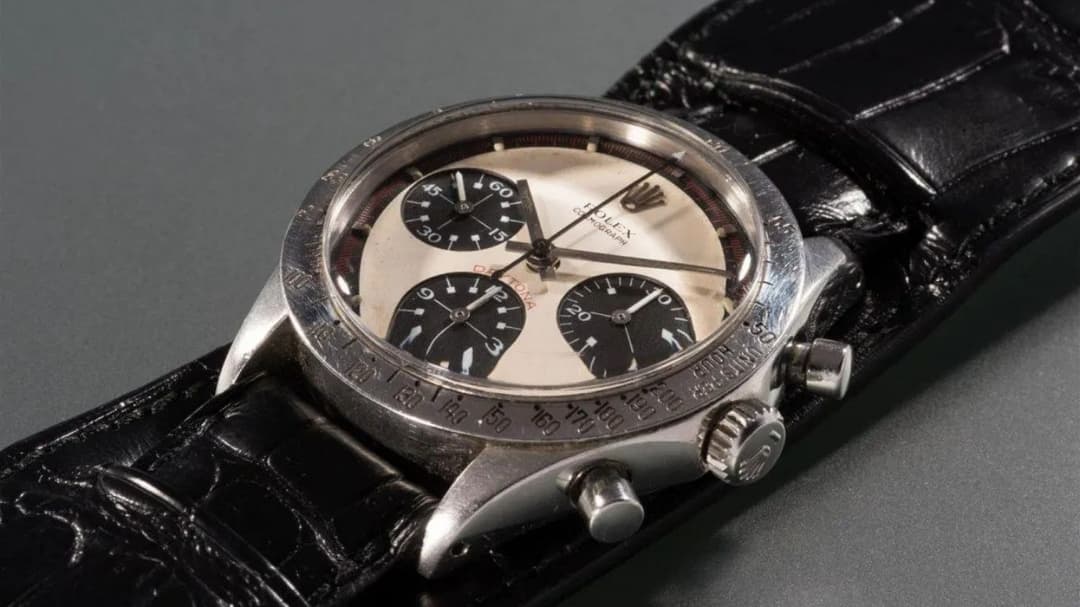
- We see the Rolex Paul Newman Daytona Reference 6239 owned by Paul Newman as the modern celebrity-provenance benchmark, with auction results validating the heritage premium.
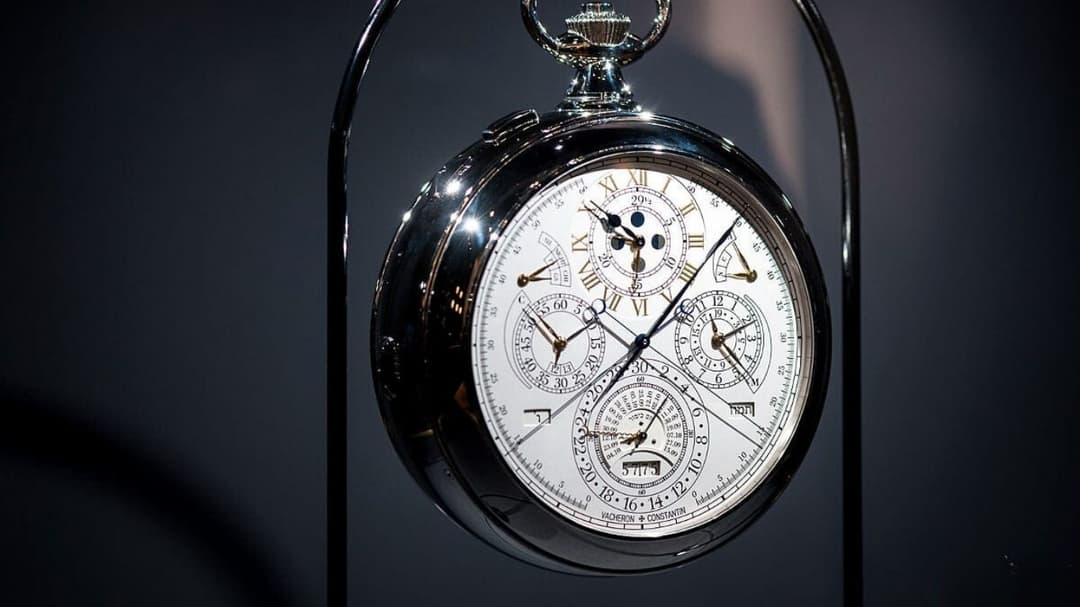
- Vacheron Constantin Reference 57260 carries fifty-seven complications and represents the technical ceiling of bespoke watchmaking.
- Unique-piece commissions from Patek Philippe, Vacheron Constantin, and Audemars Piguet continue to push the rarity definition into bespoke territory beyond standard production.
- Who is this for?
- Trophy-tier collectors, auction-watchers, and serious students of the absolute peak of watchmaking history.
- What is happening?
- A guided look at the ten rarest watches in the world, covering the references, the provenance stories, and the auction or commission prices that define them.
- When did this emerge?
- The current top-ten list reflects post-2019 auction records and the continued growth of bespoke unique-piece commissioning programmes.
- Where is this happening?
- Geneva, New York, and Hong Kong auction rooms host the headline sales, with private brand commissions accounting for several pieces that never reach public bidding.
- Why does it matter?
- These watches anchor the ceiling that informs every other valuation in collecting, and the stories behind them shape how rarity and provenance combine in the modern market.
The rarest watches in the world are works of art and mechanical genius produced in vanishingly small quantities.
Below are 10 of the rarest watches ever made, with the conditions that built each one's position and the prices these pieces command in the current market. Phillips, Christie's and Sotheby's have done much of the work consolidating the upper tier; auction history is, in this category, the most reliable data we have. We've kept close to publicly cited results.
What makes a watch rare and collectible
Several factors drive a watch's rarity and collectibility. Limited production numbers, historical provenance, mechanical complexity, the prestige of the maison behind it, and any notable ownership history all combine. When multiple factors align in a single piece, the result is genuinely irreplaceable.
- Limited Production: Watches produced in small numbers or as part of limited editions are inherently more exclusive.
- Historical Significance: Timepieces linked to significant historical events or owned by notable figures command higher value.
- Unique Complications: Watches with intricate complications like perpetual calendars, tourbillons, or minute repeaters add technical depth that makes them more desirable.
- Materials and Craftsmanship: The use of precious metals, gems, or exotic materials, combined with extraordinary hand-finishing, can make a watch both rare and structurally valuable.
- Condition and Provenance: Original condition, complete documentation, and traceable ownership all increase a watch's value at auction.
1. Patek Philippe Henry Graves Supercomplication, $24 million
Often called the Mona Lisa of watches, the Patek Philippe Henry Graves Supercomplication is a masterpiece of horological artistry. Commissioned by Henry Graves Jr., the wealthy American banker and watch collector, the piece was born from his rivalry with James Ward Packard, the automobile magnate equally determined to own the world's most complicated watch. That competition produced something neither man could have anticipated.
Crafted entirely by hand, the gold pocket watch features 24 complications, many groundbreaking for the early twentieth century. The complications include a perpetual calendar, minute repeater with Westminster chimes, grande and petite sonnerie, and a celestial chart mapping the night sky as seen from Graves's New York residence. The inclusion of sidereal time, a rare feature even by modern standards, underscores the astronomical precision poured into its creation.
First sold at Sotheby's in 1999 for $11 million, the watch set a new benchmark for collectible timepieces. Its reputation grew from there, culminating in a record-shattering 2014 auction where it sold for $24 million. The Henry Graves Supercomplication is the definitive symbol of Patek Philippe's craftsmanship and historical weight.
2. Rolex Paul Newman Daytona Reference 6239, $17.8 million
The Rolex Paul Newman Daytona is one of the most legendary and sought-after watches in the collector world. Its story is inseparable from the man whose name it carries. What sets the model apart is the exotic dial, an Art Deco-inspired design featuring square markers on the sub-dials and contrasting colours.
Early buyers weren't impressed, and that initial indifference meant far fewer of the exotic-dial models were produced. That production scarcity is precisely why the references are extraordinarily rare and desirable now. The watch's icon status was sealed by Paul Newman's personal Daytona, gifted to him by Joanne Woodward, with the case back inscribed "Drive Carefully Me."
Newman wore the watch constantly throughout his motorsport career, and that visibility transformed it into an emblem of both racing culture and horology in a way no marketing campaign could match. That provenance led to the 2017 Phillips auction where Newman's personal Daytona cleared $17.8 million, setting the record for the highest price ever paid for a wristwatch.
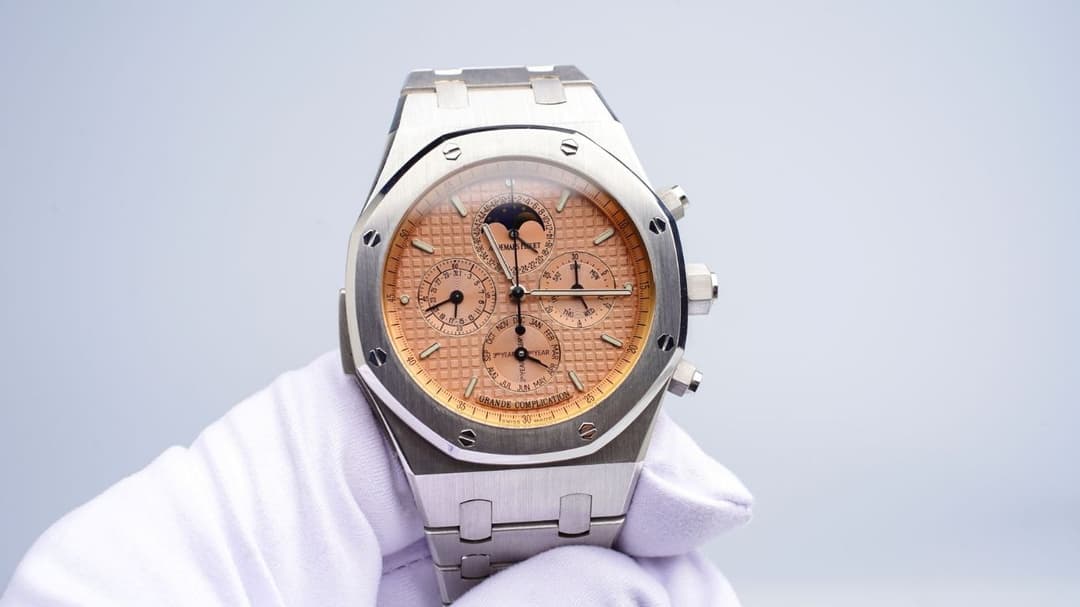
3. Audemars Piguet Royal Oak Grande Complication, $741,600
The Audemars Piguet Royal Oak Grande Complication stands as one of the most technically sophisticated timepieces ever produced by the Swiss manufacturer. First introduced in 1992, it builds on the iconic Royal Oak design conceived by Gérald Genta in 1972. The original Royal Oak was already a revolution as the first luxury sport watch crafted from stainless steel; the Grande Complication takes that legacy and pushes it into different territory entirely.
The watch combines a perpetual calendar, split-seconds chronograph, and minute repeater, all housed within the signature octagonal Royal Oak case. The perpetual calendar tracks the date, day, month, leap year cycle, and moon phases without manual adjustment. The split-seconds chronograph times multiple events simultaneously; the minute repeater chimes the hours and minutes on demand.
At a retail price of approximately $741,600, the Royal Oak Grande Complication is a statement of technical brilliance and exclusivity. Auction prices shift depending on materials, condition, and rarity, but the reference sits firmly among the most coveted creations in haute horlogerie.
4. Vacheron Constantin Reference 57260, $8 million
The Vacheron Constantin Reference 57260 holds a title that may never be taken from it. The piece is the most complicated wristwatch ever created, with 57 complications that set an entirely new benchmark in fine watchmaking. Commissioned by an unnamed private collector, the watch took eight years to develop with three master watchmakers dedicating years of their careers inside Vacheron Constantin's workshops to bring it to life.
The complications span an extraordinary range. A perpetual calendar and minute repeater, rare functions like an equation of time and a fully integrated Hebrew calendar, multiple time-zone tracking, a double retrograde split-seconds chronograph, and both a grand and petite sonnerie. A celestial map, lunar phase tracker, and sidereal time function push the astronomical precision to a level few thought achievable in a wearable timepiece.
The exact sale price of the Reference 57260 has never been publicly disclosed, but specialists estimate its value at around $8 million. The piece sits firmly among the most valuable and technically advanced watches ever made and solidifies Vacheron Constantin's place as one of the greatest horological houses in history.
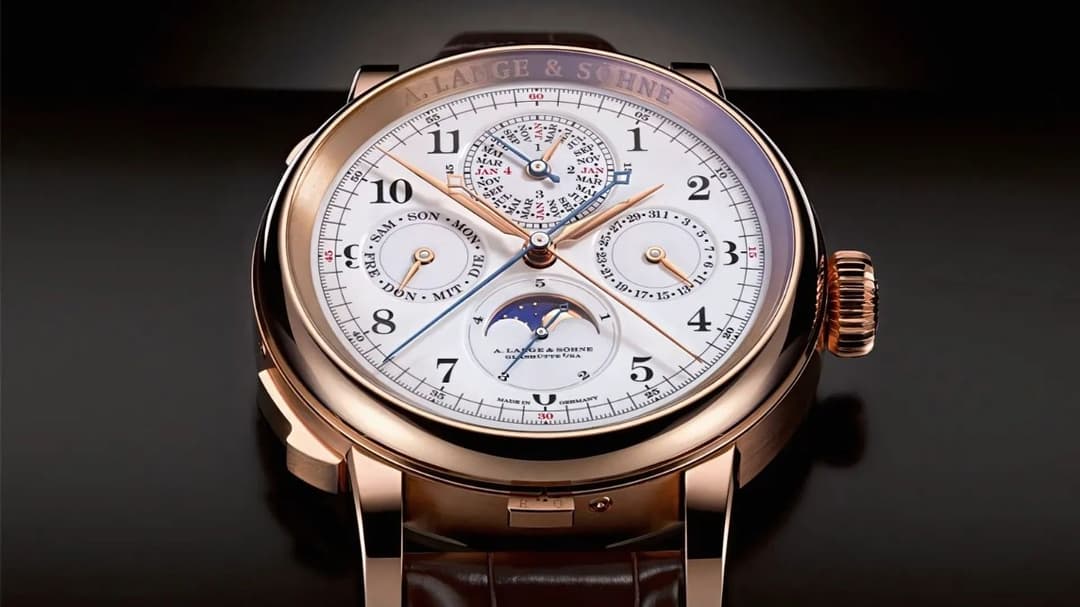
5. A. Lange & Söhne Grande Complication, $2.6 million
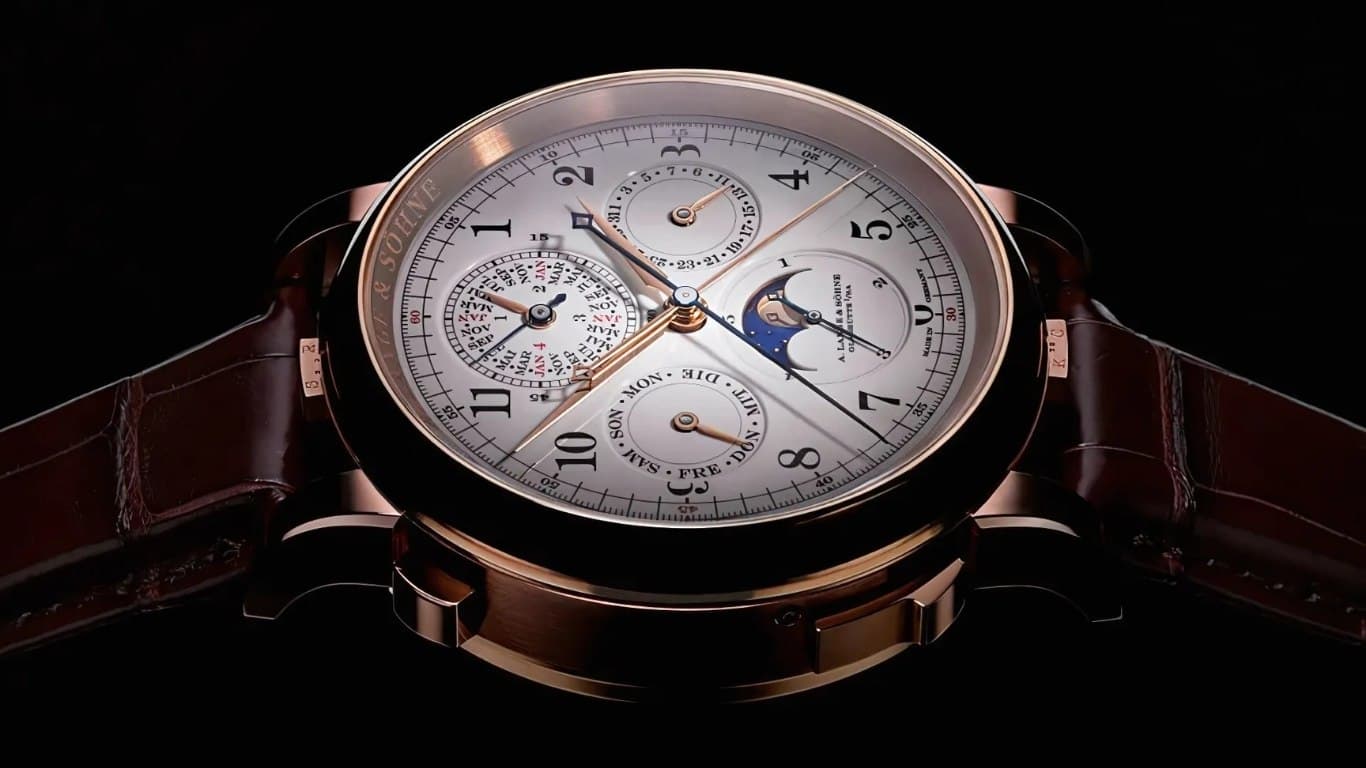
The A. Lange & Söhne Grande Complication is a masterpiece of German watchmaking, sitting at the very top of the brand's technical and artistic capabilities. Introduced in 2013, it pulls together some of the most demanding horological complications in existence. The piece is one of the most exclusive and prestigious watches A. Lange & Söhne has ever produced.
At its core sit a grande and petite sonnerie, minute repeater, perpetual calendar, and split-seconds chronograph. The minute repeater alone is one of the most intricate complications in all of watchmaking, chiming the hours, quarter-hours, and minutes on demand with acoustic precision that has to be heard to be appreciated. Add to that a perpetual calendar and a split-seconds chronograph, and the result is a watch that rarely stops surprising.
What makes the reference more extraordinary is the production number. Only six examples of the Grande Complication have ever been made. Each is meticulously hand-finished, with the movement crafted from German silver chosen for its durability and distinctive lustre.
At approximately $2. 6 million, the Grande Complication is a collector's treasure that blends exclusivity, heritage, and mechanical complexity in a way few watches can match.
6. Cartier Crash, $1 million for vintage pieces
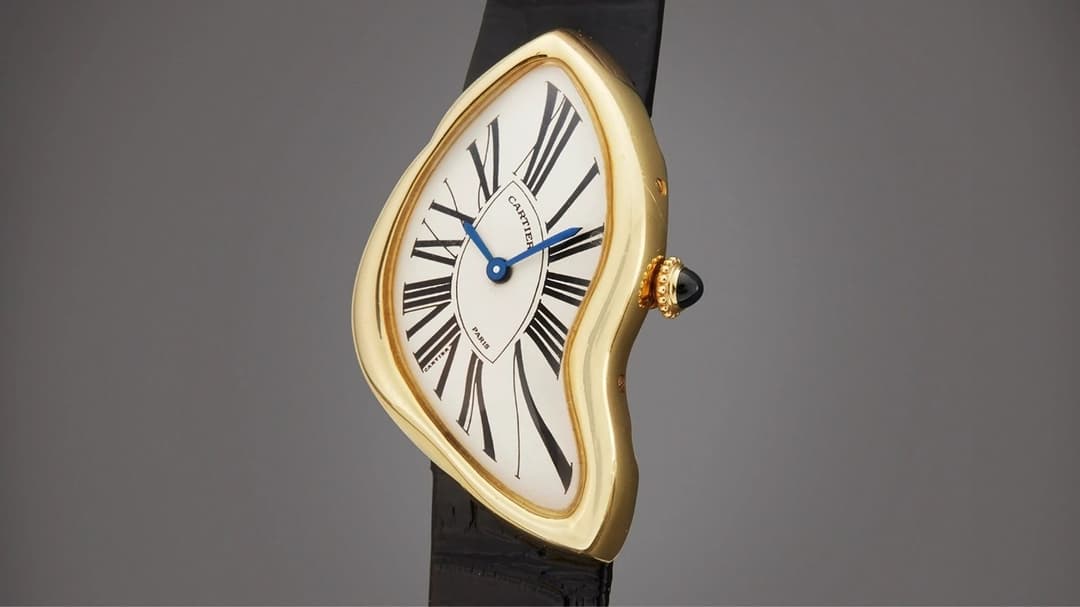
The Cartier Crash is one of the most unique and unconventional timepieces ever made. First introduced in 1967, its distorted, asymmetrical case was a deliberate design provocation. The shape works because it is unmistakable; you recognise it instantly.
The origins of the Crash are themselves a matter of debate, which only adds to the piece's mystique. Some believe it was inspired by the surrealist art movement and the melting clocks of Salvador Dalí. Another widely circulated story suggests the design came from a Cartier watch recovered after a car crash in London.
Whatever the true inspiration, the Crash came to embody artistic freedom in a way that set it entirely apart from the conventional luxury watch world.
What makes the Cartier Crash exceptionally rare is its limited production and painstaking handcrafting. Early models, made in extremely small numbers, are the ones that command serious money. Over the years, vintage pieces have appreciated substantially, regularly exceeding $1 million at auction.
Modern reinterpretations attract attention too, but rarely capture the exclusivity of the originals.
7. Richard Mille RM 056 Felipe Massa Sapphire, $1.5 million
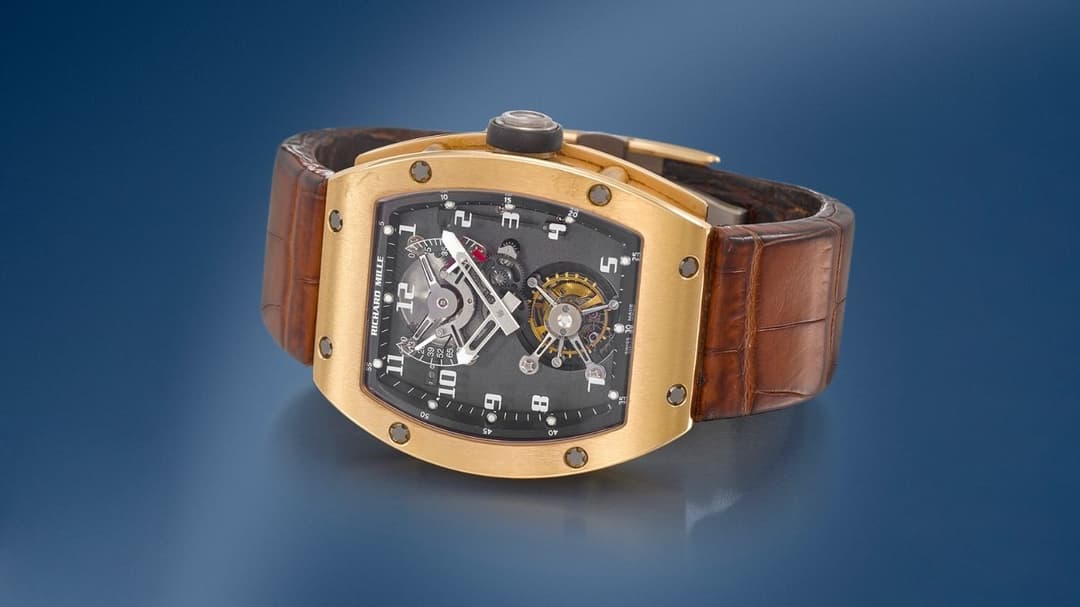
The Richard Mille RM 056 Felipe Massa Sapphire is a feat of modern horology that pushes the boundaries of what a watch can be. Richard Mille built its reputation on doing things others said couldn't be done; the RM 056 is one of the clearest statements of that philosophy.
The case is made entirely from sapphire crystal, a material so hard it is extraordinarily difficult to machine with any precision. That difficulty is the point. The result is a watch that offers an unobstructed view of the movement inside, letting the wearer see every gear, spring, and bridge at work from virtually any angle.
Beyond the case material, the RM 056 houses a tourbillon and a split-seconds chronograph, two of the most demanding complications in watchmaking. Production numbers are extremely limited. The watch was created in honour of Brazilian Formula 1 driver Felipe Massa, who built a long-standing partnership with Richard Mille throughout his racing career.
At $1. 5 million, the RM 056 sits among the most coveted pieces in the Richard Mille catalogue.
8. Jaeger-LeCoultre Reverso Gyrotourbillon 2, $400,000 to $600,000
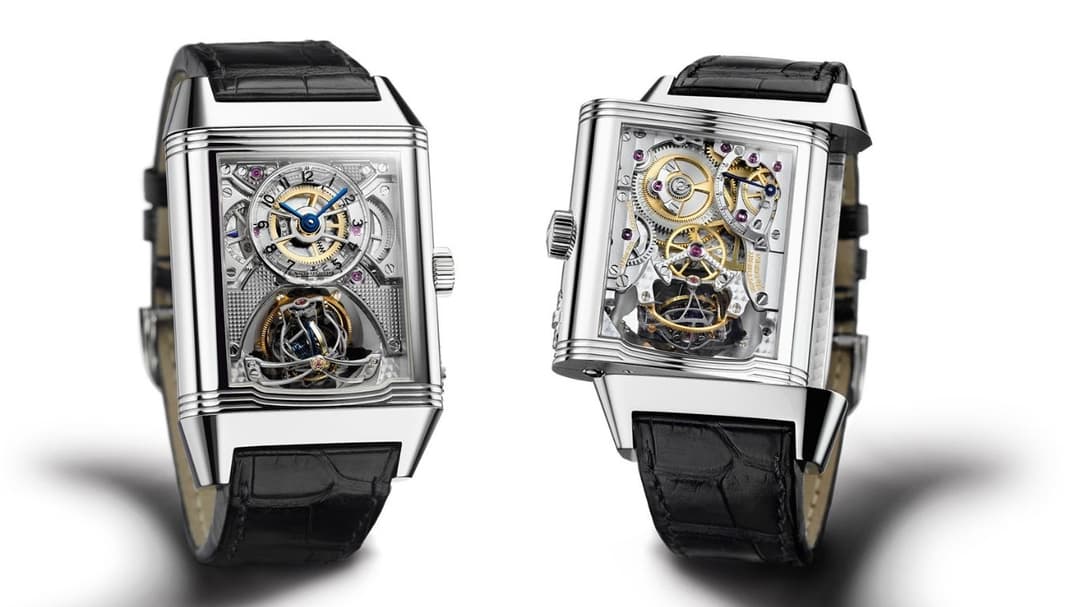
The Jaeger-LeCoultre Reverso Gyrotourbillon 2 redefines what a tourbillon-equipped timepiece can achieve, blending technical complexity with the elegance the Reverso line has always embodied. Jaeger-LeCoultre sits among the most innovative watchmakers in the world, and the Reverso, originally designed in the 1930s to survive polo matches, is one of its most enduring references.
The flipping case mechanism was built to protect the dial during play. That reversible architecture is what makes the Reverso unmistakable. With the Gyrotourbillon 2, Jaeger-LeCoultre takes that classic format and transforms it into something that belongs in a different conversation entirely.
At the heart of the watch sits a double-axis gyrotourbillon, a complication that counteracts the effects of gravity on timekeeping precision. A standard single-axis tourbillon rotates in one plane; the gyrotourbillon moves across two axes, which dramatically improves accuracy in a way that a traditional tourbillon cannot. With only a limited number produced, the Reverso Gyrotourbillon 2 has become one of the most sought-after Jaeger-LeCoultre timepieces ever made.
Depending on case material (platinum or gold) and condition, prices range from $400,000 to $600,000.
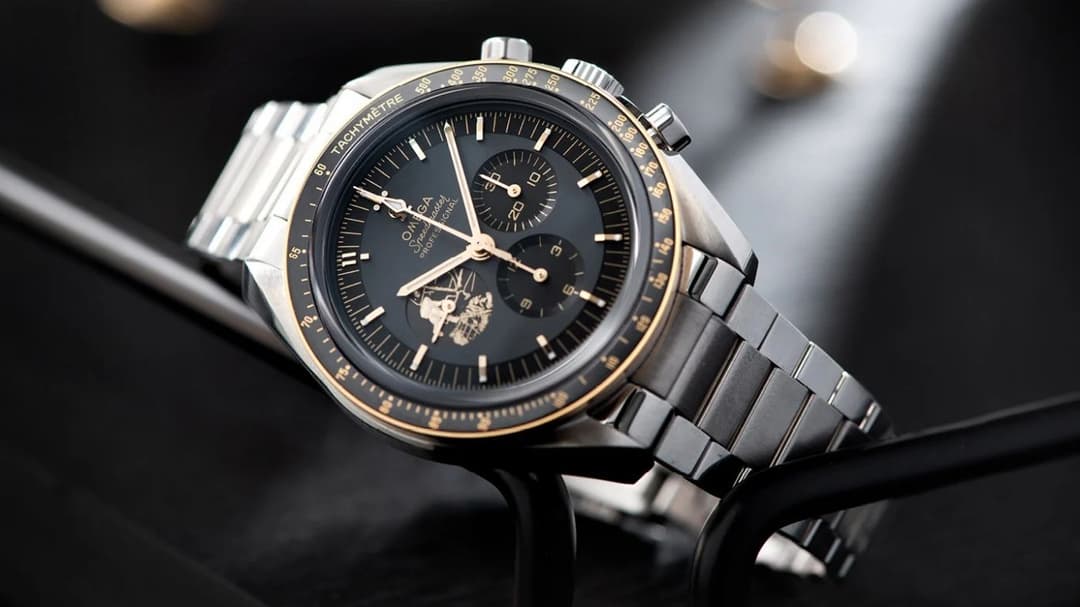
9. Omega Speedmaster Apollo 11 50th Anniversary, $35,000 to $50,000
The Omega Speedmaster Apollo 11 50th Anniversary pays tribute to one of the defining moments in human history. Released in 2019 to mark the 50th anniversary of the first lunar mission, the limited edition reinforces the Speedmaster's legacy as the first watch worn on the moon. Buzz Aldrin wore the reference during his moonwalk in 1969, and that single moment gave the Speedmaster a story no marketing budget could ever buy.
The model is limited to 6,969 pieces, a number chosen as a nod to the mission year. The 42mm case combines stainless steel with Moonshine gold, Omega's proprietary alloy that is paler than traditional yellow gold and offers superior resistance to fading over time. The aesthetic pays direct homage to the original Speedmaster Professional while incorporating modern advances in materials and finishing.
Powering the reference is the Caliber 3861, a co-axial master chronometer movement with manual winding that stays true to the hand-wound mechanism of the original. Since its release, the Apollo 11 has appreciated sharply. Originally sold at retail for far less than its current market value, it now commands between $35,000 and $50,000 on the secondary market.
10. Breguet Marie-Antoinette Grande Complication, $30 million
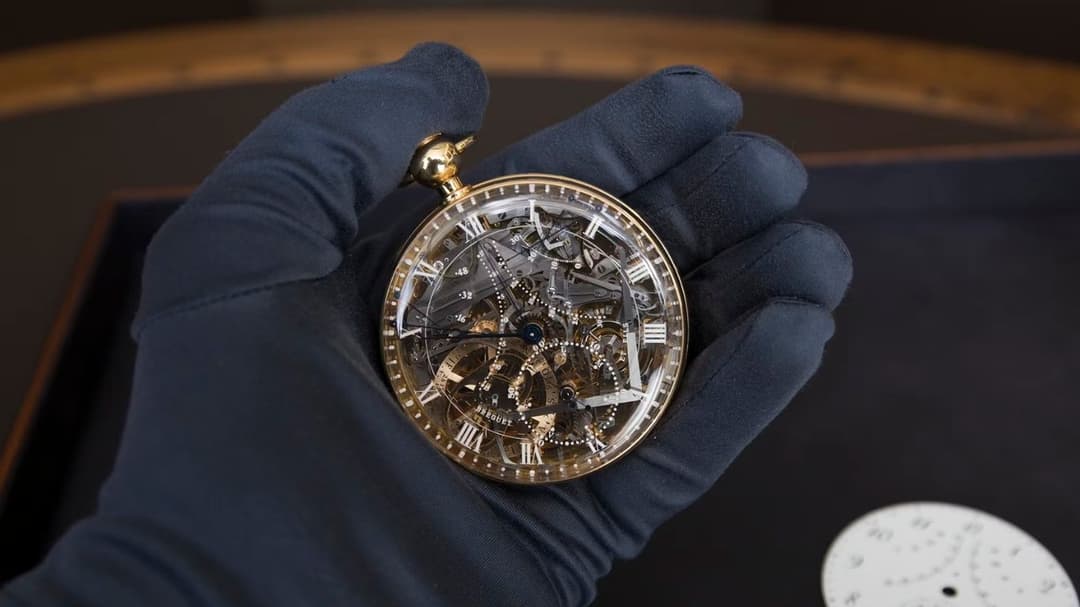
The Breguet Marie-Antoinette Grande Complication is one of the most legendary and mysterious timepieces ever to exist. Commissioned in 1783 by an anonymous admirer of Queen Marie-Antoinette, the watch was designed to incorporate every known horological complication of its era, with no limits placed on cost or time. Both demands turned out to be staggering.
Both Marie-Antoinette and watchmaker Abraham-Louis Breguet died before its completion. Breguet's son ultimately finished the watch in 1827, a full 44 years after the original commission. The finished piece features a minute repeater, perpetual calendar, thermometer, power reserve indicator, and a self-winding mechanism, all extraordinary technical achievements for the late eighteenth and early nineteenth centuries.
The history takes another dramatic turn in 1983, when the watch was stolen from the L.A. Mayer Museum for Islamic Art in Jerusalem. For more than two decades, its location was unknown. In 2007, it was recovered, a development that only deepened the piece's reputation as the most enigmatic watch in existence.
Estimated at $30 million, the Marie-Antoinette Grande Complication is one of the most expensive and historically significant timepieces ever created.
What this list tells us about the upper tier in 2026
The rarest watches in the world share a small number of structural conditions. Production runs in single or low double-digit numbers. Documented historical provenance.
Mechanical complication that anchors the piece in the highest tier of watchmaking ambition. Cultural recognition that crosses outside the watch-collecting world. The pieces above carry one or more of these conditions in concentrated form.
For collectors paying attention to this tier, the practical work is building specialist relationships with the major auction houses, reading catalogue notes in detail, and treating provenance documentation as load-bearing rather than incidental. The references at the top of the market all reward that discipline across years rather than weeks.
We last reviewed this analysis in May 2026.
Related reading on The Luxury Playbook: watch collecting.

Frequently Asked Questions
- Which is the rarest watch in the world?
- The rarest watch in the world is widely considered to be the Patek Philippe Grandmaster Chime Ref. 6300A-010, which holds the record for the most expensive watch ever sold at auction, fetching a staggering $31 million. <br><br><br>
- What is the most expensive watch in the world?
- The Graff Diamonds Hallucination is currently the most expensive watch in the world, with a price tag of $55 million. It's adorned with 110 carats of various colored diamonds, making it a truly dazzling and rare piece.

Stefanos Moschopoulos
Stefanos Moschopoulos founded The Luxury Playbook in Athens and has spent the better part of a decade following the auction calendar, the en primeur releases, and the watchmakers, gallerists, and shipyards the magazine covers. He writes the field guides and listicles that anchor the Connoisseur section — pieces built on Phillips and Christie's results, Liv-ex movements, and conversations with collectors he has met across Geneva, Bordeaux, Basel, and Monaco. His own collecting habits sit closer to watches and wine than art, and it shows in the level of detail in the magazine's coverage of those categories. Under his direction, The Luxury Playbook now publishes long-form field guides, market-defining year-end listicles, and the Voices interview series with the founders behind the houses and the brands.