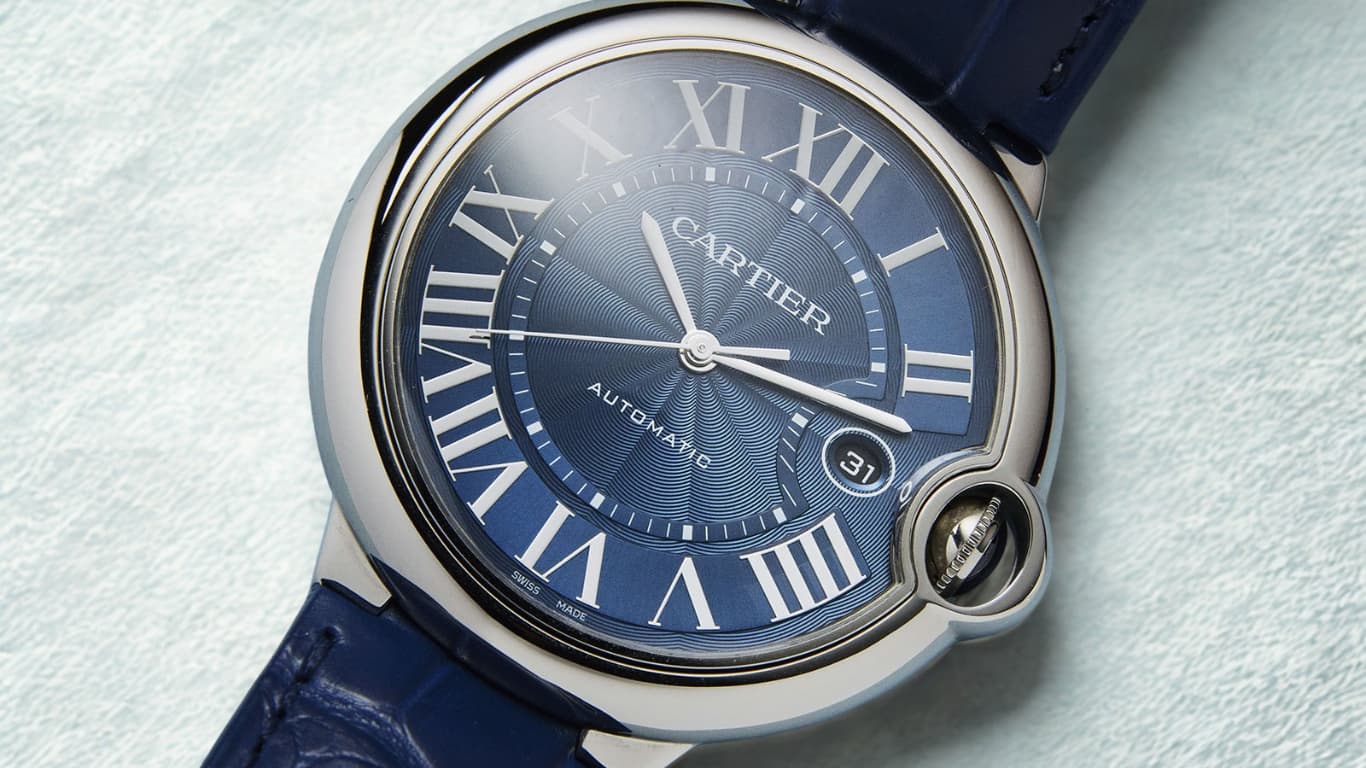
The Cartier Ballon Bleu made Cartier famous in the modern era, and that recognition is precisely why the reference no longer rewards serious collector attention on financial grounds. Launched in 2007 with the distinctive spherical case and the floating blue sapphire cabochon crown, the Ballon Bleu announced itself as a deliberate departure from the maison's rectangular Tank heritage and quickly became one of the most-recognised modern Cartier silhouettes.
- The Cartier Ballon Bleu made the brand commercially famous through the 2007 launch, but the modern collector consensus places it well below the Tank and Santos for long-term value.
- Reference WSBB0036 Ballon Bleu 36mm and Reference WJBB0072 in 42mm anchor the modern catalogue, with the Calibre 049 supporting daily-wear functionality across multiple sizes.
- The crown-guard architecture and the inset crown design have aged less gracefully than the Tank or Santos shaped-case heritage, with secondary-market depreciation reflecting the collector hierarchy.
- We see the Ballon Bleu as a strong gift-tier purchase but a poor long-term collector reference, with the broader Cartier shaped-case catalogue offering meaningfully stronger value retention.
- Buyers attracted to the Ballon Bleu should consider the Tank Must, Tank Solo, or Santos as alternatives that offer better long-term collector positioning at similar price points.
- Manufacturer pricing on the Ballon Bleu has held in the new market, but the secondary-market reality reflects the broader collector preference for the Tank and Santos heritage.
- Who is this for?
- Cartier buyers considering the Ballon Bleu, gift-tier shoppers, and established collectors weighing the Cartier shaped-case catalogue.
- What is happening?
- A grounded read on why the Ballon Bleu made Cartier famous but will not make collectors money, covering the modern catalogue and the Tank-Santos alternatives.
- When did this emerge?
- The Ballon Bleu launched in 2007, with the modern collector consensus having crystallised through the last decade of secondary-market data and auction visibility.
- Where is this happening?
- Cartier boutiques globally stock the modern Ballon Bleu catalogue, while Chrono24 and authorised pre-owned specialists handle the broader secondary market.
- Why does it matter?
- Understanding the Ballon Bleu position in the broader Cartier hierarchy informs better purchase decisions, with the Tank and Santos offering stronger long-term collector value.
What it did not become was a credible collector reference. The piece has carried unusually weak secondary-market behaviour across nearly two decades of production, and the structural reasons sit at the centre of why even the most patient Cartier collectors tend to skip the Ballon Bleu when they build serious modern positions. Reading the case honestly is the practical baseline for anyone considering the reference now.

What the Ballon Bleu actually is
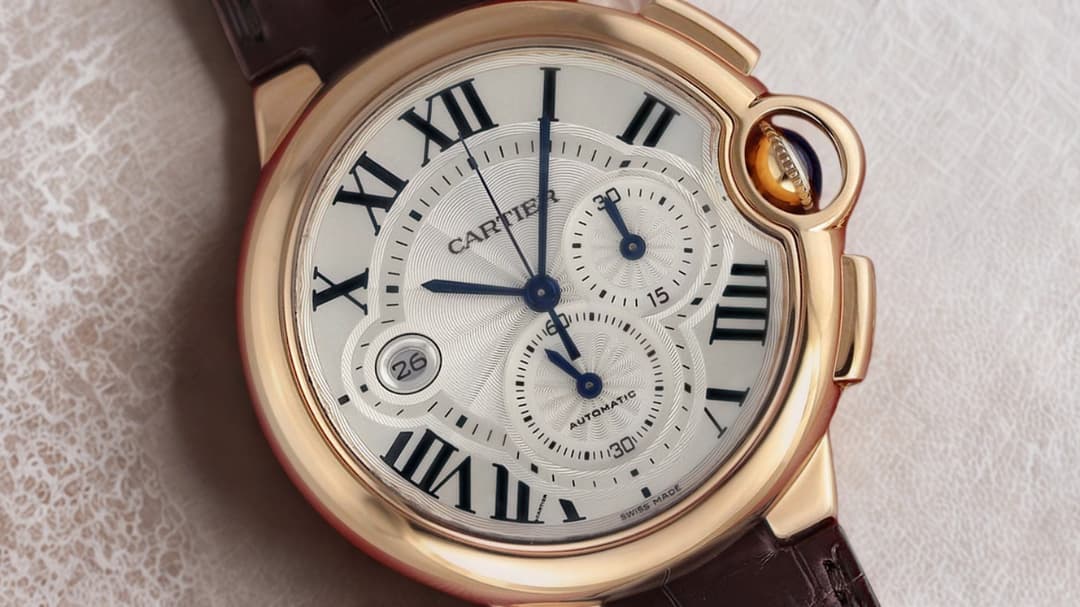
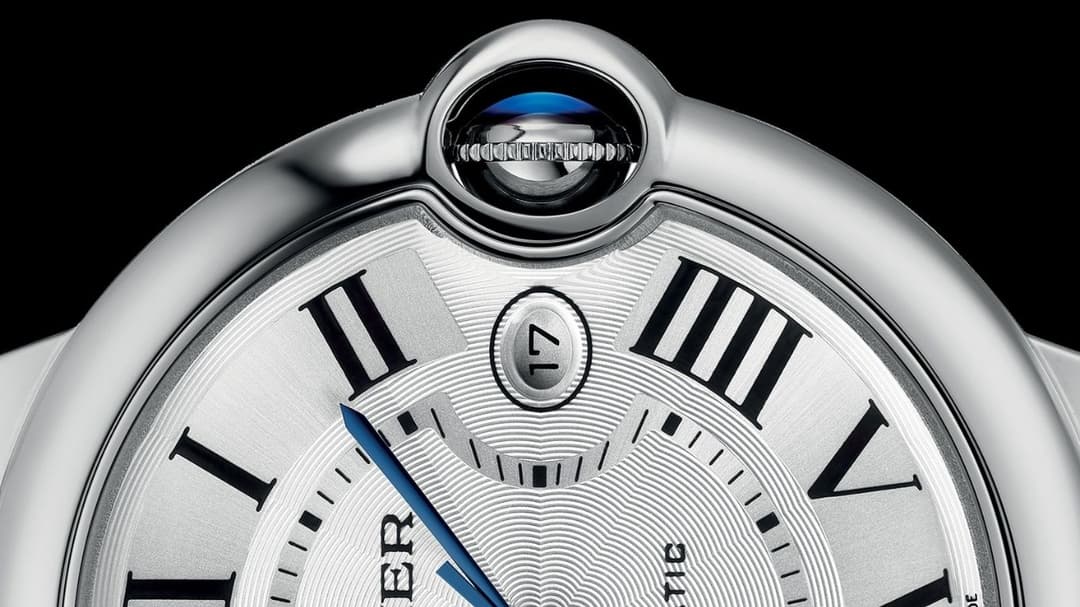
The Ballon Bleu sits at the centre of the Cartier catalogue as a contemporary design statement rather than a heritage reference. The 2007 launch combined the spherical case profile, the inset blue sapphire crown and the Cartier roman-numeral dial vocabulary into a piece that was deliberately distinct from the Tank, the Santos and the broader maison's pre-2000 design heritage.
Production has run at scale. The reference is one of the maison's volume catalogue pieces, with multiple case-size, case-material and dial variants produced across the past 18 years. The full catalogue includes 28mm, 33mm, 36mm, 40mm and 42mm cases in steel, two-tone, yellow gold, rose gold and white gold, with both quartz and automatic movement options across the range.
Why the Ballon Bleu won't make you money
The secondary-market behaviour is unusually weak by Cartier standards. WatchCharts and the major dealer platforms both record meaningful value retention drag on the Ballon Bleu catalogue, with most references trading well below their retail price, often at discounts running into the high double digits on a percentage basis across older variants.
The structural reasons are clear. Production has run at high volume across a long catalogue, which leaves the secondary market saturated with examples. The design vocabulary lacks the heritage anchor that the Tank, Santos and the maison's deeper-heritage references all carry; the Ballon Bleu is a contemporary design without the structural weight of a 1917 or 1904 lineage.
The movement architecture in the volume catalogue runs the Cartier-modified ETA and Sellita base movements rather than the more credible Cartier manufacture work that appears in the upper Privé and Métiers d'Art catalogue. The case work is well executed but operates at the maison's volume-production tier rather than the considered limited-edition tier.
The Ballon Bleu's secondary market in plain terms
Clean examples of the steel 36mm and 40mm Ballon Bleu references trade meaningfully below their original retail across the credible dealer network. The two-tone and yellow-gold variants carry a portion of their retail price more credibly, but still operate with depreciation behaviour that the broader Cartier collecting category does not generally show.
The structural reading is that the Ballon Bleu lives as a primary-market reference rather than a secondary-market one. The piece was produced for visible retail rather than for the considered collecting community, and the post-sale economics reflect that.
How the Ballon Bleu compares to credible Cartier collecting
The reference comparison matters because it shows why the Ballon Bleu sits outside the credible collecting conversation. The Tank, the Santos and the Privé references all operate with structural conditions, design heritage, allocation discipline, considered production scale, that the Ballon Bleu visibly lacks.
The Tank Must operates at retail bands similar to the entry Ballon Bleu, with secondary-market behaviour that holds meaningfully better. The Santos catalogue at the considered references operates with credible secondary-market depth that the Ballon Bleu does not match. The Privé limited editions sit at a separate tier of credible Cartier collecting that the Ballon Bleu does not approach.
The Cartier Crash sits at the upper end of credible Cartier collecting, with auction-record behaviour that anchors the maison's reputation for considered work. The Ballon Bleu does not operate on anything like the same structural plane.
The 28mm and 33mm market
The smaller Ballon Bleu references, the 28mm and 33mm cases targeted at the maison's broader fashion-retail market, sit at the most exposed end of the secondary-market behaviour. Production scale has been highest, design vocabulary has been most contemporary, and the secondary market has absorbed the consequences. Buyers entering these references should do so on the basis of personal preference rather than any credible secondary-market expectation.
Where the Ballon Bleu still earns its place
The piece is well made, the design is genuinely recognisable, and the wearing experience on the wrist is comfortable. For a buyer entering Cartier collecting through pure design preference, with no secondary-market expectation, the Ballon Bleu is a credible primary-market choice in the maison's contemporary catalogue.
The structural reading is that the Ballon Bleu is a watch to wear, not a watch to collect. The distinction matters because the credible Cartier collecting conversation operates on a different set of priors than the broader fashion-retail watch market. The maison's reputation in serious collecting circles is built on the Tank, the Santos, the Crash, the Privé references and the Métiers d'Art work, not on the Ballon Bleu catalogue.
What collectors actually do with the Ballon Bleu
The collectors we hear from at the Cartier specialist-dealer level treat the Ballon Bleu as a reference to skip when building serious modern Cartier positions. The catalogue is well executed but operates on structural conditions that do not reward considered collecting. The credible Cartier collecting frame builds outward from the Tank, the Santos, the Crash and the Privé references rather than from the Ballon Bleu.
For buyers entering Cartier through the maison's volume catalogue, the practical reading is that the Tank Must operates as a credibly better entry reference than the Ballon Bleu at similar retail. The structural conditions are different, the secondary-market behaviour holds up better, and the design heritage carries the kind of weight that the contemporary Ballon Bleu vocabulary does not credibly match.
What we'll watch next on the Ballon Bleu
The trajectory is unlikely to shift on any near-term timescale. The reference continues to sell credibly at primary retail, the design recognition remains real, and the maison continues to produce the catalogue at the volume the broader fashion-retail market supports. Secondary-market behaviour is unlikely to strengthen meaningfully without a structural change in production discipline that the catalogue's current direction does not suggest.
For serious collectors, the Ballon Bleu remains the Cartier reference to recognise rather than to pursue. The maison's credible collecting catalogue operates on a different set of conditions, and reading the Ballon Bleu honestly, as a well-made piece that does not reward considered collecting, is the practical baseline.
We last reviewed this analysis in May 2026.
Frequently Asked Questions
- Does the Cartier Ballon Bleu hold its value?
- No. Data shows the Ballon Bleu trades approximately 46.8% below retail on average in the secondary market. The popular 36mm steel automatic (ref. WSBB0048) retails for €7,100 but trades around €3,686, representing a 48% loss from retail price. It has a value retention score of -41.5% and classifies it as "Extreme Risk" (76/100) for depreciation.<br><br>
- Which Ballon Bleu models lose the most value?
- Smaller sizes and quartz models depreciate worst. The 28mm quartz (W69010Z4) drops from $5,050 retail to $2,370 market price, a 53% loss. Gold versions fare even worse: 18k rose gold 36mm models retail around $17,000 but trade for $8,000-$10,000 used, losing $7,000-$9,000 in depreciation, worse than holding equivalent value in gold bullion.<br><br>
- Should I buy a new or pre-owned Ballon Bleu?
- Always buy pre-owned. Since first owners absorb 40-50% depreciation immediately, buying used at €3,686 (already depreciated) versus €7,100 retail minimizes further loss.

Stefanos Moschopoulos
Stefanos Moschopoulos founded The Luxury Playbook in Athens and has spent the better part of a decade following the auction calendar, the en primeur releases, and the watchmakers, gallerists, and shipyards the magazine covers. He writes the field guides and listicles that anchor the Connoisseur section — pieces built on Phillips and Christie's results, Liv-ex movements, and conversations with collectors he has met across Geneva, Bordeaux, Basel, and Monaco. His own collecting habits sit closer to watches and wine than art, and it shows in the level of detail in the magazine's coverage of those categories. Under his direction, The Luxury Playbook now publishes long-form field guides, market-defining year-end listicles, and the Voices interview series with the founders behind the houses and the brands.