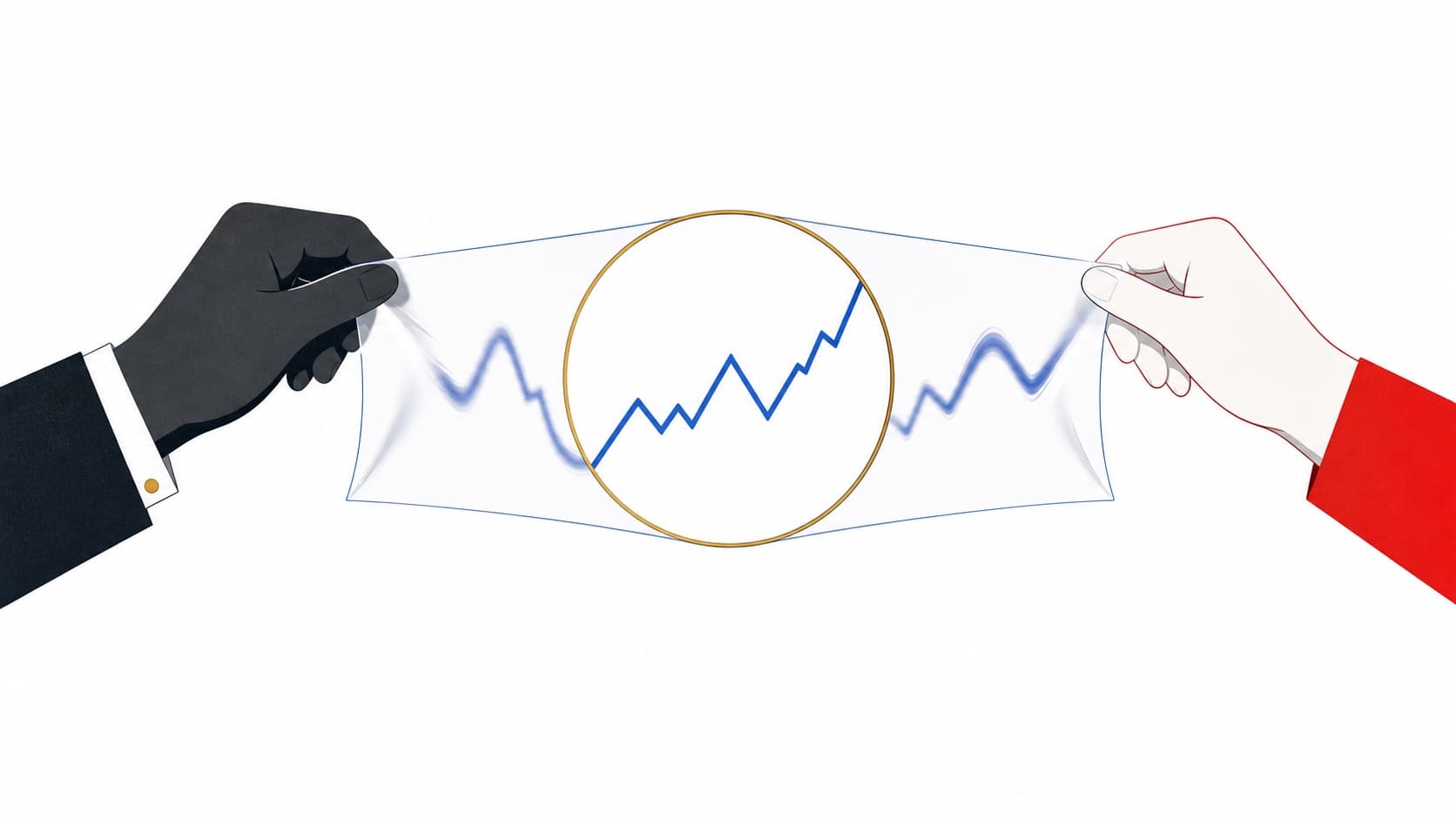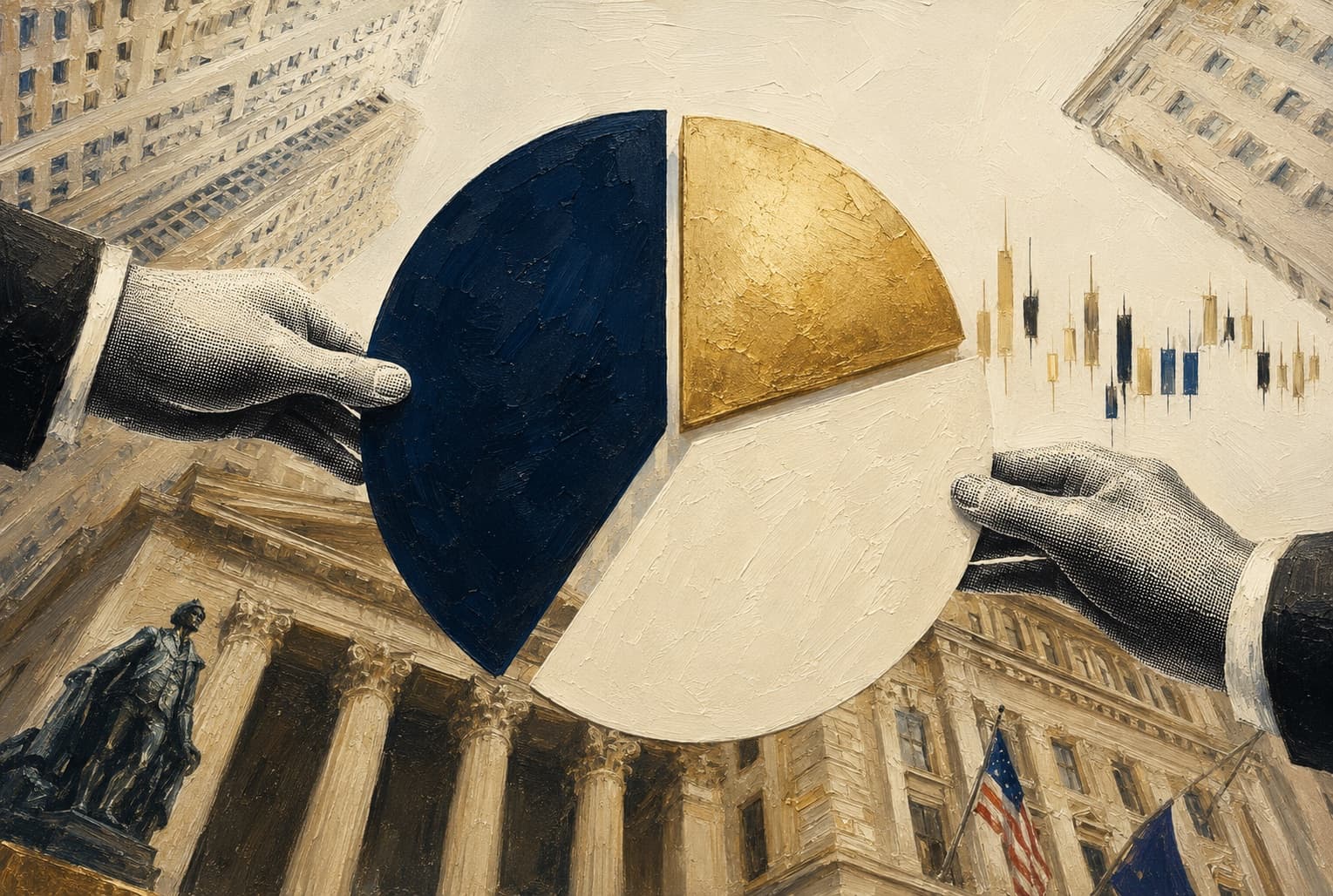

Exchange-traded funds have become the darling of modern investing, marketed as the perfect solution if you want diversification, low costs, and simplicity all wrapped up in a single ticker.
Global ETF assets hit $10.9 trillion as of September 2026, according to ETFGI data. That kind of scale tells you just how deeply these vehicles have embedded themselves into the portfolios of retail investors and financial advisors alike, many of whom treat them as the safe, sensible alternative to picking individual stocks.
The narrative is compelling: why take the risk of choosing individual companies when you can own entire markets for fees as low as 0.03%?
But beneath that appealing surface sits a far more complicated reality. ETFs carry their own unique risks and structural quirks that can turn genuinely dangerous when markets come under stress. And their very popularity may be quietly building the conditions for future instability that catches a lot of investors off guard.
The structural picture behind ETF mechanics is documented at the source. The U.S. Securities and Exchange Commission oversees the creation/redemption framework that makes ETFs work, and FINRA investor alerts cover the corner cases that bite retail allocators.
The data-side picture sits with the analytics providers. Morningstar tracks ETF tracking-error and total-cost statistics across the universe, and BlackRock publishes its own research on ETF liquidity behavior under stress.
Key Takeaways
For deeper context, the breakdown in how to read ETF flows when sentiment turns is worth reading alongside this analysis.
Navigate between overview and detailed analysisKey Takeaways
- ETF Popularity: Global ETF assets hit $10.9 trillion by Sept 2025, cementing their dominance.
- Perceived Safety: Marketed as low-cost and diversified, ETFs still carry full market risk and structural vulnerabilities.
- Hidden Risks: Liquidity mismatches, tracking errors, and concentration in mega-cap tech reduce diversification.
- Passive Bubble: With 45% of U.S. equities in passive funds, ETFs may distort valuations and amplify volatility.
- True Costs: Spreads, tax inefficiencies, and rigidity mean ETFs aren’t always as cheap as they appear.
- Alternatives: Direct indexing and selective active management offer better control and diversification.
The Five Ws Analysis
- Who:
- Retail investors, financial advisors, and institutions heavily allocating to ETFs.
- What:
- The growing risks behind ETFs despite their reputation for diversification and safety.
- When:
- As of 2025, with record ETF assets and accelerating market concentration.
- Where:
- Mainly U.S. and global equity markets, with risks extending to sector and thematic ETFs worldwide.
- Why:
- Because ETFs mask liquidity issues, tracking errors, and concentration risks while fueling a potential passive bubble that could destabilize markets.
Why ETFs Look Safer Than They Really Are
The psychological pull of ETFs is easy to understand. They feel simple. They feel safe. And that feeling of instant diversification is deeply comforting when markets are making you nervous.
Owning hundreds or even thousands of stocks through a single purchase does feel inherently less risky than betting on a single company that could face bankruptcy, fraud, or a sector collapse. That diversification benefit is real, and it genuinely is one of the strongest arguments for ETFs over concentrated stock positions. But it only tells part of the story.
Low fees are the other major selling point. The average expense ratio for equity ETFs has dropped to 0.16% as of 2026, according to Morningstar data, compared to 0.68% for actively managed mutual funds. That cost advantage is mathematically compelling over long periods, because higher fees compound against your returns in ways that quietly erode your wealth far more than most investors realize.
Still, cheap is not the same as safe.
However, the perception of safety often exceeds the reality of risk reduction that ETFs actually provide.
Many investors treat ETFs as inherently conservative without understanding that you are still fully exposed to market volatility, sector concentration, and systemic risks that sweep across entire markets. An S&P 500 ETF is no safer than the underlying market during a bear market. What it does is ensure you experience the full extent of every decline, with no chance of smart stock selection cushioning the blow.

The Hidden Risks Lurking in ETFs
One of the most serious structural risks you face as an ETF investor is the liquidity mismatch that emerges during periods of market stress. Yes, ETF shares trade throughout market hours. But the underlying securities those funds hold can become extremely difficult to trade when volatility spikes and markets seize up.
Federal Reserve research published in 2024 captured this clearly. During the March 2020 market turmoil, several bond ETFs traded at steep discounts to their net asset values precisely because the underlying bond markets had frozen while ETF trading kept right on going. If you owned those funds, you were watching the price of your investment detach from the value of what it supposedly held.
That is a risk worth understanding before you buy. You can learn more about what liquidity risk actually means for your portfolio and why it matters far beyond ETFs.
Tracking errors are another surprise waiting to happen. You assume your ETF will mirror its benchmark index almost perfectly. Often it does, but not always.
Morningstar’s 2026 analysis found the average tracking error for U.S. equity ETFs sat at 0.15% annually, but some funds showed tracking errors exceeding 1% due to sampling methodologies, cash drag, and trading costs. That gap may sound small until you run the numbers over a decade.
While seemingly small, these differences compound over time and can result in significantly different outcomes than investors expect.
Concentration risk has quietly grown more severe as passive investing has funneled enormous capital flows into the largest companies within popular indices. According to FactSet data from September 2026, the top 10 holdings in the S&P 500 now account for 34.2% of the entire index, up from just 20.1% back in 2010.
So when you buy a broad-market ETF thinking you own a genuinely diversified portfolio, what you are actually doing is making a concentrated bet on a handful of mega-cap technology companies whose performance now dominates the index returns you are tracking.
The Passive Investing Bubble
Passive investment flows have grown so large that they may be distorting market valuations in ways that create systemic risks for every investor, not just those in passive funds. Bank of America research from August 2026 found that passive funds now control roughly 45% of the U.S. equity market, up from just 15% in 2000. That shift in market structure has consequences.
This shift means that stock prices are increasingly determined by index inclusion and fund flows rather than fundamental analysis of company prospects.
The mechanical nature of passive investing can amplify both bubbles and crashes. When money flows into ETFs, funds buy regardless of price levels, potentially pushing valuations well beyond what underlying fundamentals can justify. You are not getting price discovery.
You are getting momentum on autopilot.
And when markets turn, the dynamic flips. ETF outflows force selling that can accelerate declines far beyond what company-specific factors would ever warrant on their own. Understanding how ETF flows reveal smart money moves in the market can help you read these signals before the crowd reacts.
Sector and thematic ETFs add another layer of vulnerability. When you chase performance in popular areas like artificial intelligence, clean energy, or crypto-related investments, you are often buying small clusters of stocks in rapidly growing but unproven industries. The diversification story these products tell in their marketing rarely matches the concentration risk sitting inside the fund.
The Cost of “Cheap” Investing
Management fees are just the starting point. The true cost of ETF investing includes several hidden expenses that can meaningfully drag on your returns. Bid-ask spreads, the gap between what you pay to buy and what you receive when you sell, add real costs, especially in less liquid ETFs where that gap can widen sharply during volatile sessions.
Bloomberg analysis from 2026 found that spreads for some international and sector-specific ETFs can exceed 0.5%, effectively doubling the stated expense ratio if you are making frequent trades. Suddenly the “cheap” fund starts looking a lot more expensive.
Tax efficiency is another ETF advantage that does not hold up equally across all fund types. Broad-market equity ETFs generally handle taxes well. But bond ETFs and certain international funds can generate meaningful taxable distributions that eat into your after-tax returns in ways the headline expense ratio never reveals.
The flexibility limitations of passive investing can also cost you during periods of real market deterioration. You stay fully exposed to sectors and companies experiencing fundamental decline because passive funds cannot reduce those positions until they are removed from the underlying index. And by the time that happens, a lot of the damage is already done.
Why Some ETFs Are Riskier Than Stocks
Leveraged ETFs deserve a category of their own for risk. These products reset daily, and that daily rebalancing creates a compound decay effect over longer periods that most retail investors simply do not account for. SEC data from 2024 shows the average leveraged ETF has underperformed its stated multiple of index returns by 2% to 4% annually because of volatility drag. These are tools built for daily trading, not long-term holding.
But many retail investors buy them as if they were simply amplified versions of regular index funds. That misunderstanding can be very costly over time.
Thematic ETFs carry their own version of hidden concentration risk. A fund focused on artificial intelligence, robotics, or space exploration sounds diversified by definition. In practice, many of these products hold overlapping positions in the same dozen or so companies, giving you far less diversification than the product name implies while charging higher fees than a broad market fund would.
The collapse of several high-profile ETFs makes this concrete. The VelocityShares Daily Inverse VIX Short Term ETN lost 99% of its value before shutting down. Numerous oil and gas ETFs have been liquidated after suffering devastating losses.
These were not obscure, fly-by-night products. They were marketed to everyday investors as accessible ways to gain exposure to specific themes or strategies.
What those examples show you is that the ETF structure does not eliminate investment risk. It packages and redistributes risk in ways that may not be obvious until something goes badly wrong. If you want to sharpen your overall approach to avoiding costly missteps, reviewing the most common investing mistakes beginners make is a useful starting point.
What Investors Should Do Instead
Direct index investing through low-cost brokers has become a genuinely viable alternative if you want broad diversification without the structural risks baked into ETF wrappers. Many brokerages now offer commission-free stock trades and fractional share investing, so you can build a diversified portfolio directly while keeping full control over tax management and position sizing.
That approach eliminates the liquidity mismatches and tracking errors that come with ETF structures, and it gives you a level of flexibility that passive funds simply cannot match.
Selective active management may also deliver better risk-adjusted returns than passive indexing during volatile periods, particularly if you are willing to pay modestly higher fees for professional risk management that can actually adjust positioning when conditions change.
Morningstar data from 2024 found that active managers outperformed their benchmark indices during 2022’s bear market by an average of 1.3%. That is not a guarantee, but it illustrates the potential value of having a human hand on the wheel when markets turn rough. Pairing active management with a well-chosen hedge fund strategy can add another layer of downside protection.
When ETFs do make sense for your portfolio, stay disciplined. Focus on broad-market, low-cost funds and keep your distance from specialized, leveraged, or thematic products that pile on specific risks in exchange for a compelling story.
Core positions in total market or S&P 500 ETFs can deliver cost-effective market exposure. But you should supplement them with individual stocks, bonds, or alternative investments that provide genuine diversification, not just more exposure to the same underlying risks that passive funds concentrate rather than eliminate.
We last reviewed this analysis in May 2026.


Alex Tzoulis
Alex Tzoulis is Co-Owner and Markets Analyst at The Luxury Playbook, specializing in equities, crypto, forex, and global financial markets. His work focuses on analyzing macroeconomic trends, geopolitical developments, and monetary policy, translating them into actionable insights across both traditional and digital asset classes. He leads the platform's financial market coverage, providing structured analysis across stock market investing, trading strategies, and cryptocurrency markets. His expertise strengthens the publication's authority in financial markets and capital allocation, bridging traditional finance with emerging digital investment ecosystems.