Most serious collecting eventually circles back to the question of which accessible watches actually hold up. The references priced below the trinity tier and below the upper Rolex sport line that nonetheless earn a real place in considered collections. The honest list is shorter than the watch press tends to suggest, and the discipline at this tier rewards the same close reading as the upper catalogue.
- Accessible luxury watches now offer genuine craftsmanship at sub-three-thousand-dollar entry points, with brands including Tudor, Tissot, and Hamilton leading the category.
- The Tudor Black Bay 58 remains the consensus accessible-luxury cornerstone, with manufacturer movement and proportions that punch well above the entry-level price tier.
- Tissot PRX and Gentleman references deliver in-house Powermatic 80 movements at price points that no other Swiss brand reliably matches.
- We see Hamilton Khaki Field and Intra-Matic references as the strongest tool-watch entries, with H-10 and H-30 movements offering meaningful daily reliability.
- Seiko Presage and Prospex references anchor the Japanese side of accessible luxury, with dial finishing and movement specification that competes with much pricier alternatives.
- Longines Heritage and Master Collection references round out the consensus list, offering elegant dress-watch options that hold up across decades of wear.
- Who is this for?
- New collectors building a first shelf, gift buyers, and established collectors exploring accessible luxury for daily-wear options.
- What is happening?
- A consensus list of thirteen accessible luxury watches that hold up across years of wear, anchored on Tudor, Tissot, Hamilton, Seiko, and Longines references.
- When did this emerge?
- The current list reflects 2026 manufacturer programmes, with in-house calibre rollouts at Tudor and Tissot reshaping the accessible-luxury landscape.
- Where is this happening?
- Authorised dealers globally stock the recommended references, with pre-owned specialists offering additional depth at sensible discounts.
- Why does it matter?
- Accessible luxury done right delivers serious craftsmanship without serious capital exposure, building the foundation for everything that follows in a collection.
The references that come up consistently in this conversation share a small number of attributes. Credible mechanical execution, design that doesn't read as dated five years on, deep enough secondary-market trading that the watch can be moved on if collecting tastes shift, and brand discipline that hasn't reached for marketing-led repositioning. Below are the thirteen we hear named most often in collector circles.
The accessible watches that hold up: 13 references collectors actually own
Hamilton Khaki Field Mechanical (around $475)
The honest entry into mechanical watchmaking. Manual-wind movement, 38mm case, military-derived design heritage from Hamilton's actual military-watch production through World War II. The H-50 calibre with the 80-hour power reserve is a genuinely useful upgrade over the original Khaki Field movements; the watch has become the standard recommendation for anyone wanting a credible first mechanical at a price that makes the choice easy.
Tissot PRX Powermatic 80 (around $725)
Tissot's revival of the 1978 PRX has become one of the more credible accessible-tier integrated-bracelet sport-luxury references on the market. The Powermatic 80 movement (a modified ETA 2824 with the 80-hour power reserve) sits in a 40mm case with the original PRX waffle dial design language. Mid-range collectors who can't quite reach the Tudor Black Bay tier increasingly land here; our broader read on Tissot in 2026 covers why this reference in particular holds up.
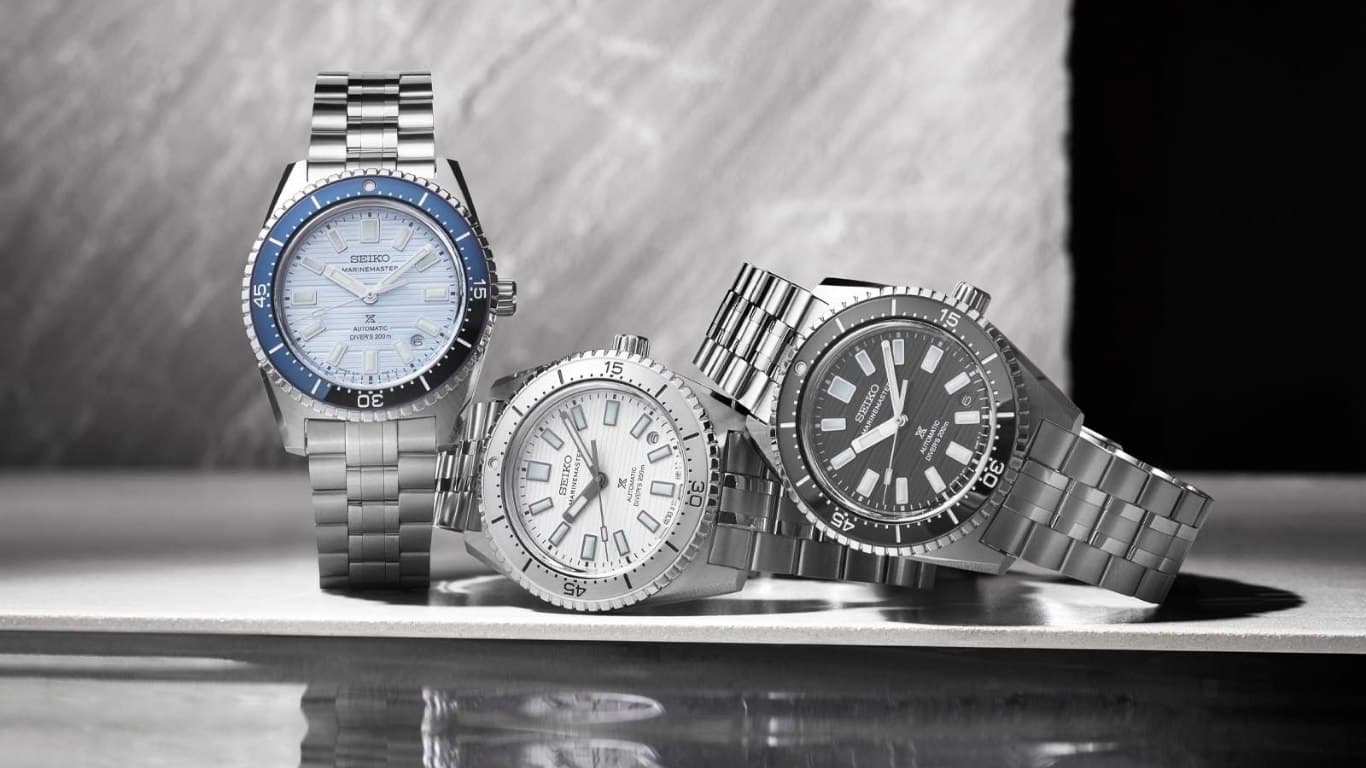
Seiko Prospex SPB143 / SPB147 / SPB149 (around $1,200 to $1,500)
Seiko's most considered modern dive watch. The case design references the 1965 62MAS, the 6R35 movement provides 70-hour power reserve, and the dial geometry reads as the most thoughtful contemporary Seiko diving production. The SPB143 sunburst grey dial and the various coloured-dial limited variants are the references collectors pursue.
Seiko 5 Sports SRPK series (around $325)
The most accessible credible mechanical Seiko. 4R36 movement, 100m water resistance, the broader Seiko 5 design language updated for the contemporary catalogue. The reference that gets recommended most often as an entry point into Seiko collecting; we've made the case before that the line is one of the more honest mechanical entries in the modern catalogue.
Tudor Black Bay 58 (around $4,000)
The reference that defined modern Tudor for many collectors. 39mm case (the smaller diameter that fit how most contemporary buyers actually wanted a dive watch), in-house MT5402 movement, heritage-derived bezel and dial design language. The reference 79030N has the deepest secondary-market trading data in the brand; the broader case for Tudor Black Bay sits on that data.
Tudor Pelagos 39 (around $5,150)
The titanium-cased modern dive watch Tudor positioned between the Black Bay heritage line and the larger Pelagos technical references. METAS Master Chronometer certification, the in-house MT5400 movement, and the cleaner contemporary case design make it one of the more considered modern Tudor references. Wearable in registers the standard Black Bay doesn't quite reach.
Cartier Tank Must (around $3,250)
Cartier's entry into the brand at a price that doesn't require six figures. Quartz movement in the most accessible references, the Tank Louis Cartier case design, and the brand's serious watchmaking heritage available without the price commitment of the higher-end Tank references. The honest entry into Cartier collecting.
Longines Heritage Military 1938 (around $2,200)
Longines's most credible modern military-style reference. The 40mm case, the railway-track minute markers, the cathedral hands, and the L893 calibre with 64-hour power reserve all earn their place. The brand's vintage-archive depth is one of the underused stories in modern accessible-tier watchmaking; the Heritage Military 1938 is the reference where that depth shows most cleanly.
Oris Aquis Date (around $2,400)
Oris's defining contemporary dive watch. The multipurpose case in various sizes from 36mm through 43. 5mm, the SW 200 calibre base, and the bracelet quality that's improved substantially across the past five years.
The various coloured-dial special editions (the Lake Baikal, the various conservation editions) anchor the collector following.
Hamilton Intra-Matic 68 (around $2,400)
Hamilton's most considered contemporary chronograph. Manual-wind H-31 calibre, 42mm case, 1968-era design references applied with discipline. The reference that gets cited as the most credible accessible chronograph below the Speedmaster tier.
Sinn 556 (around $1,500)
The German tool-watch tradition's most accessible modern reference. 38. 5mm case, ETA 2824-2 movement, German hard-coating across the upper end of the 556 range.
The brand's working-tool-watch focus and the Frankfurt-based small-batch production give it the kind of considered authenticity the broader German watchmaking tradition supports.
NOMOS Tangente 35 (around $1,940)
The Glashütte-based contemporary Bauhaus design house's defining reference. Manual-wind Alpha calibre, 35mm case, the most considered minimalist dial language in modern accessible watchmaking. The reference that anchors NOMOS's credibility as a serious independent contemporary maker rather than a purely design-led brand.
Christopher Ward C60 Trident Pro (around $1,400)
The British contemporary maker's most considered dive watch. Sellita SW200-1 movement, ceramic bezel, Light-Catcher case design. The brand has become the most credible British contemporary watchmaker at the accessible tier; the C60 is the reference that anchors most considered Christopher Ward collections.
What collectors look for at the accessible tier
The discipline at the accessible tier is the same as at the upper end, applied to lower price points. Mechanical execution that holds up under examination. Case finishing that doesn't soften under polishing.
Movement quality from credible third-party movement makers (Sellita, ETA, Seiko in-house) or genuine in-house movements where the brand can support the claim. Brand discipline that doesn't reach for marketing claims the watch can't support. Box-and-papers documentation that matters at any tier, because the resale gap is real even on a $500 Hamilton.
What separates the references that hold up from the broader accessible market is consistency. The brands listed above have all maintained credible production discipline over years; the references all have the kind of design coherence that doesn't read as dated three years post-purchase. The collectors who navigate this tier well tend to spend more time reading and handling the watches than chasing the loudest current release.
We last reviewed this list in May 2026.
We last reviewed this analysis in May 2026.

Frequently Asked Questions
- What are the best affordable watches that hold their value?
- Watches like the Seiko SKX007, Timex Marlin, Omega MoonSwatch, and Tissot PRX Powermatic 80 are among the top affordable models known for value retention.<br><br>
- Is the Timex Marlin a good watch for collectors?
- Absolutely. The Timex Marlin offers vintage charm, mechanical movement, and growing collector interest—especially for early or limited reissues.<br><br>
- Why is the Omega MoonSwatch in such high demand?
- The MoonSwatch is affordable, collectible, and backed by Omega’s brand prestige. Limited access has driven secondary market demand.<br><br>
- Do discontinued watches go up in value?
- Often, yes. Discontinued models like the Seiko SKX007 or Tudor Black Bay 79220N typically gain value due to scarcity and enthusiast demand.<br><br>
- Which affordable dive watches retain value best?
- The Seiko SKX007, Sinn 556 I, and Tudor Pelagos 39 are well-known for combining dive functionality with long-term resale potential.<br><br>

Stefanos Moschopoulos
Stefanos Moschopoulos founded The Luxury Playbook in Athens and has spent the better part of a decade following the auction calendar, the en primeur releases, and the watchmakers, gallerists, and shipyards the magazine covers. He writes the field guides and listicles that anchor the Connoisseur section — pieces built on Phillips and Christie's results, Liv-ex movements, and conversations with collectors he has met across Geneva, Bordeaux, Basel, and Monaco. His own collecting habits sit closer to watches and wine than art, and it shows in the level of detail in the magazine's coverage of those categories. Under his direction, The Luxury Playbook now publishes long-form field guides, market-defining year-end listicles, and the Voices interview series with the founders behind the houses and the brands.