The stock market is often treated as a pulse check on the broader economy, and for good reason. It moves in cycles, rising and falling in patterns that mirror what’s happening in the real world. If you understand those cycles, you gain a serious edge, because they shape everything from where prices are headed to which sectors deserve your attention right now.
In this article, you’ll learn exactly what stock market cycles are, how each phase works, and how to position yourself to profit from them.
The cycle research literature is one of the deepest corners of modern finance. Federal Reserve Economic Data hosts the recession-dating series and yield-curve history that anchor most cycle frameworks, and the Federal Reserve's monetary-policy reports show how policy responds to each cycle phase.
The institutional translation is where these frameworks become usable. JP Morgan's quarterly guide-to-the-markets and BlackRock's cyclical-asset-allocation work both translate raw cycle data into model portfolio shifts allocators can act on.
What Are Stock Market Cycles
For deeper context, the breakdown in which sectors tend to outperform in the late-cycle phase is worth reading alongside this analysis.
A stock market cycle is the recurring pattern of market fluctuations that swing between periods of rising prices (bull markets) and falling prices (bear markets).
These cycles don’t move in a straight line. They’re shaped by a mix of economic data, corporate earnings, central bank policy, geopolitical events, and the raw psychology of investors.
While no two cycles play out exactly the same way, they tend to move through recognizable phases that track shifts in economic activity and market confidence.
One thing worth knowing upfront is that stock market cycles don’t run on a fixed clock. Some last for years. The bull market that followed the 2008 financial crisis, for example, ran all the way to early 2020, making it one of the longest in modern history.
Others move fast, like the brutal bear market at the start of the COVID-19 pandemic, which hit its low point in a matter of weeks.
But regardless of how long a cycle lasts, it tends to follow a consistent structure. That consistency is what makes studying these cycles so valuable. Once you recognize the pattern, you can start to anticipate what comes next and position your portfolio before the shift happens rather than after.
The Four Phases of Stock Market Cycles
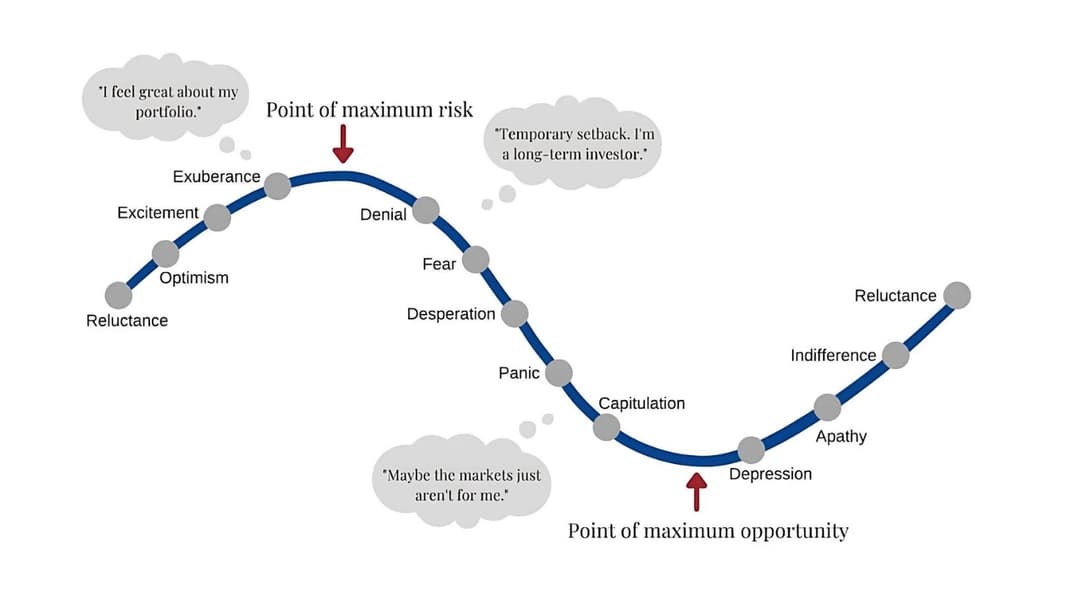
Stock market cycles typically move through four distinct phases: accumulation, markup, distribution, and markdown. Each one reflects a different mood in the market, a different set of economic signals, and a different kind of investor behavior. Get familiar with these phases, and you’ll have a much clearer view of when to buy, when to hold, and when to start pulling back.
1. Accumulation Phase
Every cycle has to start somewhere. The accumulation phase kicks off at the tail end of a bear market, when prices have bottomed out and the average investor is still convinced the sky is falling. This is exactly when institutional investors and experienced traders begin quietly re-entering the market, picking up undervalued stocks that still have strong long-term potential.
Trading volumes tend to be low during this phase, and prices often stay relatively flat while the market finds its footing. Following the 2008 financial crisis, the accumulation phase stretched from early 2009 to roughly mid-2010. It wasn’t a glamorous period, but the investors who moved early were setting themselves up for extraordinary gains in the years ahead.
Getting in during the accumulation phase is rarely comfortable. The news is still bad, sentiment is still negative, and most people are too spooked to act. But that discomfort is often where the opportunity lives.
2. Markup Phase
Once the accumulation phase runs its course, the market shifts into the markup phase. Prices start climbing steadily as investor confidence builds and economic indicators begin to improve. GDP growth picks up, jobs are being created, and corporate earnings start beating expectations.
This phase often delivers the most capital appreciation of any stage in the cycle.
As optimism spreads, retail investors start piling in, pushing prices higher and lifting trading volumes. The decade running from 2010 to early 2020 is a textbook example. The S&P 500 tripled in value over that stretch, driven by economic recovery, low interest rates, and strong earnings growth across a wide range of sectors.
3. Distribution Phase
The distribution phase is where things get tricky. Prices are still elevated, sentiment is still broadly positive, but underneath the surface, the market is starting to turn. Institutional investors begin offloading their positions and locking in profits, while retail investors, still riding the wave of optimism, keep buying.
Trading volumes stay high but prices stall or inch up only slowly. Volatility starts to creep in, and the signals can be easy to miss if you’re not paying attention.
The dot-com bubble of the late 1990s is one of the clearest historical examples. Tech stock valuations had stretched far beyond any rational basis, and when the selling started, it cascaded quickly into a full-blown correction that wiped out trillions in market value.
4. Markdown Phase
The markdown phase is what most people know as a bear market. Prices drop, sentiment turns dark, and the economic data starts confirming what the market already knew. Unemployment rises, earnings fall, and consumer spending pulls back.
Selling pressure builds on itself, and for many investors, fear takes over. Panic selling accelerates the decline, often pushing prices well below their fair value. If you’re not managing your portfolio carefully during this phase, the losses can be substantial.
The 2020 COVID-19 crash is a sharp example. Global markets fell more than 30% in just a few weeks, one of the fastest drawdowns in modern market history. The recovery that followed was equally swift, driven by massive fiscal stimulus and central bank intervention, but investors who panicked and sold near the bottom missed the entire rebound.
The Role of Investor Sentiment in Stock Market Cycles
Numbers matter in the market, but emotions often matter more in the short run. Fear, greed, and overconfidence are powerful forces that shape the direction and speed of stock market cycles, often pushing prices far beyond what economic fundamentals alone would justify.
These psychological dynamics have a real impact on how quickly markets rise or fall and how investors behave at each stage of a cycle. Understanding them gives you an edge that pure data analysis can’t always provide.
One of the most widely followed tools for tracking investor sentiment is the Fear and Greed Index. It captures the emotional temperature of the market by analyzing factors like stock price momentum, market volatility, demand for safe-haven assets, and overall market breadth.
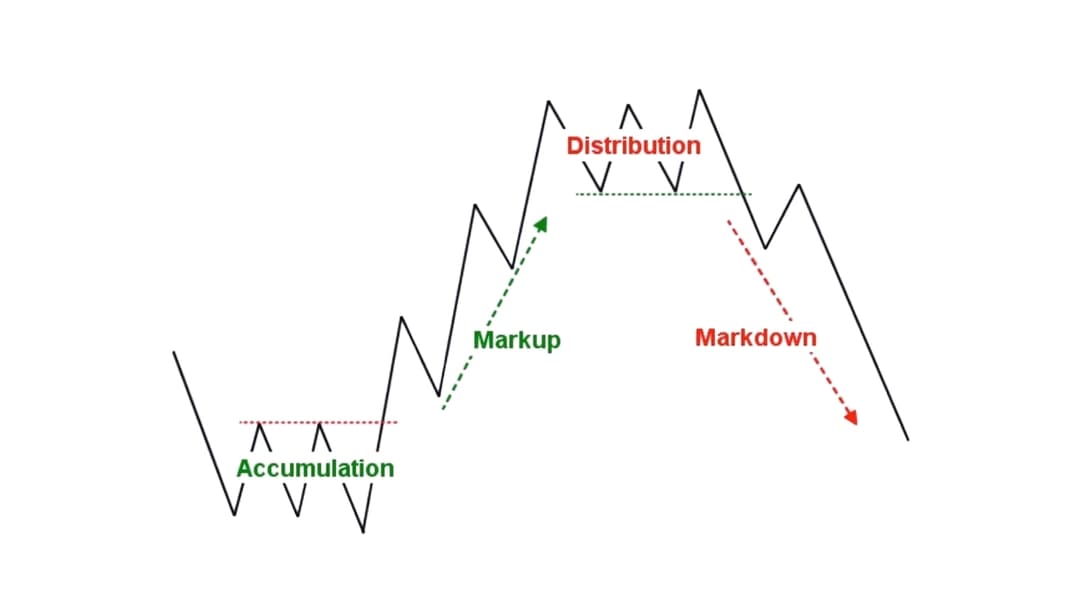
When the index tilts toward extreme greed, it usually signals that optimism has run hot and risk-taking has become aggressive. That typically lines up with the later stages of the markup phase or the early distribution period. Flip it the other way, and extreme fear readings tend to show up during the markdown phase or the early accumulation stage, when prices are low, sentiment is beaten down, and real value is quietly accumulating.
During the markup phase, greed tends to dominate. Rising prices and positive headlines pull more participants into the market, many of them afraid of missing out on gains. That herding behavior pushes valuations higher, sometimes well past what the underlying businesses can realistically support.
As the market approaches its peak, the mood begins to shift in subtle ways. Volatility picks up and uncertainty creeps in, marking the beginning of the distribution phase. Behind the scenes, institutional investors are already reducing exposure.
Once the selling accelerates and bad news starts dominating headlines, fear takes hold and the markdown phase is underway, with many investors rushing for the exits at exactly the wrong moment.
Behavioral finance research sheds a lot of light on why this keeps happening. Overconfidence leads investors to believe they can time the market perfectly, especially during strong bull runs, and that conviction often pushes them into excessive leverage or concentrated bets. Herd behavior amplifies everything, as people follow the crowd without doing their own analysis, inflating prices to levels that can’t last.
On the way down, loss aversion kicks in hard. The psychological pain of a loss hits roughly twice as hard as the pleasure of an equivalent gain, which is why investors often sell too quickly, locking in losses and missing the recovery that follows.
Recognizing these patterns in yourself is just as valuable as recognizing them in the market. When sentiment looks detached from fundamentals, that’s your signal to either take some chips off the table or start building a shopping list. Understanding when to act and when to wait is one of the most powerful skills you can develop as an investor.
This kind of emotional awareness won’t guarantee perfect timing, but it will stop you from making the most expensive mistakes. And over the full length of a market cycle, that discipline is what separates investors who build real wealth from those who just ride the wave up and crash back down.
How Economic Indicators Influence Stock Market Cycles
If investor sentiment tells you what the crowd is feeling, economic indicators tell you what’s actually happening under the hood. Tracking these data points gives you a clearer read on where the market sits within the cycle and helps you make more confident decisions about when to lean in and when to hold back.
GDP Growth
GDP growth is one of the most direct gauges of economic momentum. During the markup phase, GDP typically accelerates as consumer spending increases, businesses invest more, and the broader economy expands. That growth feeds into higher corporate earnings, which in turn drives stock prices higher.
But as the distribution phase takes hold, GDP growth often starts to lose momentum, a signal that the economy may be approaching its peak. And when GDP turns negative during the markdown phase, stock prices usually follow, reflecting the deterioration in business conditions and earnings across the market.
Interest Rates
Interest rates set by central banks are another lever that shapes the cycle. Low rates during the accumulation and markup phases make borrowing cheaper for businesses and consumers alike, which fuels spending, investment, and ultimately corporate profits. That cheap money environment tends to push equity prices higher.
But when the economy overheats, central banks raise rates to cool inflation down. Higher borrowing costs squeeze consumer spending, weigh on business investment, and compress profit margins. That combination often tips the market into the distribution phase, and if rates stay elevated long enough, it can accelerate the move into markdown territory.
Inflation
Inflation adds another layer of complexity. Moderate inflation is generally a sign of a healthy, growing economy, and it tends to support rising stock prices. But when inflation climbs too fast, it erodes purchasing power and drives up costs for businesses, cutting into the earnings that investors are ultimately betting on.
During the markup phase, inflation tends to edge higher as economic activity picks up. If it gets out of hand, central banks step in with rate hikes, which can be the catalyst that tips a hot market into distribution. On the other side of the cycle, inflation typically cools during the markdown phase, which eventually gives central banks room to cut rates and set the stage for the next accumulation period.
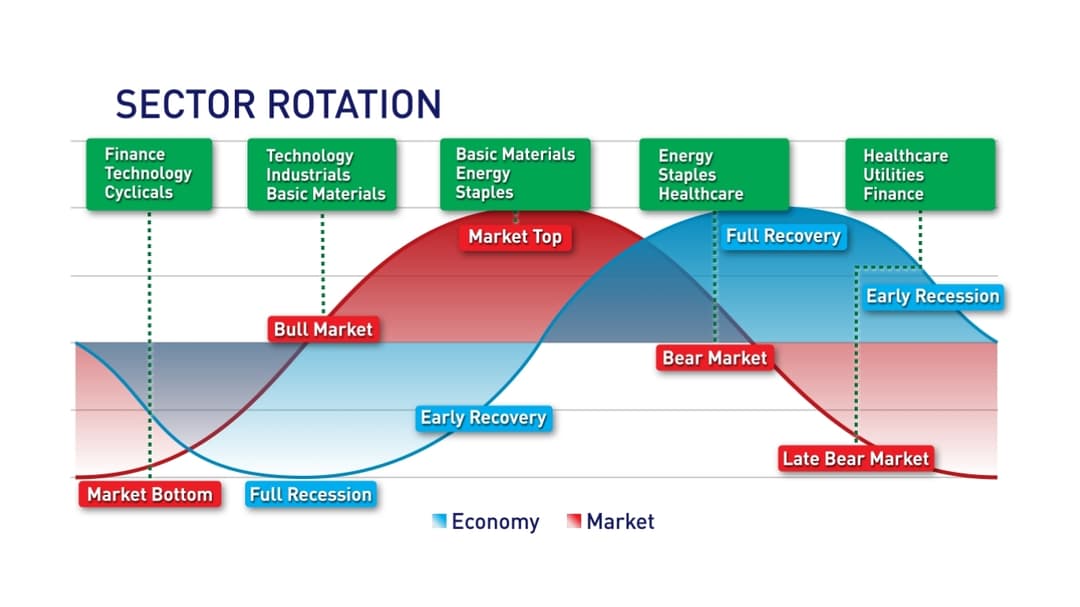
Strategies To Benefit From Stock Market Cycles
Knowing what cycle phases look like is only half the equation. The real value comes from adjusting your strategy to match where you are in the cycle. Each phase calls for a different approach, and the investors who get this right consistently outperform those who treat every market environment the same way.
Accumulation Phase Strategies
The accumulation phase is uncomfortable by design. Sentiment is low, valuations are depressed, and the market narrative is still dominated by fear. But that’s precisely what makes it such a powerful entry point for investors with patience and conviction.
Your focus during this phase should be on building positions in fundamentally strong companies that have been oversold alongside everything else. Look for businesses with clean balance sheets, consistent earnings power, and durable competitive advantages. Historically, sectors like technology, industrials, and consumer discretionary have staged the strongest recoveries coming out of downturns.
Diversification matters more here than at any other stage. Spreading your exposure across equities, bonds, and alternative assets helps protect against further downside while keeping you positioned for the recovery that typically follows. Don’t try to call the exact bottom.
Build in gradually and let the cycle do the work.
Markup Phase Strategies
The markup phase is where patient positioning from the accumulation stage starts to pay off. Confidence is building, prices are moving up, and capital appreciation opportunities become more visible. Growth-oriented stocks tend to lead during this phase, especially in cyclical sectors like energy, materials, and financials, which benefit directly from accelerating economic activity.
That said, the temptation to chase returns aggressively is real and worth resisting. Maintaining portfolio discipline and avoiding over-concentration in any single sector or asset class is what separates investors who ride the full cycle profitably from those who get caught overexposed when conditions start to shift. Capture the upside, but keep your risk management sharp.
Distribution Phase Strategies
By the time you’re in the distribution phase, valuations are elevated and market sentiment has turned euphoric. This is when experienced investors start quietly rotating out of their highest-flying positions and moving toward more defensive ground. If the crowd is most excited about the market right now, that’s usually your signal to be thinking about the exit.
Reducing exposure to overvalued assets and shifting toward traditionally resilient sectors like healthcare, utilities, and consumer staples can cushion the blow when volatility picks up. Building up liquidity through fixed-income instruments or cash reserves also gives you dry powder to deploy when the markdown phase eventually opens up better entry points.
Markdown Phase Strategies
The markdown phase is where most investors make their biggest mistakes. Prices are falling, headlines are grim, and the instinct is to sell everything and wait for the storm to pass. But for long-term investors with the right mindset, this phase is packed with opportunity.
The key is focusing on high-quality businesses that have been dragged down by broad market selling rather than any real deterioration in their fundamentals.
Dollar-cost averaging is one of the most effective tools you have during this phase. By investing a fixed amount at regular intervals, you naturally buy more shares when prices are low and fewer when they recover, smoothing out your average cost over time. Staying emotionally steady and resisting the urge to react to every negative headline is just as important as the mechanics of the strategy itself.
History is on your side here. Markets have recovered from every downturn on record, often reaching new highs within a few years of the bottom. The investors who come out ahead are the ones who stayed patient, kept their eyes on the long term, and used the markdown phase to accumulate positions they’ll still be holding when the next markup phase arrives.
For a broader look at how downturns create real asset opportunities, exploring recession-era investment strategies across multiple asset classes is well worth your time. And if you want to see how live market data and cycle signals interact in real time, keeping a close eye on reliable financial intelligence is one habit that pays for itself many times over.
We last reviewed this analysis in May 2026.


Alex Tzoulis
Alex Tzoulis is Co-Owner and Markets Analyst at The Luxury Playbook, specializing in equities, crypto, forex, and global financial markets. His work focuses on analyzing macroeconomic trends, geopolitical developments, and monetary policy, translating them into actionable insights across both traditional and digital asset classes. He leads the platform's financial market coverage, providing structured analysis across stock market investing, trading strategies, and cryptocurrency markets. His expertise strengthens the publication's authority in financial markets and capital allocation, bridging traditional finance with emerging digital investment ecosystems.