The wines that make it into a serious wine cellar do so on the assumption that nothing goes wrong with them. The storage holds, the corks stay sealed, the bottles are what the labels claim, the merchant relationships endure, and the broader market doesn't dent the value of what has been carefully assembled. Most of the time, those assumptions hold.
- A serious cellar assumes nothing goes wrong, but the failure modes that quietly erode value are more common than most collectors model.
- Temperature excursions are the single most consequential storage risk, with brief spikes capable of accelerating maturation by years.
- Cork failure on aged bottles can ruin individual cases regardless of broader cellar conditions, particularly for pre-1980 Bordeaux.
- Counterfeit bottles in the secondary market remain a real risk, with Rudy Kurniawan-era fraud still surfacing at auction.
- Merchant relationships matter, and a collapsed merchant can take months of allocation history with them at the worst moment.
- Broader market drawdowns, like the post-2022 Burgundy correction, can leave concentrated positions structurally underwater for years.
- Who is this for?
- Cellar owners trying to assess and harden their downside risk, and new collectors building structural positions for the first time.
- What is happening?
- We work through the structural failure modes that can erode a serious wine cellar, with the storage, provenance, and market risks that matter most.
- When did this emerge?
- The piece reads the contemporary market through the post-2022 Burgundy correction and the modern wave of provenance and counterfeit concerns.
- Where is this happening?
- Private cellars worldwide, bonded warehouses in the UK and Europe, the major auction houses, and the broader merchant ecosystem.
- Why does it matter?
- The cellars that hold their long-haul value are the ones built defensively around storage, provenance, and merchant diversification, not the ones with the best buying year.
But every serious wine collector eventually encounters one of them being violated, and the difference between a careful cellar and a cautionary tale usually comes down to whether the collector saw the risk coming. This is our editorial read on what actually goes wrong in serious wine cellars. We cover the failure modes, the historical case studies, and the discipline experienced collectors apply to keep them from happening.
Market shifts that catch wine collectors out
The Liv-ex 100 has had its dramatic moves over the past two decades. The 2008–2009 financial crisis took the index down sharply before recovering. The Burgundy boom from 2018 onward saw the category outpace Bordeaux for the first time in living memory, and Champagne's run since 2018 has been the most-watched move in the category.
China's pullback from First Growth Bordeaux around 2014–2015 wiped out a multi-year run-up. None of this is unique to wine, since every collecting category has its cycles. What separates the cellars that come through them is depth across producers, vintages, and regions rather than concentration in whatever is currently fashionable.
The collectors who built positions exclusively in Bordeaux First Growths between 2010 and 2014 spent the next five years wishing they had Burgundy. The collectors who chased Burgundy aggressively from 2018 onward will spend the next decade wishing they had backed something else, too.
The discipline is to build the cellar on the canon (Bordeaux, Burgundy, Champagne, the Rhône, top Italian, selective New World) and let the broader market move around the underlying quality of what is in the cellar.
Storage costs that compound
Professional storage at Octavian Vaults in the UK, Le Clos in Switzerland, Domaine Storage in Hong Kong, or Vinfolio in the U.S. typically costs $20 to $50 per case per year, depending on facility and case size. That seems modest. Across a 1,500-case cellar held for 25 years, it isn't; that is $300,000 to $750,000 in storage fees over the holding period before insurance.
The numbers are not the problem on their own. The problem is collectors building positions without modelling the cost. A bottle bought for $200 with $500 in lifetime storage and insurance attached needs to clear $700 just to break even at sale.
The discipline is to weight the cellar toward bottles whose secondary-market trajectory justifies the storage drag, and to drink the rest while it is at peak rather than holding indefinitely. Wine Spectator and Decanter both regularly publish drink-window updates that make this calculation easier for collectors with mature cellars.
Counterfeits and the Kurniawan-shaped hole in the market
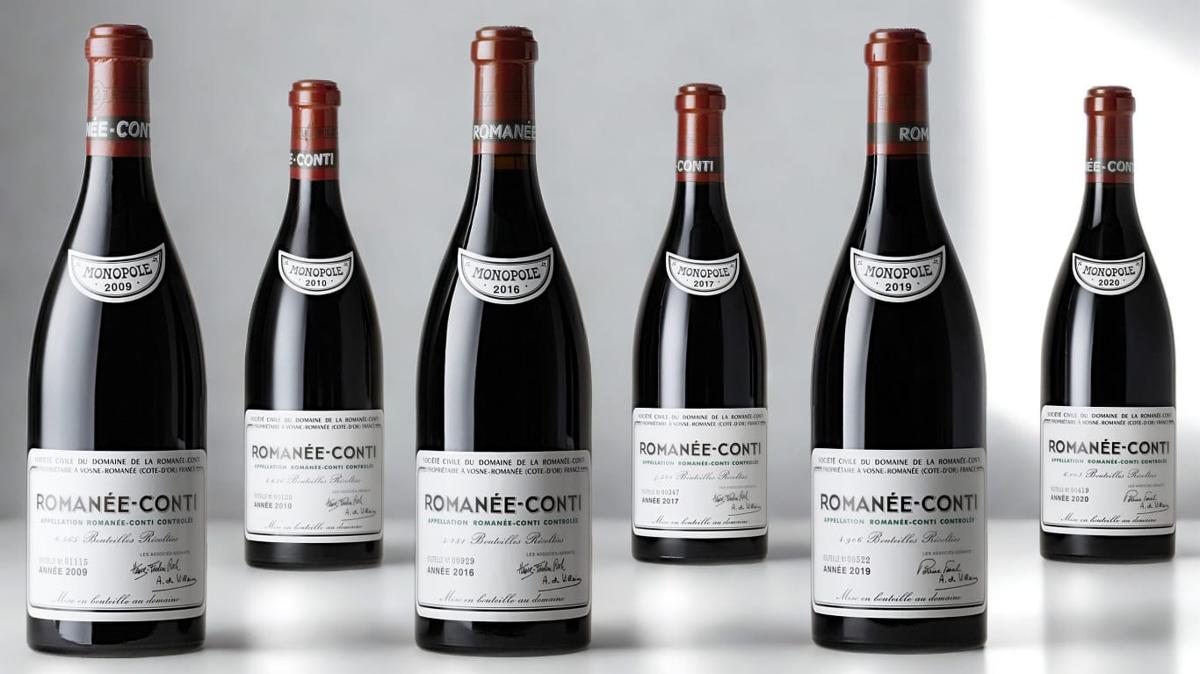
The most-faked wines in the world are 1945 Mouton, the great older Pétrus and Le Pin vintages, and any pre-1980 DRC. The 2008 Rudy Kurniawan case, the conviction of the Indonesian collector who counterfeited an estimated $35 million in rare Burgundy and Bordeaux, restructured the entire authentication discipline of the fine-wine market. Bottles without verifiable provenance increasingly struggle to clear at auction, and bottles with full chain-of-custody documentation routinely command 15–25% premiums at Sotheby's Wine, Christie's Wine, Acker and Zachys.
The practical defences are well-established. Buy from reputable merchants and major auction houses with established authentication programmes (Christie's Wine, Sotheby's Wine, Acker, Hart Davis Hart, Zachys, Bordeaux Index, Berry Bros & Rudd). Verify capsules, fill levels, and label consistency on any bottle from a sensitive vintage.
For high-value bottles, request the merchant or auction house's full provenance documentation before bidding. The auction houses themselves now employ in-house authentication teams; sticking to their offerings rather than peer-to-peer transactions for the most-faked wines is the practical approach experienced collectors take.
Limited liquidity at the top of the wine market
Fine wine is famously slow to sell. A bottle put up at a major auction takes three to six months to reach a sale, with another month to clear settlement. Private treaty sales through merchants can move faster but rarely realise the same prices as competitive bidding.
The collectors who needed to liquidate quickly during the 2020 pandemic disruption discovered the practical limit on the category. Bottles sold in distressed conditions cleared 20–40% below auction comparables, a point the Wine Advocate's market column noted at the time.
The discipline here is to build the cellar with the assumption that the wines won't be liquidated quickly. The category rewards patience, and collectors who treat their cellar as a 10-to-25-year holding window aren't troubled by the slow-sale problem. Collectors who build positions assuming they can exit in 90 days will eventually be disappointed.
Storage failures that destroy value
The single most preventable failure mode in wine collecting is storage. Temperature swings above and below the 13°C target compromise corks. Humidity outside the 60–80% band damages capsules and labels, UV exposure breaks down compounds in the wine, and vibration disturbs sediment and interferes with maturation.
Heat damage is the most common failure. A wine that has spent any meaningful time above 25°C is functionally compromised, often in ways that aren't visible from the outside but become obvious on opening.
The case studies are well-documented in the trade. Cellars left in summer-heated garages, professional storage facilities that lost climate control during equipment failures, and in-transit damage from cargo holds that exceeded their stated temperature ranges. The financial damage is substantial; a single damaged case of 1990 La Tâche from Domaine de la Romanée-Conti represents tens of thousands of dollars of value at stake, and the defence is professional storage with audit trails, climate alarms, and insurance coverage that explicitly addresses heat damage and equipment failure.
Insurance gaps that surface only after a claim
Standard homeowner's insurance does not adequately cover serious wine cellars. The schedule limits, valuation methodologies, and exclusions for "consumable" goods leave most collectors materially underinsured. Specialist wine insurance, through brokers like Berkley Asset Protection, AXA Art, or Chubb's collectibles coverage, typically runs 0.
4–0. 7% of the appraised cellar value annually, with full replacement-value coverage and explicit treatment of storage facilities, transit, and authentication disputes.
The defence is to get the cellar professionally appraised every three to five years (auction houses and specialist firms like Wineappraiser provide this), keep a digital cellar inventory with photographs and provenance documentation, and ensure the insurance policy explicitly covers professional storage facility, in-transit, and authentication-failure scenarios.
The expertise gap
The hardest risk in wine collecting to defend against is the one that comes from inadequate knowledge. Buying the wrong producer in a strong vintage, paying retail at the wrong moment, missing the drink window on bottles that needed to be opened five years ago, holding a position in a category whose secondary market has quietly stalled.
The defence is the slowest of all: tasting widely, reading the trade press (Wine Spectator, Decanter, the Wine Advocate, Vinous, The World of Fine Wine), building relationships with merchants whose track records can be verified, and cellaring conservatively in the early years.
The collectors who do best are those who stay close to the trade for years before building the cellar in earnest. The ones who get hurt are the ones who try to compress that learning curve.
Cellars that didn't come through it
The most-publicised failures in fine wine collecting tend to involve fraud at the source. The Hardy Rodenstock affair in the 1980s and 1990s, the counterfeit Thomas Jefferson bottles sold to several major collectors, preceded the Kurniawan case and remains a cautionary tale about authentication discipline. The 2009 collapse of Premium Cru Wines, a U.S. wine merchant that took customer pre-orders against wines it didn't have, cost collectors an estimated $45 million.
The smaller failures are more common and less reported. Storage facility climate failures during summer heat events. Cellars purchased on inheritance and discovered to be loosely sourced, with provenance gaps that destroy auction value.
Insurance claims denied because the policy didn't cover the specific failure mode that occurred. Professional appraisals that revealed undocumented bottles to be worth a fraction of the assumed value.
What this means for collectors
The pattern is consistent across the serious collectors we have watched build cellars over the long run. Provenance discipline: buying through known merchants and major auction houses, demanding documentation, walking away from any bottle whose chain of custody can't be verified. Storage discipline: professional facilities with climate alarms, full insurance coverage, audit trails. Cellar diversity: depth across regions, producers, and vintages rather than concentration in whatever is currently fashionable.
Patience: building positions on a 10-to-25-year window, drinking what is ready rather than holding indefinitely, selling at major auctions rather than in distressed conditions. Knowledge: staying close to the trade press, the major auctions, and the merchant network that defines the category. The cellars that compound best across decades are not the ones that took the most aggressive positions on the hot vintage; they are the ones that defended against what could go wrong, built quietly on the canon, drank the wines that asked to be opened, and let the rest mature on a timeline measured in decades rather than years. We last reviewed this analysis in May 2026.