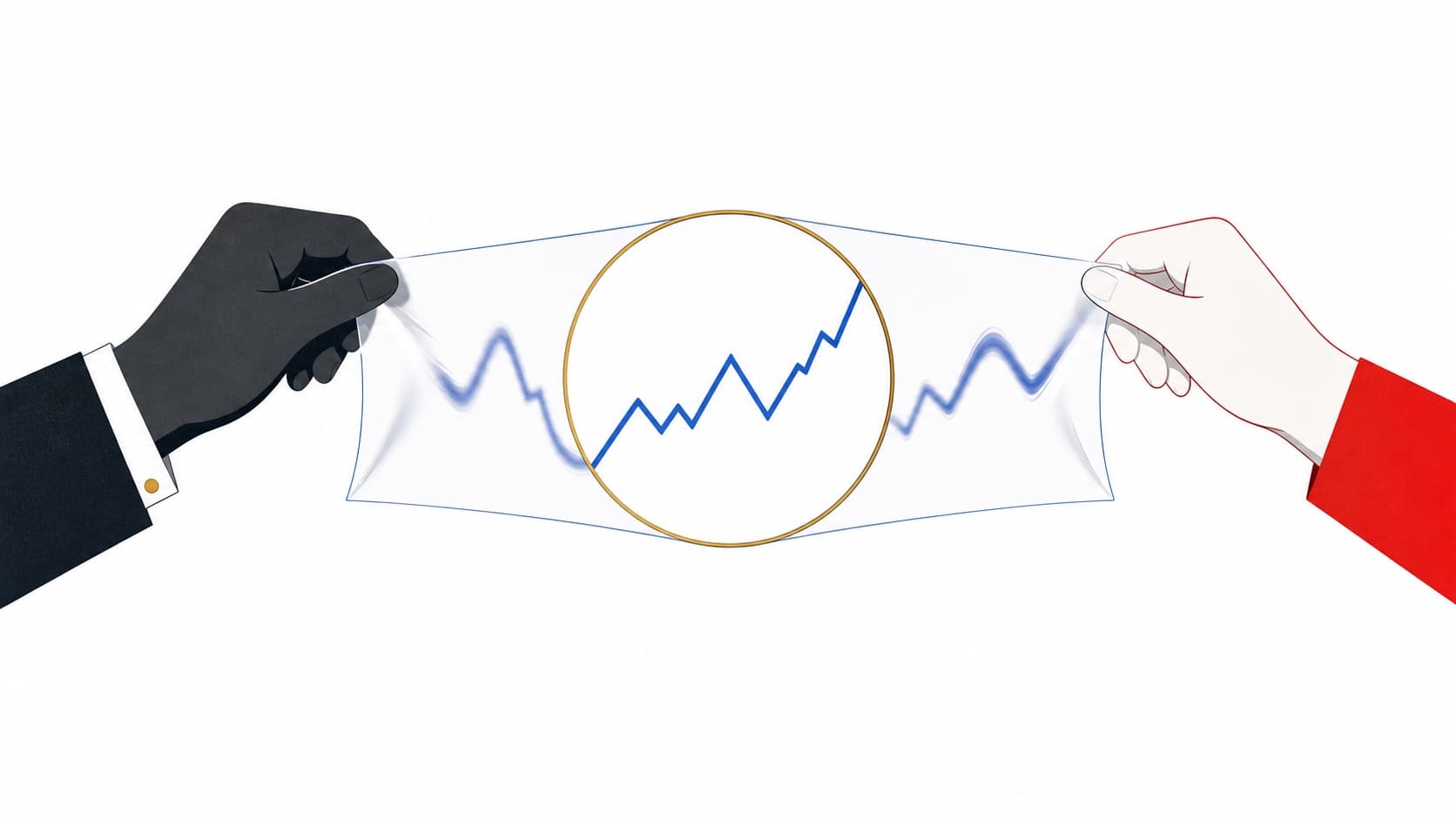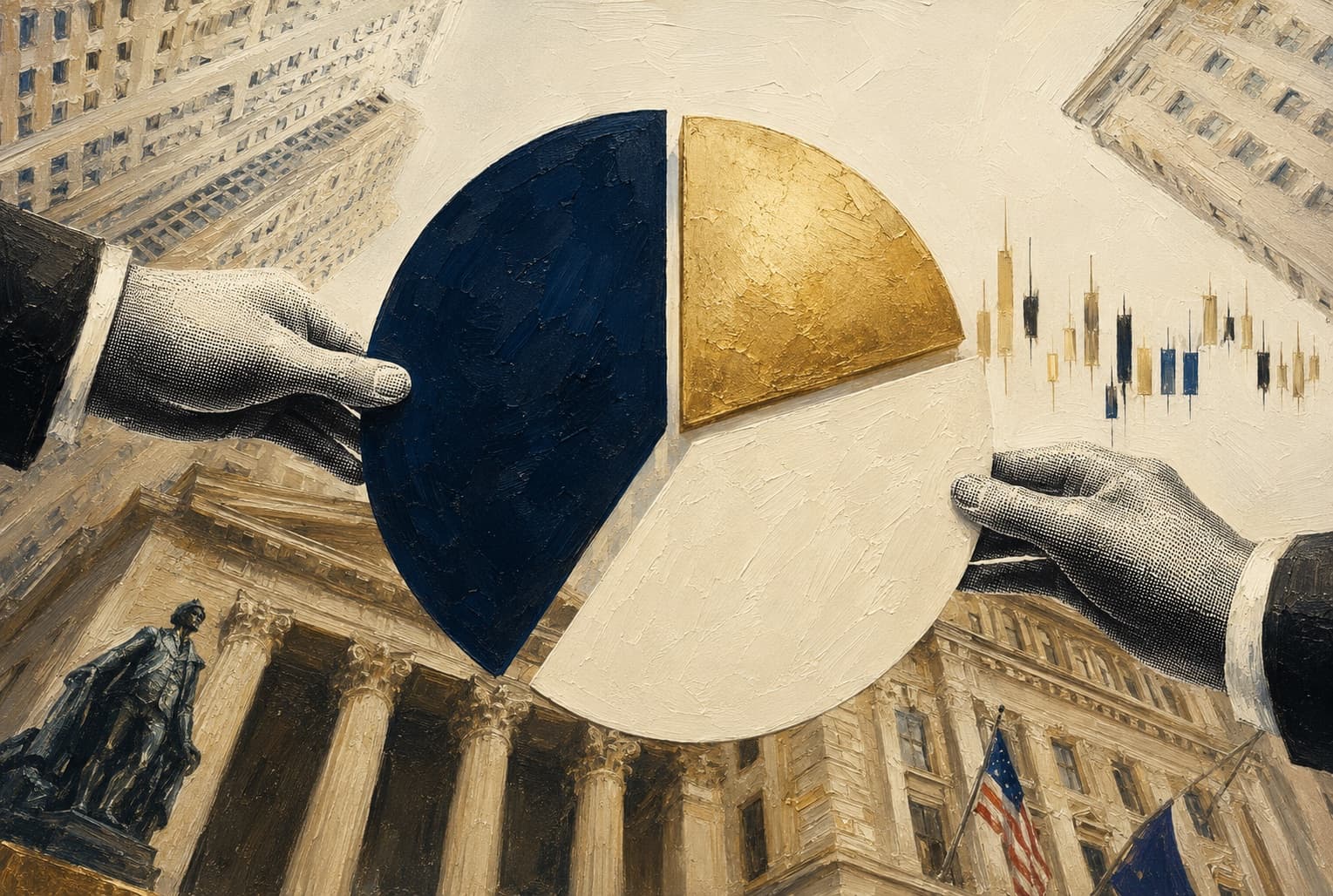
A stock buyback, or share repurchase, happens when a company buys its own shares back from the open market. That move shrinks the total number of shares available, which can lift shareholder value and signal real financial confidence from the inside.
Stock buybacks serve several purposes at once. They can push Earnings Per Share (EPS) higher, put excess capital to work more efficiently, and hand money back to investors in a tax-smart way. Tech giants like Alphabet, Meta Platforms, and Microsoft run these programs regularly, and that tells you everything about how central buybacks have become to modern corporate strategy, especially when business is booming.
- A stock buyback occurs when a company repurchases its own shares in the open market or via tender offer, reducing the share count outstanding.
- Buybacks return capital to shareholders by lifting earnings per share, which mechanically supports both reported metrics and share-price valuations.
- Companies typically pursue buybacks when management believes shares are undervalued, when free cash flow exceeds reinvestment needs or to offset dilution from stock-based compensation.
- Critics argue that buybacks can crowd out productive capital expenditure and research spending, particularly when funded through debt issuance at high prices.
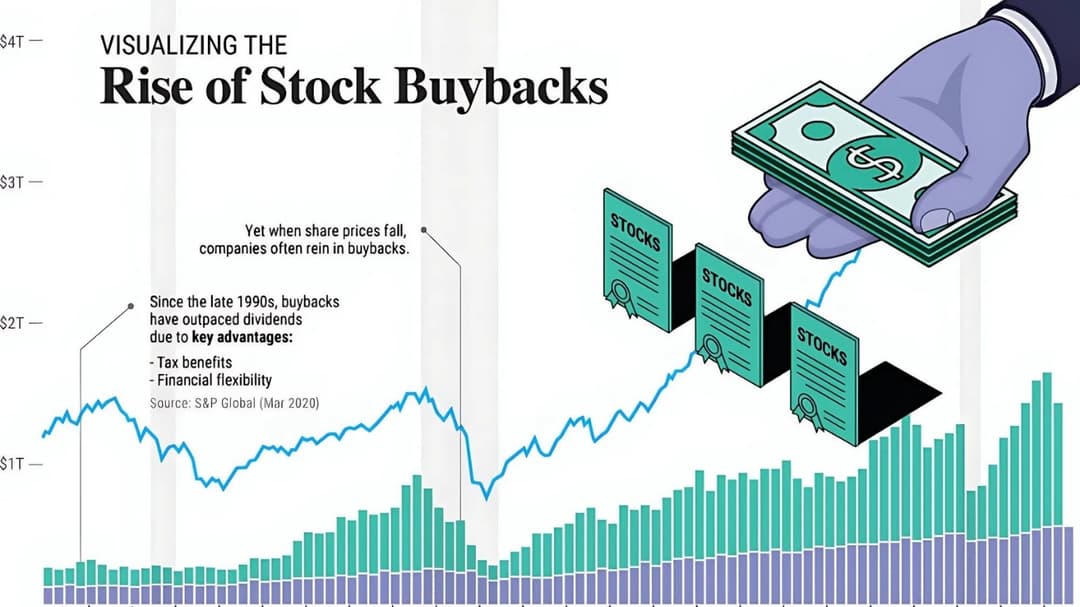
- US companies in the S&P 500 have spent record amounts on buybacks across recent years, often making them the largest single source of equity demand in the market.
- For investors, the quality of a buyback depends on price discipline, balance-sheet strength and whether the cash could have generated higher returns elsewhere.
- Who is this for?
- Equity investors, corporate finance professionals and policy observers who want to understand stock buybacks, why companies pursue them and how to evaluate whether they create or destroy shareholder value.
- What is happening?
- A comprehensive overview of stock buybacks, covering the mechanics, the strategic motivations, the criticisms levelled against them and how investors should assess buyback announcements at individual company level.
- When did this emerge?
- Particularly relevant during earnings season when buyback authorisations are announced and during periods of strong corporate cash generation when capital allocation choices become especially visible to investors.
- Where is this happening?
- Most prominent in US equity markets where buyback culture is deeply entrenched, with growing activity in European and Asian markets as governance practices converge over recent years.
- Why does it matter?
- Buybacks have become the dominant form of shareholder return in many markets, making the ability to assess them critical for understanding long-term equity returns and corporate capital allocation discipline.
What Is A Stock Buyback?
Stock buybacks are documented at the source. The U.S. Securities and Exchange Commission hosts the filings every public company submits when it authorises a buyback program, and the disclosures cover price ranges, share counts, and timing windows.
The corporate-finance research desks track the broader pattern. Goldman Sachs publishes its long-running buyback-activity index, and S&P Global tracks aggregate S&P 500 buyback spend each quarter. The Financial Times covers the political economy of corporate repurchases.
A stock buyback, also called a share repurchase, is simply when a company goes into the market and buys its own shares. Fewer shares in circulation means each remaining share claims a larger slice of the company’s earnings, which tends to lift the Earnings Per Share (EPS) and can push the stock price higher.
Buybacks sit at the heart of how major companies think about capital allocation. To put the scale in perspective, large U.S. businesses have poured more than $3.9 trillion into buybacks over just five years. The repurchased shares are typically cancelled or held in treasury, cutting the share count and giving EPS a meaningful upward nudge.
Companies generally repurchase their own shares through two main approaches, and the method they choose shapes the timing, cost, and market impact of the whole program.
- In the Tender Offer Method, a company proposes to buy shares back at above market rates. This approach usually targets a significant number of shares quickly.
- The Open Market Repurchase Method sees a company gradually buying back shares. Wells Fargo, for example, announced a $30 billion program, indicating a sustained strategy.
Both approaches give companies real control over how they manage capital and keep their balance sheets liquid without locking themselves into fixed obligations.
Reasons Companies Undertake Stock Buybacks
For deeper context, the breakdown in how buyback activity should factor into your stock-analysis framework is worth reading alongside this analysis.
Buybacks are deliberate, strategic moves. Companies use them to sharpen shareholder value, deploy capital more intelligently, and sometimes to protect themselves from unwanted outside interference. Each motivation carries its own logic, and understanding them helps you read corporate announcements with a sharper eye.
1. Enhancing Shareholder Value
Boosting shareholder value sits at the top of the list for why companies buy back their own stock. When the share count drops, your slice of the company’s earnings gets bigger. That higher EPS is a number investors watch closely, and a rising EPS tends to attract more buying interest in the stock.
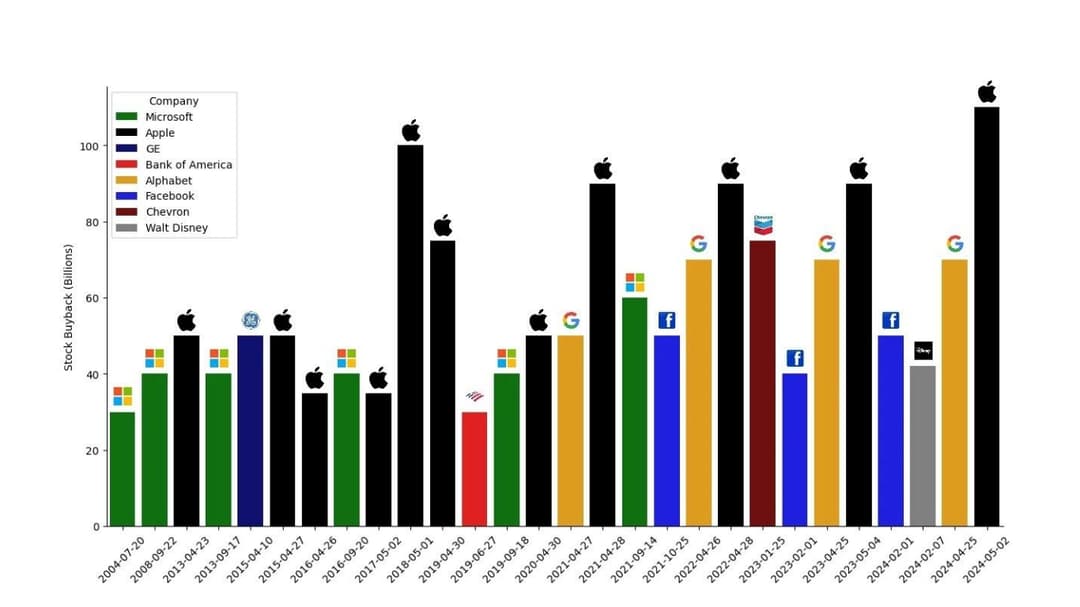
Understanding how companies return value to shareholders is essential if you want to invest with real clarity. Apple has been one of the most aggressive players in this space, spending over $467 billion on buybacks since 2012. That sustained program has done serious work lifting Apple’s EPS and keeping the stock compelling for both long-term holders and new buyers.
Salesforce has followed a similar playbook, using buybacks to keep its financial metrics tight and investor sentiment positive.
2. Optimizing Capital Allocation
When a company is sitting on surplus cash, the question becomes what to do with it. Buybacks are one of the sharpest answers available. Rather than letting cash sit idle or paying it all out as dividends, a company can repurchase its own shares, which tends to lift both return on assets (ROA) and return on equity (ROE) in a clean, efficient way.
Chevron made this move in early 2023, buying back 21.7% of its shares for $75 billion. That program returned capital to shareholders while sending a clear message about Chevron’s confidence in its own financial future. Buybacks also give companies more flexibility than dividends, since they can be scaled up or pulled back depending on conditions.
That flexibility became even more attractive after the Inflation Reduction Act of 2022 introduced a 1% excise tax on share repurchases, making buybacks a more appealing alternative to raising dividend payouts.
3. Defending Against Takeover Attempts
Buybacks can quietly work as a defence against hostile takeovers. When fewer shares float on the open market, any outside entity trying to build a controlling stake faces a harder and more expensive path. For management teams navigating volatile markets or periods of falling share prices, that protection matters enormously.
Applied Materials and United Parcel Service (UPS) have both used buybacks with this kind of defensive thinking in mind. By reducing the shares available to potential acquirers, they keep strategic control firmly in the hands of existing management and the board, shielding their long-term plans from outside disruption during uncertain times.
How Stock Buybacks Work
Buybacks don’t happen in a single, uniform way. Companies choose their repurchase method carefully, because the approach shapes how quickly the share count drops, what price they pay, and how the market reacts. The two main routes are the tender offer and the open market repurchase, and each comes with its own trade-offs for both the company and its shareholders.
Tender Offer Method
In a tender offer, the company announces it will buy back a set number of shares at a price above the current market rate. That premium is the incentive for shareholders to sell. So if shares are trading at $100, the company might offer $110.
Shareholders who take the deal lock in an immediate gain above what the market is offering.
The advantage for the company is speed. A tender offer can pull a large block of shares off the market quickly, delivering a fast reduction in the outstanding share count. That swift drop can push the value of remaining shares up sharply. Reuters has tracked how tender offers move markets in real time, and the effects are often immediate.
Verizon Communications pulled this off well in 2023, buying back roughly 500 million shares through a tender offer, which gave its EPS and stock price a clear lift.
Open Market Repurchase Method
The open market repurchase takes a slower, steadier approach. The company buys its shares at the going market price over an extended period, stepping in when conditions look favourable, typically when the share price dips. No premium is paid, but the gradual reduction in share count adds up over time.
As the share count falls, EPS climbs, and shareholder value builds quietly in the background. Apple has used this method to great effect, announcing a $110 billion buyback plan for 2024. The open market approach lets the company buy strategically, picking its moments to maximise impact while keeping full flexibility over its capital allocation decisions.
Funding Stock Buybacks
Deciding how to pay for a buyback is just as important as deciding to do one. Companies can draw on existing cash reserves or take on debt, and each path carries a different risk profile that deserves careful thought before the program launches.
- Using Cash Reserves: This is the safer option as it doesn’t increase the company’s debt levels. However, it may reduce the cash available for other strategic investments or operations.
- Borrowing: Taking on debt to fund buybacks can increase a company’s leverage, potentially leading to higher returns on equity. However, it also raises the company’s financial risk, particularly if the borrowed funds do not generate sufficient returns to cover the cost of the debt.
Banco Santander offered a good example of how to balance this carefully, funding its EUR 1.459 billion buyback program while keeping its dividend commitments intact. That kind of discipline, aligning buyback financing with broader financial goals, is what separates programs that strengthen a company from ones that quietly destabilise it.
Comparative Analysis of Buyback Methods
| Method | Characteristics | Impact on Shareholders |
|---|---|---|
| Tender Offer | Public offer at a premium price Short-term execution Targets substantial share volumes | Immediate financial gain from premium price Potential rapid increase in share value Higher immediate shareholder returns |
| Open Market Repurchase | Gradual purchase over time Leverage favorable market conditions Less impact on market prices | Steady increase in EPS Long-term enhancement of share value Consistent boost to shareholder returns |
Impact of Stock Buybacks on Company Metrics
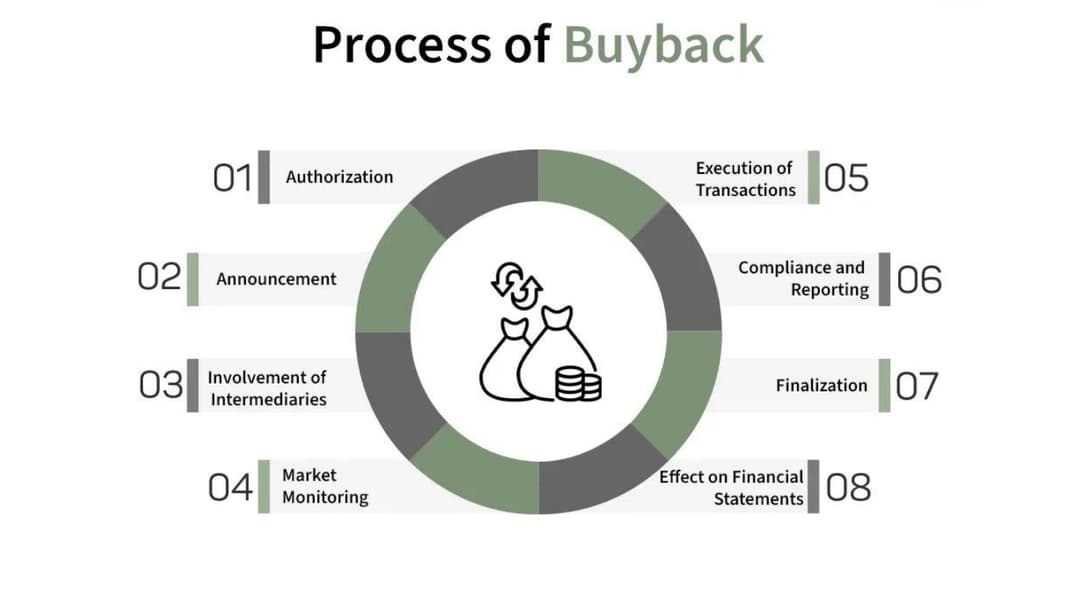
When a company buys back shares, the effects ripple through its financial statements in ways that matter to you as an investor. The most visible change hits earnings per share (EPS), but the impact doesn’t stop there. Return on assets (ROA) and return on equity (ROE) also shift, and together these numbers tell a richer story about what the buyback is actually doing for the business.
How Buybacks Affect EPS
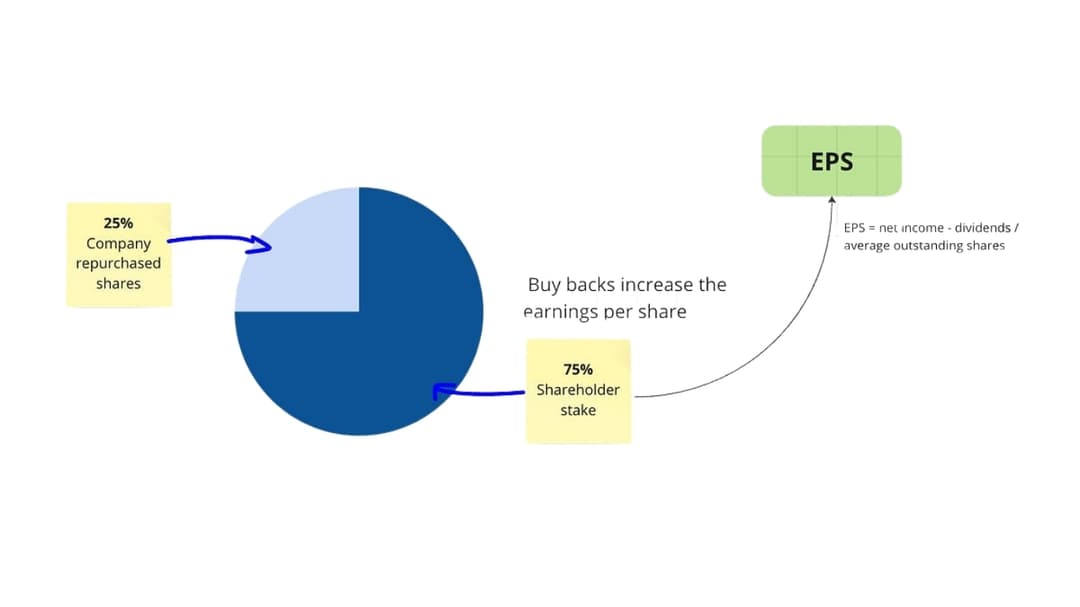
The math behind buybacks and EPS is straightforward, and that simplicity is part of what makes them so appealing to management teams. When shares get repurchased, the company’s net earnings get divided across a smaller pool of shares. Take a company earning $10 million a year with 1 million shares outstanding.
Buy back 100,000 shares and you drop to 900,000. EPS climbs from $10 to roughly $11.11. That jump in per-share profitability signals strength to the market, and share prices tend to follow.
The real-world data backs this up. The S&P 500 Buyback Index, which tracks the 100 companies with the highest buyback ratios, has outperformed standard market benchmarks by a wide margin. Bloomberg’s market data shows that since January 1994, this index has delivered an average annual return of 13.29%. Compare that to the S&P 500 High Dividend Index at 10.31% and the broader S&P 500 at 8.96% annually, and the edge that active buyback programs can generate becomes very clear.
Beyond EPS, buybacks also move the needle on ROA and ROE. Companies that repurchase more than 5% of their shares within a single year, like those tracked in the Invesco Buyback Achievers Portfolio (PKW) ETF, typically see real improvement in both metrics. ROA and ROE tell you how well a company is converting its assets and equity into actual profit, and when those numbers rise, both equity and debt investors take notice.
The Role of Financing in Buybacks
How a buyback gets funded changes everything about its impact on EPS. Cash-funded repurchases tend to produce clean, positive results. If a company spends $14 million buying back shares at $14 each, EPS can rise to $0.75 without any offsetting cost.
But debt-funded buybacks get more complicated fast. The interest expense on new borrowing can eat into the EPS gain, especially when the after-tax cost of that debt runs higher than the earnings yield on the shares being repurchased.
Run the numbers in a scenario where the after-tax cost of debt sits at 6% but the earnings yield is only 3.85%, and EPS could actually fall to $0.33 after the buyback closes. That outcome flips the whole narrative. Buybacks can absolutely create value, but the financing decision is where the deal either works or quietly falls apart.
Timing of Buybacks
Timing a buyback well is harder than it sounds, and the data reflects that. Around 36% of companies manage to time their repurchases effectively, buying back shares when they are genuinely undervalued and capturing real gains for shareholders. But studies consistently show that heavy buyback activity doesn’t automatically translate into strong total return to shareholders (TRS).
The lesson is that buybacks work best when they are part of a broader, well-considered financial strategy rather than a reflexive response to a cash surplus.
Criticisms and Risks of Stock Buybacks
Buybacks aren’t universally celebrated, and for good reason. The same tool that boosts EPS and rewards shareholders can also mask deeper problems, inflate executive pay, and leave companies dangerously exposed when conditions turn. Before you read a buyback announcement as purely good news, it pays to understand the other side of the argument.
Potential for Managerial Misconduct
One of the sharpest criticisms aimed at buybacks is the risk that executives use them to game their own compensation. When pay is tied to metrics like EPS, and a buyback mechanically lifts EPS without any improvement in underlying business performance, the incentive to misuse the tool is obvious. Short-term stock price gains can flow straight into executive bonuses, even as the company’s long-term prospects quietly erode.
According to Institutional Shareholder Services (ISS), over 30% of executive compensation plans were tied to EPS in 2019. That linkage is a red flag worth watching. When buybacks serve the compensation plan more than the shareholders, trust between investors and management breaks down, and reputational damage can follow for years.
Impact on Corporate Debt Levels
Debt-funded buybacks carry real risk, and that risk has grown since the Inflation Reduction Act introduced a 1% federal excise tax on share buybacks in 2023. Some companies have responded by leaning even harder on borrowed money to fund their programs, which pushes debt levels higher and puts cash flows under pressure at exactly the wrong moments.
As debt piles up, credit rating agencies pay attention. Downgrades reduce access to capital markets and make future financing more expensive, which is a painful position to be in when a recession hits or a major investment opportunity appears. Asking the right questions about a company’s balance sheet before the buyback announcement fades from memory is exactly the kind of discipline that separates sharp investors from the crowd. Some companies in recent years have chosen buybacks over balance sheet health, and when conditions tightened, that trade-off became very visible.
To understand how buyback spending stacks up against other capital priorities, it helps to look at how buyback expenditures and dividend payouts have tracked alongside each other across major companies.
| Year | Buyback Expenditure (USD Billion) | Dividends Paid (USD Billion) |
|---|---|---|
| 2019 | 1,200 | 1,100 |
| 2023 | 980 | 880 |
| 2024 | 1,050 | 950 |
What that comparison often reveals is that buyback spending can run ahead of dividend payouts in ways that raise real questions about where management’s priorities actually sit and whether the financial strategy is built for the long run.
Negative Perceptions Among Investors
Not every investor cheers when a buyback lands in their inbox. For some, a heavy reliance on repurchases signals that management can’t find better ways to put capital to work. If growth opportunities were plentiful, wouldn’t the company be investing in them?
When buyback enthusiasm is paired with falling dividend yields, that concern only deepens. The psychological biases that shape how investors react to corporate announcements play a real role here, and being aware of them gives you an edge.
Apple’s $110 billion buyback plan for 2024 sparked exactly this kind of debate. Some investors and analysts questioned whether the company was prioritising near-term stock price support over the kind of long-term investments that actually build durable value. That scrutiny doesn’t disappear quickly.
It shapes analyst sentiment, feeds into market narrative, and can create headwinds for the stock even when the underlying business is doing well. The Financial Times has covered the evolving debate around buyback strategy in depth, and it’s a conversation worth following closely.
We last reviewed this analysis in May 2026.


Alex Tzoulis
Alex Tzoulis is Co-Owner and Markets Analyst at The Luxury Playbook, specializing in equities, crypto, forex, and global financial markets. His work focuses on analyzing macroeconomic trends, geopolitical developments, and monetary policy, translating them into actionable insights across both traditional and digital asset classes. He leads the platform's financial market coverage, providing structured analysis across stock market investing, trading strategies, and cryptocurrency markets. His expertise strengthens the publication's authority in financial markets and capital allocation, bridging traditional finance with emerging digital investment ecosystems.