Modern art runs from roughly 1860 to the late 1970s, and it remains the deepest and most thoroughly studied category in the serious art market. The period covers the Impressionist tier, the post-Impressionists, the Cubist tier (Picasso, Braque, Léger, Gris), Fauvism, Surrealism, German Expressionism, the Bauhaus, the Mexican muralists, Abstract Expressionism, Pop Art, and Minimalism. Almost every major figure in the period is dead.
The canon is, for practical purposes, closed.
That closed canon is what shapes the modern art market. Supply is finite, scholarship is mature, and the buyer pool is intergenerational. The major-house Impressionist and Modern evening sales at Christie's, Sotheby's, and (selectively) Phillips remain the calendar venues, twice yearly in London and New York, and they are still the most consequential sales in the broader art market by total value moved.
- Modern art covers roughly 1860 through 1970 and remains one of the most institutionally collected segments of the global painting market.
- The movement runs from Impressionism through Post-Impressionism, Cubism, Surrealism, Bauhaus and Abstract Expressionism, with distinct schools driving distinct collecting markets.
- Canonical names including Monet, Picasso, Matisse, Mondrian, Pollock and Rothko anchor the top of the market and continue to set evening-sale benchmarks.
- Supply at the top is genuinely limited, with most great works held by museums and very few major lots coming to public sale in any single year.
- Provenance is unusually deep for modern work, with most major paintings passing through known dealer chains and well-documented institutional histories.
- For serious collectors, modern art provides the structural anchor of a credible twentieth-century programme alongside post-war and contemporary holdings.
- Who is this for?
- Modern art collectors, family offices and advisors building positions in nineteenth and twentieth-century painting at the museum-quality tier of the market.
- What is happening?
- A collector field guide to modern art, covering Impressionism through Abstract Expressionism, the canonical names, provenance research and the structural shape of the secondary market.
- When did this emerge?
- Most active around the May and November evening sales at Christie’s, Sotheby’s and Phillips in New York and London, and during the major fairs at Art Basel and Frieze.
- Where is this happening?
- Centred on the New York, London, Paris and Hong Kong salesrooms, with major institutional holdings across MoMA, the Tate, the Centre Pompidou and the Musee d’Orsay.
- Why does it matter?
- A clear field guide protects collectors from overpaying for lesser works and supports the disciplined buying that builds modern collections capable of holding value across cycles.
The structural shape of the modern art market
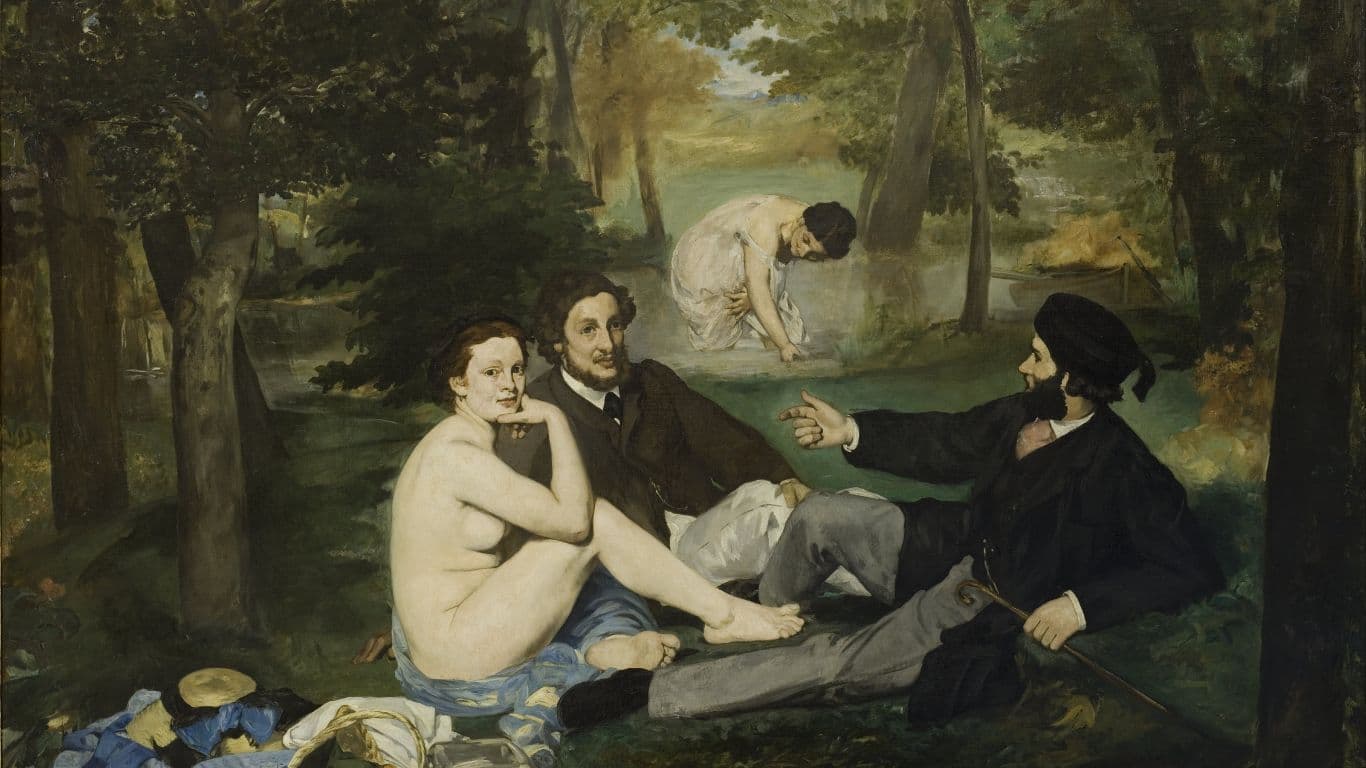
Modern art is organized by movement and by region. The Impressionists and post-Impressionists anchor the deepest tier of the market: Monet, Manet, Renoir, Degas, Pissarro, Sisley for the Impressionists; Cézanne, Van Gogh, Gauguin, Seurat, Toulouse-Lautrec, Bonnard for the post-Impressionists. Cézanne especially anchors the bridge between Impressionism and the modern century that followed.
The early twentieth century then opens out across multiple parallel lines. The Cubists (Picasso, Braque, Léger, Gris). The Fauvists (Matisse, Derain, Vlaminck).
The Surrealists (Dalí, Magritte, Miró, Ernst, Tanguy). The German Expressionist tier (Kirchner, Heckel, Schmidt-Rottluff, Nolde, Beckmann, Dix, Grosz). The Bauhaus and constructivist circle (Klee, Kandinsky, Mondrian, Albers).
The Mexican muralists (Rivera, Orozco, Siqueiros).
The post-war American period closes the modern era: Abstract Expressionism (Pollock, Rothko, de Kooning, Newman, Still, Kline, Motherwell, Frankenthaler), Pop Art (Warhol, Lichtenstein, Rosenquist, Wesselmann, Oldenburg, Johns, Rauschenberg), and Minimalism (Judd, Flavin, Stella, LeWitt, Andre, Morris).
How the modern art market actually trades
The Impressionist and Modern evening sales are the calendar anchor. Christie's runs them in May and November in New York and in February and June in London. Sotheby's runs a parallel calendar.
Phillips operates selectively in the modern segment but sits more heavily on the post-war and contemporary side.
Headline figures from the past decade frame the market. Picasso's "Les Femmes d'Alger (Version O)" made $179. 4 million at Christie's New York in May 2015.
Modigliani's "Nu couché" made $170. 4 million at Christie's New York in November 2015. Klimt's "Wasserschlangen II" made roughly $183 million in a 2013 private sale arranged by Sotheby's. These are the prices that define the top of the modern market.
Below the trophy tier, modern works price across a wide band. A solid School of Paris piece (a strong Marie Laurencin, a mid-career Léger, a smaller Vlaminck) typically prices in the high six to low seven figures. Drawings and works on paper by the same artists price meaningfully lower than their painted equivalents, often by an order of magnitude.
What makes the modern market unusually stable
Three structural features distinguish the modern market from contemporary. First, the canon is closed. No new Picassos, no new Rothkos, no new Pollocks will be painted.
Supply is what currently exists in circulation, with the museum-held majority unlikely to return to the market.
Second, the scholarship is mature. Catalogue raisonnés for most major modern artists are complete or in late-stage revision. The Picasso, Matisse, Léger, Mondrian, and Pollock catalogue raisonnés are all reference standards.
Authentication committees have either disbanded after completing their work or operate in restricted advisory roles.
Third, the buyer pool is intergenerational and broad. Modern art draws collectors from across Europe, the Americas, East Asia, and the Gulf. The Louvre Abu Dhabi, the Qatar Museums network, the M+ in Hong Kong, the Mori Art Museum, the Leeum Samsung Museum: all have meaningful modern acquisitions on their long-cycle programmes.
The advisor and dealer landscape in modern
The named modern art dealer tier is smaller than contemporary and more secondary-market focused. Acquavella in New York. Helly Nahmad in London and New York.
Marlborough. Lévy Gorvy. Van de Weghe.
These houses operate in the secondary market, often quietly, often with significant private inventory.
Many serious modern collectors operate with a long-tenure advisor in the segment. The Association of Professional Art Advisors (APAA) sets the fee-only standard; the senior modern-art advisor tier in New York and London is a small group, and the relationships are typically multi-decade.
Conservation specialists matter more in modern than in contemporary because most works are now between 50 and 150 years old. The major-house conservation departments, the museum conservation networks, and the named independent paintings conservators in New York, London, and Paris handle most of the meaningful work.
Condition, provenance, and the documentation conversation
Modern art carries documentation requirements that contemporary often does not. Provenance research goes back through the twentieth century, with particular attention to works that passed through Europe during 1933-1945. Restitution research (the Art Loss Register, the Commission for Looted Art in Europe, the German Lost Art Foundation database) is a standard part of due diligence on any pre-war modern work.
Condition is graded carefully. Modern paintings are now old enough that the conservation history matters: how often a work has been cleaned, what retouching has been done, whether the original support is intact. A modern work in untouched original condition prices at a meaningful premium to one with extensive intervention.
Exhibition history adds weight. A work that appears in catalogue raisonnés, that has been shown in significant museum retrospectives, and that has been published in reference scholarship carries a stronger market position than one without that record.
What this means for collectors
Modern art remains the most credible long-cycle category in the serious market. The closed canon, the mature scholarship, the intergenerational buyer pool, and the long museum hold patterns combine to support prices through cycles that punish more speculative categories.
For collectors entering the segment, the practical starting point is to focus tightly. Pick one or two movements, build the eye through the major museum collections (MoMA, the Pompidou, the Tate, the Stedelijk), engage a specialist dealer and advisor, and develop the condition vocabulary that this category demands. The major-house Impressionist and Modern evening sales are the public market; the dealer secondary market and the private sale channels at the houses are the deeper layer.
What we'll watch next
The 2024 UBS/Art Basel Global Art Market Report flagged that the mid-market in modern (works between $250,000 and $5 million) has been one of the more resilient segments through the recent softer cycle. We expect that pattern to continue through 2026.
We are also watching second-tier names within the major movements. A strong Lyonel Feininger, a serious Matta surrealist work, a mid-career Hans Hofmann: these are the lots holding their estimates while the trophy market remains selective. The discipline at this level is unchanged from any other modern cycle: condition, provenance, and exhibition history are the three numbers that matter.
We last reviewed this analysis in May 2026.

Frequently Asked Questions
- Who are the most valuable modern artists?
- Top-performing artists include Pablo Picasso, Jackson Pollock, Mark Rothko, Andy Warhol, Wassily Kandinsky, and Henri Matisse.<br><br>
- What drives the value of a modern artwork?
- Key factors include artist reputation, provenance, condition, exhibition history, and institutional validation by museums like MoMA, Tate, or Guggenheim.<br><br>
- How liquid is modern art?
- Liquidity varies. Blue-chip works with strong provenance are highly liquid and regularly sold at major auctions and private sales. Lesser-known works may take longer to sell.<br><br>
- Do modern artworks come with documentation?
- Yes. Important pieces are accompanied by authentication certificates, condition reports, and often a catalogue raisonné listing.<br><br>
- Can modern art protect against inflation?
- Yes. Like gold and real estate, modern art holds intrinsic value and has historically performed well during inflationary cycles.

Stefanos Moschopoulos
Stefanos Moschopoulos founded The Luxury Playbook in Athens and has spent the better part of a decade following the auction calendar, the en primeur releases, and the watchmakers, gallerists, and shipyards the magazine covers. He writes the field guides and listicles that anchor the Connoisseur section — pieces built on Phillips and Christie's results, Liv-ex movements, and conversations with collectors he has met across Geneva, Bordeaux, Basel, and Monaco. His own collecting habits sit closer to watches and wine than art, and it shows in the level of detail in the magazine's coverage of those categories. Under his direction, The Luxury Playbook now publishes long-form field guides, market-defining year-end listicles, and the Voices interview series with the founders behind the houses and the brands.