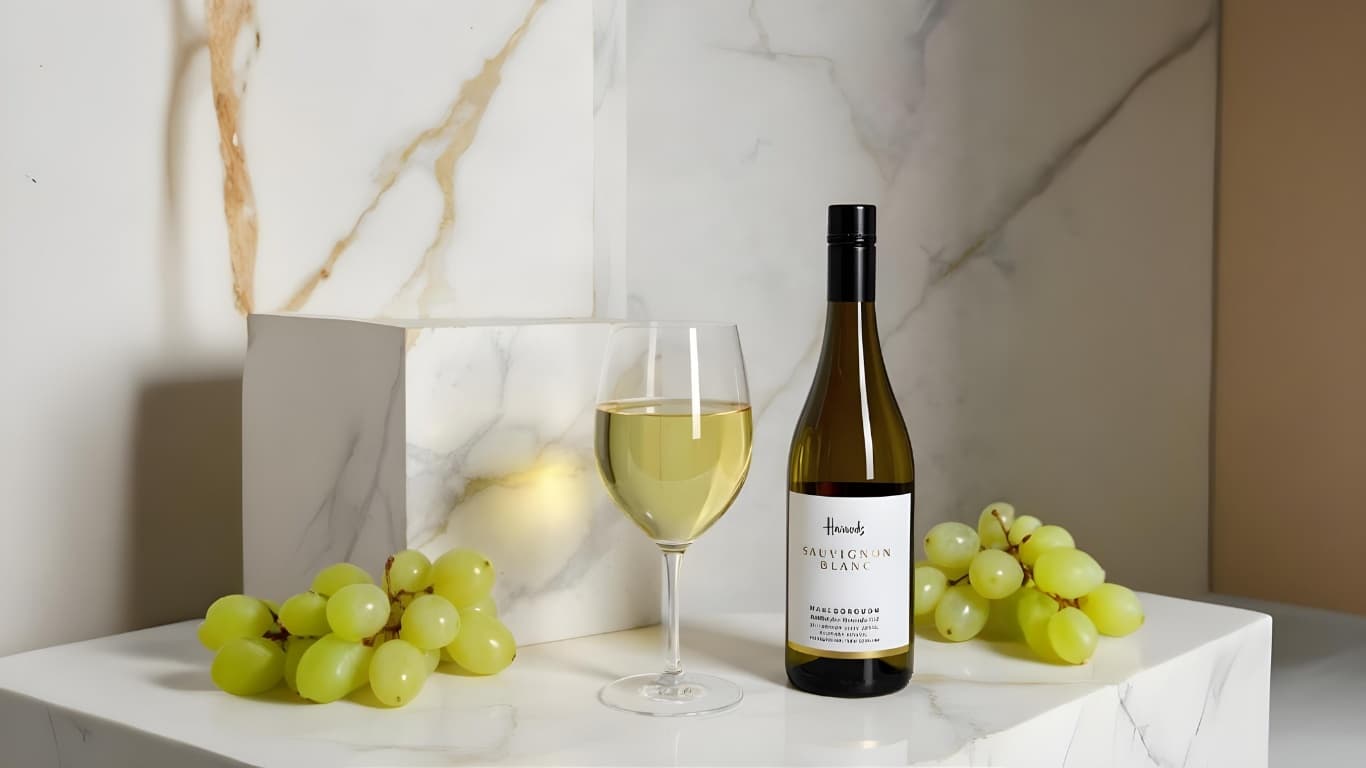
Sauvignon Blanc has spent a generation evolving from the easy-pour summer-pour grape into something genuinely worth serious cellar attention. The Loire's Sancerre and Pouilly-Fumé from named producers, Didier Dagueneau, Edmond Vatan, François Cotat, have built reputations comparable to good Premier Cru white Burgundy. Marlborough's serious tier in New Zealand, Cloudy Bay's Te Koko, Greywacke, Dog Point Section 94, produces structurally complex Sauvignon Blanc that ages 8 to 15 years from named vintages.
- Sauvignon Blanc has spent a generation evolving from the easy summer pour into a category worth serious cellar attention at named-producer level.
- The Loire's Sancerre and Pouilly-Fume from named producers, Didier Dagueneau, Edmond Vatan, Francois Cotat, have built reputations comparable to good Premier Cru white Burgundy.
- Marlborough's serious tier in New Zealand, Cloudy Bay's Te Koko, Greywacke, Dog Point Section 94, produces structurally complex Sauvignon Blanc that ages 8 to 15 years from named vintages.
- Bordeaux's white Pessac-Leognan, with Domaine de Chevalier, Smith Haut Lafitte, and Haut-Brion Blanc, anchors the most age-worthy Sauvignon-led whites in fine wine.
- Liv-ex's broader fine-wine indices now include selected Loire and Pessac-Leognan blanc bottlings as the category has matured in international collector attention.
- For collectors the serious Sauvignon Blanc tier is narrow but credible, with named single-vineyard work the structural way into the category.
- Who is this for?
- Cellar builders working through the white-wine architecture, and serious collectors evaluating where Sauvignon Blanc earns a structural position.
- What is happening?
- We map Sauvignon Blanc as a cellar category, with the Loire benchmark, Marlborough single-vineyard tier, and Bordeaux blanc apex that anchor serious collecting.
- When did this emerge?
- The piece reads the contemporary post-2020 market, where the named-producer Sauvignon Blanc tier has built genuine international collector standing.
- Where is this happening?
- The Loire's Sancerre and Pouilly-Fume, Marlborough in New Zealand, and Bordeaux's white Pessac-Leognan as the structural apex regions.
- Why does it matter?
- Sauvignon Blanc no longer earns dismissal in serious cellars, and understanding which producers drive the structural apex matters for white-wine cellar architecture.
Even the Bordeaux blanc tradition, where Sauvignon Blanc blends with Sémillon at named Pessac-Léognan estates (Domaine de Chevalier, Smith Haut Lafitte, Haut-Brion Blanc), produces some of the most age-worthy white wines in fine wine. Liv-ex's broader fine-wine indices now include selected Loire and Pessac-Léognan blanc bottlings as the category has matured in international collector attention.
This is our editorial field guide to Sauvignon Blanc for collectors building or expanding white-wine positions outside the Burgundy Chardonnay axis.
The grape itself
Sauvignon Blanc is a structurally aromatic, high-acid white grape with origins in the Loire Valley and a documented genetic relationship to Cabernet Sauvignon (Cabernet is a natural cross between Sauvignon Blanc and Cabernet Franc, a connection confirmed through DNA analysis at UC Davis in 1996). The grape's high acidity and aromatic intensity give it the structural backbone for serious cellar positions from the right producers in the right regions.
The character profile spans a wider stylistic range than most major white varietals. The Loire style runs flinty, mineral, restrained: gooseberry, citrus zest, white pepper, the gun-flint character that defines great Sancerre. The Marlborough style runs more aromatic, tropical, intensely expressive: passionfruit, guava, grapefruit, herbal lift.
The Bordeaux blanc style integrates the Sauvignon's aromatic backbone with Sémillon's textural depth, producing wines with serious ageing capacity.
The Loire: the structural reference
Sancerre and Pouilly-Fumé sit on opposite banks of the upper Loire river and produce the world's reference Sauvignon Blanc from named producers. The serious Sancerre producers serious cellars track: Edmond Vatan (the cult Clos La Néore bottling now trades $400 to $1,500+ at major auctions), François Cotat, Pascal Cotat, Henri Bourgeois, Vacheron, and Alphonse Mellot.
The serious Pouilly-Fumé producers: Didier Dagueneau (the late vigneron whose Silex and Pur Sang bottlings remain Pouilly-Fumé's most-coveted), Domaine Dagueneau (now run by his son Louis-Benjamin), Tinel-Blondelet, and Saget La Perrière.
Current-vintage pricing for the named Loire producers ranges from $40 (entry tier from Henri Bourgeois, Saget La Perrière) to $200 to $400 for Dagueneau Silex and Pur Sang and François Cotat's named Sancerres. The wines age 8 to 15 years from a strong vintage. Dagueneau Silex from named vintages ages 15 to 20 years comfortably.
Marlborough: the modern reference
Marlborough on New Zealand's South Island has been the most-watched Sauvignon Blanc story of the past two decades. The category sits across a wide quality spectrum, from the volume-driven supermarket bottlings to the serious tier produced by named producers working at structural levels comparable to good Loire Sancerre.
The serious Marlborough producers: Cloudy Bay (particularly the Te Koko bottling, barrel-fermented, longer ageing, structurally distinct from the standard Cloudy Bay), Greywacke (Kevin Judd's project after Cloudy Bay), Dog Point Vineyard (particularly the Section 94 bottling, barrel-fermented, structurally serious), Marisco's The King's Series, Saint Clair Pioneer Block, and Te Whare Ra.
Current-vintage pricing for the serious Marlborough tier runs $25 to $120 per bottle. The wines age 8 to 15 years from named producers in strong vintages, meaningfully longer than the conventional wisdom about Marlborough Sauvignon Blanc suggests.
Bordeaux blanc: the long-hold tier
Pessac-Léognan in Bordeaux produces the world's most-coveted barrel-aged white wines from Sauvignon Blanc and Sémillon blends. Haut-Brion Blanc anchors the top tier (the wine is one of the most-coveted whites in fine wine, with current vintages running $400 to $700 per bottle and mature library releases clearing $1,500 to $5,000+).
La Mission Haut-Brion Blanc sits beside it. Domaine de Chevalier Blanc, Smith Haut Lafitte Blanc, Pape Clément Blanc, and Carbonnieux Blanc anchor the broader serious tier at $60 to $200 for current vintages.
The Bordeaux blanc style produces wines that age 15 to 35 years from named producers in strong vintages, putting them in the same drink-window range as serious red Bordeaux. The structural integration of Sauvignon's aromatic intensity with Sémillon's textural depth creates a wine that doesn't really exist outside the Pessac-Léognan tradition.
Other serious origins
Sauvignon Blanc has a number of distinctive other origins worth tracking. Friuli in northeast Italy produces serious Sauvignon Blanc from named producers including Jermann, Schiopetto, Venica and Venica, and Gravner.
South Africa's cool-climate Sauvignon from Elgin, Hemel-en-Aarde, and Constantia (particularly Klein Constantia and Cape Point Vineyards) produces structurally serious wines at accessible price tiers. Chile's Casablanca and San Antonio Valleys produce serious Sauvignon at workable price ranges.
California's Sauvignon Blanc tradition has a structural revival underway, with serious bottlings from Larkmead, Stony Hill, and the better Napa Valley producers building meaningful presence in serious-cellar conversations.
Drink windows and storage
Sauvignon Blanc storage parameters match the standard fine-white cellar conditions: 55°F to 58°F (13°C to 14°C), held steady; 70% humidity; bottles laid horizontally; minimal vibration; no UV exposure.
The drink windows differ meaningfully by tier. Entry-tier Sancerre and Pouilly-Fumé reach their drinking peak at 3 to 6 years; the named producer Sancerres at 6 to 12 years; Dagueneau Silex and Pur Sang at 12 to 20 years; Bordeaux blanc from named producers at 15 to 35 years.
Where to start
For collectors building first serious depth in Sauvignon Blanc, the entry points worth tracking are Sancerre from named producers (Vacheron, Alphonse Mellot, Henri Bourgeois) at $30 to $80. Serious Marlborough (Cloudy Bay Te Koko, Greywacke, Dog Point Section 94) runs $30 to $80. Entry tier Pessac-Léognan blanc (Carbonnieux, Pape Clément) runs $50 to $120.
For collectors deepening positions: Dagueneau Silex and Pur Sang (and the rare Astéroïde bottling) from named vintages; François Cotat's named Sancerres; Edmond Vatan Clos La Néore when it appears at major auction houses; Haut-Brion Blanc and La Mission Haut-Brion Blanc in strong vintages.
What this means for collectors
Sauvignon Blanc rewards collectors who treat it as a genuinely serious white-wine category rather than a discount alternative to Chardonnay. The range, from the structurally restrained, mineral Loire style to the aromatically intense Marlborough style to the long-ageing Bordeaux blanc tradition, gives serious cellars stylistic depth that single-grape focused white cellars miss.
The category doesn't generate the same per-bottle clearing prices as serious Burgundy Chardonnay, but it produces wines of comparable structural seriousness from named producers at meaningfully more accessible price tiers. The cellars built around the Loire and Bordeaux blanc traditions, with selective Marlborough depth for stylistic variety, are typically the cellars that benefit most from Sauvignon Blanc as the variety continues to mature in serious-wine conversation.
We last reviewed this analysis in May 2026.

Frequently Asked Questions
- Where does the best Sauvignon Blanc come from?
- Top regions include Sancerre and Pouilly-Fumé in France, Marlborough in New Zealand, Napa and Sonoma in the U.S., and parts of Bordeaux.<br><br>
- Does Sauvignon Blanc age well?
- Most styles are best within 2–5 years, though oak-aged Bordeaux and select Napa wines can improve for up to 10–12 years.<br><br>
- How much does premium Sauvignon Blanc cost?
- Top bottles generally range from $60 to $120, with a few rare cuvées exceeding that at auction.<br>

Stefanos Moschopoulos
Stefanos Moschopoulos founded The Luxury Playbook in Athens and has spent the better part of a decade following the auction calendar, the en primeur releases, and the watchmakers, gallerists, and shipyards the magazine covers. He writes the field guides and listicles that anchor the Connoisseur section — pieces built on Phillips and Christie's results, Liv-ex movements, and conversations with collectors he has met across Geneva, Bordeaux, Basel, and Monaco. His own collecting habits sit closer to watches and wine than art, and it shows in the level of detail in the magazine's coverage of those categories. Under his direction, The Luxury Playbook now publishes long-form field guides, market-defining year-end listicles, and the Voices interview series with the founders behind the houses and the brands.