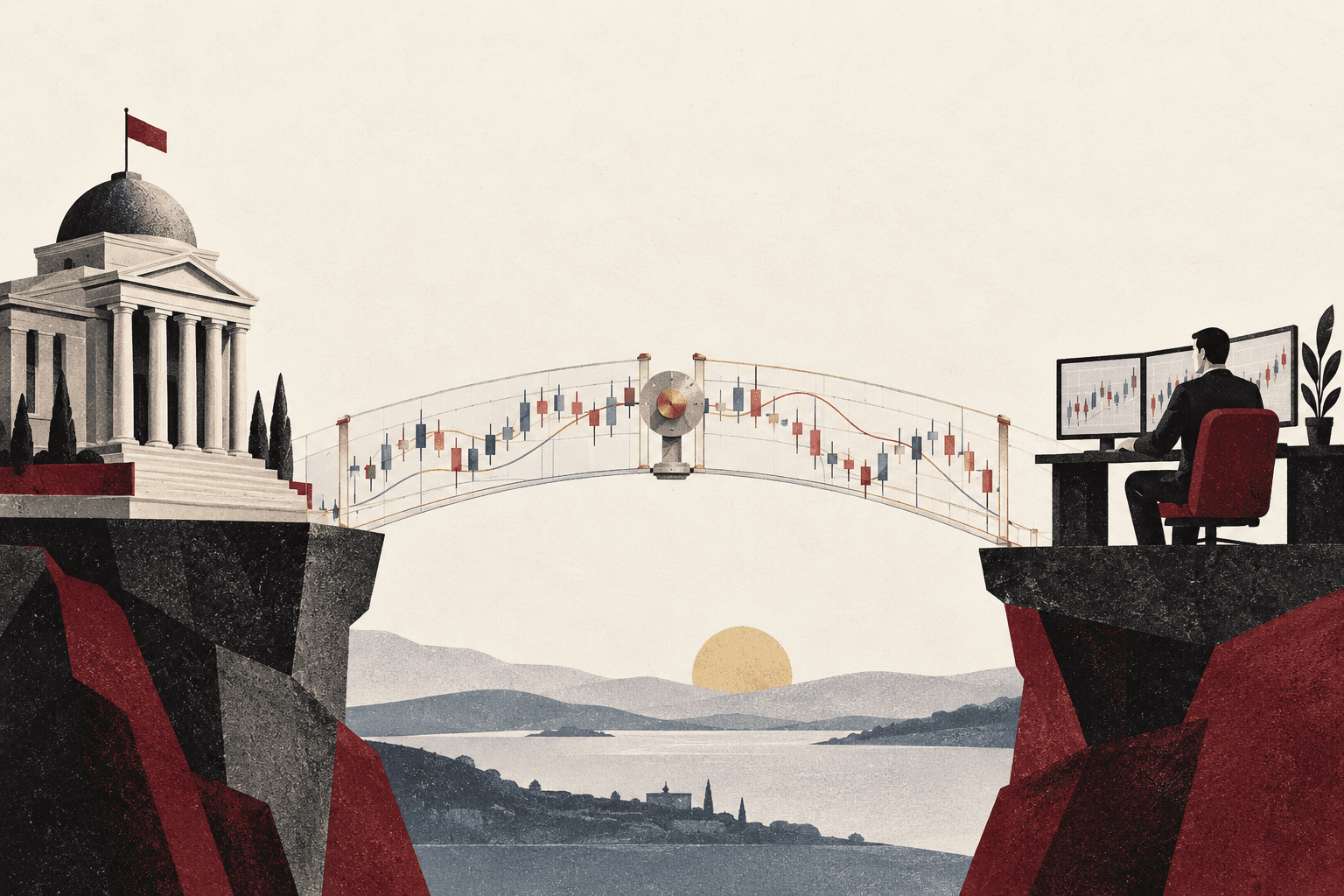
One of the quiet paradoxes of serious wealth is that the more advisory firepower a family can summon, the harder genuinely independent judgement becomes to protect. A family office can reach the finest minds in investment management, law, tax, governance, philanthropy and private banking. Logic says that more expertise should mean better decisions.
Often it does. Yet the same concentration of talent carries a hidden cost. When advisers share professional circles, attend the same conferences, read the same research and trade the same assumptions, their thinking slowly converges. The counsel stays technically excellent while the spread of genuine perspectives quietly narrows.
That gap between access to expertise and the ability to think independently is, in my experience, the real dividing line. The families that preserve wealth, purpose and cohesion across generations are seldom the ones with the most advisers. They are the ones that keep the confidence to think for themselves.
Key Takeaways
- Abundant expertise does not guarantee independent judgement. A family office can hold world-class advice and still watch its range of thinking narrow.
- Advisory capture is the quiet risk. When advisers share the same circles and sources they tend to reach the same conclusions, so diversity of expertise can hide a lack of diversity in thought.
- The danger is rarely a wrong decision. It is the question that stops being asked, because consensus can remove options from the table before anyone notices.
- Family offices steward far more than capital. Succession, values, philanthropy and family cohesion are judgement calls that technical skill alone cannot settle.
- Governance is the safeguard. Strong frameworks separate advice from authority and treat agreement as something to examine rather than assume.
- Independent judgement is now a rare asset. The capacity to think clearly while everyone moves the same way is what lets families endure.
- Who: Principals, family councils and the advisers around single and multi family offices.
- What: Why genuinely independent judgement is so hard to keep inside a family office, and how governance protects it.
- When: Now, when information is abundant and advisory networks are more interconnected than ever.
- Where: Inside the governance of family offices that steward wealth across generations.
- Why: Because the families that endure are those that can challenge consensus rather than quietly absorb it.
The Paradox of Abundant Expertise
At first glance the worry seems backwards. Family offices draw on some of the most experienced advisers in the world, and conventional wisdom holds that more expertise produces better decisions. The reality is subtler. Expertise clusters. Advisers trained in the same institutions, certified by the same bodies and rewarded by the same incentives tend to frame problems in similar ways.
The advice each gives may be first rate, yet the menu of options a family ever sees can shrink to variations on a single theme. An abundance of knowledge and a scarcity of genuine alternatives can sit quietly side by side, and the family rarely feels the narrowing as it happens.
Understanding Advisory Capture
Governance professionals know regulatory capture, where an institution slowly bends towards the very bodies meant to oversee it. Family offices face a quieter cousin that might be called advisory capture. Decision-making becomes shaped by a narrow ecosystem of advisers, networks and accepted wisdom.
No one behaves improperly and there is no coordination. The mechanism is simply that people drawing on similar sources, inside similar environments, tend to arrive at similar conclusions. Diversity of expertise can therefore coexist with a striking uniformity of thought.
When Good Advice Quietly Narrows the Options
The risk is rarely that a decision is wrong. Many consensus decisions are perfectly sound. The deeper danger is that some questions stop being asked at all, and in governance the unasked question is often more revealing than the agreed answer.
What looks like a broad exploration of choices can become a selection between different routes to the same destination. Advisory capture seldom announces itself as a failure. Controls hold, reporting is robust and meetings are productive. It tends to look exactly like professionalism, which is what makes it so hard to catch.
Why Family Offices Need More Than Technical Skill
A family office is not simply an investment vehicle. It is asked to preserve wealth across generations, navigate succession, hold a family together, steward values and balance the competing priorities of people who do not always agree.
These are not purely technical problems and they cannot be solved by technical skill alone. A family can receive flawless investment advice and still pursue a strategy misaligned with its purpose. A succession plan can look watertight on paper and ignore the real relationships it depends on. Expertise can inform such decisions. It cannot make them.
How Governance Protects Independent Judgement
Why do some families keep a distinctive decision-making identity across generations while others drift towards the same conclusions as everyone else? The answer lies less in expertise and more in governance. The strongest frameworks build deliberate separation between advice and authority.
They treat consensus as something to be examined rather than assumed, and they recognise that agreement is not proof that every relevant perspective has been heard. Independent thinking is rarely preserved by accident. It is engineered through structures that invite challenge and make room for dissent.
What Enduring Families Do Differently
The families that hold a clear identity over time tend to share a few habits. They are willing to question prevailing assumptions even when it feels uncomfortable. They actively seek out views that differ from their own. They treat disagreement as a contribution rather than an obstacle.
Above all they understand that governance is not only about oversight and risk. It is also about protecting the capacity for independent thought, which is far easier to lose than to rebuild.
Independent Judgement as the Rarest Asset
The families that endure are not the ones that forecast every twist correctly. Markets shift, politics turn and the consensus itself moves on. What sets them apart is the ability to think clearly while everyone around them leans the same way.
In an age of abundant information and tightly connected advisory networks, genuinely independent judgement may be the rarest asset a family office holds. Preserving it takes more than brilliant advice. It takes governance built to challenge consensus, protect perspective and ensure that, even when surrounded by excellent counsel, a family keeps the ability to think for itself.
Related reading on the judgement behind lasting wealth can be found in Behavioral Arbitrage and the Hidden Skill Behind Modern Wealth Preservation.
We last reviewed this analysis in June 2026.


Mitzi Danielson-Kaslik
Mitzi Danielson-Kaslik is a governance, risk, and compliance consultant specialising in financial crime, operational resilience, and organisational risk culture. She is the recipient of an Outstanding Achievement Award in AML and currently serves as Chair of the IoD Isle of Man Emerging Leaders group. Her work focuses particularly on the intersection between governance, human behaviour, and decision-making under pressure, with a strong interest in how modern institutions manage ambiguity, scrutiny, and trust. Alongside her consultancy work, Mitzi writes and speaks on private wealth, leadership, systems thinking, and the invisible operational structures that underpin high-performing organisations. Her writing combines regulatory and governance insight with a broader perspective on credibility, resilience, and institutional behaviour in increasingly transparent environments.