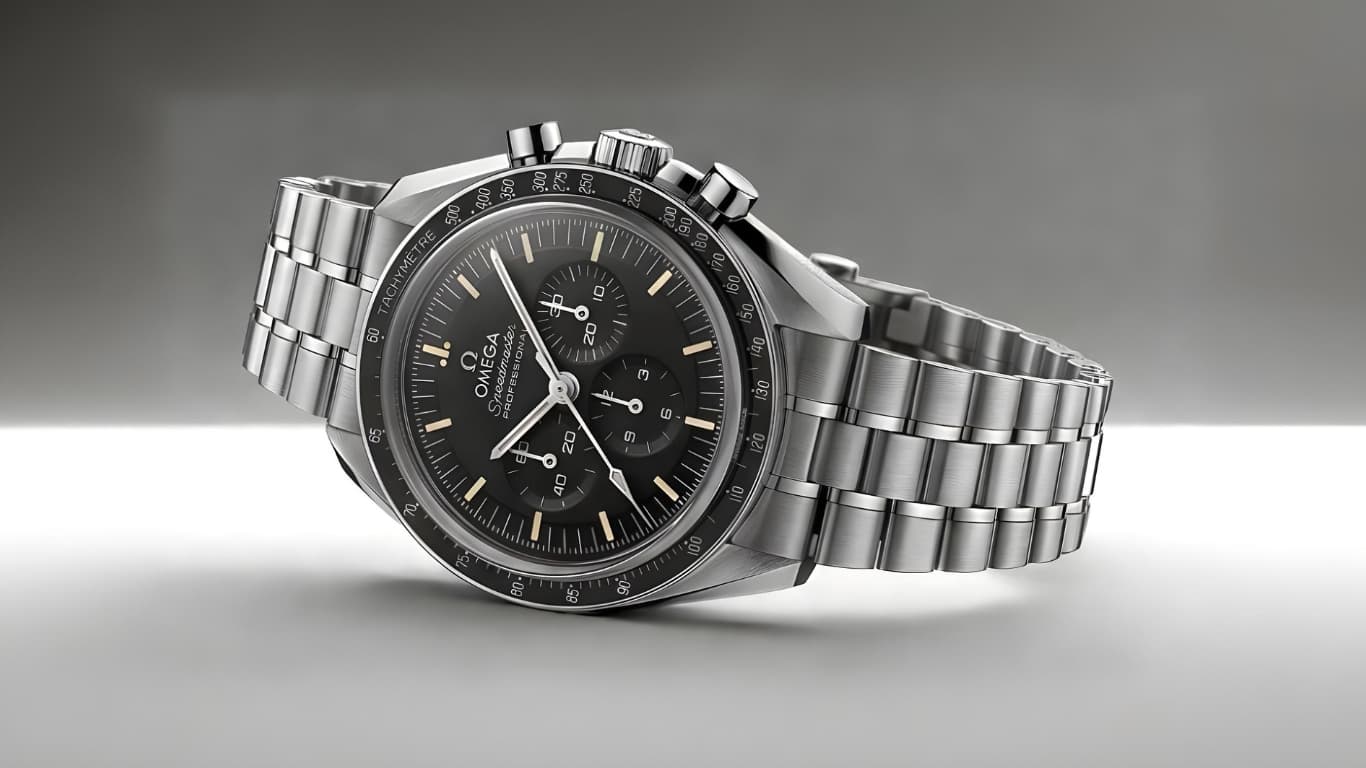
The Omega Speedmaster belongs in every serious collection because it sits as the single most-essential non-Rolex reference in modern collecting, and has done for years. The Speedmaster anchors Omega's place in serious modern collecting in a way no other Omega reference quite matches, and the structural reasons are unusually clear.
- The Omega Speedmaster Professional anchors the historical foundation of any serious watch collection, with Apollo lineage and chronograph heritage that no rival can match.
- Reference 311.30.42.30.01.005 (the Moonwatch hesalite) remains the cornerstone purchase, with the Calibre 3861 supporting modern reliability alongside historical fidelity.
- Vintage 105.012 and 145.012 references from the 1960s define the absolute peak of Speedmaster collecting, with original tritium dials and unpolished cases commanding meaningful premiums.
- We see the Speedmaster as the most reasonable single luxury watch purchase in collecting, with historical importance, daily wearability, and accessible pricing aligned uniquely.
- Limited Speedmaster editions tied to NASA programme milestones, including the Snoopy Award pieces, continue to outperform the broader catalogue on the secondary market.
- The Calibre 321 reissue programme has reinforced collector confidence, with the in-house calibre revival reconnecting modern production to vintage Moonwatch architecture.
- Who is this for?
- Every serious collector at any tier, space and aviation enthusiasts entering watch collecting, and chronograph buyers building historical depth.
- What is happening?
- A grounded case for the Omega Speedmaster as a foundational piece in any serious collection, covering the Moonwatch hesalite cornerstone, vintage references, and Calibre 321 revival.
- When did this emerge?
- The case has held across six decades, with the Moonwatch Apollo provenance from 1969 continuing to anchor collector confidence into 2026.
- Where is this happening?
- Authorised Omega dealers globally stock the current catalogue, while Phillips, Christie's, and specialist auctions handle the meaningful vintage market.
- Why does it matter?
- The Speedmaster offers historical importance, daily wearability, and accessible pricing in a combination that no other single reference can match.
Three forces converge. The cultural weight is genuine: NASA flight-qualification for the Apollo programme, the lunar-surface use in July 1969, more than half a century of essentially continuous production. The contemporary technical execution is serious: the manual-wind Calibre 3861 carries Master Chronometer certification, and the broader catalogue runs on movement architecture that doesn't compromise.
And the pricing doesn't ask for the kind of capital the equivalent Rolex sport references require. Most serious modern collections include a Speedmaster in some form.
Why the Omega Speedmaster belongs in every collection
The cultural anchor is the starting point. The Speedmaster Professional became NASA's flight-qualified chronograph in 1965 after exhaustive testing against the Rolex Daytona, the Longines, and several other contemporary chronographs. The watch worn by Buzz Aldrin on the lunar surface in July 1969 cemented the "Moonwatch" identity that has anchored the line ever since.
That cultural weight isn't constructed; it sits in NASA's archives and in the publicly documented Apollo programme history. No other modern watch reference carries comparable institutional provenance, and few will ever match it.
The technical execution carries the second pillar. The current Calibre 3861, manual-wind with a 50-hour power reserve and Master Chronometer certification, represents the most considered contemporary expression of the Moonwatch movement architecture. The METAS certification provides timing accuracy and antimagnetic resistance the broader chronograph category doesn't reliably match.
And the price point puts the line within reach of collectors building serious collections without unlimited capital. The current Moonwatch in steel sits at around $7,800 retail. A comparable Rolex chronograph reference runs more than triple the Speedmaster's price secondary, with substantially less straightforward boutique availability.
The current Moonwatch as the structural reference
The current Speedmaster Professional Moonwatch reference 310. 30. 42.
50. 01. 001 (the Hesalite crystal version, retail around $7,800) and the sapphire-crystal-sandwich variant (around $8,300) anchor the contemporary Speedmaster catalogue.
Both references run the Calibre 3861 with Master Chronometer certification, and both deliver the lineage to the Apollo-era Calibre 1861 the line is structurally built around.
Pre-owned full-set examples cluster between $6,300 and $7,000 on Chrono24 and WatchCharts, with median time-to-sell tracking in the high-teens of days. That liquidity matters: a buyer entering the line has the option to move on without friction, and that secondary-market depth is itself a structural argument for the reference.
The Hesalite-crystal Moonwatch is the cleanest connection to the Apollo-era reference. The plastic Hesalite material was chosen by NASA in the 1960s specifically because it doesn't shatter in a depressurised cabin, and the same material remains specified for current Moonwatch production. The sapphire-crystal sandwich variant is the contemporary alternative for collectors preferring the harder, scratch-resistant material and the visible movement through the display caseback.
Vintage Speedmaster: the considered upper tier
Vintage Speedmasters with the Calibre 321 anchor the upper tier of vintage Speedmaster collecting. The references that matter most are the 105. 012, the 145.
012, and the earlier "Pre-Moon" pieces from the early to mid-1960s. Clean examples with original components, original lume, unpolished cases, and credible service histories trade between $20,000 and $80,000 at Phillips and Christie's depending on reference, condition, and provenance.
Documented Apollo-era pieces with credible astronaut associations clear seven-figure sums regularly. The Phillips and Christie's catalogues have included multiple astronaut-provenance Speedmasters across the past decade, and the documented-provenance tier sits structurally above the broader vintage market.
The Calibre 321 reissue, the modern "Ed White" 321 reference, is the closest contemporary production gets to vintage Speedmaster credibility. The limited-production hand-assembled re-creation of the historical movement trades accordingly at upper-five-figure secondary pricing, and the reference has consolidated its place at the upper end of the contemporary Speedmaster catalogue.
The limited editions: Snoopy, Apollo, and the rest
The Silver Snoopy Award 50th Anniversary reference 310. 32. 42.
50. 02. 001 is the contemporary Speedmaster reference with the strongest secondary premium.
Launched at $9,600, the reference now trades between $14,000 and $16,000, and the supply discipline shows no sign of softening.
The Apollo 11 50th Anniversary references in steel and precious metals followed similar patterns, with secondary markets clearing 30 to 50 per cent above launch retail across the relevant production windows. The various smaller Speedmaster anniversary references and the smaller-case Speedmaster Reduced derivatives extend the broader catalogue.
These limited editions are where the contemporary Speedmaster behaves most like a structural collector reference. The supply-constraint discipline creates the kind of secondary premiums the broader contemporary catalogue doesn't generally produce, and the references most likely to appreciate further are the ones where the production window has already closed.
What collectors look for in a Speedmaster
For modern Speedmaster, the references that come up most consistently in serious collector conversation are the Hesalite-crystal Moonwatch (the cleanest connection to the Apollo-era reference), the sapphire-crystal sandwich variant (for collectors preferring the visible movement), the Silver Snoopy 50th Anniversary, and the Calibre 321 "Ed White" reissue. Box-and-papers documentation matters at any tier; full-set unworn examples carry the strongest premiums.
For vintage, the Calibre 321 Speedmasters anchor the upper end. Originality of dial, hands, and bezel insert all matter substantially. The various dial variants are the details that separate the considered collector from the casual buyer: the "Pre-Professional" dial without the "Professional" text, the "Dot Over 90" tachymetre bezels, the various lume colour configurations.
Hodinkee, A Collected Man, and the established specialist Omega dealers all give the vintage Speedmaster category serious page space. The Omega Museum in Bienne also maintains a substantial vintage Speedmaster archive that supports authentication on the most contested references.
What this means for collectors
The Speedmaster occupies a unique position in modern watch collecting. Few modern references carry comparable cultural weight; fewer still combine that weight with serious contemporary technical execution at price points that don't demand a credible boutique relationship to access. The line earns its place in serious collections on grounds the broader market continues to read clearly.
We'd argue the Speedmaster is the most-essential single watch a serious collector can build a collection around. Whether the buyer starts with the current Moonwatch or works back into the vintage Calibre 321 references, the line provides the structural anchor most collections benefit from.
We last reviewed this analysis in May 2026.

Frequently Asked Questions
- What is the average resale value of the Omega Speedmaster?
- Depending on the model and condition, most modern Speedmaster Professionals retain 80–95% of their retail price. Limited editions and vintage references can exceed retail by 15–40%, particularly with box and papers.<br><br>
- Which Omega Speedmaster models appreciate the most?
- Snoopy editions, certain Apollo commemoratives, vintage pre moon references, and limited production Caliber 321 releases are among the most cited high performers, largely because demand exceeds supply and the references carry clear narrative importance.<br>
- Is the Omega Speedmaster better with Hesalite or Sapphire?
- Hesalite is often preferred by collectors who want the closest experience to the NASA era Moonwatch. Sapphire is preferred by buyers who prioritize scratch resistance and movement visibility. Both can hold value well when the reference is desirable and the condition is strong.

Stefanos Moschopoulos
Stefanos Moschopoulos founded The Luxury Playbook in Athens and has spent the better part of a decade following the auction calendar, the en primeur releases, and the watchmakers, gallerists, and shipyards the magazine covers. He writes the field guides and listicles that anchor the Connoisseur section — pieces built on Phillips and Christie's results, Liv-ex movements, and conversations with collectors he has met across Geneva, Bordeaux, Basel, and Monaco. His own collecting habits sit closer to watches and wine than art, and it shows in the level of detail in the magazine's coverage of those categories. Under his direction, The Luxury Playbook now publishes long-form field guides, market-defining year-end listicles, and the Voices interview series with the founders behind the houses and the brands.