Omega belongs in a serious watch collection because the brand has spent the past decade quietly making the case that the loudest names in Swiss watchmaking aren't necessarily the most interesting ones. Omega sits one tier below Rolex and Patek in cultural noise. On movement technology and finishing-per-dollar, it has been arguably the most credible operator in the $5,000 to $10,000 retail band for years.
- Omega earns its place in any serious collection through documented horological history, Apollo lineage, and a catalogue that rewards patient collectors.
- The Speedmaster Professional remains the cornerstone, and pre-Moonwatch transitional references have appreciated steadily across the last decade.
- Seamaster 300 vintage models from the 1960s and 1970s carry condition-sensitive premiums that experienced collectors track closely on auction results.
- Modern Omega calibres, including the Co-Axial Master Chronometer line, deliver chronometric performance that competes directly with much pricier Swiss peers.
- We see Omega as the most reasonable entry into serious watchmaking, with pre-owned Speedmasters and Seamasters offering real depth at sensible money.
- Provenance documentation, original bracelets, and unpolished cases drive long-term value more than any single special-edition release the brand has shipped.
- Who is this for?
- New collectors building a first serious shelf, established Rolex owners looking for horological depth, and value-minded buyers wary of speculative pricing.
- What is happening?
- A reasoned case for Omega as a structural pillar in a watch collection, anchored on Speedmaster heritage, Seamaster pedigree, and modern Master Chronometer engineering.
- When did this emerge?
- Omega has rewarded long-term collectors for decades, and the brand's modern Master Chronometer rollout has reinforced confidence across the catalogue.
- Where is this happening?
- Geneva auctions, Chrono24, and authorised dealer pre-owned programmes all offer reliable access, with Phillips setting the headline vintage results.
- Why does it matter?
- Omega offers documented history, manufacturing depth, and pricing that still leaves room for collectors who do their homework on references and condition.
Master Chronometer certification, in-house Co-Axial calibres, antimagnetic resistance to 15,000 gauss: these are the technical credentials that, on a Swiss watch costing twice as much, would carry a premium. And yet the Speedmaster Moonwatch still trades at retail or just below.
The brand's history is the kind that gets cited so often it can lose its weight. Omega has been the official timekeeper of the Olympics since 1932, a continuous run of more than 90 years that no other Swiss luxury brand approaches.
Why Omega earns its place in a serious watch collection
The Speedmaster reference 105. 012 was the watch NASA flight-qualified for Apollo. It won out against Rolex and Longines in the agency's lab tests, and went to the Moon on Buzz Aldrin's wrist in 1969.
The Seamaster has been the official James Bond watch since GoldenEye in 1995.
These are the kind of cultural anchors that build the long-term collector base, not waitlist theatre. They're also the kind of provenance that auction houses pay attention to, which is why Phillips and Christie's continue to bring serious vintage Speedmaster lots to market with meaningful estimates.
The current Omega catalogue rewards careful reading. Picking the right reference matters more than picking the right family name, and the technical credentials behind each line are what separate Omega from most of its peers in the same price band.
The Speedmaster, Seamaster and core Omega catalogue
The current catalogue splits into two pillars and several supporting lines. The Speedmaster Professional Moonwatch, currently the reference 310. 30.
42. 50. 01.
001 with the manual-wind Calibre 3861, is the brand's defining piece. Hesalite crystal, manual wind, the same case geometry NASA certified six decades ago.
Tudor and Seiko have plenty of credible diving heritage. Nobody else has the Moonwatch. The Seamaster line splits into the Diver 300M (the Bond reference, 210.
30. 42. 20.
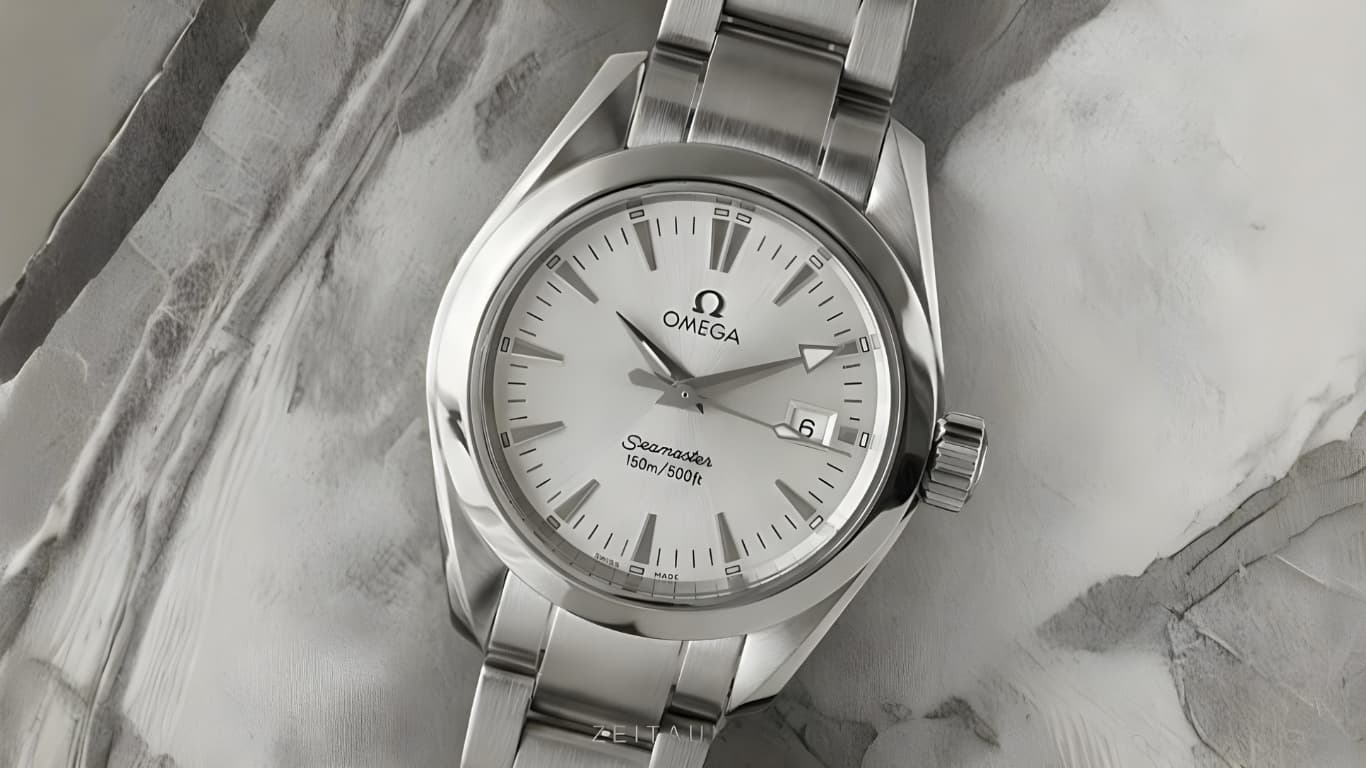
01. 001 in steel), the Planet Ocean (the over-engineered diving line at 600m and 1,200m), the Aqua Terra (the dressier sport-luxury line), and the Seamaster 300 Heritage which references the original 1957 dive watch.
The Constellation and De Ville lines round out the dress catalogue. Retail puts the Seamaster Diver 300M around $5,800 in steel, the Speedmaster Moonwatch Hesalite around $7,800, the Planet Ocean 600M from roughly $8,000, and the Seamaster 300 Heritage from $7,000 to $7,500. The Aqua Terra opens lower.
Precious-metal Speedmasters and limited-edition pieces climb well above $10,000.
What the Omega secondary market actually shows
The Moonwatch Hesalite is the cleanest data point in the modern Omega catalogue. Full sets cluster between $6,300 and $6,800 on Chrono24 and WatchCharts, slightly below current retail.
That's the natural state of a watch that Omega supplies its dealers reliably without the artificial constraint that drives Rolex secondary pricing. Box-and-papers full sets carry a 10 to 15 percent premium over loose examples. Sapphire-crystal sandwich variants trade at similar levels for collectors who prefer the visible movement to the historical Hesalite.
The Seamaster Diver 300M reference 210. 30. 42.
20. 01. 001, the black-dial Bond Seamaster, trades between $5,200 and $6,200 on the secondary market, around or just below retail.
WatchCharts has the reference among the most-traded Omega pieces year-on-year, with median time-to-sell measured in days rather than weeks.
Where the Planet Ocean softness sits
The Planet Ocean 600M is softer. Clean pre-owned examples trade in the $4,100 to $5,200 range against $8,000 retail, the sharpest depreciation of the core sport line.
Buyers looking for diving capability per dollar gravitate to the pre-owned Planet Ocean for that reason, and it is one of the genuine value picks in the modern Omega catalogue if you can find a clean full set with current service.
Limited editions and where they hold
Limited editions are where the most dramatic numbers show up. The Speedmaster Silver Snoopy Award 50th Anniversary reference 310. 32.
42. 50. 02.
001, launched at roughly $9,600, now trades between $14,000 and $16,000.
That's a 45 to 65 percent secondary premium over launch retail, holding firm three years on. The Apollo 11 50th Anniversary references in steel and precious metals followed a similar pattern, clearing 30 to 50 percent above retail within a few years of release as production wound down.
Both pieces benefit from defined production numbers, distinctive design, and the Apollo narrative connection that Omega has been building on for half a century. That kind of provenance pattern is rare in the modern market, and it's why collectors treat Omega limited editions seriously when they're released through proper boutique channels.
Movement technology and case construction credentials
Omega's technical positioning is what separates the brand from most of its $5,000 to $10,000 peers. Master Chronometer certification, held jointly with COSC and METAS, tests every certified watch across eight positions and certifies it to between zero and five seconds per day, with antimagnetic resistance to 15,000 gauss.
That magnetic tolerance is the technical headline. In practical terms it means a Master Chronometer Omega holds its accuracy in environments (proximity to laptops, MRI machines, electric motors) where most mechanical watches drift significantly.
The Co-Axial escapement, originally designed by George Daniels, sits at the heart of the modern Omega calibres: the 3861 in the manual-wind Speedmaster, the 8800 family in the automatic Seamaster line. The escapement geometry reduces sliding friction at the impulse, which in theory extends service intervals and improves long-term timekeeping consistency. The long service intervals Omega quotes (eight to ten years) have held up across the decade since rollout.
Case materials that matter long-term
The case materials run deeper than the marketing suggests. Sedna gold, a copper-rich rose gold formulation Omega developed for colour stability, and Canopus white gold, Omega's proprietary white gold blend, are reasons higher-end Omega precious-metal pieces hold their colour over decades where some competitors fade or shift.
Ceramic bezels with liquidmetal indices are now standard across the sport line. That construction holds up significantly better than the aluminium bezels still found on some competitor pieces in the same price band, and is one of the genuinely future-proofed elements of the modern catalogue.
What serious Omega collectors look for
For modern Omega, the play is straightforward enough. The Moonwatch Hesalite full set with box and papers is the entry-level blue-chip Omega: high liquidity, stable pricing, easy resale.
The Seamaster Diver 300M in the standard black-dial reference is the daily-wear pillar, also with strong secondary depth. Limited editions tied to genuine narrative, Apollo anniversaries, Snoopy editions, Bond film tie-ins, are the references that command secondary premiums. Standard production sport pieces trade reliably but rarely climb significantly above retail.
For vintage, originality of dial, hands and case finish all matter substantially. Calibre 321 Speedmasters are the top-tier vintage Omega play, with documented military or NASA-tested provenance carrying meaningful weight.
Where the pre-Moon references sit
The pre-Moon references in clean condition have been the strongest secondary movers across the past decade as serious Speedmaster collecting has matured. The reissued modern Calibre 321 reference, the "Ed White" 321 in steel, is the closest current production gets to the vintage credibility, and trades accordingly.
Phillips' recent thematic Speedmaster sales have consistently placed clean 105.012 examples in the $40,000 to $80,000 band, with exceptional pieces with documented NASA provenance climbing into six figures. That trajectory has held steady across the past five years.
What this means for collectors next
The story collectors are watching now is whether the Master Chronometer programme continues to differentiate Omega from the wider Swiss field as more brands move to in-house movement certification. So far, on the evidence, and on what Hodinkee, GQ and the major auction houses are giving page space to, the technical case for Omega remains the most credible one in its price band.
For collectors building a serious modern reference set, the Moonwatch Hesalite, the Seamaster Diver 300M and a credible Speedmaster limited edition remain the cleanest entry points. Vintage Calibre 321 Speedmasters reward longer hunting and deeper authentication discipline, but the rewards are commensurate.
We last reviewed this analysis in May 2026.

Frequently Asked Questions
- Will Omega watches go up in price?
- Yes. Omega watches—especially Speedmasters, limited editions, and discontinued Seamaster models—have shown annual appreciation rates of 5–15% depending on rarity and condition.<br><br>
- Is Omega as good as Rolex?
- In terms of movement innovation and value for money, yes. Omega offers Master Chronometer certification, superior anti-magnetism, and strong resale potential—often at a lower entry point than Rolex.<br><br>
- Do limited edition Omega watches increase in value?
- Yes. Most limited editions—especially Speedmaster LEs like the Snoopy and Apollo 11—have doubled or tripled in value post-release.<br><br>
- Is Omega a luxury watch brand?
- Yes. Omega is a Swiss luxury brand known for its precision, innovation, and cultural relevance in space exploration, sports timing, and cinema.<br>

Stefanos Moschopoulos
Stefanos Moschopoulos founded The Luxury Playbook in Athens and has spent the better part of a decade following the auction calendar, the en primeur releases, and the watchmakers, gallerists, and shipyards the magazine covers. He writes the field guides and listicles that anchor the Connoisseur section — pieces built on Phillips and Christie's results, Liv-ex movements, and conversations with collectors he has met across Geneva, Bordeaux, Basel, and Monaco. His own collecting habits sit closer to watches and wine than art, and it shows in the level of detail in the magazine's coverage of those categories. Under his direction, The Luxury Playbook now publishes long-form field guides, market-defining year-end listicles, and the Voices interview series with the founders behind the houses and the brands.