The Omega Seamaster offers the most polished dive-watch package outside of Rolex at roughly half the secondary price of comparable Submariner generations. That value position has held through the broader market cooling of 2022-24, and the references that anchored the tier then are the same ones still anchoring it now.
- The Omega Seamaster Diver 300M remains the strongest single value purchase in the dive-watch category, with Master Chronometer engineering at sub-Submariner pricing.
- Reference 210.30.42.20.01.001 in blue ceramic anchors the modern catalogue, with the Co-Axial Calibre 8800 supporting daily-wear reliability across decades.
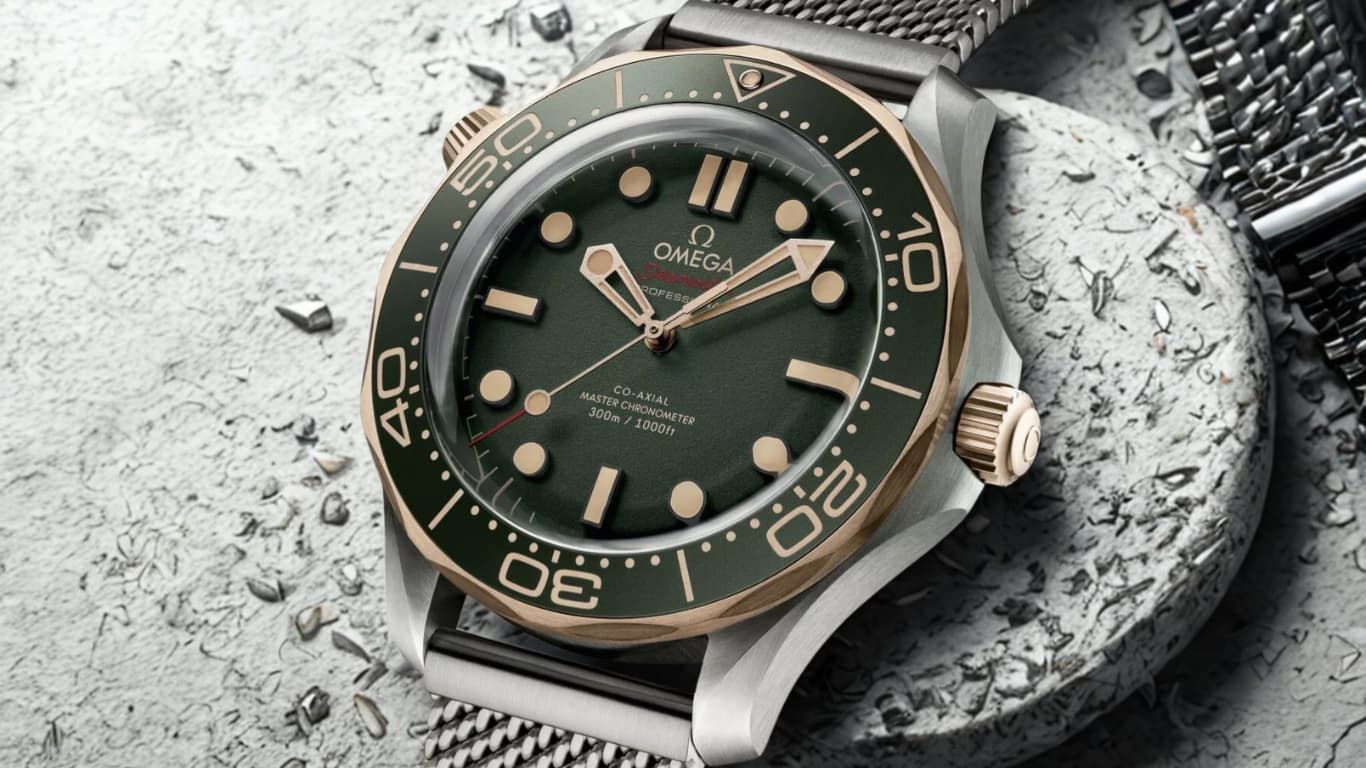
- James Bond editions, including the No Time To Die and Diver 300M variants, have outperformed the broader Seamaster catalogue on the secondary market.
- We see the pre-owned Seamaster Diver 300M from the mid-2010s as the strongest entry-tier purchase, often well below the modern asking price with finishing intact.
- Vintage Seamaster 300 references from the 1960s and 1970s draw growing collector competition, with original tritium dials commanding meaningful premiums.
- Service infrastructure and Master Chronometer certification beat almost every comparable price-tier dive watch, with magnetic resistance to 15,000 gauss locked in.
- Who is this for?
- First-time dive-watch buyers, value-minded collectors, and Rolex owners exploring Omega depth for the first time.
- What is happening?
- A grounded case for the Omega Seamaster Diver 300M as the best-value dive reference, anchored on Master Chronometer engineering and accessible secondary pricing.
- When did this emerge?
- The case has strengthened since the 2018 Calibre 8800 refresh, with the modern catalogue continuing to anchor the value position into 2026.
- Where is this happening?
- Authorised Omega dealers globally stock the modern catalogue, while Chrono24, Subdial 50, and specialist auctions handle the pre-owned and vintage market.
- Why does it matter?
- The Seamaster offers Master Chronometer certification, dive-tool heritage, and pricing that still leaves serious room compared with the obvious Swiss competition.
The combination of Master Chronometer technical credentials, the cultural anchor of the Bond film tie-ins running from GoldenEye in 1995 through every subsequent installment, and the broader Omega brand discipline that has rebuilt the Speedmaster and Aqua Terra catalogues over the past decade all support the Seamaster's place as the most credible dive reference at its price band. Omega is, alongside Rolex, one of only two major brands whose dive catalogue carries both COSC chronometer and METAS Master Chronometer certification across the upper tier. The competitive set at the Seamaster's price point simply does not match the engineering specification.
The Seamaster Diver 300M: the best-value dive reference
The Seamaster Diver 300M reference 210. 30. 42.
20. 01. 001, the black-dial Bond Seamaster, is the brand's defining contemporary dive reference.
Retail sits at $5,800; secondary trades $5,200 to $6,200 with the full set. The Calibre 8800 movement delivers Master Chronometer certification, antimagnetic resistance to 15,000 gauss, and a 0-to-plus-5-seconds-per-day accuracy spec across eight positions.
The helium escape valve at 10 o'clock supports the 300m depth rating, and the wave-pattern dial geometry has been refined steadily across the past decade. WatchCharts shows the reference among the most-traded Omega pieces year-on-year, and Chrono24 listings consistently outnumber the Submariner equivalents by a wide margin.
The various dial colour variants (the standard black, the "Bond" green tied to No Time to Die, the 60th and 70th anniversary references) anchor the broader Diver 300M collecting tier. The Bond-tied limited editions tend to carry 10 to 20 percent secondary premiums post-release. In our coverage of the past three boutique cycles, the standard black dial has been the most resilient pick on resale, with the Bond green close behind.
The Seamaster 300 Heritage and the cleaner case option
The Seamaster 300 Heritage line, the contemporary reissue of the 1957 Seamaster 300, sits one tier below the Diver 300M in production volume but above it in collector consideration. The current reference 234. 30.
41. 21. 01.
001 in the 41mm case retails around 7,000 to 7,500 euros.
The cleaner contemporary case design language, the in-house 8912 movement, and the historical reference geometry make this the Seamaster most contemporary collectors gravitate toward when given the choice between Heritage and Diver 300M. The vintage feel is genuine rather than styling exercise.
The Planet Ocean and the technical end
The Planet Ocean line, the over-engineered diving register at 600m and 1,200m depth ratings, sits at the technical end of the Seamaster catalogue. Pricing runs from around $8,000 in the standard 600M reference up to the 1,200m variants. The Aqua Terra, the dressier sport-luxury line in 38mm and 41mm cases from around $5,000, is the Seamaster reference for buyers who want the technical credentials in a more versatile case.
The PloProf, the over-engineered 1,200m diving piece with the distinctive industrial-grade case construction, anchors the Seamaster's deep-end engineering credentials. Original 1970s PloProf references have built a meaningful vintage following over the past decade.
Why the Seamaster holds its value tier
Three reasons. The technical specification matches or exceeds the Submariner on most measurable axes (antimagnetic resistance, accuracy certification, depth-rating engineering) while sitting at roughly half the price. The Bond cultural anchor gives the reference cross-generational recognition that no other dive watch in the price tier can match.
The Omega production discipline of the past decade has consolidated the brand's serious-collecting credentials in a way the 2000s catalogue did not.
The collectors we hear from at this tier increasingly arrive at the Seamaster after weighing the Submariner secondary market and concluding the technical specification per dollar is better at Omega. That conclusion is genuinely defensible on the engineering merits.
What collectors look for in a serious Seamaster pick
For modern Seamaster, the references that come up most consistently are the Diver 300M Bond reference 210. 30. 42.
20. 01. 001, the Seamaster 300 Heritage in the various dial configurations, the Planet Ocean 600M for collectors weighting technical credentials more heavily, and the Bond and anniversary limited editions.
Box-and-papers documentation matters; Master Chronometer certification cards should accompany the standard documentation.
Originality of dial, hands and case finish matters substantially on the vintage references. The 1957 Seamaster 300 CK2913 in clean condition with original gilt dial has cleared 50,000-plus euros at the major auction houses; the 165. 024 and 166.
024 generations through the 1960s and 1970s sit at meaningful discounts to the CK2913 but anchor an entire vintage tier on their own.
What this means for collectors
The longer story collectors recognise is that the Seamaster occupies a particular value tier in modern dive collecting. It's not the structural anchor: that's the Submariner. It's not the most considered accessible-tier; that's the Tudor Black Bay 58.
It is the most polished mid-tier dive package available outside the Rolex catalogue, with technical credentials that often exceed comparable Swiss alternatives at higher price points. The Seamaster earns its enduring place in serious dive collecting on those grounds, and the value tier looks structurally durable through the next cycle.
For collectors weighing the line in 2026, the practical advice from the trade press has been consistent: the Diver 300M Bond reference in the standard black dial continues to look like the cleanest entry, with the Seamaster 300 Heritage as the considered second pick for collectors weighting historical case geometry.
The Bond green and the various anniversary references add measured collectibility on top of the baseline, and the Master Chronometer certification carries the technical credentials through any future ownership transfer.
We last reviewed this analysis in May 2026.

Frequently Asked Questions
- What makes the Omega Seamaster different from a Rolex Submariner?
- The Seamaster often offers higher anti-magnetic protection (up to <strong>15,000 gauss</strong> vs. Rolex’s ~1,000 gauss) and is generally more affordably priced. Many collectors see it as the more technically advanced yet understated alternative to the Submariner.<br>
- Is the Seamaster a good daily wear watch?
- Absolutely. It’s built for daily use with robust steel or ceramic cases, METAS-certified movements for top-level precision, and thoughtful features like micro-adjust clasps and long-lasting lume.

Stefanos Moschopoulos
Stefanos Moschopoulos founded The Luxury Playbook in Athens and has spent the better part of a decade following the auction calendar, the en primeur releases, and the watchmakers, gallerists, and shipyards the magazine covers. He writes the field guides and listicles that anchor the Connoisseur section — pieces built on Phillips and Christie's results, Liv-ex movements, and conversations with collectors he has met across Geneva, Bordeaux, Basel, and Monaco. His own collecting habits sit closer to watches and wine than art, and it shows in the level of detail in the magazine's coverage of those categories. Under his direction, The Luxury Playbook now publishes long-form field guides, market-defining year-end listicles, and the Voices interview series with the founders behind the houses and the brands.