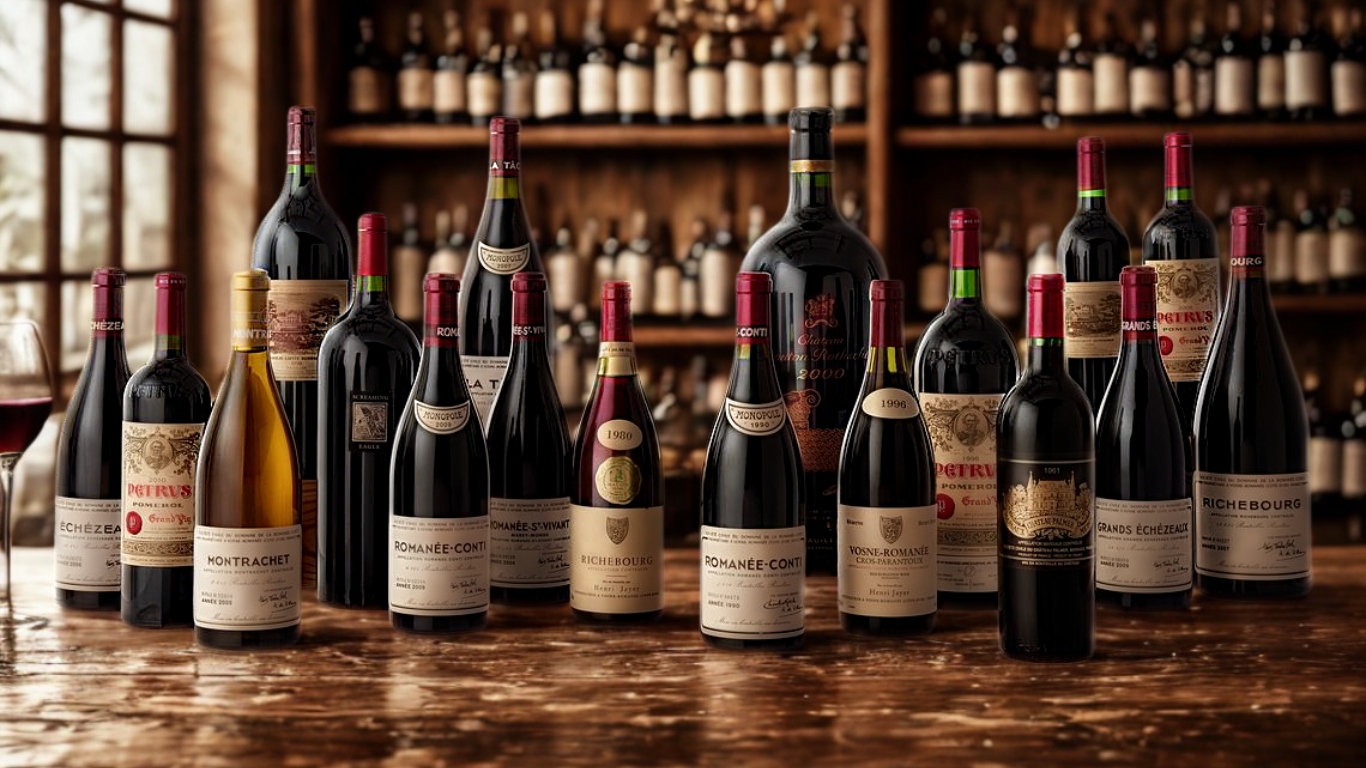


Wine ratings are one of the most powerful forces shaping the value, quality, and demand of fine wines. These scores, handed out by professional critics and respected publications, drive consumer perception, move markets, and ultimately determine whether your wine investment pays off. If you’re serious about fine wine as an asset class, understanding how ratings work is non-negotiable.
Table of Contents
What Are Wine Ratings
A wine rating is a numerical or categorical score that tells you how good a wine is across measures like quality, balance, complexity, and character. Critics, publications, and competitions issue these scores as a benchmark, giving buyers and investors a shorthand for evaluating a wine’s overall excellence.
Critics taste wines in controlled settings, assessing everything from aroma and flavor to texture and finish. Each wine then receives a score on a predefined scale, with higher numbers pointing to superior quality.
The 100-point scale, popularized by Robert Parker and Wine Spectator, sits at the top of the pile as the most widely used system. But you’ll also encounter star ratings, letter grades, and medals handed out at major competitions.
High ratings tend to trigger an immediate spike in demand and market prices. For anyone with skin in the fine wine game, that connection between score and value is everything.
Why Wine Ratings Matter
Wine ratings carry real weight in the fine wine world, shaping what consumers buy, where prices go, and how individual bottles perform over time. If you’re investing in wine, knowing why these scores matter is the difference between a strategic portfolio and an expensive hobby.
Credibility and Consumer Trust
- Expert Validation: Ratings provide an expert assessment of a wine’s quality, giving consumers and investors confidence in their choices.
- Influence on Purchases: Studies show that wines rated 90 points or higher experience a significant surge in sales compared to lower-rated wines.
Impact on Market Value
- Price Premiums: Wines with high ratings often command higher prices. For instance, a wine rated 95+ points by Wine Advocate can see its market value increase by 20–30% compared to similar wines with lower scores.
- Secondary Market Demand: In the fine wine auction market, bottles with high ratings are more likely to attract bids and achieve premium prices.
Benchmark for Quality
- Guidance for Collectors: Ratings act as a benchmark for collectors to identify top-performing wines and vintages.
- Clarity in Investment Decisions: Investors use ratings to evaluate potential acquisitions, ensuring their portfolios include wines with strong market potential.
Influence on Regional and Brand Reputation
- Region Boost: A high rating for a wine can elevate the reputation of an entire region. For example, Robert Parker’s high scores for Rhône wines in the 1980s helped put the region on the global map.
- Brand Recognition: Consistently high ratings reinforce the reputation of producers, such as Château Margaux or Domaine de la Romanée-Conti, ensuring sustained demand for their wines.
Ratings do far more than validate quality. They shape a wine’s entire market trajectory, making them indispensable whether you’re a passionate collector or a hard-nosed investor looking for returns.

How Wine Ratings Affect the Wine’s Value
The relationship between a wine’s rating and its market value is direct, fast-moving, and often dramatic. If you want to maximize your returns in fine wine, understanding this connection is where you start.
High ratings drive immediate price increases. Wines rated 95 points or above by critics like Wine Spectator or Wine Advocate regularly see their market value surge on release. A Napa Valley Cabernet Sauvignon with a 96-point score might jump 25% in price compared to lower-rated rivals. In secondary markets, that premium only compounds. Burgundy’s Domaine de la Romanée-Conti, backed by near-perfect scores year after year, is a textbook example of ratings fueling sustained price growth.
Scarcity makes the equation even more powerful. Limited production combined with critical acclaim creates a demand surge that drives prices higher, while a wine’s aging potential adds another layer of long-term value. Bordeaux’s 2000 vintage and Barolo’s 2010 vintage, both carrying exceptional ratings, have shown strong appreciation across decades for exactly this reason.
Consumer perception ties directly into how ratings move value. A high score signals exceptional quality, and that signal travels globally. A 90-plus Wine Spectator score can elevate a wine’s appeal even among casual buyers, creating a ripple effect that pushes market value well beyond what the wine’s production cost would suggest.
The historical track record backs all of this up. Bordeaux’s Château Margaux 2005 appreciated at over 12% annually after landing top scores. Robert Parker’s championing of Rhône wines through the 1990s pushed their value up by 30 to 50% over the following decade. These are not outliers. They are what fine wine’s €30 billion market looks like when ratings and scarcity align.
Wine ratings are not merely quality markers. They are active drivers of market dynamics, capable of reshaping value trajectories and giving you a genuine foundation for smarter investment decisions.
Different Rating Systems
The wine ratings world is dominated by a handful of influential critics and publications, each using distinct methods to score wines. Knowing these systems matters to you as an investor because the source of a rating, not just the score itself, can determine how much weight the market gives it.
The 100-Point System
The 100-point system, popularized by Robert Parker and adopted by major publications worldwide, sits as the most widely recognized method for rating wines. The scale gives critics enough room to make meaningful distinctions between wines, and the market has built its pricing logic around it.
- 95–100 Points: Exceptional quality, showcasing complexity, balance, and longevity.
- 90–94 Points: Outstanding wines with notable character and minimal flaws.
- 80–89 Points: Good to very good wines, often approachable and reliable.
The system gives you a clear, standardized way to compare wines across regions and vintages, making it invaluable for building and managing an investment portfolio.
The 20-Point Wine Rating System
The 20-point system is a traditional European approach used by institutions and competitions that prize precision over breadth. Wines are scored from 0 to 20 across attributes like appearance, aroma, taste, typicity, and overall impression. The focus on typicity, meaning how faithfully a wine expresses its variety, region, or style, sets this system apart from its American counterpart.
Appearance covers clarity, color, and visual appeal, with flawless presentation scoring highest. Aroma and bouquet are judged on intensity, complexity, and harmony. Taste and structure reward balance, depth, and a lingering finish. Typicity captures how authentically the wine reflects its grape variety and regional character. Overall impression brings it all together, reflecting the wine’s harmony and enjoyability as a complete package.
On the 20-point scale, wines scoring between 18 and 20 are considered outstanding, often qualifying as investment-grade. Scores between 15 and 17 indicate very good wines with solid aging potential. A score of 12 to 14 points puts a wine in the good-but-unremarkable category. Anything below 12 suggests average to poor quality with limited collector appeal.
The 20-point scale is well suited to European wines where terroir and regional authenticity take center stage. The catch is that its narrower range makes finer distinctions harder to spot. If you want more granularity when comparing wines across a broad market, the 100-point system gives you more to work with.
Star Rating System
Star ratings are simple, intuitive, and widely used in consumer-facing wine reviews and guides. Wines earn between one and five stars, with five stars reserved for exceptional quality. You’ll find this format in mainstream publications and retail environments where accessibility matters more than technical depth.
- Who Uses It: Publications like Wine & Spirits and some wine merchants.
- Strengths: Easy to understand, ideal for casual buyers.
- Limitations: Lacks granularity for detailed evaluations, making it less suitable for investment-grade wines.
Letter Grade System
Some critics and publications score wines using a letter grade system that mirrors academic grading, running from A-plus for outstanding wines all the way down to F for wines with serious flaws. The familiarity of the format makes it easy to read at a glance.
- Who Uses It: Occasionally seen in U.S.-based reviews and wine clubs.
- Strengths: Familiar format for many consumers, simple to interpret.
- Limitations: Less commonly used and lacks global recognition.
Medal Awards
Medal systems, awarding Gold, Silver, and Bronze, are used in major competitions like the International Wine Challenge and the Decanter World Wine Awards. A Gold medal from one of these events can move prices meaningfully in the right market.
- Who Uses It: Major international competitions.
- Strengths: Highlights wines that perform well against peers in blind tastings.
- Limitations: Focuses on competitive comparison rather than absolute quality.
Five-Point Scale
The five-point scale rates wines from 1 to 5, with each number tied to a specific quality level. It’s a condensed format that prioritizes accessibility over nuance.
- 1: Poor
- 2: Fair
- 3: Good
- 4: Very Good
- 5: Excellent
You’ll encounter this system most often in consumer-facing reviews and apps like Vivino, where crowdsourced opinions meet simple scoring.
German Quality Classifications
Germany takes a different approach entirely, building its quality framework around ripeness levels rather than critic scores. Categories run from Kabinett and Spätlese through to Auslese, Beerenauslese, Trockenbeerenauslese, and the extraordinary Eiswein. The system rewards natural sweetness and concentration in ways no other country replicates.
- Who Uses It: German producers and buyers of Riesling and other white wines.
- Strengths: Highlights the style and sweetness of wines rather than absolute quality.
- Limitations: Not a universal rating system; specific to German wines.
10-Point Scale
Some European competitions and wine reviews use a 10-point system, scoring wines on overall quality. It’s simpler than the 20-point scale but effective for quick comparisons in a competition setting.
- Who Uses It: Often seen in smaller wine competitions and regional reviews.
- Strengths: Easy to interpret, concise.
- Limitations: Less detail compared to 100- or 20-point systems.
Australian Wine Companion (James Halliday)
James Halliday, Australia’s most respected wine critic, uses a five-star rating system with added granularity, often pairing the stars with scores out of 100 so you get both a quick read and a detailed assessment in a single review.
- Who Uses It: Australian wine enthusiasts and investors.
- Strengths: Comprehensive for Australian wines, combines simplicity and depth.
- Limitations: Primarily focuses on the Australian market.
Cups and Glasses Systems
Certain regional guides rate wines by the number of cups or glasses they earn, a format similar to stars. Italy’s Gambero Rosso, the country’s most prestigious wine guide, awards its highest honor as Tre Bicchieri, meaning Three Glasses. Landing that designation is a serious market signal for Italian wines.
- Who Uses It: Gambero Rosso (Italy) and similar publications.
- Strengths: Highlights standout wines in an approachable format.
- Limitations: Primarily focuses on Italian wines.
Numeric Average Ratings (Crowdsourced Systems)
Platforms like Vivino aggregate user reviews into an average numeric rating on a scale of 1 to 5. These crowdsourced scores carry less weight with serious investors but can influence mass-market demand, particularly for wines in the sub-$100 range.
- Who Uses It: Wine apps and e-commerce platforms.
- Strengths: Reflects real-world consumer preferences.
- Limitations: Subjective and lacks professional evaluation standards.

Critic Scores
Critic scores sit at the heart of the fine wine industry, shaping perceptions, moving markets, and directly affecting the investment potential of individual bottles. The scores handed down by globally respected critics and publications give you an authoritative read on a wine’s quality, aging potential, and long-term desirability.
1. Wine Spectator (WS)
Wine Spectator ranks among the most influential voices in wine, known for its rigorous tasting panels and genuinely global coverage. Its 100-point scale sets wines rated 90 and above apart as exceptional, and a high WS score routinely triggers price movement in both primary and secondary markets.
- Focus Areas: Bordeaux, California, Italy, and Australia.
- Market Influence: A high WS score significantly boosts consumer demand and market value. For instance, Napa Valley wines with WS scores above 94 often see price increases of 20–30%.
- Annual Features: Wine Spectator’s “Top 100 Wines” list is a key driver of market trends, with featured wines experiencing sharp spikes in demand.
2. Robert Parker / Wine Advocate (RP/WA)
Robert Parker changed wine criticism permanently with his 100-point scale, and Wine Advocate carries that legacy forward as an industry standard. Parker’s influence runs especially deep in Bordeaux, the Rhône Valley, and Napa Valley, where his scores have historically moved prices more dramatically than any other single critic.
- Focus Areas: Bordeaux, Rhône, Napa Valley, and emerging regions like South America.
- Market Influence: Parker’s scores have historically created “Parkerization,” where high-scoring wines see dramatic price appreciation. For example, Château Margaux vintages rated 98+ by Parker have appreciated by over 12% annually.
- Collector Appeal: Wines with Parker’s endorsement are highly sought after in auctions, often fetching record-breaking prices.
3. Wine Enthusiast (WE)
Wine Enthusiast offers accessible, consumer-friendly reviews that balance technical depth with readable language. Its 100-point scale mirrors Wine Spectator’s approach but casts a wider net across wine regions, making it a useful tool for discovering value in less-covered markets.
- Focus Areas: Value wines, emerging regions, and popular varietals.
- Market Influence: While not as dominant in the secondary market, WE scores are crucial in retail and e-commerce, driving sales among casual buyers.
4. Decanter (D)
Decanter is a UK publication with deep roots in Old World wine, particularly France and Italy. Its reviews blend tradition with a modern perspective, and its annual Decanter World Wine Awards carry real weight with collectors and connoisseurs who prize European provenance.
- Focus Areas: Bordeaux, Burgundy, Champagne, and emerging European regions.
- Market Influence: High Decanter scores enhance a wine’s credibility, particularly in Europe and Asia. Featured wines often see increased demand among collectors.
- Decanter World Wine Awards: This prestigious competition highlights wines that may otherwise be overlooked, offering opportunities for investors.
5. James Suckling (JS)
James Suckling has built one of the most recognized names in modern wine criticism, known for concise, focused reviews and a strong emphasis on drinkability. His 100-point system highlights wines that deliver quality without demanding decades of patience.
- Focus Areas: Bordeaux, Tuscany, Champagne, and New World regions.
- Market Influence: Suckling’s scores resonate strongly with younger consumers and emerging markets like Asia, making them a valuable tool for identifying trends.
6. Vinous (V)
Founded by Antonio Galloni, Vinous has earned a strong following for its deep-dive analysis and willingness to cover both established powerhouse regions and lesser-known appellations. Its reviews speak directly to serious investors who want more than a number.
- Focus Areas: Bordeaux, Burgundy, California, and lesser-known European regions.
- Market Influence: High Vinous scores elevate a wine’s appeal among collectors and can influence auction performance.
7. Jeb Dunnuck (JD)
Jeb Dunnuck built his reputation covering Rhône wines and has since expanded into a wide range of regions. His detailed, collector-focused reviews appeal to investors who want a critic with real regional depth and a track record of spotting value before the market catches on.
- Focus Areas: Rhône, Bordeaux, California, and New World wines.
- Market Influence: JD scores are becoming increasingly important in fine wine markets, particularly for Rhône and California wines, which often see price increases after favorable reviews.
8. Tre Bicchieri
The Tre Bicchieri designation, awarded by Gambero Rosso in its annual Italian wine guide, is the highest honor an Italian wine can receive from that publication. For collectors and investors focused on Italian wine, this is a signal worth taking seriously.
- Focus Areas: All major Italian regions, including Tuscany, Piedmont, and Sicily.
- Market Influence: This accolade significantly increases visibility and demand for Italian wines in global markets, particularly in Europe and the U.S.
9. Burghound
Focused exclusively on Burgundy and Pinot Noir, Burghound is an essential resource for anyone building a serious position in one of the world’s most valuable and supply-constrained wine categories. If estate wines are your focus, Burghound’s depth is hard to match.
- Focus Areas: Burgundy, Oregon, and New Zealand Pinot Noir.
- Market Influence: Burghound’s highly detailed reviews and nuanced scoring system make it the go-to source for Burgundy investors, often influencing auction prices.
10. James Halliday
James Halliday is Australia’s leading wine critic, and his 100-point scoring system, calibrated specifically to Australian wines, carries genuine authority in that market. A five-red-star winery designation from Halliday is a strong signal of quality and investment potential.
- Focus Areas: Barossa Valley, Margaret River, and Hunter Valley.
- Market Influence: High Halliday scores boost the global recognition and value of Australian wines, making them increasingly attractive to investors.
Critic scores are a cornerstone of the wine investment ecosystem. They guide your purchasing decisions, shape where the market moves next, and influence a wine’s long-term value trajectory. Understanding what each critic focuses on, and where their influence is strongest, lets you make strategic calls that build a genuinely profitable portfolio.
How Wine Ratings Can Help
Wine ratings give you one of the most reliable tools available for navigating the fine wine market. These scores, awarded by trusted critics and respected publications, help you identify quality at a glance, spot investment opportunities early, and make purchasing decisions with a level of confidence that experience alone can’t always deliver. For a deeper look at how the broader market works, understanding which wine regions are ready for serious investment puts ratings into essential context.
- Simplifying Investment Decisions: Wine ratings distill complex evaluations of a wine’s quality into an easily understandable score, enabling investors to make informed decisions without requiring expert-level knowledge. A high score acts as a marker of excellence, signaling wines with strong aging potential and market demand.
- Identifying High-Value Opportunities: For investors, ratings highlight wines that offer exceptional quality at various price points. A wine rated 95+ by Robert Parker or Wine Spectator is likely to appreciate over time, making it a reliable addition to any portfolio. Similarly, ratings from James Suckling or Vinous can identify emerging producers or regions with strong growth potential.
- Ensuring Authenticity and Credibility: High ratings provide credibility, assuring investors of a wine’s provenance and production standards. This assurance is especially important in secondary markets, where authenticity and quality directly influence value.
- Enhancing Market Liquidity: Wines with high ratings are easier to trade in both primary and secondary markets. Collectors and investors alike are more willing to purchase wines with strong critical acclaim, increasing their liquidity and appeal.
- Guiding Portfolio Diversification: By comparing ratings across regions, vintages, and styles, investors can build a diversified portfolio. For example, combining highly rated Bordeaux classics with up-and-coming Rhône wines or emerging producers from Argentina creates a balanced and resilient investment strategy.
- Boosting Long-Term Returns: Historical data shows that wines with consistently high ratings outperform those without critical acclaim in terms of price appreciation. For instance, a Château Margaux vintage rated 98 points is likely to appreciate more rapidly than a similar wine without such endorsement.
- Navigating Emerging Markets: Ratings from critics like James Suckling or publications like Decanter often shine a spotlight on wines from emerging regions, such as Yunnan or South Africa. This guidance helps investors explore high-potential markets and diversify their portfolios effectively.
Wine ratings are far more than a quality guide. They are a cornerstone of smart wine investment strategy. By reading scores correctly and understanding the weight each critic carries in specific markets, you can navigate the complexity of fine wine, identify assets with real upside, and position your portfolio for long-term profitability. The Decanter fine wine market analysis is worth bookmarking as a regular reference point as you build your knowledge.