Estate wines versus mass-produced wines is the structural distinction that defines collectible from non-collectible in the modern fine-wine market. The categories sit on opposite sides of nearly every variable that drives long-term value retention. Production scale, terroir specificity, winemaking discipline, critical pedigree, and provenance traceability all separate them in measurable ways.
- Estate wines versus mass-produced wines is the structural distinction that defines collectible from non-collectible in the modern fine-wine market.
- Estate production typically sits below 50,000 bottles per cuvee at the apex tier, with the structural top under 10,000 bottles for the most-coveted releases.
- Mass production at multiple-million-bottle scale rules out collectibility almost entirely, with the structural exceptions limited to a small handful of branded champagnes.
- Estate control of grape sourcing, vineyard work, vinification, and bottling defines the structural quality chain that drives long-haul cellar performance.
- Producer reputation, critic consensus, and secondary-market liquidity all cluster heavily on the estate side of the structural divide.
- For collectors the estate-versus-mass distinction is the foundational filter that defines which wines belong in serious cellars at all.
- Who is this for?
- Cellar builders working through what actually qualifies as collectible, and new collectors trying to understand the structural divide in serious wine.
- What is happening?
- We work through the structural distinction between estate wines and mass-produced wines, with the production-scale, control-chain, and market variables that define collectibility.
- When did this emerge?
- The piece reads the contemporary post-2020 market, with the modern Liv-ex Fine Wine 1000 underlying universe as the structural reference for what trades.
- Where is this happening?
- The international fine-wine market, with Bordeaux, Burgundy, Champagne, Tuscany, Piedmont, and Napa as the structural traded regions.
- Why does it matter?
- The estate-versus-mass distinction defines the structural universe of collectible wine, and understanding it correctly is the foundational filter for any serious cellar.
Understanding the distinction matters because the secondary market prices them in entirely different ways. The Liv-ex Fine Wine 1000 covers estate wines exclusively. Mass-produced wines do not enter the index conversation at any meaningful level.
This is our editorial read on what actually sets estate wines apart and how serious collectors apply the distinction.
What "estate wine" actually means
Estate wine, in the strictest reading, is wine grown, vinified, and bottled by a single producer on a defined property. The grapes come from the estate's own vineyards, the winemaking happens at the estate, and the bottling happens before the wine leaves the producer's control. The French term mis en bouteille au château captures the structural meaning.
The definition admits gradations. Some estates own all their vineyards, some lease additional sites under long-term contracts that they treat as estate fruit, and some negotiate grape contracts with growers in ways that approach estate-level discipline.
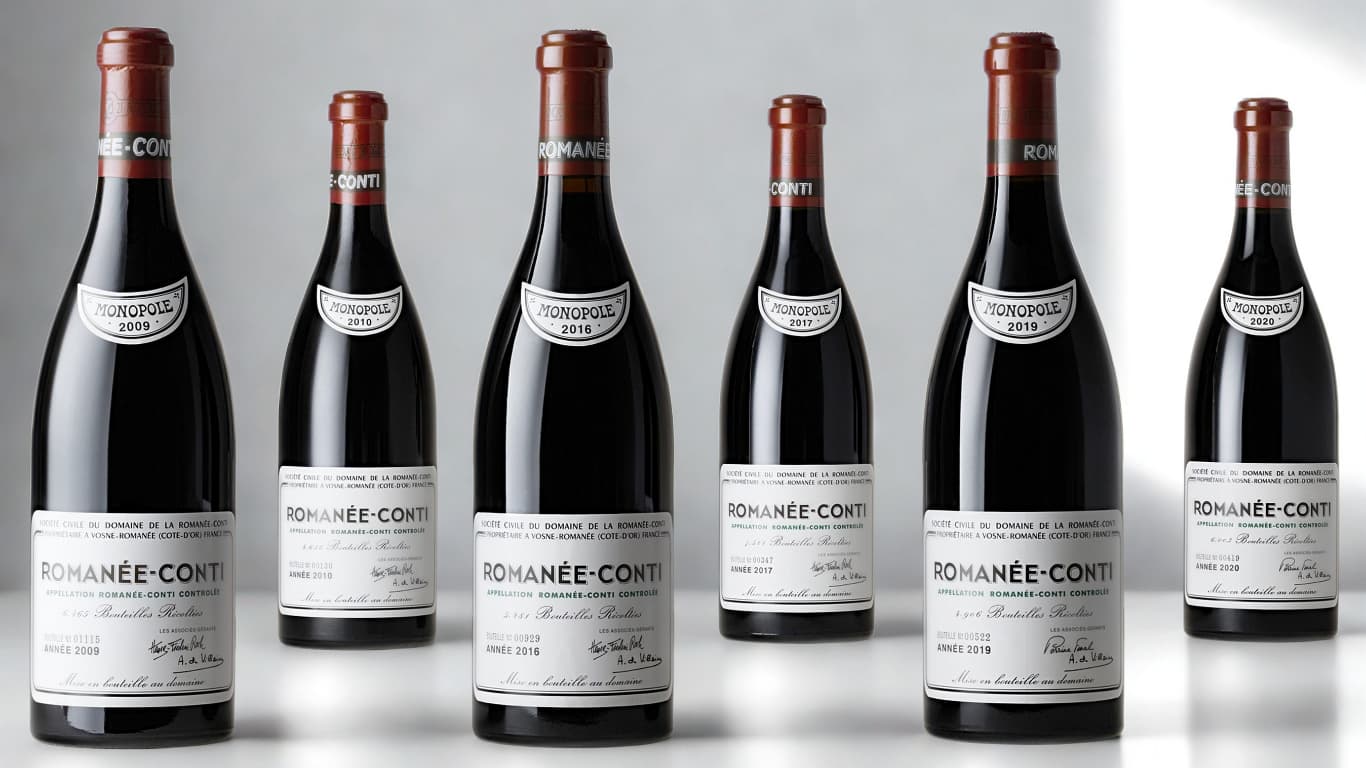
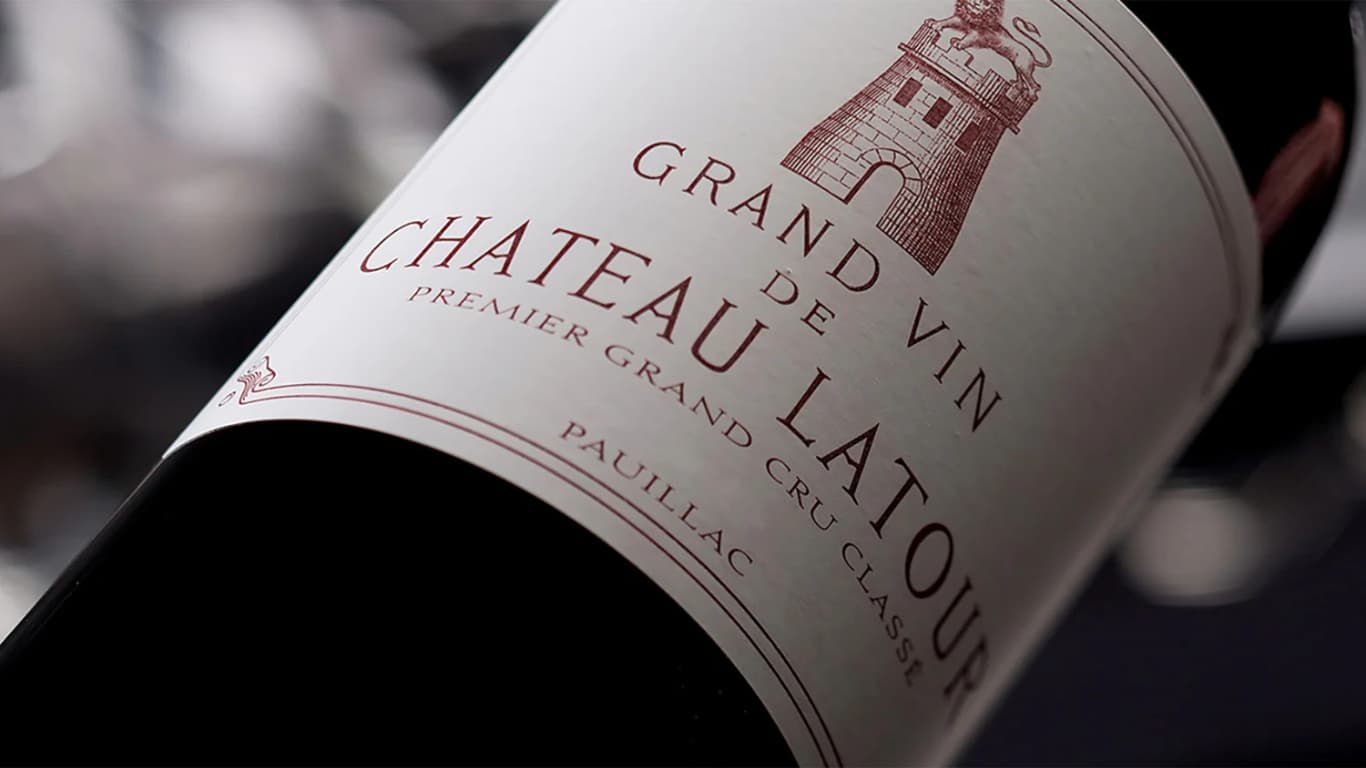
The trade reads these gradations carefully. The named producers at the apex of every collecting region (Domaine de la Romanée-Conti, Château Latour, Pétrus, Sassicaia, Screaming Eagle) all operate on the strict definition.
What mass-produced wine actually means
Mass-produced wine is wine made at industrial scale, typically with fruit sourced from multiple growers across broad geographic regions, vinified in large industrial facilities, and bottled at scales of hundreds of thousands or millions of cases per vintage. The category includes most supermarket wine and most branded wine sold at price points under $20 per bottle internationally.
Mass production is not synonymous with low quality. Modern industrial winemaking can produce technically clean and commercially appealing wines at scale. The structural argument against mass-produced wine in collecting cellars is not quality per se, but the absence of the variables that drive long-term value retention.
Production scale, vineyard sourcing, winemaking flexibility, and critical pedigree all differ structurally between the two categories.
Production volume and structural scarcity
The apex estate wine producers operate at tiny volumes. Domaine de la Romanée-Conti's La Tâche runs to perhaps 1,800 cases globally per vintage. Pétrus runs at roughly 2,500 cases.
Screaming Eagle runs between 500 and 850 cases.
The named First Growths of Bordeaux operate at larger volumes, with Lafite Rothschild producing roughly 20,000 cases of its first wine per vintage. By estate standards this is large, but it remains structurally tiny against mass-production scale.
Mass-produced wines operate at scales that make secondary-market activity structurally impossible. A wine produced at 500,000 cases per vintage has no plausible path to scarcity-driven value retention.
Vineyard sourcing and terroir specificity
Estate wines come from defined vineyards. The terroir is identifiable, the soils are documented, the vine ages are known, and the trade can read the wine against the underlying site with serious precision.
Mass-produced wines typically blend fruit from multiple growers across broad geographic areas. The terroir character of any specific vineyard is diluted in the blend, and the wine's identity rests on producer style and price-point positioning rather than site expression.
The collecting case rests entirely on terroir specificity. Wines whose identity rests on a defined site offer the structural variables (scarcity, uniqueness, ageing curve tied to specific soils) that the secondary market prices in.
Winemaking discipline and quality decisions
Estate producers can make winemaking decisions that mass producers cannot afford. Aggressive sorting at the sorting table, declassification of wines that don't meet standards, low yields enforced by green harvesting, new French oak ageing, gravity-fed winemaking, and extended barrel maturation are all standard at the apex of the estate category.
Mass producers operate under structural constraints that preclude many of these practices. The economics of bulk wine production require maximum yield from each ton of fruit, fast turnaround through tanks and barrels, and process discipline aimed at consistency rather than peak quality.
The structural quality difference at the apex is real, even if the difference at the mid-tier is more contestable.
Critical pedigree and the named-producer effect
The apex estate wines receive serious critical attention from the Wine Advocate, Vinous, Decanter, Jancis Robinson, and the broader trade press. The named producers' wines are reviewed in depth, scored across multiple publications, and discussed in the trade press across vintages.
Mass-produced wines receive minimal critical attention beyond consumer-facing reviews oriented to immediate drinking. The Wine Spectator's Top 100 list occasionally includes wines at scale, but the apex of serious critical attention concentrates on the estate category.
The implications for cellar construction are direct. Wines that lack serious critical pedigree do not enter the secondary-market collecting conversation, regardless of their immediate quality.
Provenance traceability
Estate wines carry traceable provenance from the producer through the négociant or merchant chain to the collector. The bottle's chain of custody can be documented, authenticated, and used to support the wine's secondary-market positioning.
Mass-produced wines carry minimal provenance discipline beyond the bottling-line lot codes. The structural argument for provenance discipline (which drives 15 to 25 percent premiums at major auction for the most carefully tracked bottles, as our coverage of how serious collectors manage and grow fine-wine cellars walks through) does not apply at the mass-production scale.
The Kurniawan case in 2008 restructured the contemporary authentication discipline around exactly this distinction.
Ageing capacity and structural durability
Estate wines from the apex producers age on 20 to 60 year arcs in great vintages. The structural variables (low yields, careful winemaking, oak discipline, bottling timing) all combine to produce wines whose drinking windows extend across generations.
Mass-produced wines are built for consumption within 2 to 5 years of release. The winemaking decisions that drive long-term ageability would compromise the economics of mass production, and the wines are not built to age.
For collectors building cellars with multi-decade horizons, the structural ageing distinction is decisive.
Secondary-market positioning
The Liv-ex Fine Wine 1000 covers estate wines from the canonical regions. The apex producers in each region anchor the sub-indices, and the secondary-market activity at Sotheby's, Christie's, Acker, Zachys, Hart Davis Hart, Bordeaux Index, and Berry Bros & Rudd concentrates on the estate category.
Mass-produced wines do not enter the secondary-market conversation. Auction houses do not catalog them, merchants do not maintain inventory beyond current-release product, and the structural variables for value retention are absent.
The implications for cellar construction follow directly. Serious collecting cellars allocate exclusively to estate wine across the price tiers.
How to evaluate estate credentials
Five questions sharpen the evaluation. First, does the producer own and farm the vineyards directly? Second, is the wine vinified at the estate?
Third, is the wine bottled at the estate (mis en bouteille au château or au domaine)?
Fourth, what is the production scale (cases per vintage)? Fifth, does the producer maintain critical pedigree across the major publications and secondary-market activity across the major auction houses?
The wines that score on all five are the wines that anchor serious cellars. Our most coveted wine producers of 2026 coverage walks the apex producers in detail.
What this means for collectors
The estate-versus-mass-produced distinction is one of the few binary structural questions in serious wine collecting. Estate wines from the apex producers anchor serious cellars across all price tiers. Mass-produced wines have effectively no role in collecting cellars beyond immediate-consumption stock.
The collector building a serious cellar in 2026 should apply the distinction systematically. Our coverage of the single-vineyard wines versus blends cellar comparison sets useful additional context for the structural questions within the estate category.
What we'll watch next
Three signals will tell us how the estate-versus-mass-produced landscape evolves. First, whether mid-tier estate producers (the apex of the regional categories below the canonical names) continue to gain critical recognition and secondary-market depth. Second, whether private-label estate wines from named retailers (a growing category) develop credible collecting positioning.
Third, whether the structural definition of "estate" tightens further as the trade continues to value provenance discipline.
The structural variables we've described above will continue to define the distinction across the next decade.
We last reviewed this analysis in May 2026.

Frequently Asked Questions
- What are Estate Wines?
- Estate Wines are produced from grapes grown, harvested, vinified, and bottled on the same property, ensuring full control over quality and terroir expression.<br><br>
- What are Mass-Produced Wines?
- Mass-Produced Wines are made from grapes sourced across wide regions, blended for consistency, and produced at industrial scale to meet high-volume consumer demand.<br><br>
- Are Estate Wines more expensive than Mass-Produced Wines?
- Yes. Estate Wines command higher prices due to limited production, terroir specificity, and brand prestige, while Mass-Produced Wines are priced for broad retail affordability.<br><br>
- Is storage important for Estate Wines?
- Yes. Proper climate-controlled storage is critical for maintaining quality and maximizing the future market value of Estate Wines, especially over multi-decade horizons.<br><br>
- Do Estate Wines perform well during market downturns?
- Estate Wines historically maintain value during downturns due to their intrinsic scarcity, cultural capital, and consistent collector demand.<br><br>

Stefanos Moschopoulos
Stefanos Moschopoulos founded The Luxury Playbook in Athens and has spent the better part of a decade following the auction calendar, the en primeur releases, and the watchmakers, gallerists, and shipyards the magazine covers. He writes the field guides and listicles that anchor the Connoisseur section — pieces built on Phillips and Christie's results, Liv-ex movements, and conversations with collectors he has met across Geneva, Bordeaux, Basel, and Monaco. His own collecting habits sit closer to watches and wine than art, and it shows in the level of detail in the magazine's coverage of those categories. Under his direction, The Luxury Playbook now publishes long-form field guides, market-defining year-end listicles, and the Voices interview series with the founders behind the houses and the brands.