Texas's million-dollar home market has expanded faster than any other state cluster in the U.S. through 2024 and 2025, with Austin, Houston and Dallas now collectively accounting for a meaningful share of all U.S. luxury residential transactions outside the established coastal markets. The data, summarised by Knight Frank's U.S. desk and corroborated by the major brokerage indices, points to a structural rather than cyclical shift.
Mansion Global, the Wall Street Journal's Texas coverage and FT Property have all flagged the same picture. Texas is no longer the value-tier alternative to coastal luxury. It is increasingly a peer market in its own right, with brokerage infrastructure, cross-border buyer access and architectural quality that compete directly with the established West Coast and Atlantic Coast trophy positions.

- Austin, Houston and Dallas continue to lead Texas million-dollar home sales in 2026, with the broader corporate relocation story underpinning luxury segment activity across the state.
- We see Park Cities, Highland Park and Preston Hollow in Dallas, alongside River Oaks in Houston and West Lake Hills in Austin, anchoring the trophy segment across each metro.
- Property tax structure carries the structural Texas characteristic of high effective rates, with combined municipal, county and school district levies warranting careful underwriting attention.
- No state income tax remains a structural appeal driver for relocating HNW buyers, with the offsetting property tax burden shaping the overall ownership cost picture.
- Inventory at the million-dollar level has loosened modestly through 2025 and 2026, with the segment offering more buyer leverage than at the recent cycle peak.
- For most considered luxury buyers we view the Texas trio as warranting structural awareness of the property tax landscape alongside the corporate relocation demand drivers.
- Who is this for?
- Luxury property buyers, investors and advisers tracking the Texas million-dollar market, alongside the family offices, brokers and tax advisers supporting metro Texas transactions.
- What is happening?
- A market analysis of how Austin, Houston and Dallas are leading the Texas million-dollar home market explosion, covering submarket dynamics, tax considerations and corporate relocation drivers.
- When did this emerge?
- The article covers conditions through 2025 and 2026, with reference to the post-pandemic corporate relocation cycle and the latest luxury segment activity data.
- Where is this happening?
- The piece covers Austin, Houston and Dallas, including West Lake Hills, River Oaks, Park Cities, Highland Park, Preston Hollow and the broader Texas trio submarkets.
- Why does it matter?
- Texas million-dollar market activity continues to lead the country in 2026, which is why understanding both the demand drivers and the property tax structure matters for serious buyers.
Why the Texas Million-Dollar Home Market Has Expanded
The structural drivers are well-rehearsed: population in-migration tracked by U.S. Census Bureau data, corporate relocation flows, the absence of state income tax, and the regulatory framework that has historically supported luxury construction at a pace the more constrained coastal jurisdictions cannot match.
The compounding effect over the past five years has been meaningful. Population growth in the Texas Triangle has run at 1. 5 to 2.
5 percent annually, against a U.S. national rate nearer 0. 5 percent. The cohort moving in skews younger, higher-income and more cross-border-connected than the legacy Texas population.
Knight Frank, Cushman and Wakefield and CBRE all flag this as a structural rather than cyclical shift. The cohort is not moving back to California in the next cycle.
Austin Leads the Luxury Build-Out
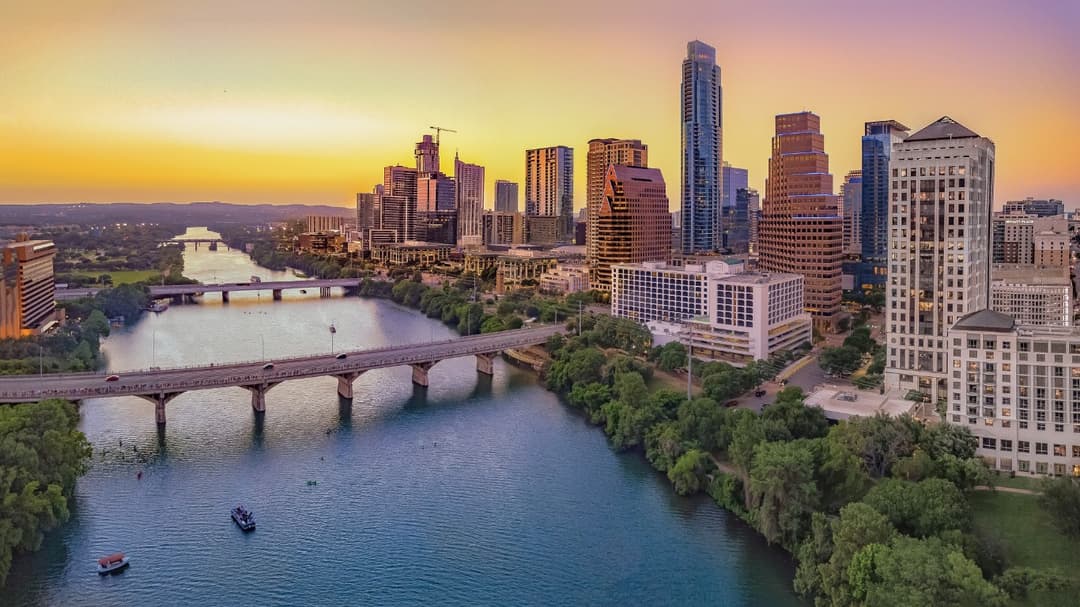
The strongest Texas million-dollar growth is concentrated in Austin Real Estate Market and its prime neighbourhoods (Tarrytown, Westlake, Rollingwood, the West Lake Hills band). The Austin Board of Realtors reports that million-dollar-plus transactions have grown at double-digit annual rates through the past three years.
The buyer cohort is concentrated in tech-sector wealth from California and Seattle, with a growing cross-border presence from Asia and selected European principals. Sotheby's International Realty's Austin office and Christie's International Real Estate's Texas desk have both reported a meaningful step-up in cross-border inquiry through 2025.
Pricing for prime Austin trophy product runs in the 1,200 to 2,800 dollars per square foot band, with peak Westlake and Tarrytown inventory pushing above. The pricing has compounded at mid-to-high-single-digit annual rates through the cycle.
Dallas Million-Dollar Homes Set New Records
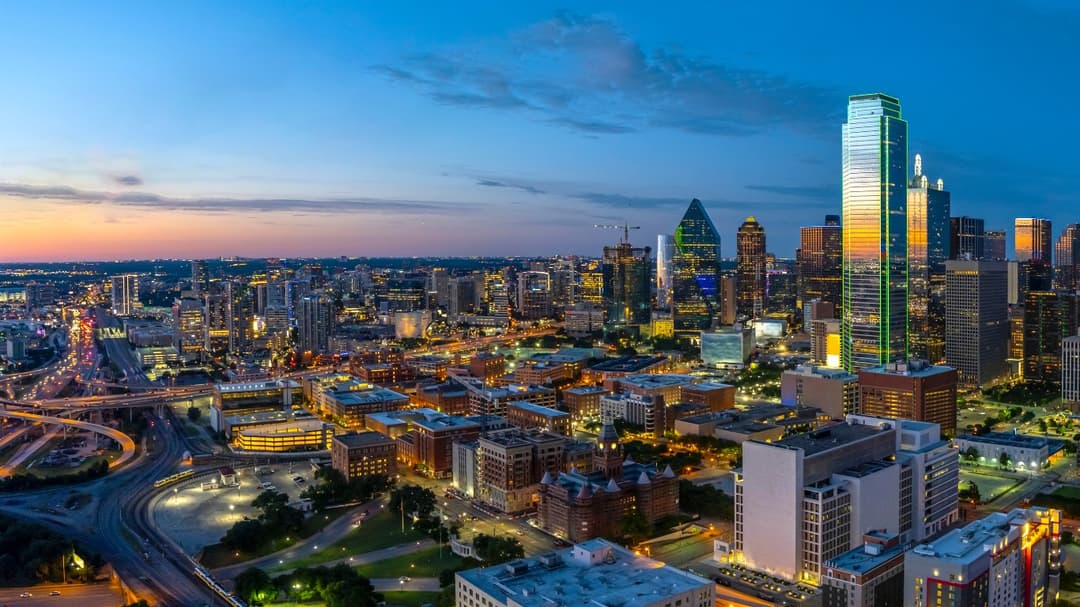
The Dallas Morning News has tracked the structural expansion of the Dallas Real Estate Market million-dollar segment through the past five years, with Highland Park and Preston Hollow now posting record transaction counts in the 2-to-10-million-dollar tier.
The Dallas buyer cohort is the most domestically driven of the three Texas markets. The bid book is dominated by long-tenured Dallas wealth and corporate-relocation principals from California, the Northeast and the upper Midwest. Cross-border presence is modest but growing.
Pricing for prime Dallas trophy product, particularly in Highland Park, runs comparable to Austin in the 1,200 to 2,400 dollars per square foot range. The compounding has been steadier and the volatility lower than in Austin.
Houston Quietly Outpaces on the Trophy Bid
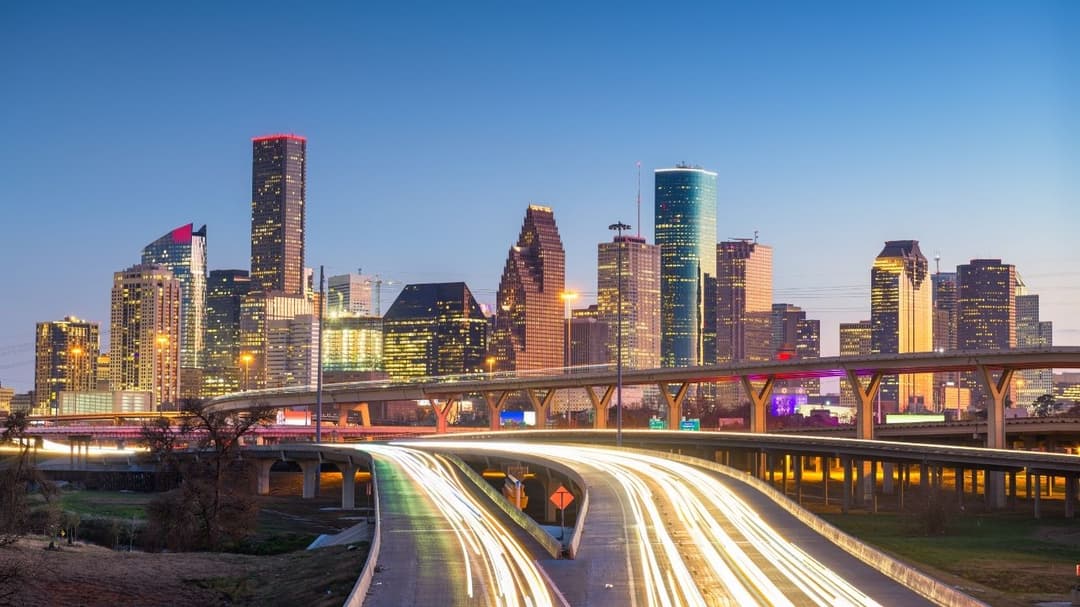
The most defensible value play in the Texas Triangle is currently Houston. The Houston Association of Realtors reports that the city's million-dollar-plus transactions have grown faster on a percentage basis than either Austin or Dallas over the past 24 months, against a smaller absolute base.
The Houston bid book is concentrated in River Oaks, Memorial and West University. Cross-border presence is meaningful, particularly from Latin American principals (Mexico, Colombia, Brazil) and a growing UAE and Asia-based cohort. The energy-sector wealth base continues to compound.
Pricing for prime Houston trophy product runs in the 1,000 to 2,200 dollars per square foot band, against the comparable Beverly Hills inventory at 4,500 to 9,000. The arbitrage is the alpha, and the cohort engaging with the market is sophisticated enough to recognise it.
The Disciplined Buyer's Path Through the Three Cities
The smart money discipline shift that has reshaped the broader U.S. real estate conversation favours exactly this kind of relative-value position. Texas trophy product offers the same architectural quality as the established coastal markets at a meaningful pricing discount.
For collectors prioritising tech-sector buyer-cohort depth and cross-border momentum, Austin is the most defensible entry. For collectors prioritising long-tenured trophy quality and the most established brokerage network, Dallas Highland Park warrants explicit attention. For collectors prioritising the absolute strongest pricing discount versus comparable coastal product, Houston River Oaks is the cleanest value play.
The wider context is in our coverage of real estate investors moving into thinner-bid markets, and the Texas pattern fits the same framework.
What a Million Dollars Buys in Each City
In Austin, a million dollars typically clears a 2,800 to 4,000 square foot home in Tarrytown or close-in West Lake Hills, often with a refurbishment budget required. In Dallas Highland Park, the same budget buys 2,500 to 3,500 square feet of established trophy inventory, generally turnkey. In Houston's River Oaks and Memorial, the same dollar buys 3,000 to 4,500 square feet, often in larger lots.
The square footage at the million-dollar tier is roughly 2. 5 to 3. 5 times what comparable budgets buy in coastal trophy markets.
That is the structural arbitrage that has driven the Texas migration.
The wider Santorini real estate market forecast framing - that supply-constrained markets eventually price out the cohort that initially built them - applies to the coastal U.S. luxury markets. Texas is the relief valve.
What This Means for Buyers
Buyers acting in the next 24 months have the strongest combination of architectural quality, brokerage network maturity and pricing arbitrage available in any cluster of U.S. luxury markets. The cohort that recognises this early has the cleanest entry into the cycle.
For cross-border buyers, the Dubai's record-breaking real estate run dynamic has thinned the bid for U.S. coastal trophy product, but the Texas cluster has not been similarly affected. The cross-border bid in Texas remains constructive.
Sotheby's International Realty, Christie's International Real Estate, Engel and Voelkers and the long-tenured Texas brokerages have the network. For collectors of U.S. trophy property, the Texas Triangle in 2026 offers the cleanest combination of value, quality and cohort depth available.
We last reviewed this analysis in May 2026.

Savvas Agathangelou
Savvas Agathangelou co-founded The Luxury Playbook and has spent years reporting from the prime postcodes the magazine covers — Mayfair, Knightsbridge, the Athens Riviera, Dubai's Palm crescents, and the southern Mediterranean coastlines where the world's wealthy keep coming back. His background is in international hospitality, and that frame shapes how he writes about property: the developer's choices, the architect's signature, the agency's bench of named brokers, the building's service standard once the buyer moves in. He files developer spotlights, agency profiles, and the seasonal "Properties That Defined" listicles, and he hosts the magazine's founder-and-leadership interviews on the Voices side.