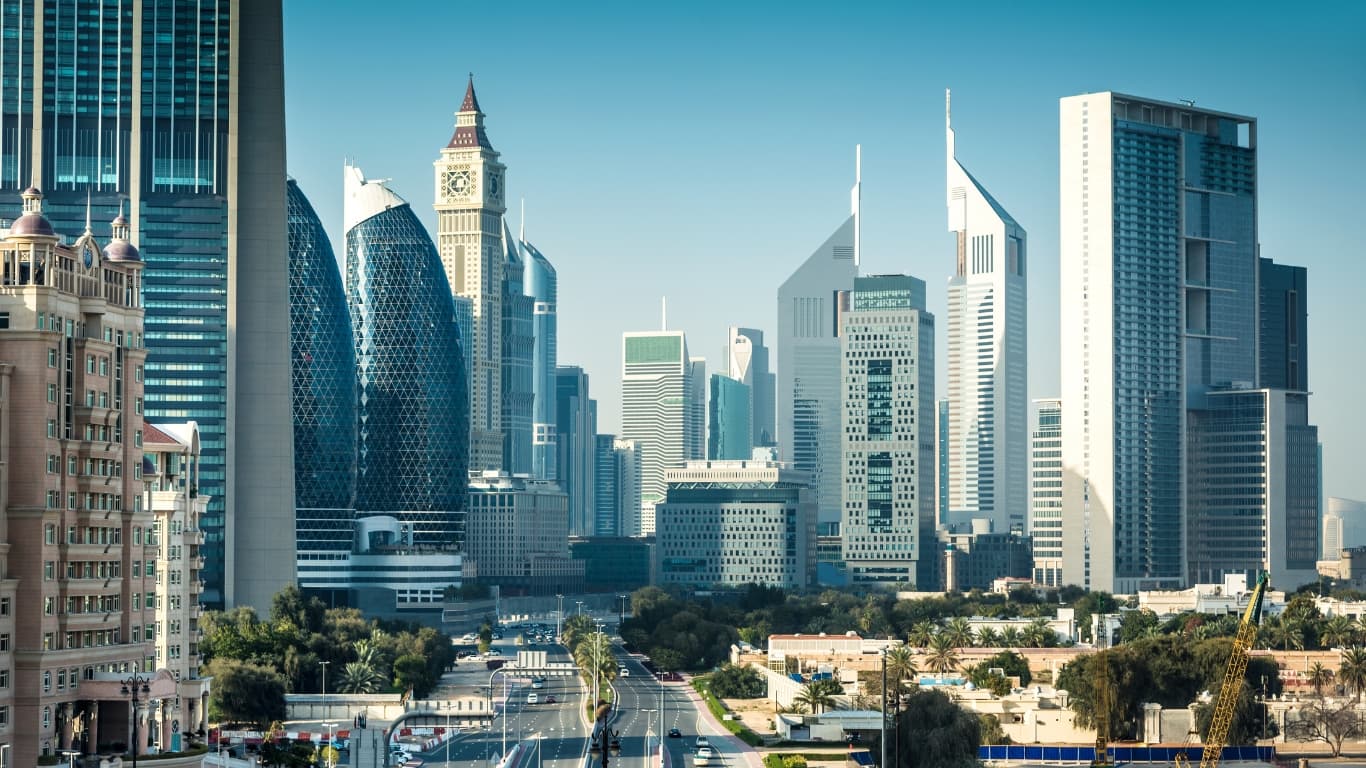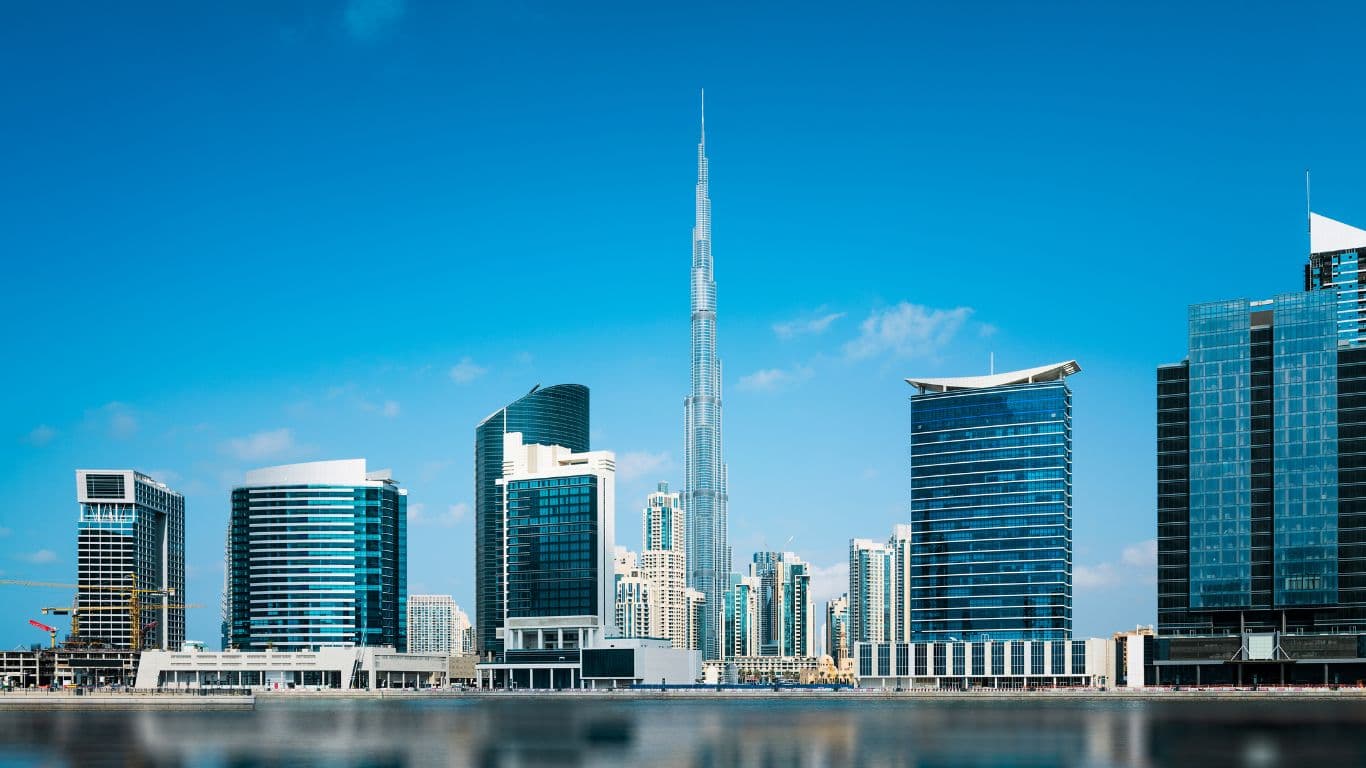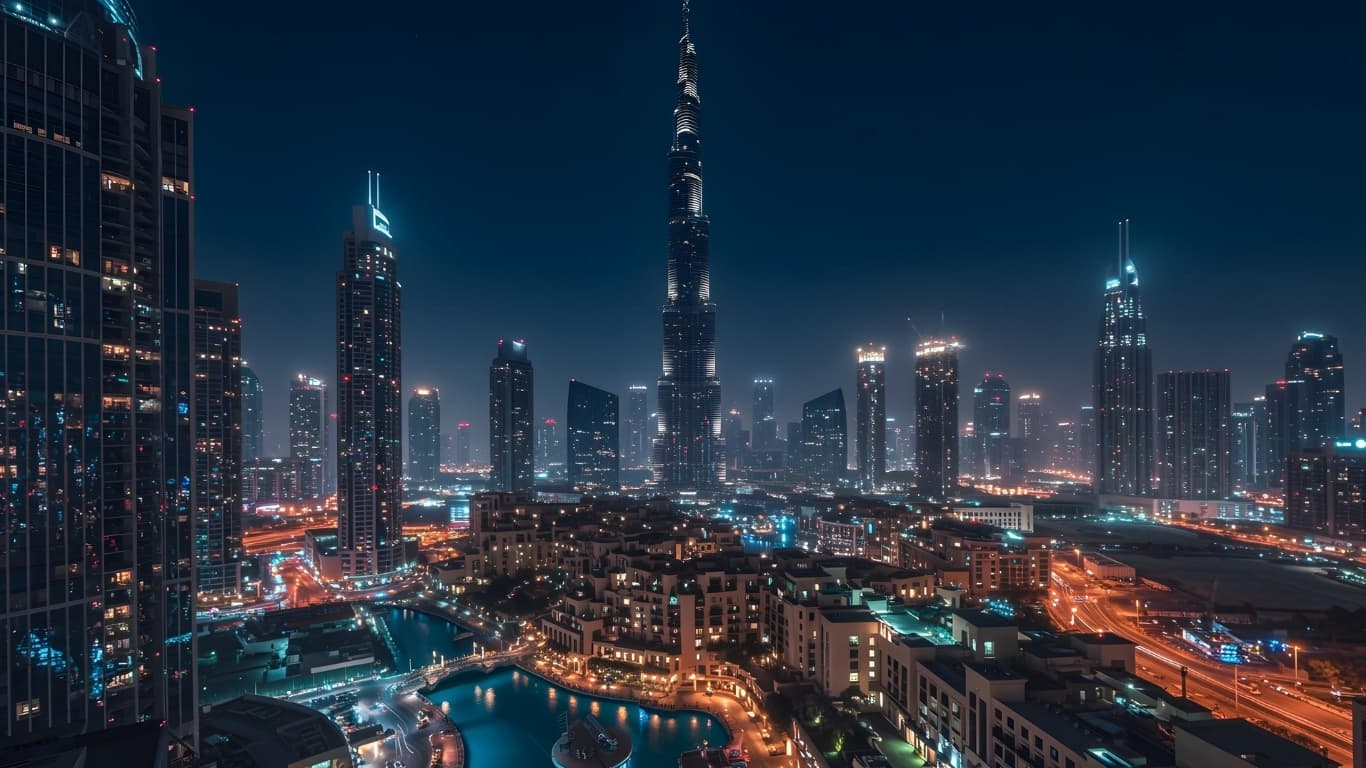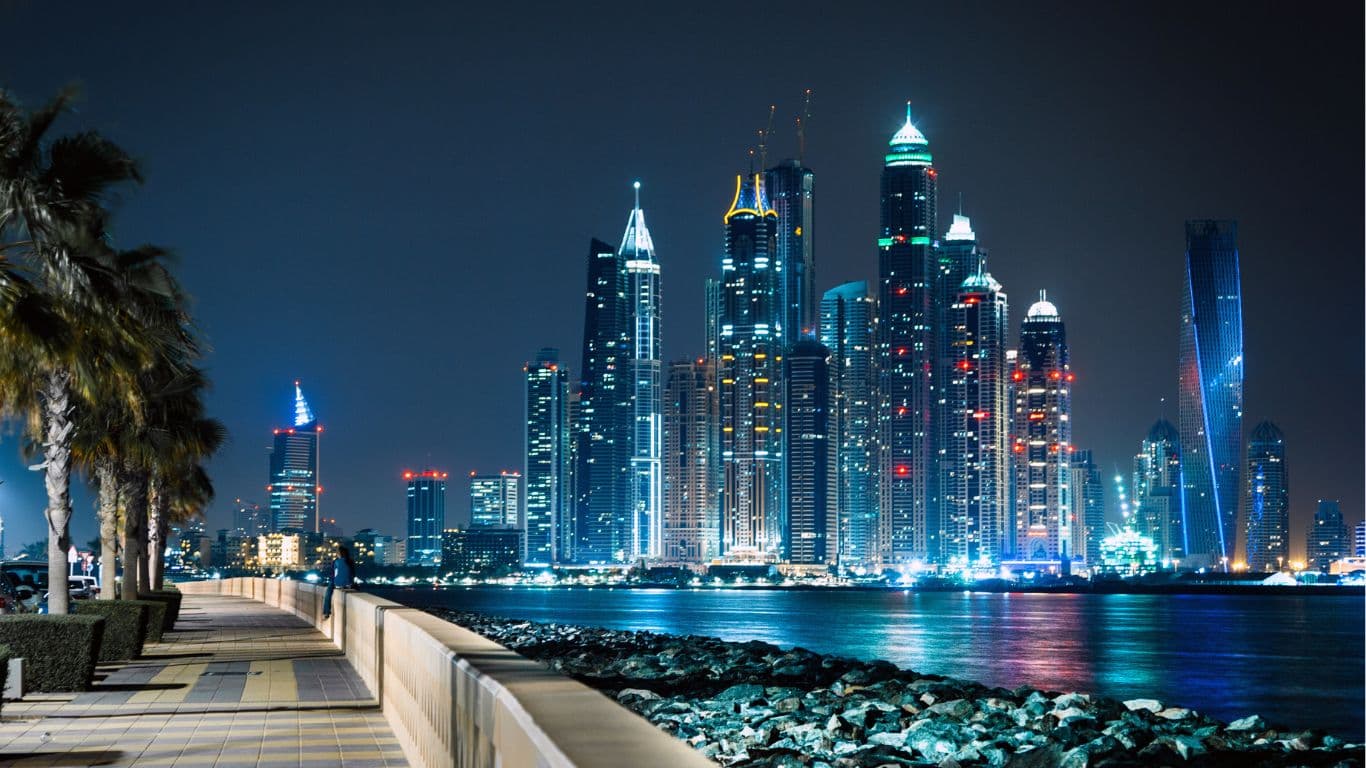
Dubai is a city of distinct neighborhoods, each with its own architectural language, demographic, and rhythm. Five of them now do most of the heavy lifting at the prime end of the market, and another half-dozen are doing more interesting work below the headline numbers. The Dubai Land Department's 2025 figures put residential transaction volume at roughly AED 326 billion.
The prime band above AED 20 million accounted for a third of that figure by value. Knight Frank's 2025 MENA Wealth Report listed Dubai among the four most-bought-into global prime markets, alongside London, New York, and Singapore. Mansion Global's 2025 Dubai dispatch confirms the same league position.
Below, our editorial cut of where the buyers are actually landing, and why each address holds.
- Dubai's most coveted neighbourhoods in 2026 span Palm Jumeirah, Downtown Dubai, Emirates Hills, Jumeirah Bay, Dubai Marina and the secondary growth corridors gaining momentum.
- We see Palm Jumeirah anchoring the trophy waterfront category, with the Frond villas and the One&Only Mirage residences defining the upper end of the segment.
- Downtown Dubai continues to deliver record transaction activity, with the Burj Khalifa-adjacent towers attracting international buyer interest at multiple price points.
- Emirates Hills represents the established villa benchmark, with the gated lifestyle and the international school proximity supporting consistent buyer demand.
- Jumeirah Bay, Dubai Marina and Bluewaters Island represent the next tier, each offering distinct waterfront profiles at different price points within the prime market.
- For most considered international buyers we view neighbourhood selection as primarily about lifestyle priority and access patterns rather than abstract appreciation metrics alone.
- Who is this for?
- International buyers selecting Dubai neighbourhoods for acquisition, alongside the advisers, brokers and family office staff framing those decisions across the prime market.
- What is happening?
- A read of Dubai's most coveted neighbourhoods in 2026, covering Palm Jumeirah, Downtown, Emirates Hills, Jumeirah Bay, Dubai Marina and the secondary growth areas.
- When did this emerge?
- The article reflects 2026 market conditions through Dubai Land Department, Property Monitor and Knight Frank UAE data alongside our own observations.
- Where is this happening?
- The piece focuses on Dubai, including Palm Jumeirah, Downtown, Emirates Hills, Jumeirah Bay, Dubai Marina and Bluewaters Island.
- Why does it matter?
- Dubai neighbourhood selection determines the lifestyle and appreciation profile, which is why upfront discipline pays back across every subsequent property-level decision the buyer makes.
Palm Jumeirah
The original Palm has stayed at the top of the Dubai conversation for a reason. It is the address that defines the city to the outside world, and the resale data says owners who bought into the right villa segment a decade ago haven't lost the floor. The trunk-end and crescent are the two most defensible plots; the fronds in the middle of the run are the ones traded most actively.
Mansion Global's 2025 Palm dispatch flagged Como Residences (Damac), the Atlantis the Royal residences, the Bulgari villas, and the Six Senses residences at Bluewaters as the names anchoring the current wave. Sotheby's International Realty UAE and Christie's International Real Estate's Dubai desk both place Palm Jumeirah at the apex of the city's prime resale liquidity. The neighborhood holds because the address is finite.
There is one Palm Jumeirah and it isn't being remade.
Emirates Hills
Emirates Hills remains the Beverly Hills of Dubai. Equestrian-scale villa plots, the Montgomerie Golf Course at the center, and a buyer profile that skews toward family offices, regional CEOs, and second-home owners with primary bases in London or Geneva. The lake-fronting plots rarely come up on the open market; when they do, they tend to clear off-market through agencies like Luxhabitat, Engel & Völkers, and Driven Properties.
Emirates Hills is not a place a buyer enters in a hurry. It is a place where you wait two years for the right plot, then commission the architect of your choice (Edgley Design, Killa Design, Foster + Partners' regional practice) to build something specific to it. Cushman & Wakefield's Dubai prime desk has tracked Emirates Hills transactions at a steady year-over-year volume floor across the last five years.
Dubai Hills Estate
Emaar's Dubai Hills has matured into the family choice for prime. The community combines completed schools (GEMS Wellington, Dwight, Repton), a fully operational mall, and a deep cycle of villa releases that have set price benchmarks across the segment. The 2025 Vista Lux launch sold within days.
Dubai Hills works because Emaar built the masterplan with the community first and the trophy releases second. Buyers who entered in the early phases have absorbed the operational maturity that the 2025 releases are pricing in. For a family relocating to Dubai, the Hills is the most institutionally complete answer in the city.
Downtown Dubai
Downtown remains the high-rise prime, anchored by the Burj Khalifa, the Dubai Mall, and a generation of named towers (Address Sky View, Boulevard Heights, Volta) that bring the upper apartment band into the AED 6,000 to 9,000 per square foot range. The Burj Khalifa addresses themselves still trade on cachet rather than rental flow.
JLL's 2025 Dubai office and residential brief notes that the Downtown apartment-resale curve has flattened after the post-2020 rebound, with the Burj-adjacent floors holding price discipline.
For buyers who want a true urban Dubai address with hotel-grade service downstairs, Downtown is the answer. Colliers' Middle East desk places Downtown alongside Marina and Palm Jumeirah as the three highest-liquidity prime districts in the city. The address-buyer is the predominant profile.
Dubai Marina and Bluewaters
The Marina has matured. The 2010s wave that defined the early Dubai high-rise era (Princess Tower, Cayan Tower, Marina Crown) has been joined by a second generation of branded buildings: the Cavalli Tower, the Six Senses residences at Bluewaters, the Address Marina. Bluewaters Island, sitting just offshore, has emerged as the Marina-adjacent address with the cleanest infrastructure and the strongest hospitality program (Caesars Palace, Madame Tussauds, the Ain Dubai Ferris wheel).
For buyers who want urban density with a marina view, the combination of Marina and Bluewaters covers the segment. Savills' MENA desk notes that the Marina rental yield remains structurally higher than Palm or Downtown, which keeps the investor pool meaningfully active in addition to the owner-occupier flow.
City Walk and Jumeirah
City Walk, the Meraas master-development between Downtown and the coast, has become Dubai's closest thing to a low-rise European urban quarter. The Central Park villas and the Bulgari Lighthouse extension sit at the upper end. Jumeirah proper (the original Jumeirah, not Jumeirah Lakes Towers) has stayed the family-oriented coastal residential band, with villa plots and townhouses that span from generational holdings to recent renovations.
The Jumeirah seafront retains a buyer profile that overlaps with London's Holland Park and New York's Brooklyn Heights. Buyers who want a quieter cadence with strong walkability tend to gravitate here. Engel & Völkers' UAE office reports that Jumeirah resale velocity has accelerated over the last twenty-four months.
Business Bay
Business Bay has reset itself in the past three years. The Lana Residences (Dorchester Collection), the Bayz101 tower, and the Vela Viento by Omniyat-with-Bvlgari are anchoring the Bay's pivot from a pure office-and-apartment district to a mixed-use band with branded residences sitting on canal-front plots. The branding has done the work.
Buyers who looked at Business Bay five years ago saw a transit district. Buyers landing now see a residential program with hotel partners attached. Knight Frank's 2025 Dubai brief flags Business Bay as the district with the largest year-over-year prime-band growth.
Jumeirah Bay Island
The pear-shaped island offshore from Jumeirah holds the Bulgari Resort and the Bulgari Residences. Two of the more institutionally tight branded products in the Middle East. Plot count is finite by geography.
Resale activity is thin by design. For owners who want Dubai's quietest prime address, the Bulgari residences on Jumeirah Bay Island are the answer. Mansion Global tracked transactions at AED 13,000-plus per square foot during the 2024-2025 cycle, the upper end of the city.
MBR City and District One
The Mohammed bin Rashid City masterplan is large. District One, the lagoon-front quarter, holds the trophy villas. The District One Mansions release in 2024 reset per-square-foot benchmarks for villa product in the city.
Crystal Lagoon technology runs through the district. For a family who wants a villa with water frontage that isn't beachfront, District One is the answer. CBRE's MENA residential desk notes District One has captured the largest share of inbound family-villa capital among Dubai's master communities over the 2024-2025 cycle.
Dubai South and Expo City
The southern corridor is the where-it's-going part of the conversation. The post-Expo planning has produced masterplanned releases pitched at owner-occupiers (Mira Villas with Bentley Home, the Expo City Residences, the Mag of Life schemes) alongside the Al Maktoum airport build-out. Dubai South in 2026 reads the way Dubai Hills read in 2018: under-priced relative to where the planning is going, and waiting for the operational layer to land.
The buyers in early are betting on the corridor. The schools, the mall, and the hospitality operators arrive in 2027 and 2028. JLL's MEA office has flagged Dubai South as the master community most likely to see the largest prime-price re-rating across the next three years.
What this means for buyers
Dubai's neighborhood map has matured. Five years ago the conversation was binary: Marina or Downtown, Palm or Hills. Today the granularity is closer to a global city.
Each of the addresses above has a defensible reason to exist and a buyer field that has settled into it. Choosing between them is no longer a value question; it is a question of how the owner wants to live. That is a healthier place for a city to be, and it is the basis on which the next decade of Dubai property gets built.
We last reviewed this analysis in May 2026.
Further reading


Savvas Agathangelou
Savvas Agathangelou co-founded The Luxury Playbook and has spent years reporting from the prime postcodes the magazine covers — Mayfair, Knightsbridge, the Athens Riviera, Dubai's Palm crescents, and the southern Mediterranean coastlines where the world's wealthy keep coming back. His background is in international hospitality, and that frame shapes how he writes about property: the developer's choices, the architect's signature, the agency's bench of named brokers, the building's service standard once the buyer moves in. He files developer spotlights, agency profiles, and the seasonal "Properties That Defined" listicles, and he hosts the magazine's founder-and-leadership interviews on the Voices side.