The most considered entry points into Rolex aren't the references that get the most secondary-market attention. The Daytona, the Submariner Date and the GMT-Master II are the watches the brand is famous for; they're also the watches with the steepest allocation friction at the boutique level and the largest secondary-market premiums. The references collectors actually start with, when they're starting with the brand for serious reasons rather than for status, sit one tier below.
- The best entry points into Rolex for 2026 still cluster around Datejust, Explorer, and Air-King references, with secondary-market depth and accessible pricing supporting first purchases.
- A pre-owned Datejust 36 or 41 remains the consensus first-Rolex recommendation, with versatile design and condition durability that anchors decades of wear.
- The Explorer 124270 and 124273 offer tool-watch heritage at price points that sit below the more famous Submariner and GMT references.
- We see the Air-King 126900 as the most underrated entry-tier Rolex, with distinctive dial design and the in-house 3230 calibre supporting a credible long-term purchase.
- Vintage Datejust references from the 1970s and 1980s offer the most affordable entry points into Rolex collecting, often well below the modern catalogue.
- A pre-owned Submariner 124060 sits at the upper edge of entry-tier purchases, with no-date design purity and the in-house 3230 calibre justifying the step up.
- Who is this for?
- First-time Rolex buyers, gift buyers planning a serious Rolex acquisition, and established collectors recommending Rolex entry points to friends.
- What is happening?
- A guided overview of the best entry points into Rolex for 2026, covering Datejust, Explorer, Air-King, vintage Datejust, and no-date Submariner options.
- When did this emerge?
- The current entry-point landscape reflects 2026 secondary-market dynamics, with pre-owned Datejust and Explorer references continuing to anchor first purchases.
- Where is this happening?
- Authorised dealers globally maintain waitlists for some entry references, while Chrono24, Subdial 50, and independent specialists handle the broader pre-owned market.
- Why does it matter?
- A well-chosen first Rolex shapes the entire collection that follows, and the right entry point balances accessibility, condition standards, and long-term value.
The Oyster Perpetual, the Air-King, the entry-tier Datejust 36, and the no-date Submariner are where the conversation actually starts. Each is the kind of piece a buyer can acquire at retail with patience. Each anchors decades of subsequent collecting in ways the headline references don't quite duplicate.
The Oyster Perpetual: the most considered Rolex entry point
The Oyster Perpetual is Rolex's defining time-only reference. The watch the brand was effectively built around since the original Oyster case patent of 1926 and the Perpetual rotor movement of 1931. Current production runs from 28mm through 41mm; the 36mm reference 126000 (retail $6,400) and the 41mm reference 124300 (retail $6,800) anchor the contemporary catalogue.
Allocation is meaningfully easier than for the sport references; the secondary market trades close to retail in clean condition. The recently discontinued 36mm and 41mm references with the 2020 candy-coloured dials (turquoise, coral, yellow, green, pink: the "celebration dials") carry collector premiums. The 41mm Tiffany blue reference 124300 has moved most aggressively post-discontinuation, trading at $20,000 to $30,000 in the post-2024 secondary market against the original $6,800 retail.
What makes the Oyster Perpetual the most considered Rolex entry point is the combination of pricing accessibility, reasonable boutique availability, and design discipline. The Calibre 3230 movement provides 70-hour power reserve and the technical credentials standard across the modern Rolex catalogue; the smooth bezel and time-only dial keep the watch register-flexible across formal and casual settings.
Hodinkee, GQ and the established specialist Rolex sites all consistently identify the Oyster Perpetual as the most considered modern Rolex entry point.
The Air-King: the aviation-derived entry
The Air-King reference 126900 (current production from 2022 onwards) is the second-most-considered entry into the broader Rolex catalogue. The 40mm case, the distinctive aviation-derived dial geometry (the green seconds hand, the prominent 3, 6, 9 numerals, the yellow Rolex coronet), and the Calibre 3230 movement make it a genuinely distinctive Rolex reference at $7,400 retail.
The reference traces back to the original 1945 Air-King as one of the Rolex references made for British RAF pilots returning from World War II.
The modern Air-King's design language carries that historical anchor through the contemporary catalogue. Secondary market trades close to retail; allocation is easier than for the Submariner or GMT-Master II. The reference is one of the more honest entry points to the broader Rolex catalogue for collectors weighting design heritage over pure brand recognition.
The Datejust 36: the working dress-watch entry
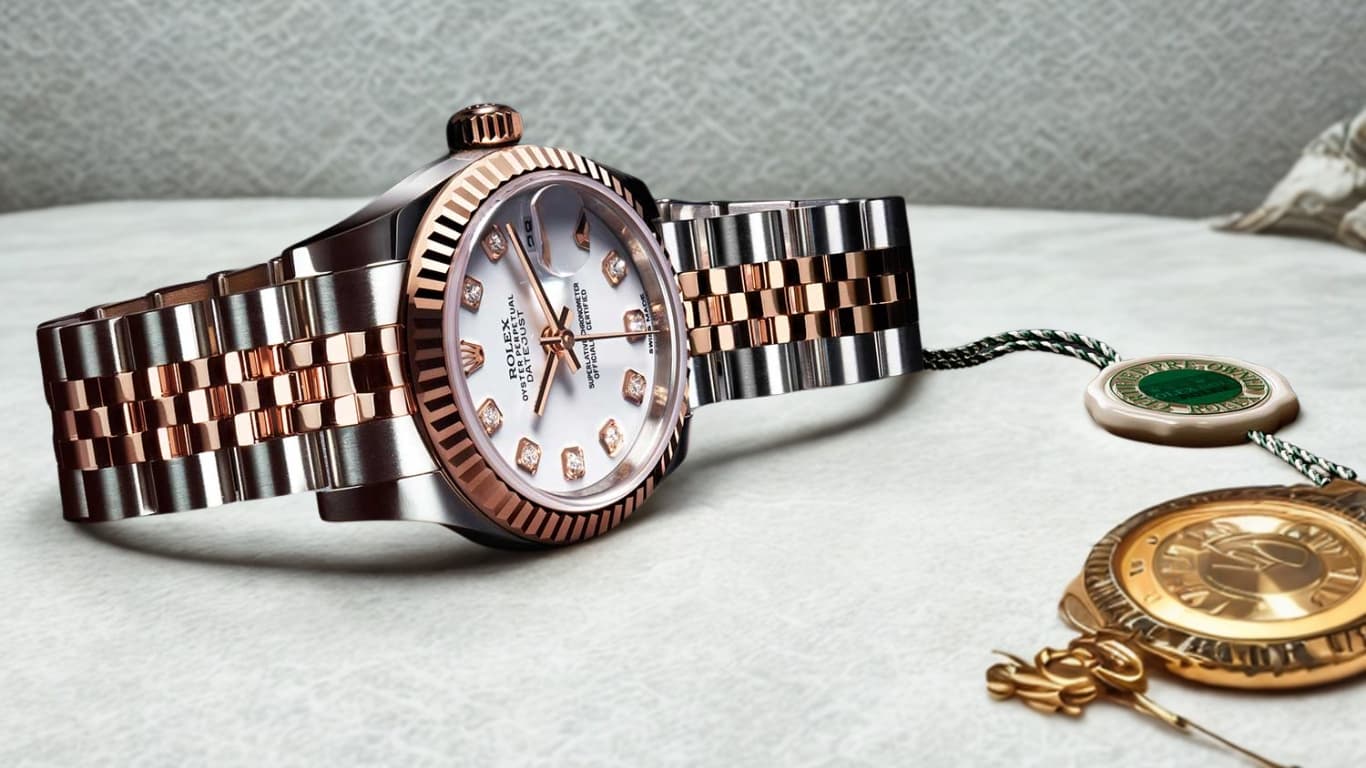
The Datejust 36, particularly in the steel reference 126200 (smooth bezel, Oyster bracelet, retail around $7,500) and the steel-and-yellow-gold reference 126233 with the Jubilee bracelet, is the entry into the broader Datejust catalogue. The 36mm case sits well across most wrists; the Datejust's design discipline across decades makes it the reference most likely to read as well-considered ten years on as it does at purchase.
Allocation at the boutique level is meaningfully easier than for the sport references.
The vintage Datejust 1601, the 36mm steel-and-gold reference from the 1960s and 1970s with the original pie-pan dial, is the secondary-market entry tier into vintage Rolex collecting. Clean examples trade between $4,500 and $8,000 depending on dial colour, condition and box-and-papers documentation.
The reference is one of the few entry points to vintage Rolex where credible examples exist at accessible price points and where the specialist dealer ecosystem handles the trading patterns with sufficient discipline that the broader vintage Rolex framework can be learned through it.
The Submariner No-Date 124060: the sport-catalogue entry
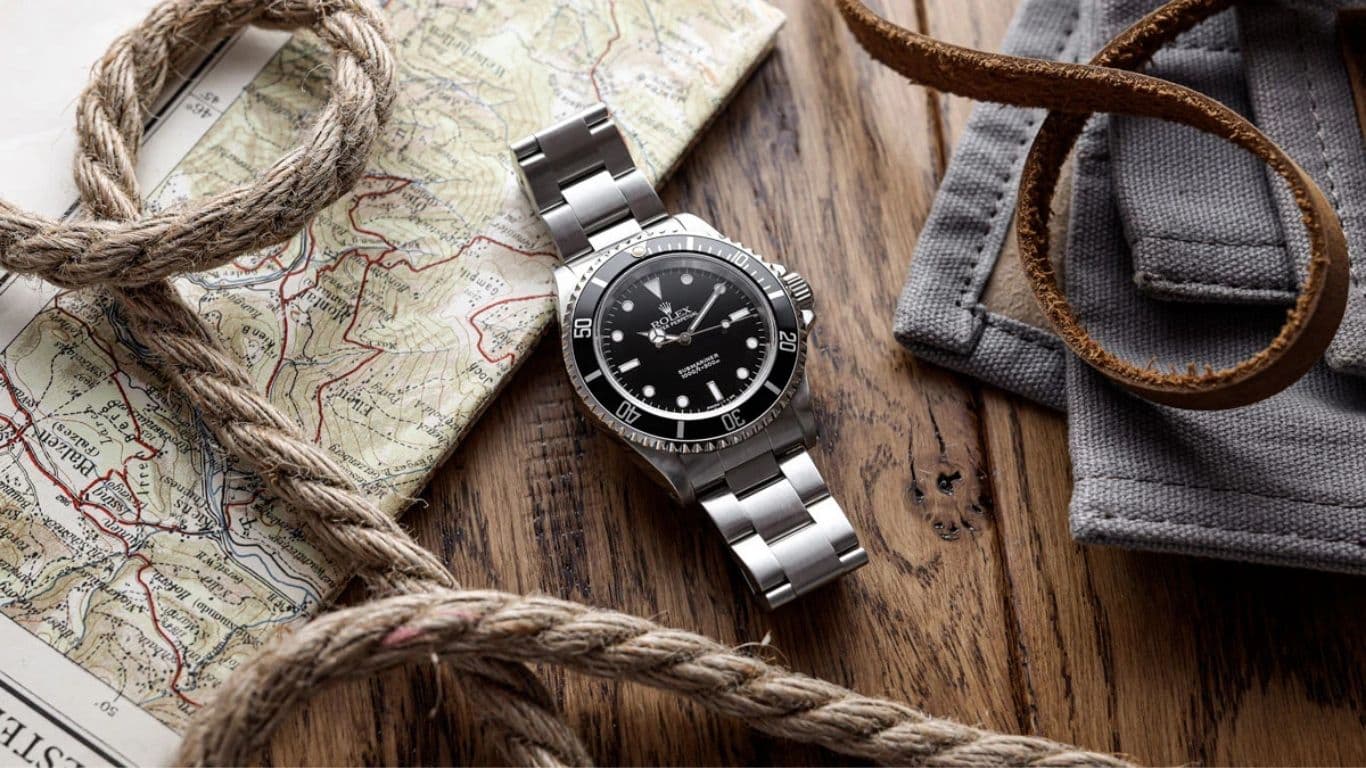
The Submariner No-Date 124060 is the entry into the Rolex sport catalogue at retail (around $9,100). The no-date case is the cleaner of the two contemporary Submariner references; the 41mm Cerachrom-bezel case sits well across registers. Boutique allocation is more constrained than for the Oyster Perpetual or Datejust but meaningfully easier than for the Daytona; secondary market premium runs around 15 to 30 percent above retail.
For collectors building toward the broader sport catalogue, the no-date Submariner is the practical first piece. The contemporary Submariner Date reference 126610LN is the more frequently-discussed sport reference, but the date complication and the Cyclops magnifier are decisions a thoughtful collector should make consciously rather than by default.
The no-date case is cleaner; the 126610LV Kermit with green bezel and black dial is the colour-variant configuration that has built its own following.
What collectors actually look for at the entry tier
The discipline at the entry tier is the same as at the upper end, applied to lower price points. Box-and-papers documentation matters at every price point. Service history through Rolex's authorised network is the practical baseline; reference specificity matters more than model choice.
Two Datejust 36 references with different dial-and-bezel configurations can read very differently and trade at different secondary levels.
The pattern across these entry references is consistency. They're all pieces with credible heritage, deep secondary-market trading, and design language that has been refined gradually rather than reinvented. The collectors who start here and build out into the broader Rolex catalogue tend to navigate the brand substantially better than those who try to start at the Daytona tier.
Part of that is because the entry references make the catalogue's design discipline visible; part is because the relationship-building with a credible boutique that allocation discipline rewards happens more naturally over years than over months. The boutique-relationship dynamic is critical and underappreciated; the Authorised Dealer network is the practical access mechanism for the sport-tier references and the relationship-building starts with the entry-tier purchases.
What this means for collectors building toward Rolex
The longer story collectors come to recognise is that the entry into Rolex isn't really about which reference comes first. It's about building the working knowledge of the catalogue, the relationships with boutiques and specialist dealers, and the reading discipline that lets the more aggressive subsequent acquisitions hold up over years. The Oyster Perpetual, Air-King, Datejust 36 and no-date Submariner all serve that role well; the loudest current reference is rarely the right place to start.
Our pick for the most overlooked entry point in the current catalogue is the Datejust 36 in steel with the smooth bezel and the silver or champagne dial. The reference reads cleanly across registers, sits well on most wrists, and provides the design-language anchor for the broader catalogue. The collectors who navigate to it as a first piece tend to find that it remains a primary daily-wear reference even after subsequent acquisitions.
We last reviewed this analysis in May 2026.

Frequently Asked Questions
- What is an entry-level Rolex watch?
- An entry-level Rolex is a more affordable model with simpler designs, fewer complications, and stainless steel construction, offering an accessible entry point into Rolex ownership.<br><br>
- Is it better to buy a new or pre-owned Rolex?
- Both are valid options. New Rolexes offer warranty and authenticity, while pre-owned models may provide better availability and unique references.<br><br>

Stefanos Moschopoulos
Stefanos Moschopoulos founded The Luxury Playbook in Athens and has spent the better part of a decade following the auction calendar, the en primeur releases, and the watchmakers, gallerists, and shipyards the magazine covers. He writes the field guides and listicles that anchor the Connoisseur section — pieces built on Phillips and Christie's results, Liv-ex movements, and conversations with collectors he has met across Geneva, Bordeaux, Basel, and Monaco. His own collecting habits sit closer to watches and wine than art, and it shows in the level of detail in the magazine's coverage of those categories. Under his direction, The Luxury Playbook now publishes long-form field guides, market-defining year-end listicles, and the Voices interview series with the founders behind the houses and the brands.