Renaissance Masters at auction is one of the most consequential conversations in the art market, and it is the one most often misread. The category is small, supply is closed, and the buyer pool sits at a level of seriousness that does not look like the rest of the salesroom. When a real Renaissance Master comes up, the room behaves differently, and the prices reflect it.
The benchmark sale that everyone returns to is the Salvator Mundi sale at Christie's New York in November 2017, where the Leonardo da Vinci attribution made $450. 3 million. That figure is the headline, but the more useful figure for collectors is how rarely a genuine Renaissance Master appears at all.
Christie's and Sotheby's might offer five or six undisputed Renaissance lots between them in a strong year. Most years it is fewer.
- Renaissance masters at auction remain the structural top of the Old Masters category, with very few works of museum quality coming to public sale each year.
- The deepest single sales of the past decade have been led by Salvator Mundi at four hundred and fifty million dollars at Christie’s New York in November 2017.
- Names including Botticelli, Raphael, Titian, Veronese and the Northern masters Van Eyck, Memling and Bruegel define the very top of the Old Master market.
- Most major Renaissance works are held by museums, which makes any serious lot at auction a genuinely scarce event for institutional and private collectors alike.
- Attribution research, condition reports and provenance histories are unusually deep at this level and frequently shift valuations by an order of magnitude.
- For serious Old Master collectors, the Renaissance segment rewards patience, scholarship and disciplined engagement with the specialist departments at the major houses.
- Who is this for?
- Serious Old Masters collectors, advisors and family offices tracking the deepest Renaissance lots coming to auction at the major houses each season.
- What is happening?
- A collector read on Renaissance masters at auction, covering canonical Italian and Northern names, attribution research, recent benchmark sales and the realistic supply environment.
- When did this emerge?
- Most relevant around the January and July Old Master sales at Christie’s, Sotheby’s and Bonhams in New York and London, and whenever a major attribution returns to public sale.
- Where is this happening?
- Concentrated in the New York and London salesrooms at Christie’s and Sotheby’s, with scholarship anchored in European institutions across Italy, the Low Countries and Germany.
- Why does it matter?
- Renaissance lots at auction are genuinely scarce events, and disciplined preparation around scholarship and provenance is what separates credible bidders from costly mistakes.
What "Renaissance Masters at auction" actually covers
The auction-house definition is consistent. Renaissance Masters sits within the Old Masters category and covers roughly 1400 to 1600, Italian and Northern, painting and works on paper. The Italian roster includes Leonardo, Michelangelo, Raphael, Botticelli, Titian, Veronese, Tintoretto, Caravaggio (slightly later but typically included), Andrea del Sarto, Giorgione, Correggio, Bronzino, Bellini, and Fra Angelico.
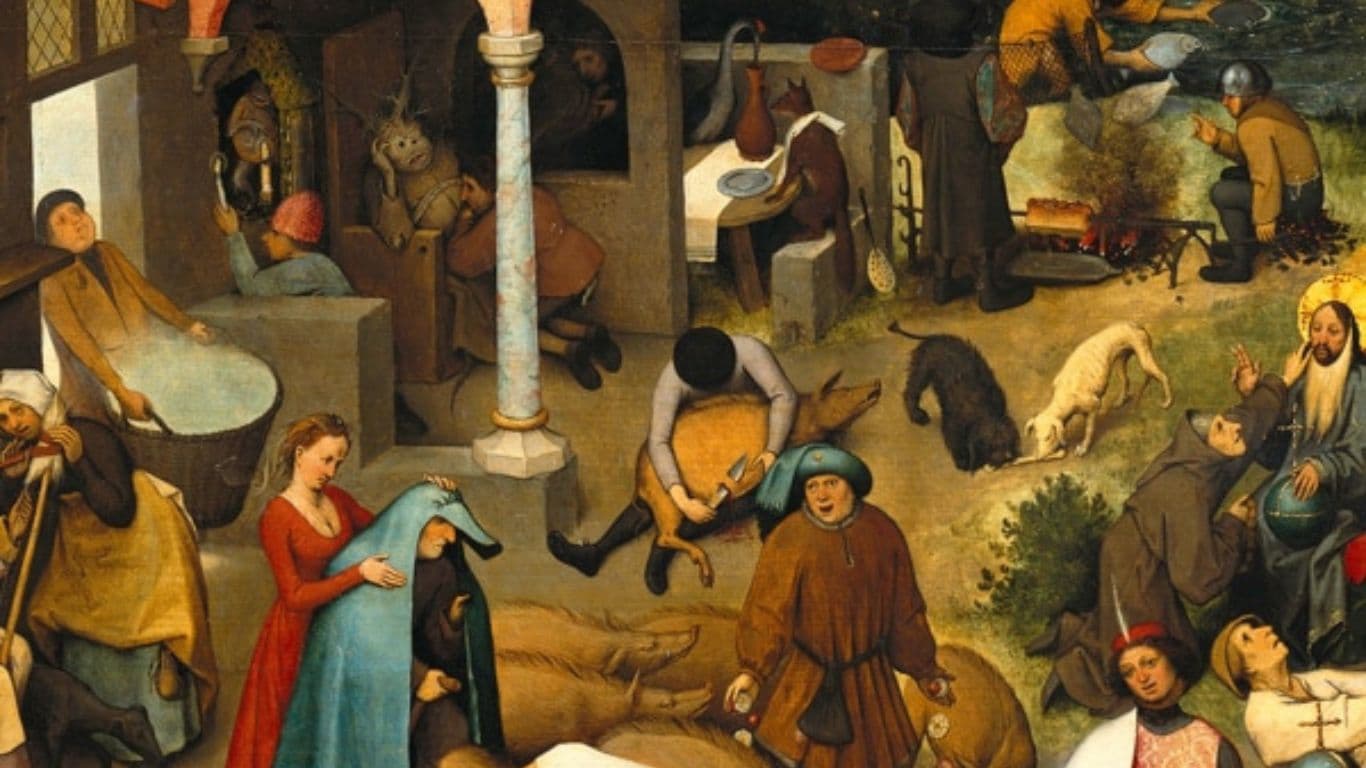
The Northern roster includes Dürer, Cranach, Holbein, van Eyck, Rogier van der Weyden, Memling, Bosch, and Bruegel.
The Old Masters evening sales at Christie's, Sotheby's, and Bonhams are the main calendar venue, running twice yearly in London and New York. TEFAF Maastricht in March is the parallel fair venue, where dealers in the category bring the highest-grade material for private sale rather than auction.
For the deeper category context, our Renaissance Art: A Collector's Field Guide covers attribution, condition, and primary versus secondary scholarship in detail.
What scarcity actually looks like at the top of this market
Most major Renaissance works are in museum collections and will never come back to market. The Met, the National Gallery in London, the Uffizi, the Prado, the Louvre, the Hermitage, and the Vatican Museums hold the great majority of the surviving canonical material. What circulates at auction is what remained in private hands, often through aristocratic European family lines.
The supply that does come up tends to share patterns. Restitution-related deaccessioning. Estate sales from European noble families.
The occasional museum deaccession. Rediscoveries (workshop attributions reassigned to the master after new technical analysis). A genuine top-flight Leonardo or Raphael at auction is a once-a-decade event, and the room knows it.
The Phillips name appears less in Old Masters than in contemporary, but the field is dominated by Christie's and Sotheby's, with Bonhams playing a credible mid-market role on workshop attributions and less canonical names.
How prices behave at the top of the Renaissance market
The Salvator Mundi number ($450. 3 million) is the outlier. Beneath it sits a market with extreme attribution sensitivity.
A confirmed autograph work by Leonardo, Raphael, or Michelangelo is priced in eight or nine figures. The same composition reattributed to a workshop or school is priced in six or seven. The same work reattributed to "circle of" or "follower of" drops another order of magnitude.
That attribution sensitivity makes Renaissance auction lots difficult to value without specialist input. The major-house Old Masters specialists are the first read; the Rijksbureau voor Kunsthistorische Documentatie (RKD), the Frick Art Reference Library, and the Warburg Institute archive provide the academic depth that supports or challenges those reads.
Technical analysis (infrared reflectography, X-ray, dendrochronology for panel paintings) has become standard for any serious Renaissance lot. The conservation report is part of the catalogue, and a clean technical record changes the price by multiples.
The named-collector tier active in this market
The serious Renaissance buyer pool is small and unusually disciplined. Old European family collections returning to the category for additions or replacements; American museum-trustee buyers acquiring for eventual gift or for foundation; and a small number of Gulf and East Asian buyers who entered the category through the past decade.
The Louvre Abu Dhabi was the single most consequential new institutional buyer in this segment when it opened in 2017. Its acquisition programme has continued to take Renaissance Masters off the market on a multi-year timeline. The Qatar Museums network and several private foundations in Hong Kong and Singapore are part of the same broader institutional buildup.
What distinguishes this collector tier is patience. Renaissance buyers wait. A serious collector might track a specific Bronzino portrait or a Titian small-scale composition for years before the right example surfaces.
That patience is the discipline that keeps prices high even in soft cycles.
Condition, provenance, and the catalogue raisonné conversation
Condition matters more in Renaissance painting than in almost any other category. Five centuries of cleaning, varnish removal, retouching, panel transfer (oil from panel onto canvas), and over-restoration have left many surviving works in compromised states. A Renaissance painting in good condition can be worth multiples of one in poor condition by the same hand.
Provenance discipline is unusually deep. Most major Renaissance works carry documented chains of ownership going back centuries, often through the original commissioning families. Restitution research is part of the standard process: the Art Loss Register, the Commission for Looted Art in Europe, and the relevant national restitution archives are all part of due diligence on any pre-modern lot.
The catalogue raisonné for each Renaissance Master is the foundational reference. New editions appear on long cycles; the Leonardo catalogue raisonné has been updated multiple times in the past two decades, with successive scholarship adding, removing, and reattributing works. Serious buyers track this scholarship closely.
What this means for collectors
Renaissance Masters at auction is not a category to enter casually. The supply is thin, the attribution conversation is technical, and the price sensitivity around condition and provenance is unusual. Most serious collectors entering this market do so with established Old Masters dealer relationships, a specialist advisor, and a technical and academic team behind every meaningful acquisition.
For collectors interested in the segment, the practical entry points are workshop attributions, drawings, and works on paper. These trade at meaningful discounts to autograph paintings and offer a way to develop the eye, the condition vocabulary, and the dealer relationships before committing to the painting top of the market. Our coverage of The Categories of Art Worth Collecting in 2026 sets this in the broader context of where serious capital is currently going.
What we'll watch next
The Old Masters evening sales in January and July at Christie's and Sotheby's remain the calendar moments. We will be watching attribution discussions on several lots flagged for technical re-examination through 2025 and 2026, particularly in the Florentine and Venetian schools.
We are also watching the continued institutional buildup in the Gulf, where the Louvre Abu Dhabi's acquisition pipeline and the broader Qatar and Saudi Arabian programmes are taking serious Renaissance material out of circulation on a long cycle. That pressure on supply matters more for prices over the next decade than any short-term market sentiment.
We last reviewed this analysis in May 2026.

Frequently Asked Questions
- How scarce are authentic Renaissance artworks today?
- Extremely scarce. Less than 2% of Renaissance masterpieces remain in private hands. Most are housed in permanent museum collections, making any private sale a rare market event.<br><br>
- What factors impact the value of Renaissance artworks?
- Key drivers include provenance, condition, academic attribution, exhibition history, and connection to major commissions or noble collections.<br><br>
- Which Renaissance artist has shown the highest price growth recently?
- Sandro Botticelli demonstrated record-breaking growth, with his <em>Portrait of a Young Man Holding a Roundel</em> selling for $92.2 million in 2021, driving a major recalibration of Botticelli's secondary market.<br>

Stefanos Moschopoulos
Stefanos Moschopoulos founded The Luxury Playbook in Athens and has spent the better part of a decade following the auction calendar, the en primeur releases, and the watchmakers, gallerists, and shipyards the magazine covers. He writes the field guides and listicles that anchor the Connoisseur section — pieces built on Phillips and Christie's results, Liv-ex movements, and conversations with collectors he has met across Geneva, Bordeaux, Basel, and Monaco. His own collecting habits sit closer to watches and wine than art, and it shows in the level of detail in the magazine's coverage of those categories. Under his direction, The Luxury Playbook now publishes long-form field guides, market-defining year-end listicles, and the Voices interview series with the founders behind the houses and the brands.