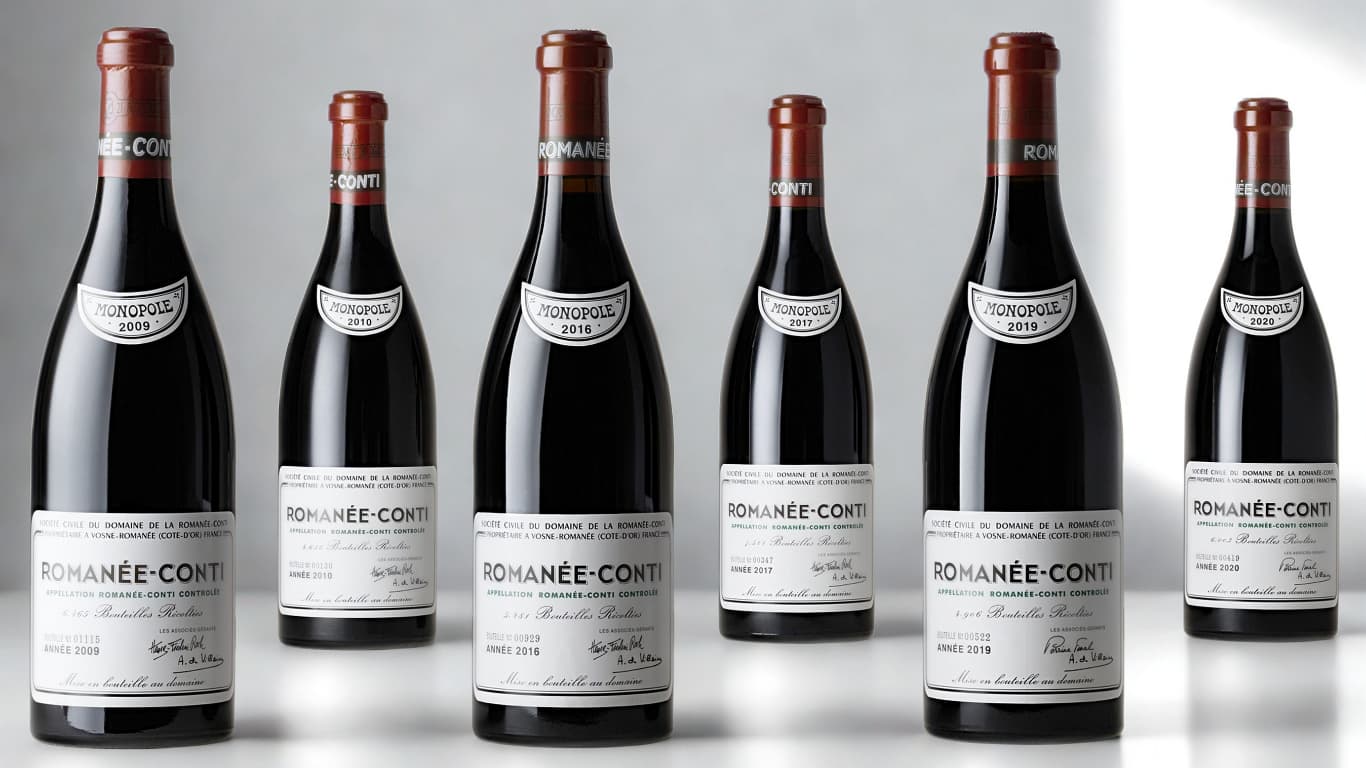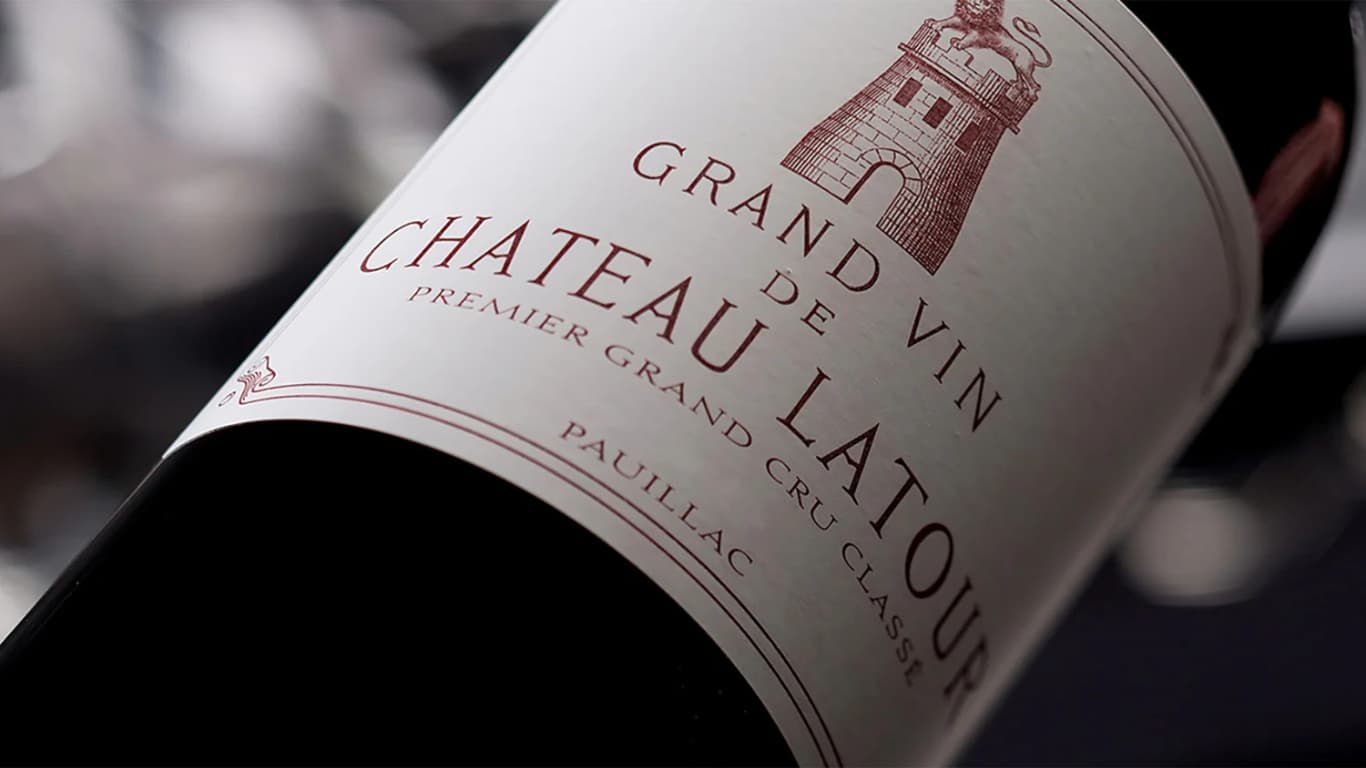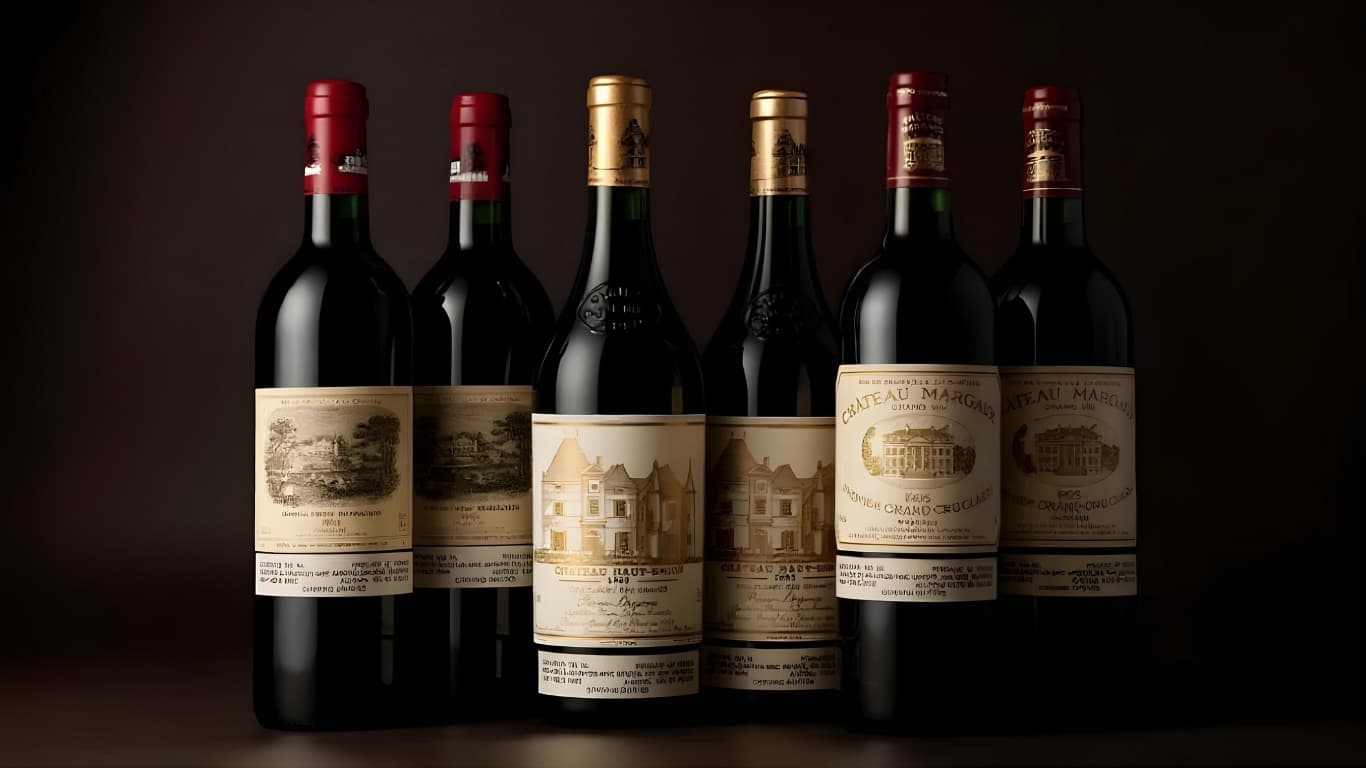
Bordeaux versus Napa Valley is one of the foundational cellar comparisons in serious collecting, and the conversation has shifted meaningfully over the past two decades. Bordeaux's First Growths and the broader serious Bordeaux tier still anchor the secondary market on Liv-ex, and Napa cult Cabernet has built parallel collector credibility that genuinely belongs in the same conversation.
- Bordeaux versus Napa Valley is one of the foundational cellar comparisons in serious collecting, with the conversation shifting meaningfully across the past two decades.
- Bordeaux's First Growths and the broader serious Bordeaux tier still anchor the secondary market on Liv-ex, with the Bordeaux 500 as the structural reference.
- Napa cult Cabernet, led by Screaming Eagle, Harlan Estate, and Schrader, has built parallel collector credibility that belongs in the same conversation.
- Bordeaux sits at roughly 45 degrees north latitude with a maritime climate, producing wines of structured tannin and moderate alcohol around 13 to 13.5 percent.
- Napa's warmer climate produces wines of riper fruit, higher alcohol, and softer tannin, with structurally different ageing curves than the Bordeaux apex.
- For collectors both regions earn structural cellar positions, with the relative weight shaped by stylistic preference and broader red-wine architecture.
- Who is this for?
- Cellar builders weighting their Cabernet positions, and serious collectors evaluating Bordeaux First Growth allocations against Napa cult apex producers.
- What is happening?
- We compare Bordeaux and Napa Valley as parallel cellar positions, with the terroir, climate, producer, and structural variables that distinguish each region.
- When did this emerge?
- The piece reads the contemporary post-2020 market, with the resilient Bordeaux First Growth tier and the established Napa cult apex as live context.
- Where is this happening?
- Bordeaux's Medoc and Right Bank, plus Napa's apex cluster across Oakville, Rutherford, and the broader appellation as the structural regions.
- Why does it matter?
- Sizing Bordeaux and Napa correctly is foundational for serious Cabernet-led cellar architecture, and both regions earn structural positions for the long haul.
The two regions share a Cabernet Sauvignon backbone but diverge sharply on terroir, structure, ageing trajectory, and pricing dynamics.
Sotheby's, Christie's, and Acker now run dedicated Napa allocations alongside their Bordeaux blocks, and the Liv-ex Fine Wine 1000 tracks both categories across its US and Bordeaux indices. Wine Spectator and Antonio Galloni's Vinous have written extensively on the structural quality gap and where it has, and hasn't, closed.
This is our editorial read on Bordeaux versus Napa Valley as parallel cellar positions, and where each region earns its place.
Region, climate, and the Cabernet question
Bordeaux sits at roughly 45 degrees north latitude on the Gironde estuary, with a maritime climate moderated by the Atlantic and the Garonne and Dordogne rivers. Cool nights, moderate growing-season temperatures, and the gravel-and-clay soils of the Left Bank produce wines of structured tannin, moderate alcohol (typically 13 to 13.5%), and the long ageing curves that define First Growth and Super-Second Bordeaux.
Napa Valley sits at roughly 38 degrees north, with a warmer Mediterranean climate moderated by the Pacific fog rolling in through the Petaluma Gap. The valley floor and the hillside AVAs (Stags Leap, Howell Mountain, Diamond Mountain, Spring Mountain) produce wines of riper fruit profile, higher alcohol (typically 14.5 to 15%+), and more immediately accessible structure than equivalent Bordeaux.
Both regions anchor on Cabernet Sauvignon, but Bordeaux blends Cabernet with Merlot, Cabernet Franc, Petit Verdot, and Malbec in proportions that vary by Left Bank versus Right Bank tradition, while serious Napa Cabernet is often varietal or near-varietal.
Producer structure and cellar economics
Bordeaux organises around classified châteaux, with the 1855 Classification of the Médoc and Sauternes establishing the First through Fifth Growths that still structure the regional hierarchy. The First Growths (Lafite, Latour, Margaux, Haut-Brion, Mouton) are joined by the Right Bank references (Cheval Blanc, Ausone, Pétrus, Le Pin) and Sauternes (d'Yquem) at the top of the global wine pricing tier.
Production volumes at the First Growths run substantial by collector standards. Lafite Rothschild produces roughly 20,000 cases of grand vin per year, Latour 12,000 to 15,000, Margaux similar. The broad serious-Bordeaux tier (the Super-Seconds, the better classified-growth Saint-Juliens and Pauillacs, the named Right Bank Pomerols and Saint-Émilions) extends production substantially further.
Napa cult Cabernet operates at a fundamentally different production scale. Screaming Eagle produces roughly 600 cases per year, Harlan Estate roughly 1,800, Bryant Family roughly 1,000, Scarecrow roughly 800. The scarcity premium on Napa cult Cabernet is a structural feature, not a market accident.
Pricing and the secondary market
Bordeaux First Growth release pricing (en primeur) for the 2019 and 2020 vintages cleared roughly $500 to $800 per bottle. Mature vintages from the great years (1982, 1990, 2000, 2009, 2010, 2016) clear $1,000 to $5,000 at Sotheby's and Christie's depending on the bottle's storage history and provenance. The 1869 Lafite Rothschild sold for $233,972 at Sotheby's Hong Kong in 2010, one of the most-cited Bordeaux auction lots in modern collecting history.
Napa cult Cabernet operates at a comparable top-tier pricing but on a much smaller production base. Screaming Eagle clears $3,000 to $5,000+ per bottle at auction and on allocation, Harlan Estate $1,000 to $2,000, Bryant Family $1,500 to $3,000. The broader serious Napa Cabernet tier (Shafer Hillside Select, Continuum, Realm, Bond, Schrader) runs $200 to $600 per current-release bottle.
Liv-ex tracks both categories actively. The Liv-ex 100 has historically been Bordeaux-weighted, and the broader Liv-ex Fine Wine 1000 includes a US sub-index that has grown structurally over the past five years as Napa cult Cabernet collector demand has deepened internationally.
Ageing trajectory and drink windows
Bordeaux First Growth and serious classified-growth Bordeaux from a strong vintage ages 30 to 60+ years, with the great years routinely drinking beautifully at 40 to 50 years. The 1961 vintage continues to deliver, 1982 is now in its peak drinking window, 2000 and 2010 are entering theirs, and 2009 has been the most explosive recent vintage on Liv-ex pricing.
Napa cult Cabernet ages well but on a compressed curve. The best vintages from Screaming Eagle, Harlan, Bryant, and Scarecrow drink beautifully at 15 to 30 years, with the longest-lived bottlings reaching 35 to 40 years. The riper fruit profile, higher alcohol, and softer tannin structure compress the ageing window relative to equivalent Bordeaux.
This matters for cellar planning. A Bordeaux cellar built across multiple decades compounds beautifully across multiple generations, while a Napa cult Cabernet position pays out earlier and on a tighter schedule.
Stylistic register and the dinner-table case
Bordeaux is the structured, complex, long-ageing reference. Mature First Growth Bordeaux from a great vintage delivers a complexity of secondary and tertiary aromas (cedar, tobacco, leather, forest floor, pencil shavings, dried herbs) that the riper Napa register can match in fruit weight but rarely in aromatic complexity at full maturity.
Napa Cabernet is the riper, more immediately accessible reference. The best Napa cult Cabernet delivers concentration, polished tannin, and a fruit profile (cassis, blackberry, mocha, vanilla, sweet oak) that pairs beautifully with the modern American restaurant register. The Left Bank versus Right Bank conversation maps loosely onto the Napa hillside versus valley floor distinction, but with different structural drivers.
How to position both in a serious cellar
A working serious cellar typically anchors Bordeaux at substantially greater depth than Napa, with the First Growths and the better Super-Seconds providing the structural reference and the broader classified-growth tier providing accessible depth. Napa cult Cabernet positions are necessarily smaller given the production constraints, but a working Napa allocation typically anchors around two or three of the named cult producers plus depth in the broader serious Napa tier.
The two categories complement rather than compete. Bordeaux compounds across multiple decades, Napa compounds on a tighter window, and both belong in the cellars working at the structural quality top of serious wine collecting.
What this means for collectors
Bordeaux versus Napa isn't a binary choice. The cellars that compound best across the next decade are likely to be the ones holding meaningful positions in both, treating Bordeaux as the structural reference and Napa cult Cabernet as the parallel category that has earned its credibility on its own terms.
The structural pricing differential between the two regions has narrowed over the past decade as Napa cult Cabernet collector demand has expanded globally. The long-term direction of travel favours quality and provenance over regional positioning, and both categories have producers genuinely working at the top of the global wine quality tier.
We last reviewed this analysis in May 2026.

Frequently Asked Questions
- Are Bordeaux wines more age-worthy than Napa wines?
- Yes. Bordeaux wines, especially from the Left Bank, often age 30–50+ years. Napa wines typically peak within 20–30 years.<br><br>
- Which grapes dominate each region?
- Bordeaux is Cabernet Sauvignon and Merlot-focused. Napa is also Cabernet-dominant but offers more ripe, fruit-driven styles.<br><br>
- Do Bordeaux wines perform better in auctions?
- Yes. Bordeaux wines consistently rank among the highest-traded lots at Sotheby’s and Liv-ex.<br><br>
- Which region is better for short-term flips?
- Napa Valley. Wines like Scarecrow and Harlan show fast appreciation post-release.<br><br>
- Do critics rate Napa or Bordeaux wines higher?
- Both receive 100-point ratings, but Napa wines often get higher early ratings due to bold styles favored by critics like Parker.<br><br>
- Which region has more liquid resale markets?
- Bordeaux. It benefits from global secondary market infrastructure, making it easier to buy and sell.<br><br>

Stefanos Moschopoulos
Stefanos Moschopoulos founded The Luxury Playbook in Athens and has spent the better part of a decade following the auction calendar, the en primeur releases, and the watchmakers, gallerists, and shipyards the magazine covers. He writes the field guides and listicles that anchor the Connoisseur section — pieces built on Phillips and Christie's results, Liv-ex movements, and conversations with collectors he has met across Geneva, Bordeaux, Basel, and Monaco. His own collecting habits sit closer to watches and wine than art, and it shows in the level of detail in the magazine's coverage of those categories. Under his direction, The Luxury Playbook now publishes long-form field guides, market-defining year-end listicles, and the Voices interview series with the founders behind the houses and the brands.